
On a September morning in 1799, a clerk at 40 Wall Street opened a ledger for the first time — not for a merchant, not for a shipowner, but for a company that had spent the summer laying hollowed pine logs through the streets of Manhattan. The Bank of the Manhattan Company had just opened its doors, and the waterworks that supposedly justified its existence were already being treated as an afterthought.
The Yellow Fever Crisis and Burr's Opportunity
New York City in the late 1790s was a place of recurring panic. Yellow fever swept the streets in waves, killing thousands and driving the wealthy to flee. The prevailing theory blamed the city's wretched water supply: shallow wells contaminated by privies, slaughterhouse runoff, and the salt marshes that surrounded the settled tip of the island. A reliable system of fresh water was a desperate public need.
Aaron Burr, then a rising Democratic-Republican assemblyman, saw something else in the crisis: a chance to break the Federalist stranglehold on banking. Alexander Hamilton's Bank of New York, chartered in 1784, enjoyed a near-monopoly on credit in the city. Burr, Hamilton's bitter political rival, knew a direct application for a bank charter would be blocked. He needed cover.
In early 1799, Burr introduced a bill to create "The Manhattan Company," capitalized at $2 million — an enormous sum — for the purpose of supplying "pure and wholesome water" to the city. The legislation sailed through the legislature. On April 2, the charter was granted. No one objected to a public health measure.
The Trojan Horse Clause
Buried in the charter's fine print was a single sentence that would change American finance. The company was permitted to employ any "surplus capital" in "moneyed transactions or operations." The phrase was vague enough to escape notice but broad enough to authorize a full-scale banking business. Burr had drafted it himself, or so his contemporaries believed.
The waterworks did require money — but not $2 million. Crews began driving hollowed pine logs into the ground as pipes, a primitive but functional system that delivered water to a fraction of the city. By September, the company had spent only a portion of its capital. The rest, conveniently, was "surplus."
On September 1, 1799, The Bank of the Manhattan Company began operations at 40 Wall Street. It accepted deposits, discounted notes, and issued its own banknotes. Within weeks it was a going concern. The pine logs kept leaking; the bank kept lending.
Pine Logs and the First Deposits
The contrast was stark. The water system was a patchwork of bored tree trunks, joined with iron bands and tar, prone to bursting and freezing. It served perhaps a few thousand customers. The bank, by contrast, tapped into the torrent of commercial paper flowing through a port city hungry for credit. Merchants, shipowners, and artisans lined up. The Manhattan Company's notes circulated freely, backed by the confidence that came from a $2 million capital base — most of which now funded loans, not pipes.
Burr himself deposited the company's first $500,000 in specie. He also arranged for the bank to become the fiscal agent for the federal government's customs receipts in New York, a lucrative privilege that Hamilton's bank had previously held. The political payoff was immediate.
By 1808, the charade ended. The city, eager to control its own water supply, purchased the wooden pipe network for $1.9 million. The Manhattan Company walked away from the water business entirely. It had been a bank for nine years; it would remain one for the next two centuries.
From Waterworks to Wall Street
Burr's duel with Hamilton in 1804 ended the assemblyman's national ambitions, but his bank outlived both men. The Bank of the Manhattan Company survived the Panic of 1837, when 40% of the nation's banks failed, and the Panic of 1857, which had bankrupted John Thompson, future founder of Chase National Bank. It merged with Chase National in 1955 to form Chase Manhattan, which in 2000 merged with J.P. Morgan & Co. — the firm descended from the Morgan lineage that Burr's rival Hamilton had once dismissed as "a party of moneyed interests."
The pine logs are long gone, dug up and replaced by iron mains in the 1830s. The clause that started it all — "moneyed transactions or operations" — survives only in corporate genealogies. Yet every transaction processed today by the world's largest bank by market capitalization traces a lineage to that September morning in 1799, when a politician turned a public health emergency into a private charter, and a water company became a bank.
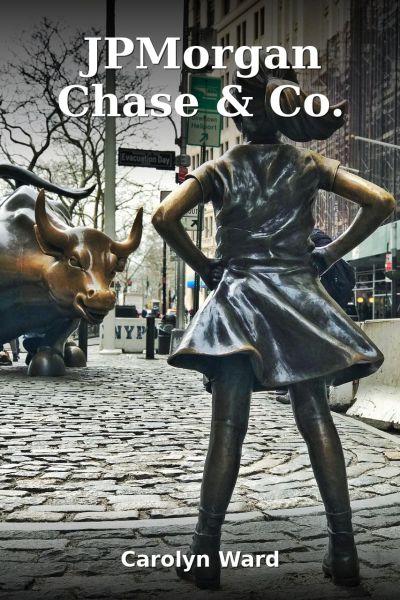
This is one episode in a much longer story. For the full account of the history of JPMorgan Chase, read “JPMorgan Chase & Co.” by Carolyn Ward on MixCache.com.
Please log in or create an account to leave a comment.
No comments yet. Be the first to say something.