
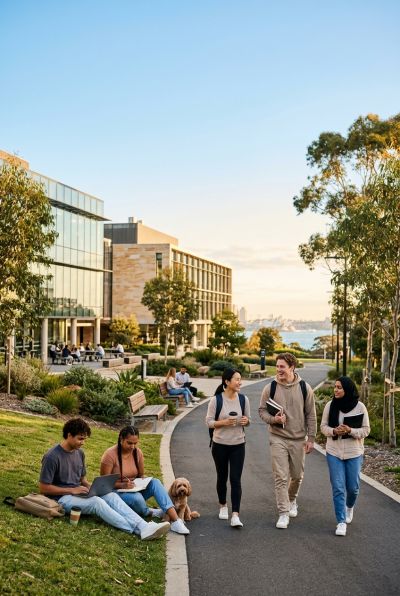
Considering studying in Australia but overwhelmed by the complexity of applications, visas, and daily life abroad? Studying in Australia by Dr Alex Bugeja offers more than just generic advice—it provides a meticulously researched, step-by-step roadmap that addresses every stage of the international student journey, from initial program selection to post-graduation work options.
What the Book Covers
This nonfiction guide follows a logical chronological progression, beginning with why Australia attracts global students and moving through understanding the higher education system, choosing programs, meeting entry requirements, navigating applications and visas, preparing for departure, arriving and settling in, managing finances and daily life, succeeding academically, building networks, exploring the country, and finally considering career pathways after graduation. It explicitly addresses both undergraduate and postgraduate students, acknowledging their differing needs while providing tailored information for each level. The book assumes readers are in the planning stages, offering concrete tools like checklists, cost breakdowns, and system explanations rather than inspirational anecdotes alone.
Navigating the Entire Student Journey
The book’s greatest strength lies in its commitment to guiding readers through every phase—not just getting accepted, but thriving throughout and beyond their studies. As stated in the Introduction, it aims to be "your trusty companion through that maze, helping you navigate the journey from your first spark of an idea to your first day of lectures, and beyond." This promise is fulfilled in Chapter 25, which details post-study work options like the Temporary Graduate visa (subclass 485), explaining stay periods based on qualification level (e.g., up to 4 years for PhD graduates) and eligibility requirements. By covering the full arc from pre-application contemplation to professional outcomes, it helps readers realistically assess whether the entire endeavor aligns with their goals, not just the initial excitement of studying abroad.
Demystifying Australia's Education Systems
For those intimidated by unfamiliar acronyms and structures, the book excels at translating complex systems into clear, actionable information. Chapter 2 dedicates significant space to explaining the Australian Qualifications Framework (AQF), describing it as "a ladder, with ten levels, each representing a different level of educational attainment, from Certificate I (Level 1) up to Doctoral Degree (Level 10)." It further clarifies how TEQSA regulates higher education, what CRICOS registration means for international students, and how credit transfer and Recognition of Prior Learning (RPL) work. Similarly, Chapters 7 and 8 break down entry requirements for undergraduate and postgraduate degrees with specificity—detailing prerequisite subjects, English test score ranges, and when additional materials like portfolios or research proposals are needed—transforming opaque admission criteria into tangible preparation steps.
Beyond Logistics: Culture, Health and Daily Life
Recognizing that successful study involves more than paperwork, the book substantial sections on adapting to life in Australia. Chapter 17 directly addresses cultural nuances, noting that while "Australia is often perceived as a very laid-back and informal country… it has its own unwritten rules and social expectations," covering concepts like "fair go," mateship, and communication styles to prevent misunderstandings. Practical daily life guidance appears in Chapters 16 (accommodation options from on-campus residences to homestays), 18 (health, safety, and mandatory Overseas Student Health Cover details including what OSHC does and doesn’t cover), and 19 (banking, budgeting, and smart spending tips like leveraging student discounts). This holistic approach helps readers envision their lived experience, not just their academic one.
Financial Planning Realities
Finances are treated with refreshing honesty and depth, moving beyond vague warnings to provide actionable frameworks. Chapter 12 states plainly that "For international students, tuition fees will likely be your single largest expense," then offers indicative annual fee ranges for different study levels and fields (e.g., Bachelor's degrees from AUD 20,000 to AUD 45,000, specialized MBAs potentially exceeding AUD 50,000). It complements this with detailed city-specific cost of living breakdowns—highlighting Sydney as "generally considered the most expensive city" versus Adelaide as "often highlighted as one of the more budget-friendly major Australian cities." Chapter 13 expands on scholarship sources (government-funded like Australia Awards, university-specific, and external organisations), while Chapter 19 provides concrete budgeting strategies, including tracking income/expenses, setting contingency funds, and saving tips like buying second-hand textbooks or cooking at home to make funds stretch further.
Research Opportunities for Postgraduates
For readers considering research-focused study, Chapter 6 delivers targeted, substantive guidance rather than superficial encouragement. It opens by acknowledging that "For many embarking on a postgraduate journey, particularly at the Master's by Research or PhD level, the allure of contributing to the world's knowledge bank is a powerful motivator." The chapter then details how to identify research strengths across Australian universities, connect with potential supervisors (including email etiquette and what to include), and explore structured opportunities like CSIRO partnerships or Cooperative Research Centres (CRCs). It also covers practical realities such as research ethics, intellectual property policies, and funding avenues including the Research Training Program (RTP) scholarships. This section moves beyond general praise of Australian research to equip readers with the specific knowledge needed to pursue and succeed in research degrees.
Who should read this book? It is most valuable for prospective international students in the early to mid-planning stages who seek detailed, system-oriented guidance—not those looking for casual travel inspiration or already-enrolled students seeking niche academic tips. Individuals feeling overwhelmed by visa complexity, uncertain about matching programs to career goals, or needing concrete help with financial planning will find it particularly useful. While it assumes readers are serious about pursuing study in Australia, its balanced tone (acknowledging challenges like homesickness or competitive admissions) ensures it informs rather than oversells the experience.
Read “Studying in Australia” on MixCache.com →
Please log in or create an account to leave a comment.
No comments yet. Be the first to say something.