
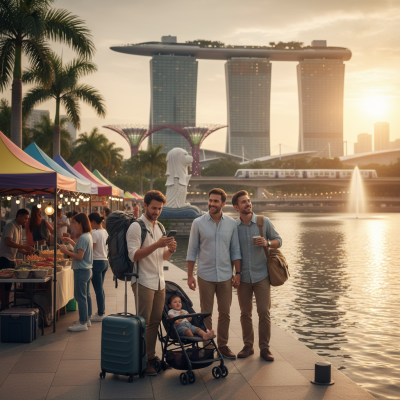
Moving to Singapore isn't just about ticking boxes on a visa form—it's about navigating a city where efficiency dances with tropical chaos, and where a misplaced tissue packet can save your lunch spot. Most guides drown you in generic moving advice, but this book cuts straight to the Lion City's unique rhythms. It’s less a manual and more a candid conversation with someone who’s lived the sweat, the hawker queues, and the unspoken rules.
This guide skips the packing-tape basics and assumes you’ve already mastered the art of not leaving the kettle until the last minute. Instead, it dives headfirst into Singapore-specific realities: deciphering visa acronyms (EP, S Pass, DP), choosing between condo luxury and HDB authenticity, budgeting for a city where hawker centre meals undercut coffee prices elsewhere, and surviving humidity that redefines your relationship with sweat. Organized into 25 focused chapters, it walks you through logistics like banking and healthcare while preparing you for cultural nuances—from Singlish particles to workplace hierarchy—so you can build a life that feels less like a resort and more like home. Whether you’re a solo professional or relocating with family, it frames the move as a series of manageable, informed steps.
Decoding the Visa Alphabet Soup
The book’s first chapter doesn’t just list visa types—it reveals how Singapore’s bureaucratic alphabet soup directly impacts your job prospects and daily life. You’ll learn that an Employment Pass (EP) isn’t merely a formality; its approval hinges on a shifting salary threshold tied to your age and industry, verifiable through MOM’s Self-Assessment Tool. More critically, the S Pass comes with hidden strings: employer quotas and monthly levies that can silently kill a job offer. As the text bluntly states, "If a company is already at its S Pass quota, it doesn’t matter how brilliant you are; they simply cannot hire you." This isn’t theoretical—it explains why seemingly perfect opportunities evaporate. The takeaway? Prospective expats must assess eligibility early, understand how visa rules shape hiring decisions, and recognize that dependant’s passes (DPs) no longer allow spouses to work easily—a game-changer for dual-income plans.
Housing: Condo vs. HDB and the Expat Bubble Trap
Chapter two cuts through the glossy condo brochures to compare housing options with unflinching honesty. Yes, condos offer pools and gyms—but you’ll "pay dearly for the privilege of that 50-metre lap pool you’ll swear you’ll use every day and then visit precisely twice." More insidiously, condo living risks trapping you in an "expat bubble" where "your only real Singaporean friend is the guy who delivers your groceries." HDB flats, meanwhile, offer authentic immersion at lower cost, but come with rules foreigners must navigate: citizenship-based rental quotas, the need for landlords to have completed their Minimum Occupation Period, and the absence of building amenities. The book stresses checking your Tenancy Agreement for a diplomatic clause—your "get-out-of-jail-free card" for early lease termination if transferred out of Singapore. Beyond rent, it details hidden costs: security deposits (one or two months’ rent), furnishing expenses ("unfurnished" means zero appliances), and the quarterly air-conditioning servicing that protects your deposit. Readers learn to weigh not just price, but lifestyle fit and long-term social integration.
Budgeting Hawker-Style: How to Eat Well Without Going Broke
Where most budget guides focus on deprivation, chapter three celebrates Singapore’s great financial equalizer: the hawker centre. It’s where you get "a truly spectacular meal for between S$4 and S$8"—less than a fancy coffee elsewhere—and where "you could, in theory, eat out at a hawker centre for every meal and still spend less than you would on a weekly grocery shop back home." This isn’t just about saving money; it’s about cultural access. The book contrasts this with budget-busters: imported cheese (S$10 a block), wine (starting at S$30), and car ownership (S$2,000–S$3,000 monthly once COE, insurance, and ERP are factored in). Instead, it offers a framework: splurge selectively (occasional dining out), save aggressively (hawker staples, local wet-market produce, and embracing "the incredible variety of tropical fruits"), and leverage systems like PayNow for instant, fee-free transfers. Readers walk away with a clear hierarchy—housing and schooling are the apes, but food and transport are your lifelines—and understand why rejecting car ownership is often "the single best financial decision you can make."
Humidity Hacks: Surviving the Perpetual Summer
Chapter sixteen doesn’t just complain about the weather—it arms you with tactical survival strategies for Singapore’s "physical presence" of humidity. You’ll learn that polyester is "a plastic prison for your skin," while natural fabrics like cotton and linen, or moisture-wicking athletic wear, are essential. The book introduces the "Singapore Shuffle": "a slower, more deliberate pace of walking that is designed to minimise exertion and heat generation. It is not a sign of laziness; it is a sign of climatic intelligence." Beyond clothing, it details household warfare: using Thirsty Hippo dehumidifier crystals in wardrobes, strategic fan placement to reduce air-con reliance, and embracing geckos as "free, all-natural pest control service." Crucially, it addresses the psychological shift: accepting sweat as normal, finding "blissed relief" in air-conditioned rooms, and recalibrating expectations so that "a certain level of sweatiness is normal." Readers gain actionable, not theoretical, tools to protect belongings, manage energy, and transform discomfort into adaptable resilience—turning a climatic adversary into a manageable part of daily rhythm.
Workplace Wisdom: Hierarchy, Harmony, and the Art of Indirectness
Chapter seventeen explains why your direct feedback style might backfire in Singaporean offices, where hierarchy and "face" govern interactions. "Face is a blend of honour, reputation, and social standing," and losing it—by openly contradicting a boss in a meeting—is "a cardinal sin." Instead, communication leans into indirectness: "I will try my best" often means "This is probably not going to happen," and meetings are "often just the formal ratification of a decision that has already been made" made in prior informal chats. The book advises expats to "frame your points as suggestions rather than directives"—using phrases like "Perhaps we could consider..."—to preserve harmony. It also notes the lunch-hour ritual: teams "descend on the nearest hawker centre" to "acquire a delicious, high-quality meal and consume it with maximum speed" before returning to desks, a practice that builds rapport while respecting efficiency. Readers learn to navigate not just tasks, but the unspoken social operating system: observing who deflects to whom, recognizing that silence signals respect (not disinterest), and adjusting their own directness to build trust without causing unintended offense. It’s less about changing who you are, and more about coding your communication for the local context.
Who should read this? Anyone seriously planning a move to Singapore—especially professionals, couples, or families with some international relocation experience—will find this book invaluable. It’s not for tourists seeking top-ten lists or those unwilling to engage with detailed logistics (like visa renewal processes or HDB quota rules). If you want to move beyond the expat bubble and build a life that feels authentic, not temporary, this guide offers the specific, street-tested insights needed to thrive. Skip it only if you’re looking for pure inspiration over practical preparation; otherwise, it’s a trustworthy companion that turns anxiety into informed action, helping you focus on enjoying the food, culture, and adventure that awaits in the Lion City.
Read “Moving to Singapore” on MixCache.com →
Please log in or create an account to leave a comment.
No comments yet. Be the first to say something.