
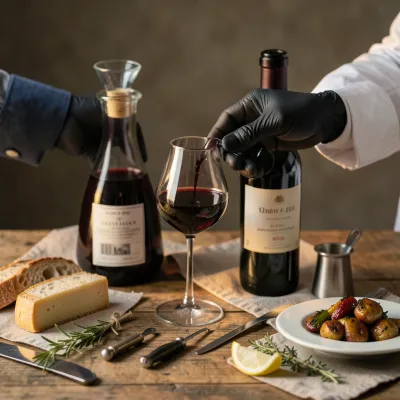
For anyone who works with wine in a restaurant, bar, or even a busy home kitchen, the gap between knowing a wine’s story and being able to use that story to enhance a meal can feel frustratingly wide. Somm Start bridges that gap by treating wine not as a luxury accessory but as a structural ingredient that interacts directly with food. The book’s approach is deliberately practical: it begins with palate calibration, builds food‑centric pairing frameworks, and ends with checklists and scenarios designed to turn knowledge into muscle memory.
What the book is about
Somm Start is organized into twenty‑five chapters that move from foundational tasting technique to advanced service operations. Early chapters focus on calibrating the palate through a deductive tasting method that asks five evidence‑based questions about color, nose, structure, texture, and overall story. Later sections explore classic wine regions, New World landscapes, sparkling and fortified styles, and fault identification. The second half of the book shifts to operational topics: mise en place, glassware, temperature control, table‑side presentation, responsible alcohol service, building a food‑centric wine list, by‑the‑glass strategy, purchasing, cost control, inventory management, staff training, and guest communication. Throughout, each chapter includes drills, checklists, or sample menus that invite immediate application. The intended audience is chefs, servers, and serious home cooks who want to make faster, more food‑aware wine decisions without memorizing endless producer lists.
Deductive tasting as a repeatable routine
The book opens with the idea that "Wine begins with evidence, not poetry" and introduces a disciplined calibration process that turns subjective impressions into shared language. Chapter 1 explains how to assess sight, nose, and palate while focusing on four primary structural signals—acid, tannin, alcohol, and sweetness—plus texture and flavor carry. A key passage states: "Deductive tasting is a short, disciplined routine you can run aloud or silently. It asks you to move from sight to nose to palate while asking five questions that force evidence into categories." This routine is reinforced with drills such as the Calibration Trio (three wines representing distinct structural brackets) and Blind Deduction, which are designed for pre‑shift huddles or at‑home practice. By repeatedly mapping structure to aroma, the reader learns to resolve contradictions and produce consistent descriptions that can be trusted under service pressure.
Food‑centric pairing frameworks
Chapters 21 through 23 build a pairing system that treats wine as a structural counterpart to the six primary tastes: salt, acid, fat, sweet, bitter, and umami. Rather than memorizing arbitrary matches, the reader learns to map a dish’s components onto the wine’s acid, tannin, alcohol, and sweetness. For example, Chapter 21 notes: "The fundamental rule for pairing wine with acidic food is simple: the wine must have at least as much, if not more, acidity than the food." Chapter 22 extends this to proteins, cooking methods, and sauces, offering a systematic approach: first identify the protein, then consider the cooking method, and finally analyze the sauce for its dominant taste components. Chapter 23 adds a layer for heat and spice, emphasizing that sweetness, lower alcohol, and crisp acidity are the most effective antidotes to capsaicin’s burn. These frameworks give the reader a logical toolkit to predict harmony or clash before the first bite.
Service foundations and table‑side excellence
Chapters 11 and 12 treat service as "invisible architecture"—the mise en place, glassware choices, temperature control, and presentation steps that allow wine to arrive at the table in the condition the winemaker intended. Chapter 11 stresses that "Mise en place in a wine program begins with the layout of the station and the rhythm of the shift" and includes drills for station setup speed, glassware influence, and temperature control routines. Chapter 12 adds the visible choreography of opening, pouring, and decanting, noting that "Pouring seems simple but is often botched by haste, resulting in splashes that warm the wine and spill that soils the tablecloth." The book provides checklists for bottle service, temperature management, and pre‑shift station setup, turning these details into repeatable habits that reduce waste and build guest confidence.
Building and managing a wine program
The middle section of the book moves from the glass to the ledger, showing how to translate a culinary vision into a coherent wine program. Chapter 14 advises that "A wine list is more than a price catalog; it is a restaurant’s liquid philosophy" and offers exercises for matching wine selection to menu flavors, organizing the list by style or grape, and writing concise, food‑centric descriptions. Chapters 15 through 18 cover the practicalities of by‑the‑glass strategy, purchasing, vendor relations, cost control, and inventory management. A notable insight from Chapter 17 appears in the beverage cost formula: "Beverage Cost Percentage = (Cost of Beverages Sold / Beverage Revenue) × 100," with guidance on tracking breakage, spoilage, and sales mix to protect margins. Chapters 18’s cellar management drills emphasize storing bottles on their sides, monitoring the "four enemies" of wine (heat, light, vibration, humidity), and implementing security measures to safeguard investment.
Responsible service and guest communication
Chapters 13 and 20 remind the reader that technical skill must be paired with ethical hospitality. Chapter 13 defines responsible service as "being proactive, empathetic, and always putting the well‑being of the guest first" and includes drills for recognizing behavioral cues of intoxication, refusing service politely, and verifying identification. Chapter 20 shifts to the art of talking with guests, advising servers to "think of yourself as a translator, not a lecturer" and to use accessible language that connects wine to food. A useful guideline states: "Instead of discussing malolactic fermentation or the nuances of specific appellation laws, talk about how a wine tastes: 'This Chardonnay is crisp and bright, with notes of green apple and a hint of minerality, perfect with your roasted chicken.'" The book also offers role‑play scenarios for clarifying guest preferences, making food‑centric recommendations, and managing expectations around challenging wines such as natural or skin‑contact styles.
By the end of Somm Start, the reader should be able to run a deductive tasting, build a food‑focused wine list, execute proper service techniques, communicate wine choices without jargon, and manage the operational realities of a profitable wine program. The blend of theory, regional knowledge, and hands‑on drills makes the book a working manual rather than a reference to be shelved.
Read “Somm Start: Wine Fundamentals for Food Professionals and Enthusiasts” on MixCache.com →
Please log in or create an account to leave a comment.
No comments yet. Be the first to say something.