
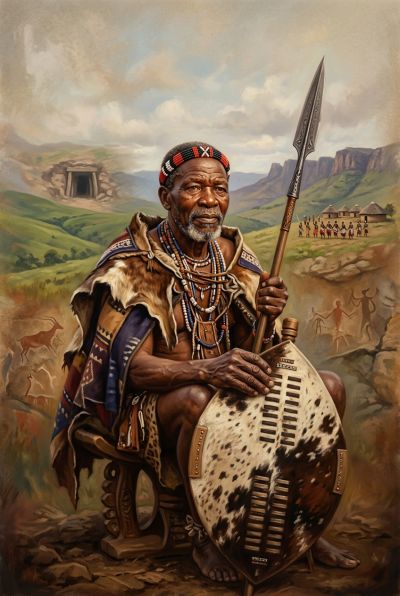
Nestled between South Africa and Mozambique, Eswatini's story is one of remarkable resilience. This book traces how a small kingdom navigated centuries of upheaval—from Stone Age mines to modern monarchy—while fiercely guarding its unique identity.
Geschiedenis van Eswatini offers a comprehensive chronological journey from prehistoric habitation to the 2018 name change. Organized into 25 chapters, it covers early human evidence at Ngwenya mines, Bantu migrations, the Dlamini clan's rise, key rulers' reigns, colonial encounters, independence struggles, and contemporary tensions. Ideal for readers interested in African nation-building, indigenous political systems, or the complexities of maintaining sovereignty amid regional powers.
The Dual Monarchy: A Balancing Act of Power
Central to Eswatini's endurance is its unique dual monarchy, established early in the nation's formation. As Chapter 2 explains: "De natie zou niet worden geleid door een koning alleen, maar door de koning, bekend als de Ngwenyama ("Leeuw"), die regeerde in tandem met zijn moeder, de Indlovukazi ("Zij-Olifant"). Deze briljante institutionele regeling creëerde een vitaal machtsevenwicht. De Ngwenyama diende als het administratieve en militaire staatshoofd, terwijl de Indlovukazi het spirituele hoofd van de natie was, de bewaarder van heilige rituelen en een tegenwicht voor het gezag van de koning." This system wasn't merely symbolic; it provided stability through centuries of crisis by balancing executive power with spiritual authority and continuity.
Sobhuza I's Diplomatic Survival During the Mfecane
When the Mfecane shattered neighboring states, Sobhuza I chose diplomacy over futile resistance. Chapter 4 details his approach: "Sobhuza's diplomatieke scherpzinnigheid was ook gericht op de andere opkomende grootmacht in de regio: het Zoeloe-koninkrijk... Mondelinge overleveringen suggereren een respectvolle, zij het behoedzame, relatie tussen Sobhuza en Shaka. De Swazi-koning vermeed wijselijk het provoceren van zijn machtige buurman, en betaalde waarschijnlijk schatting in de vorm van vee en andere goederen om de vrede te bewaren." This strategic retreat and alliance-building—including marrying Zwide's daughter—allowed the Swazi core to survive while others collapsed, laying foundations for future expansion.
The Land Concessions Crisis Under Mbandzeni
King Mbandzeni's land deals triggered a catastrophic loss of sovereignty, as Chapter 8 reveals: "Tegen het einde van zijn regering leek Mbandzeni de volledige, rampzalige omvang van wat er was gebeurd te beseffen. De strategie om concessiebetalingen te gebruiken voor veiligheid en welvaart was volledig mislukt. Het koninkrijk was failliet, zijn soevereiniteit was aangetast, en zijn land en hulpbronnen waren bijna volledig weggegeven. In 1890 werd berekend dat het land twee-, drie- of zelfs viermaal bedekt was met concessies van verschillende aard." Misunderstandings over Swazi land use concepts led to European settlers claiming permanent ownership, displacing Swazi communities and creating a landless peasantry that defined colonial-era struggles.
Sobhuza II's Long-Term Land Buyback Strategy
Sobhuza II turned economic resistance into a multi-generational land reclamation effort. Inspired by his grandmother Labotsibeni, who "verklaarde beroemd dat de macht van de blanke man in twee dingen lag: 'geld en boeken'", he revived the Lifa Fonds to buy back territory. As Chapter 13 states: "Hij wijdde de natie opnieuw aan de nauwgezette, generaties-overspannende taak om het land terug te kopen, hectare voor dure hectare. Het Lifa Fonds werd nieuw leven ingeblazen, en de lange, langzame strijd voor economische emancipatie begon serieus." This patient strategy—using migrant labor earnings to repurchase land—became a cornerstone of Swazi economic sovereignty efforts.
The 1973 Decree and the Tinkhundla System
Sobhuza II's 1973 decree dissolved constitutional monarchy, initiating decades of absolute rule. Chapter 18 records: "Met de steun van zijn kabinet trok hij de grondwet van 1968 in. Hij riep de noodtoestand uit, die de volgende drie decennia van kracht zou bleef. In een koninklijke proclamatie nam hij 'de opperste macht in het Koninkrijk Swaziland aan en dat alle wetgevende, uitvoerende en rechterlijke macht bij mijzelf berust." Chapter 25 notes how this evolved into the Tinkhundla system: "Het formele bestuurssysteem waarlangs dit koninklijke gezag wordt uitgeoefend, staat bekend als Tinkhundla... In de praktijk is het ontworpen om de politieke dominantie van de monarchie te verzekeren." This framework channels local merit-based representation while ensuring royal control over key appointments.
This book will resonate with readers passionate about African history, indigenous governance models, or how small states navigate regional power dynamics. Those seeking deep analysis of economic policies or light cultural overviews may find its dense political focus less engaging, but for anyone curious about Eswatini's unique journey—from the world's oldest mine to Africa's last absolute monarchy—it provides essential, text-grounded insight.
Read “Geschiedenis van Eswatini” on MixCache.com →
Please log in or create an account to leave a comment.
No comments yet. Be the first to say something.