Browse by Category
Fiction
- Action & Adventure
- African American
- Anthologies
- Children's Fiction
- Classics
- Comics & Graphic Novels
- Coming of Age
- Contemporary
- Cultural & Regional
- Drama
- Erotica
- Fantasy
- General
- Historical Fiction
- Horror
- Humor & Satire
- Literary Fiction
- Mystery, Thriller & Suspense
- Poetry
- Religious & Inspirational
- Romance
- Science Fiction
- Short Stories
- War & Military
- Westerns
- Women's Fiction
- Young Adult
Non-Fiction
- Antiques & Collectibles
- Arts & Photography
- Biographies & Memoirs
- Business & Money
- Children's Non-Fiction
-
Computers & Technology
- Artificial Intelligence
- Computer Science
- Cybersecurity & Cryptography
- Data Science & Analytics
- Databases & Big Data
- Game Development & Design
- General
- Hardware & DIY
- Mobile App Development
- Networking & Cloud Computing
- Operating Systems
- Programming
- Robotics
- Software
- Software Engineering
- User Experience (UX) & Design
- Web Development & Design
- Cooking, Food & Wine
- Crafts, Hobbies & Home
- Education & Teaching
- Engineering
- General
- Health, Fitness & Dieting
-
History
- African History
- African History - North Africa
- African History - Sub-Saharan Africa
- American History
- American History - 20th Century
- American History - Civil War
- American History - Colonial Period
- Ancient History
- Asian History
- Asian History - China
- Asian History - India
- Asian History - Japan
- Asian History - Southeast Asia
- European History
- European History - Ancient Greece
- European History - Ancient Rome
- European History - Medieval
- European History - Modern
- European History - Renaissance
- General
- Middle Eastern History
- Military History
- Military History - Aviation
- Military History - Naval
- Social & Cultural History
- World History
- Humor & Entertainment
- Industrial Technology
- Language Learning
- Law
- LGBTQ+ Non-Fiction
- Literary Criticism
- Medical Books
- Parenting & Relationships
- Philosophy
- Politics & Social Sciences
- Reference
- Religion & Spirituality
-
Science & Math
- Agricultural Sciences
- Astronomy & Space Science
- Behavioral Sciences
- Biological Sciences
- Botany & Plant Science
- Chemistry
- Earth Sciences
- Engineering - Chemical
- Engineering - Civil
- Engineering - Electrical
- Engineering - Mechanical
- Environment
- General
- Geology
- Mathematics
- Nature & Ecology
- Oceanography
- Paleontology
- Physics
- Statistics
- Self-Help
- Sports & Outdoors
- Study Aids
- Sustainability & Green Living
- Textbooks
- Transportation
- Travel
- True Crime
- Urban Planning & Development
- Veterinary Medicine
- Writing & Publishing
Jump to Section
MixCache.com Total Access
Unlimited reading and audiobooks for every book published by MixCache.com.
Included titles carry the MTA badge.
Learn more →
Viral Health Misinformation: Detecting and Debunking False Claims
MTA
Tools for Public Health Professionals and Content Creators
About this book:
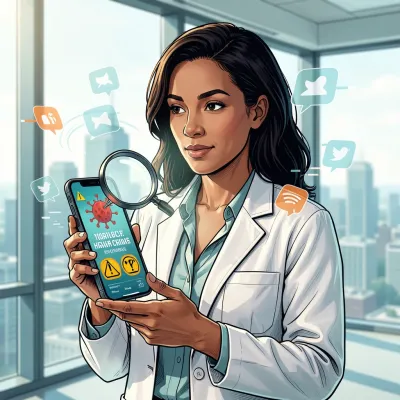
This book provides a comprehensive guide to understanding, detecting, and countering viral health misinformation. It begins by defining the landscape of health misinformation, distinguishing it from disinformation and malinformation, and exploring its rapid spread facilitated by social media algorithms and psychological vulnerabilities. The text details common cognitive biases (confirmation bias, motivated reasoning, illusory truth effect) and emotional drivers (fear, hope, anger) that make individuals susceptible to false claims, while identifying pervasive tropes such as "secret cure" narratives, "us vs. them" conspiracy frameworks, appeals to nature, cherry-picked data, and anecdotal evidence presented as proof.
The book then equips readers with practical tools and methodologies for verification. It introduces the SIFT method (Stop, Investigate the source, Find better coverage, Trace claims to original context) as a core fact-checking framework, alongside essential browser extensions for reverse image search and source analysis. Advanced search techniques, utilization of authoritative public health databases (CDC, WHO, NIH, PubMed), and strategies for assessing online source credibility are thoroughly covered. Additionally, it provides guidance on recognizing logical fallacies and analyzing visual misinformation in images and videos through reverse image search and forensic tools.
For effective debunking, the text emphasizes communication strategies that correct misinformation without inadvertently amplifying it, such as the "truth sandwich" method, empathetic engagement, and audience-tailored messaging. It discusses building trust through transparency and community involvement, addressing emotional responses like fear and hope, collaborating with influencers and community leaders, and monitoring misinformation trends using social listening and network analysis. Legal and ethical considerations, including defamation, copyright, and privacy, are examined, complemented by case studies of successful debunking campaigns (e.g., anti-vaccine myths, MMS, Zika, fluoridation). The book concludes by advocating for building long-term resilience through media literacy, critical thinking, strengthening trust in institutions, empowering community fact-checkers, collaborating with technology platforms for systemic solutions, and preparing for future challenges posed by AI and evolving digital landscapes.
What You'll Find Inside:
- Understanding how health misinformation originates, spreads, and gains traction through psychological vulnerabilities, social media algorithms, and emotional exploitation.
- Learning to identify common tropes and patterns in viral health misinformation including 'secret cure' narratives, conspiracy theories, appeals to nature, and cherry-picked data.
- Mastering practical fact-checking tools and techniques such as browser extensions for verification, advanced search methods, and leveraging public health databases like PubMed and WHO resources.
- Developing effective debunking strategies that correct misinformation without amplifying it, including the 'truth sandwich' method, addressing emotional responses, and crafting audience-specific messages.
- Building long-term resilience against misinformation through media literacy, community fact-checker training, platform collaboration, and proactive prebunking strategies.
Who's It For:
This book is essential for public health professionals (including epidemiologists, health educators, policymakers, and clinicians), content creators (such as bloggers, social media managers, journalists, and educators), and community leaders who need to combat health misinformation in their work. It provides practical tools and strategies specifically designed for those responsible for communicating accurate health information to the public in today's digital landscape.
Table of Contents:
- Introduction
- Chapter 1: The Landscape of Health Misinformation
- Chapter 2: Understanding the Anatomy of a Health Rumor
- Chapter 3: The Psychology Behind Believing False Claims
- Chapter 4: Identifying Common Tropes and Patterns in Viral Misinformation
- Chapter 5: Tracing the Origins of Health Misinformation
- Chapter 6: The Role of Social Media in Amplification
- Chapter 7: Fact-Checking Fundamentals for Public Health
- Chapter 8: Essential Browser Extensions for Verification
- Chapter 9: Leveraging Advanced Search Techniques for Fact-Checking
- Chapter 10: Utilizing Public Health Databases and Resources
- Chapter 11: Assessing the Credibility of Online Sources
- Chapter 12: Recognizing and Countering Logical Fallacies
- Chapter 13: Analyzing Visual Misinformation: Images and Videos
- Chapter 14: Crafting Effective Debunking Messages
- Chapter 15: Communication Strategies: Correcting Without Amplifying
- Chapter 16: Engaging with Audiences and Building Trust
- Chapter 17: Addressing Emotional Responses to Misinformation
- Chapter 18: Working with Influencers and Community Leaders
- Chapter 19: Monitoring and Tracking Misinformation Trends
- Chapter 20: Legal and Ethical Considerations in Debunking
- Chapter 21: Case Studies: Successful Debunking Campaigns
- Chapter 22: Building Resilience Against Future Misinformation
- Chapter 23: Training and Empowering Community Fact-Checkers
- Chapter 24: Collaborating with Technology Platforms
- Chapter 25: The Future of Health Communication in a Misinformation Age
Author:
Published By:
Date Published:
July 17, 2026
Type:
Nonfiction
Language:
English
Word Count:
48,081 words
Reading Time:
3 hours 22 minutes
Sample:
Order:
Order Viral Health Misinformation: Detecting and Debunking False Claims (Hardcover) on MixCache.com:
Buy NowPrint copy is made to order and ships worldwide. Includes the ebook free, ready to read instantly.
$5 account credit for all new MixCache.com accounts, usable toward any ebook purchase!*