Browse by Category
Fiction
- Action & Adventure
- African American
- Anthologies
- Children's Fiction
- Classics
- Comics & Graphic Novels
- Coming of Age
- Contemporary
- Cultural & Regional
- Drama
- Erotica
- Fantasy
- General
- Historical Fiction
- Horror
- Humor & Satire
- Literary Fiction
- Mystery, Thriller & Suspense
- Poetry
- Religious & Inspirational
- Romance
- Science Fiction
- Short Stories
- War & Military
- Westerns
- Women's Fiction
- Young Adult
Non-Fiction
- Antiques & Collectibles
- Arts & Photography
- Biographies & Memoirs
- Business & Money
- Children's Non-Fiction
-
Computers & Technology
- Artificial Intelligence
- Computer Science
- Cybersecurity & Cryptography
- Data Science & Analytics
- Databases & Big Data
- Game Development & Design
- General
- Hardware & DIY
- Mobile App Development
- Networking & Cloud Computing
- Operating Systems
- Programming
- Robotics
- Software
- Software Engineering
- User Experience (UX) & Design
- Web Development & Design
- Cooking, Food & Wine
- Crafts, Hobbies & Home
- Education & Teaching
- Engineering
- General
- Health, Fitness & Dieting
-
History
- African History
- African History - North Africa
- African History - Sub-Saharan Africa
- American History
- American History - 20th Century
- American History - Civil War
- American History - Colonial Period
- Ancient History
- Asian History
- Asian History - China
- Asian History - India
- Asian History - Japan
- Asian History - Southeast Asia
- European History
- European History - Ancient Greece
- European History - Ancient Rome
- European History - Medieval
- European History - Modern
- European History - Renaissance
- General
- Middle Eastern History
- Military History
- Military History - Aviation
- Military History - Naval
- Social & Cultural History
- World History
- Humor & Entertainment
- Industrial Technology
- Language Learning
- Law
- LGBTQ+ Non-Fiction
- Literary Criticism
- Medical Books
- Parenting & Relationships
- Philosophy
- Politics & Social Sciences
- Reference
- Religion & Spirituality
-
Science & Math
- Agricultural Sciences
- Astronomy & Space Science
- Behavioral Sciences
- Biological Sciences
- Botany & Plant Science
- Chemistry
- Earth Sciences
- Engineering - Chemical
- Engineering - Civil
- Engineering - Electrical
- Engineering - Mechanical
- Environment
- General
- Geology
- Mathematics
- Nature & Ecology
- Oceanography
- Paleontology
- Physics
- Statistics
- Self-Help
- Sports & Outdoors
- Study Aids
- Sustainability & Green Living
- Textbooks
- Transportation
- Travel
- True Crime
- Urban Planning & Development
- Veterinary Medicine
- Writing & Publishing
Jump to Section
MixCache.com Total Access
Unlimited reading and audiobooks for every book published by MixCache.com.
Included titles carry the MTA badge.
Learn more →
Education In Slovakia
MTA
A Comprehensive Overview from Early Childhood to Higher Education
About this book:
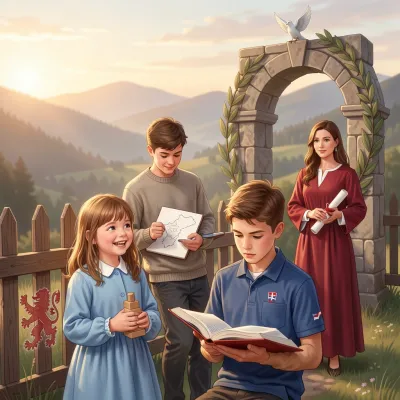
Education in Slovakia encompasses a comprehensive structure from early childhood through higher education, shaped by a rich historical trajectory that includes influences from Great Moravia, Habsburg reforms, Czechoslovak integration, communist centralization, and post‑1989 democratization. The system is grounded in constitutional guarantees of free, compulsory education and regulated by a layered legislative framework—chiefly the Constitution, the School Act, the Act on Pedagogical and Professional Employees, and the Act on Higher Education Institutions—supported by numerous decrees that detail curricula, assessment, and governance. Funding and governance are shared among the central Ministry of Education, regional self‑governing bodies (VÚC), and municipalities, with additional contributions from private and church sources, while school councils provide multi‑stakeholder oversight.
Early childhood education, delivered through nurseries and compulsory kindergarten for five‑year‑olds, emphasizes play‑based development. Primary education spans nine years, divided into a foundational first stage (grades 1‑4) with class teachers and a more specialized second stage (grades 5‑9) introducing subject‑specific instruction. Lower secondary education continues this specialization, preparing students for upper secondary pathways. Upper secondary education bifurcates into academically oriented gymnasiums—offering four‑ or eight‑year programs focused on broad theoretical knowledge and preparation for the Matura exam—and vocational upper secondary schools, which combine general education with specialized training in fields such as engineering, healthcare, and the arts, often culminating in the Matura or a vocational qualification. The Matura exam, comprising compulsory Slovak language and literature, a foreign language, and optional subjects, serves as the national gateway to higher education, assessing both written and oral competencies.
Higher education aligns with the Bologna Process, offering three‑cycle degrees (Bachelor’s, Master’s, Doctoral) through public and private universities and colleges. Admission is decentralized, typically requiring the Matura certificate and, for many programs, additional entrance examinations or interviews. Study programs are diverse across technical, natural, medical, social, humanities, artistic, and pedagogical disciplines, with increasing English‑taught offerings and strong emphasis on research, quality assurance via the Slovak Accreditation Agency for Higher Education, and internationalization through Erasmus+ and EU structural funds. The system also addresses special educational needs through inclusive policies and individualized plans, supports teacher training and lifelong professional development, and provides extensive student welfare services. Ongoing reforms target funding adequacy, teacher attractiveness, curriculum relevance, equity for Roma and other minorities, digital integration, and alignment with EU policies, aiming to build a responsive, inclusive, and globally competitive educational landscape for the future.
What You'll Find Inside:
- Comprehensive coverage of the Slovak education system from early childhood nurseries and kindergartens through university doctoral programs, including the structure of primary, secondary, and higher education.
- Detailed examination of the Matura exam as the critical gateway to higher education, explaining its components, grading, and role in university admissions.
- In-depth analysis of special educational needs and inclusive education policies, including support systems for Roma children and other minority groups.
- Exploration of teacher training and professional development requirements, highlighting the continuous learning and qualification pathways for educators.
- Overview of the legislative and funding frameworks governing education, including the impact of EU policies and the Bologna Process on Slovak higher education.
Who's It For:
This book is ideal for policymakers, education researchers, and administrators seeking a thorough understanding of Slovakia's educational infrastructure and reform efforts. It also serves university students studying comparative education, international educators interested in Central European systems, and anyone involved in cross-border educational collaboration or planning to study or work within the Slovak education system.
Table of Contents:
- Introduction
- Chapter 1 Historical Context of Slovak Education
- Chapter 2 Legislative Framework of the Slovak Educational System
- Chapter 3 Funding and Governance of Education in Slovakia
- Chapter 4 Early Childhood Education: Nurseries and Kindergartens
- Chapter 5 Primary Education: Structure and Curriculum
- Chapter 6 Lower Secondary Education: Transition and Core Subjects
- Chapter 7 General Upper Secondary Education: Gymnasiums
- Chapter 8 Vocational Upper Secondary Education: Specialised Schools
- Chapter 9 The Matura Exam: A Gateway to Higher Education
- Chapter 10 Special Educational Needs and Inclusive Education
- Chapter 11 Teacher Training and Professional Development
- Chapter 12 Higher Education Landscape: Universities and Colleges
- Chapter 13 Admission Processes to Slovak Universities
- Chapter 14 Study Programs and Degrees in Higher Education
- Chapter 15 Quality Assurance in Slovak Higher Education
- Chapter 16 Research and Development in Slovak Academia
- Chapter 17 Internationalization of Slovak Education
- Chapter 18 Lifelong Learning and Adult Education
- Chapter 19 The Role of Technology in Slovak Education
- Chapter 20 Education for Roma Children and Minorities
- Chapter 21 Challenges and Reforms in Slovak Education
- Chapter 22 The Impact of EU Policies on Slovak Education
- Chapter 23 Student Support and Welfare in Slovakia
- Chapter 24 Parental Involvement and Community Engagement
- Chapter 25 Future Prospects and Innovations in Slovak Education
Author:
Published By:
Date Published:
July 3, 2026
Type:
Nonfiction
Language:
English
Word Count:
43,445 words
Reading Time:
3 hours 3 minutes
Sample:
Order:
Order Education In Slovakia (Hardcover) on MixCache.com:
Buy NowPrint copy is made to order and ships worldwide. Includes the ebook free, ready to read instantly.
$5 account credit for all new MixCache.com accounts, usable toward any ebook purchase!*