
Browse by Category
Fiction
- Action & Adventure
- African American
- Anthologies
- Children's Fiction
- Classics
- Comics & Graphic Novels
- Coming of Age
- Contemporary
- Cultural & Regional
- Drama
- Erotica
- Fantasy
- General
- Historical Fiction
- Horror
- Humor & Satire
- Literary Fiction
- Mystery, Thriller & Suspense
- Poetry
- Religious & Inspirational
- Romance
- Science Fiction
- Short Stories
- War & Military
- Westerns
- Women's Fiction
- Young Adult
Non-Fiction
- Antiques & Collectibles
- Arts & Photography
- Biographies & Memoirs
- Business & Money
- Children's Non-Fiction
-
Computers & Technology
- Artificial Intelligence
- Computer Science
- Cybersecurity & Cryptography
- Data Science & Analytics
- Databases & Big Data
- Game Development & Design
- General
- Hardware & DIY
- Mobile App Development
- Networking & Cloud Computing
- Operating Systems
- Programming
- Robotics
- Software
- Software Engineering
- User Experience (UX) & Design
- Web Development & Design
- Cooking, Food & Wine
- Crafts, Hobbies & Home
- Education & Teaching
- Engineering
- General
- Health, Fitness & Dieting
-
History
- African History
- African History - North Africa
- African History - Sub-Saharan Africa
- American History
- American History - 20th Century
- American History - Civil War
- American History - Colonial Period
- Ancient History
- Asian History
- Asian History - China
- Asian History - India
- Asian History - Japan
- Asian History - Southeast Asia
- European History
- European History - Ancient Greece
- European History - Ancient Rome
- European History - Medieval
- European History - Modern
- European History - Renaissance
- General
- Middle Eastern History
- Military History
- Military History - Aviation
- Military History - Naval
- Social & Cultural History
- World History
- Humor & Entertainment
- Industrial Technology
- Language Learning
- Law
- LGBTQ+ Non-Fiction
- Literary Criticism
- Medical Books
- Parenting & Relationships
- Philosophy
- Politics & Social Sciences
- Reference
- Religion & Spirituality
-
Science & Math
- Agricultural Sciences
- Astronomy & Space Science
- Behavioral Sciences
- Biological Sciences
- Botany & Plant Science
- Chemistry
- Earth Sciences
- Engineering - Chemical
- Engineering - Civil
- Engineering - Electrical
- Engineering - Mechanical
- Environment
- General
- Geology
- Mathematics
- Nature & Ecology
- Oceanography
- Paleontology
- Physics
- Statistics
- Self-Help
- Sports & Outdoors
- Study Aids
- Sustainability & Green Living
- Textbooks
- Transportation
- Travel
- True Crime
- Urban Planning & Development
- Veterinary Medicine
- Writing & Publishing
Jump to Section
MixCache.com Total Access
Unlimited reading and audiobooks for every book published by MixCache.com.
Included titles carry the MTA badge.
Learn more →
Education In Libya
MTA
A Comprehensive Overview from Early Childhood to Higher Education
About this book:
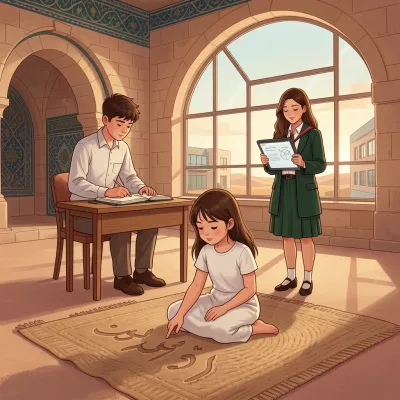
Education in Libya has evolved through a complex tapestry of historical influences and modern challenges, shaping a system that spans early childhood to higher education. Rooted in traditional Islamic institutions like *kuttabs* and *zawiyas*, education in Libya was initially informal and religiously focused. The colonial eras, both Ottoman and Italian, introduced limited formal education, with the latter heavily restricting access for Libyan citizens and leaving a legacy of underdevelopment. Post-independence, especially under King Idris and later Gaddafi, the state systematically expanded access, emphasizing free education at all levels, the establishment of universities, and the introduction of vocational training. Despite this growth, the system has faced persistent challenges due to political instability, conflict since 2011, and the resulting fragmentation of administrative oversight between eastern and western regions.
The contemporary Libyan educational structure is segmented into pre-primary, basic (primary and preparatory), secondary (general and technical streams), and tertiary levels. Access and equity remain paramount concerns, with disparities between urban and rural areas, gender inequalities, and inadequate support for children with disabilities. The impact of prolonged conflict has been devastating, leading to damaged infrastructure, disrupted learning for over 160,000 children, and a significant brain drain of academics. While efforts like the "No Difference" program aim to enhance inclusive education and UNICEF supports emergency schooling and teacher training, challenges in funding, quality assurance, and curriculum relevance persist, exacerbated by economic volatility and dependence on oil revenues.
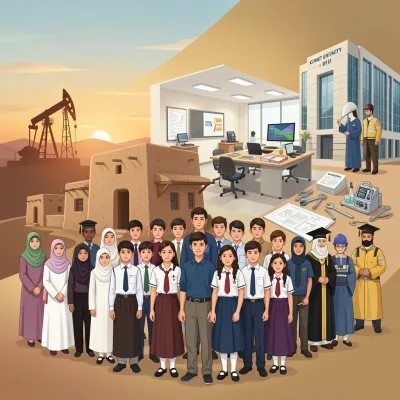
Vocational and technical education plays a vital role in preparing students for the workforce, supported by initiatives like EU-funded projects to modernize skills training and align curricula with labor market demands. Higher education institutions, including universities and technical institutes, strive to maintain quality amid brain drain and administrative fragmentation, with partnerships like Erasmus+ facilitating international collaboration and curriculum alignment. The future of Libyan education hinges on stabilizing governance, investing in teacher professional development, leveraging technology for equitable access, and implementing reforms that prioritize critical thinking, digital literacy, and industry-responsive training to bridge gaps between educational output and employment opportunities.
What You'll Find Inside:
- The book provides a comprehensive historical analysis of Libya's educational system, tracing its evolution from traditional Islamic kuttab schools through Ottoman and Italian colonial influences to the post-independence expansion under the monarchy and the later impacts of the Gaddafi era and the 2011 revolution.
- It examines the multifaceted impact of prolonged conflict on the educational landscape, including physical damage to infrastructure, massive displacement of students and teachers, psychological trauma, fragmentation of administrative oversight, and the disruption of curriculum implementation and data collection.
- Special attention is given to the challenges of human capital in education, such as the acute shortage of qualified teachers, inconsistent professional development, low and delayed salaries, and the devastating effects of brain drain on Libyan academia, which depletes experienced faculty and hampers research capacity.
- The book covers vocational and technical education in depth, exploring its historical development, the 1980 'New Educational Structure' reforms, the persistent societal bias favoring academic paths, weak labor market links, outdated equipment, and the critical need for modernization to align with national economic diversification goals.
- Equity and access issues are systematically addressed, highlighting the rural-urban divide in infrastructure and teacher quality, persistent barriers for children with disabilities, the impact of conflict on school enrollment and retention, and the socioeconomic challenges that prevent vulnerable populations from fully benefiting from Libya's free education system.
Who's It For:
This book is primarily designed for policymakers, ministry officials, and educational administrators seeking a thorough, evidence-based understanding of Libya's complex educational landscape to inform reform and reconstruction efforts. It is also an invaluable resource for academic researchers, university faculty, and graduate students focusing on MENA region education, conflict-sensitive development, or comparative education systems. International organizations, donor agencies, and NGOs operating in Libya will find the detailed analysis of challenges and case studies essential for designing effective capacity-building and humanitarian education interventions.
Table of Contents:
- Introduction
- Chapter 1: Historical Foundations of Libyan Education
- Chapter 2: The Structure of the Libyan Educational System
- Chapter 3: Early Childhood Education: Nurseries and Kindergartens
- Chapter 4: Primary Education: Curriculum and Challenges
- Chapter 5: Preparatory Education: Bridging Primary and Secondary
- Chapter 6: Secondary Education: Streams and Specializations
- Chapter 7: Vocational and Technical Education: Skills for the Workforce
- Chapter 8: Higher Education: Universities and Institutes
- Chapter 9: Access and Equity in Libyan Education
- Chapter 10: Curriculum Development and Educational Standards
- Chapter 11: Teacher Training and Professional Development
- Chapter 12: Educational Administration and Governance
- Chapter 13: Funding and Financing of Education in Libya
- Chapter 14: The Impact of Conflict on the Educational Landscape
- Chapter 15: International Cooperation and Educational Partnerships
- Chapter 16: Special Education: Supporting Diverse Learners
- Chapter 17: Adult Education and Lifelong Learning Initiatives
- Chapter 18: The Role of Technology in Libyan Education
- Chapter 19: Challenges and Reforms in Early Childhood Education
- Chapter 20: Innovations in Primary and Secondary Schooling
- Chapter 21: Quality Assurance in Higher Education
- Chapter 22: Brain Drain and its Impact on Libyan Academia
- Chapter 23: The Future of Educational Policy in Libya
- Chapter 24: Graduate Employment and the Education-Job Market Link
- Chapter 25: Case Studies in Libyan Educational Development
Author:
Published By:
Date Published:
June 28, 2026
Type:
Nonfiction
Language:
English
Word Count:
43,745 words
Reading Time:
3 hours 4 minutes
Sample:
MixCache.com Total Access
Get unlimited access to this book + all books published by MixCache.com for $11.99/month
Subscribe to MTAOr purchase this book individually below
Order:
Buy the Education In Libya ebook on MixCache.com:
Buy Now
Full ebook will be available immediately
- read online or download as a PDF file.
$5 account credit for all new MixCache.com accounts, usable toward any ebook purchase!*


Ratings & Reviews
Ask Questions About This Book
Have a question about the content? Ask our AI assistant!
Start by asking a question about "Education In Libya"
Example: "Does this book mention William Shakespeare?"
Thinking...