Browse by Category
Fiction
- Action & Adventure
- African American
- Anthologies
- Children's Fiction
- Classics
- Comics & Graphic Novels
- Coming of Age
- Contemporary
- Cultural & Regional
- Drama
- Erotica
- Fantasy
- General
- Historical Fiction
- Horror
- Humor & Satire
- Literary Fiction
- Mystery, Thriller & Suspense
- Poetry
- Religious & Inspirational
- Romance
- Science Fiction
- Short Stories
- War & Military
- Westerns
- Women's Fiction
- Young Adult
Non-Fiction
- Antiques & Collectibles
- Arts & Photography
- Biographies & Memoirs
- Business & Money
- Children's Non-Fiction
-
Computers & Technology
- Artificial Intelligence
- Computer Science
- Cybersecurity & Cryptography
- Data Science & Analytics
- Databases & Big Data
- Game Development & Design
- General
- Hardware & DIY
- Mobile App Development
- Networking & Cloud Computing
- Operating Systems
- Programming
- Robotics
- Software
- Software Engineering
- User Experience (UX) & Design
- Web Development & Design
- Cooking, Food & Wine
- Crafts, Hobbies & Home
- Education & Teaching
- Engineering
- General
- Health, Fitness & Dieting
-
History
- African History
- African History - North Africa
- African History - Sub-Saharan Africa
- American History
- American History - 20th Century
- American History - Civil War
- American History - Colonial Period
- Ancient History
- Asian History
- Asian History - China
- Asian History - India
- Asian History - Japan
- Asian History - Southeast Asia
- European History
- European History - Ancient Greece
- European History - Ancient Rome
- European History - Medieval
- European History - Modern
- European History - Renaissance
- General
- Middle Eastern History
- Military History
- Military History - Aviation
- Military History - Naval
- Social & Cultural History
- World History
- Humor & Entertainment
- Industrial Technology
- Language Learning
- Law
- LGBTQ+ Non-Fiction
- Literary Criticism
- Medical Books
- Parenting & Relationships
- Philosophy
- Politics & Social Sciences
- Reference
- Religion & Spirituality
-
Science & Math
- Agricultural Sciences
- Astronomy & Space Science
- Behavioral Sciences
- Biological Sciences
- Botany & Plant Science
- Chemistry
- Earth Sciences
- Engineering - Chemical
- Engineering - Civil
- Engineering - Electrical
- Engineering - Mechanical
- Environment
- General
- Geology
- Mathematics
- Nature & Ecology
- Oceanography
- Paleontology
- Physics
- Statistics
- Self-Help
- Sports & Outdoors
- Study Aids
- Sustainability & Green Living
- Textbooks
- Transportation
- Travel
- True Crime
- Urban Planning & Development
- Veterinary Medicine
- Writing & Publishing
Jump to Section
MixCache.com Total Access
Unlimited reading and audiobooks for every book published by MixCache.com.
Included titles carry the MTA badge.
Learn more →
Education In Nigeria
MTA
A Comprehensive Overview from Early Childhood to Higher Education
About this book:
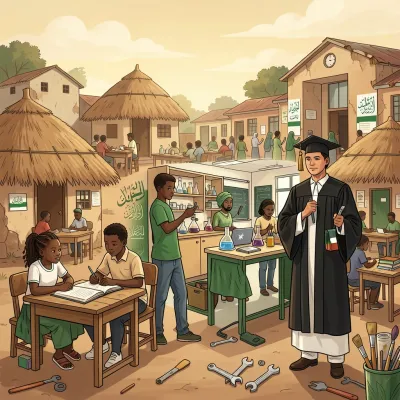
Education in Nigeria traces its roots from indigenous and Islamic learning systems through missionary and colonial interventions to post‑independence nation‑building efforts, culminating in the 6‑3‑3‑4 structure and ongoing policy reforms. The system spans early childhood education, primary and secondary schooling, technical and vocational training, and higher education delivered by universities, polytechnics, and colleges of education, each governed by bodies such as NUC, NBTE, NCCE, and TRCN. Curriculum development is centralized through NERDC and sector‑specific regulators, emphasizing mother‑tongue instruction in early primary, progressive specialization at secondary level, and industry‑aligned TVET programs, while higher education balances teaching, research, and community service under strict minimum academic standards.
Persistent challenges undermine the sector’s potential: inadequate and uneven funding, dilapidated infrastructure, shortages of qualified teachers, overcrowded classrooms, and limited learning materials hinder access and quality, especially in rural and conflict‑affected areas. Gender disparities, socio‑economic barriers, and gaps in provision for special‑needs learners exacerbate inequities, while examination malpractice, brain drain, and a widening digital divide further erode outcomes. Private providers expand access and innovation but often deepen stratification due to cost, and governance is fragmented across federal, state, and local levels, hampered by politicization, corruption, and weak data systems.
Nevertheless, notable progress and emerging trends offer pathways forward. Universal Basic Education legislation, girl‑child education campaigns, conditional cash transfers, and community‑driven initiatives have improved enrollment and retention. Growing emphasis on TVET, entrepreneurship, digital literacy, inclusive education, and lifelong learning aligns curricula with 21st‑century skills and labor‑market needs. Public‑private partnerships, international collaborations, and localized EdTech innovations are beginning to bridge resource gaps, while success stories—such as Anambra State’s teacher development program, community‑led learning in crisis zones, and alumni‑supported university upgrades—demonstrate that targeted investment, strong leadership, and stakeholder engagement can yield tangible gains. Realizing Nigeria’s development goals will depend on sustaining these reforms, ensuring equitable financing, and transforming education into a genuine catalyst for human capital formation and national prosperity.
What You'll Find Inside:
- Comprehensive analysis of Nigeria's educational system from early childhood through higher education, including historical foundations, curriculum development, and pedagogical approaches.
- In-depth exploration of challenges such as funding deficits, teacher shortages, infrastructure gaps, and equity issues affecting rural, girl-child, and special needs education.
- Discussion on technical and vocational education and training (TVET) as a critical pathway for skills development, unemployment reduction, and economic growth.
- Critical examination of policy frameworks, governance structures, and quality assurance mechanisms across primary, secondary, and tertiary institutions.
- Insight into emerging trends like digital learning, gender disparities, brain drain impacts, and successful case studies driving educational reforms and innovation.
Who's It For:
This book is essential for policymakers, educators, and education administrators seeking to understand and address Nigeria's systemic challenges. It benefits researchers, students, and development practitioners interested in comparative education systems and human capital development. Parents, community leaders, and NGOs involved in educational advocacy will find actionable insights on improving access and quality. Academics and stakeholders in international development will appreciate its analysis of global influences and innovative solutions for sustainable educational growth.
Table of Contents:
- Introduction
- Chapter 1: Historical Foundations of Education in Nigeria
- Chapter 2: Early Childhood Education: Structure, Access, and Challenges
- Chapter 3: Primary Education: Curriculum, Pedagogy, and Enrollment Trends
- Chapter 4: Secondary Education: Types, Examinations, and Transition Rates
- Chapter 5: Technical and Vocational Education and Training (TVET)
- Chapter 6: Higher Education: Universities, Polytechnics, and Colleges of Education
- Chapter 7: Curriculum Development and Implementation Across Educational Levels
- Chapter 8: Teacher Education and Professional Development
- Chapter 9: Educational Policy and Governance in Nigeria
- Chapter 10: Funding and Financing of Education
- Chapter 11: Access and Equity in Nigerian Education
- Chapter 12: Gender Disparities in Education
- Chapter 13: Education for Special Needs Learners
- Chapter 14: The Role of Private Education Providers
- Chapter 15: Impact of Technology on Education
- Chapter 16: Quality Assurance and Standards in Education
- Chapter 17: Assessment and Evaluation Practices
- Chapter 18: International Partnerships and Influences on Nigerian Education
- Chapter 19: Education in Crisis and Conflict Zones
- Chapter 20: Brain Drain and its Impact on Human Capital Development
- Chapter 21: Education and National Development Goals
- Chapter 22: Challenges and Opportunities in Rural Education
- Chapter 23: The Role of Parental and Community Engagement
- Chapter 24: Emerging Trends and Future Prospects in Nigerian Education
- Chapter 25: Case Studies and Success Stories in Nigerian Education
Author:
Published By:
Date Published:
July 2, 2026
Type:
Nonfiction
Language:
English
Word Count:
44,811 words
Reading Time:
3 hours 8 minutes
Sample:
Order:
Order Education In Nigeria (Hardcover) on MixCache.com:
Buy NowPrint copy is made to order and ships worldwide. Includes the ebook free, ready to read instantly.
$5 account credit for all new MixCache.com accounts, usable toward any ebook purchase!*