Browse by Category
Fiction
- Action & Adventure
- African American
- Anthologies
- Children's Fiction
- Classics
- Comics & Graphic Novels
- Coming of Age
- Contemporary
- Cultural & Regional
- Drama
- Erotica
- Fantasy
- General
- Historical Fiction
- Horror
- Humor & Satire
- Literary Fiction
- Mystery, Thriller & Suspense
- Poetry
- Religious & Inspirational
- Romance
- Science Fiction
- Short Stories
- War & Military
- Westerns
- Women's Fiction
- Young Adult
Non-Fiction
- Antiques & Collectibles
- Arts & Photography
- Biographies & Memoirs
- Business & Money
- Children's Non-Fiction
-
Computers & Technology
- Artificial Intelligence
- Computer Science
- Cybersecurity & Cryptography
- Data Science & Analytics
- Databases & Big Data
- Game Development & Design
- General
- Hardware & DIY
- Mobile App Development
- Networking & Cloud Computing
- Operating Systems
- Programming
- Robotics
- Software
- Software Engineering
- User Experience (UX) & Design
- Web Development & Design
- Cooking, Food & Wine
- Crafts, Hobbies & Home
- Education & Teaching
- Engineering
- General
- Health, Fitness & Dieting
-
History
- African History
- African History - North Africa
- African History - Sub-Saharan Africa
- American History
- American History - 20th Century
- American History - Civil War
- American History - Colonial Period
- Ancient History
- Asian History
- Asian History - China
- Asian History - India
- Asian History - Japan
- Asian History - Southeast Asia
- European History
- European History - Ancient Greece
- European History - Ancient Rome
- European History - Medieval
- European History - Modern
- European History - Renaissance
- General
- Middle Eastern History
- Military History
- Military History - Aviation
- Military History - Naval
- Social & Cultural History
- World History
- Humor & Entertainment
- Industrial Technology
- Language Learning
- Law
- LGBTQ+ Non-Fiction
- Literary Criticism
- Medical Books
- Parenting & Relationships
- Philosophy
- Politics & Social Sciences
- Reference
- Religion & Spirituality
-
Science & Math
- Agricultural Sciences
- Astronomy & Space Science
- Behavioral Sciences
- Biological Sciences
- Botany & Plant Science
- Chemistry
- Earth Sciences
- Engineering - Chemical
- Engineering - Civil
- Engineering - Electrical
- Engineering - Mechanical
- Environment
- General
- Geology
- Mathematics
- Nature & Ecology
- Oceanography
- Paleontology
- Physics
- Statistics
- Self-Help
- Sports & Outdoors
- Study Aids
- Sustainability & Green Living
- Textbooks
- Transportation
- Travel
- True Crime
- Urban Planning & Development
- Veterinary Medicine
- Writing & Publishing
Jump to Section
MixCache.com Total Access
Unlimited reading and audiobooks for every book published by MixCache.com.
Included titles carry the MTA badge.
Learn more →
Education In Micronesia
MTA
A Comprehensive Overview from Early Childhood to Higher Education
About this book:
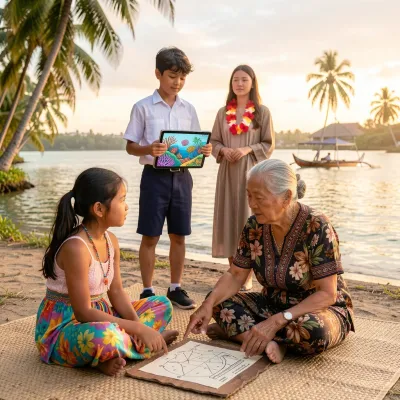
The book, "Education In Micronesia: A Comprehensive Overview from Early Childhood to Higher Education," provides a thorough examination of the educational landscape across the Micronesian region, encompassing the Federated States of Micronesia (FSM), the Republic of Palau, and the Republic of the Marshall Islands (RMI). It traces the historical evolution of learning, beginning with traditional indigenous systems deeply rooted in oral traditions, navigation, and environmental stewardship, which were later transformed through the influences of Spanish, German, Japanese, and American colonial powers. These encounters introduced formal schooling, often driven by missionary efforts and administrative needs, leading to the establishment of structured educational institutions. The narrative highlights the ongoing tension and integration between preserving traditional knowledge and adopting Western pedagogical frameworks, particularly emphasizing the importance of bilingual education policies that balance indigenous languages with English proficiency.
The book then explores the current structure and development of education across all levels. It details the progression from early childhood education, which has seen significant growth through programs like Head Start and national frameworks, to primary and secondary education. The latter is described as largely modeled after American systems but adapted to local contexts, with curriculum development focusing on core subjects like language arts, mathematics, and sciences, while integrating indigenous knowledge. Vocational and technical education is presented as a vital pathway for workforce development, with institutions like the College of Micronesia-FSM, Palau Community College, and the College of the Marshall Islands offering specialized training. The landscape of higher education is highlighted as crucial for human resource development, though it faces challenges such as brain drain and funding sustainability.
Central to the discussion are the persistent challenges and innovative solutions within Micronesian education. Geographic isolation, resource scarcity, and the need for equitable access across scattered islands are major obstacles, addressed through distance learning initiatives, community partnerships, and mobile educational services. The book underscores the critical role of international aid, particularly through the Compacts of Free Association with the U.S., in funding infrastructure, teacher training, and programs. Additionally, it examines emerging priorities such as special education, inclusive practices, and the integration of education for sustainable development, recognizing the region's vulnerability to climate change. Policies and reforms are shown to be dynamic, aiming to enhance quality, strengthen teacher training, and ensure curriculum relevance to modern global and local demands.
Looking toward the future, the book envisions an educational system that is both globally competitive and deeply rooted in Micronesian cultural identity. This vision emphasizes the full integration of traditional knowledge into curricula, the universal access to technology and digital literacy, and the development of resilient, climate-adapted schooling systems. It acknowledges ongoing struggles with sustainable funding and talent retention but asserts that through strategic partnerships, curriculum innovation, and a steadfast commitment to equity, Micronesian nations can empower their youth to become leaders and innovators. The narrative concludes by affirming education as a linchpin for the sovereignty, sustainability, and cultural preservation of these island communities in the 21st century.
What You'll Find Inside:
- Explores the historical foundations of Micronesian education, from traditional learning systems and indigenous knowledge to the profound impacts of Spanish, German, Japanese, and American colonial influences on formal schooling.
- Analyzes the structure and challenges of primary and secondary education across Micronesia, including curriculum development, bilingual education policies, and efforts to bridge geographical and resource gaps for equitable access.
- Examines the evolution and significance of vocational and technical education (VTE) pathways in preparing students for workforce participation and addressing national development needs in the FSM, Palau, and RMI.
- Highlights critical challenges such as funding constraints, teacher training, and the integration of inclusive practices for students with special needs and disabilities within diverse island communities.
- Addresses the urgent intersection of education and climate change, detailing how rising sea levels, extreme weather, and environmental shifts threaten educational infrastructure and necessitate adaptive strategies for resilient learning systems.
Who's It For:
This book is designed for educators, educational policymakers, and researchers focused on Pacific Island education systems, as well as development professionals and leaders in Micronesia seeking insights into educational reform, cultural preservation, and sustainable development. Students and scholars in the fields of education, anthropology, and international development will find it valuable for understanding the unique context of Micronesian schooling and its global implications.
Table of Contents:
- Introduction
- Chapter 1: The Historical Roots of Education in Micronesia
- Chapter 2: Traditional Learning Systems and Indigenous Knowledge
- Chapter 3: The Influence of Colonial Powers on Micronesian Education
- Chapter 4: Establishing Formal Education: Early Schools and Missions
- Chapter 5: The Development of Early Childhood Education in Micronesia
- Chapter 6: Current Frameworks and Policies for Early Childhood Education
- Chapter 7: Primary Education Across the Micronesian Islands
- Chapter 8: Curriculum Development and Implementation in Primary Schools
- Chapter 9: Challenges and Innovations in Micronesian Primary Education
- Chapter 10: Secondary Education: Structure and Access
- Chapter 11: Vocational and Technical Education Pathways
- Chapter 12: Preparing for Higher Education: Bridging Programs and Support
- Chapter 13: The Landscape of Higher Education in Micronesia
- Chapter 14: Key Institutions and Their Roles in Post-Secondary Learning
- Chapter 15: Distance Learning and Technology in Micronesian Education
- Chapter 16: Teacher Training and Professional Development
- Chapter 17: Language and Literacy Education in a Multilingual Context
- Chapter 18: Special Education and Inclusive Practices
- Chapter 19: Funding and Resource Allocation in Micronesian Education
- Chapter 20: The Role of International Aid and Partnerships
- Chapter 21: Education for Sustainable Development in Micronesia
- Chapter 22: Addressing Educational Disparities and Equity
- Chapter 23: The Impact of Climate Change on Educational Infrastructure and Access
- Chapter 24: Educational Policy Reform and Future Directions
- Chapter 25: The Future of Education in Micronesia: Vision and Challenges
Author:
Published By:
Date Published:
June 30, 2026
Type:
Nonfiction
Language:
English
Word Count:
39,012 words
Reading Time:
2 hours 44 minutes
Sample:
Order:
Order Education In Micronesia (Paperback) on MixCache.com:
Buy NowPrint copy is made to order and ships worldwide. Includes the ebook free, ready to read instantly.
$5 account credit for all new MixCache.com accounts, usable toward any ebook purchase!*