Browse by Category
Fiction
- Action & Adventure
- African American
- Anthologies
- Children's Fiction
- Classics
- Comics & Graphic Novels
- Coming of Age
- Contemporary
- Cultural & Regional
- Drama
- Erotica
- Fantasy
- General
- Historical Fiction
- Horror
- Humor & Satire
- Literary Fiction
- Mystery, Thriller & Suspense
- Poetry
- Religious & Inspirational
- Romance
- Science Fiction
- Short Stories
- War & Military
- Westerns
- Women's Fiction
- Young Adult
Non-Fiction
- Antiques & Collectibles
- Arts & Photography
- Biographies & Memoirs
- Business & Money
- Children's Non-Fiction
-
Computers & Technology
- Artificial Intelligence
- Computer Science
- Cybersecurity & Cryptography
- Data Science & Analytics
- Databases & Big Data
- Game Development & Design
- General
- Hardware & DIY
- Mobile App Development
- Networking & Cloud Computing
- Operating Systems
- Programming
- Robotics
- Software
- Software Engineering
- User Experience (UX) & Design
- Web Development & Design
- Cooking, Food & Wine
- Crafts, Hobbies & Home
- Education & Teaching
- Engineering
- General
- Health, Fitness & Dieting
-
History
- African History
- African History - North Africa
- African History - Sub-Saharan Africa
- American History
- American History - 20th Century
- American History - Civil War
- American History - Colonial Period
- Ancient History
- Asian History
- Asian History - China
- Asian History - India
- Asian History - Japan
- Asian History - Southeast Asia
- European History
- European History - Ancient Greece
- European History - Ancient Rome
- European History - Medieval
- European History - Modern
- European History - Renaissance
- General
- Middle Eastern History
- Military History
- Military History - Aviation
- Military History - Naval
- Social & Cultural History
- World History
- Humor & Entertainment
- Industrial Technology
- Language Learning
- Law
- LGBTQ+ Non-Fiction
- Literary Criticism
- Medical Books
- Parenting & Relationships
- Philosophy
- Politics & Social Sciences
- Reference
- Religion & Spirituality
-
Science & Math
- Agricultural Sciences
- Astronomy & Space Science
- Behavioral Sciences
- Biological Sciences
- Botany & Plant Science
- Chemistry
- Earth Sciences
- Engineering - Chemical
- Engineering - Civil
- Engineering - Electrical
- Engineering - Mechanical
- Environment
- General
- Geology
- Mathematics
- Nature & Ecology
- Oceanography
- Paleontology
- Physics
- Statistics
- Self-Help
- Sports & Outdoors
- Study Aids
- Sustainability & Green Living
- Textbooks
- Transportation
- Travel
- True Crime
- Urban Planning & Development
- Veterinary Medicine
- Writing & Publishing
Jump to Section
MixCache.com Total Access
Unlimited reading and audiobooks for every book published by MixCache.com.
Included titles carry the MTA badge.
Learn more →
Education In Jordan
MTA
A Comprehensive Overview from Early Childhood to Higher Education
About this book:
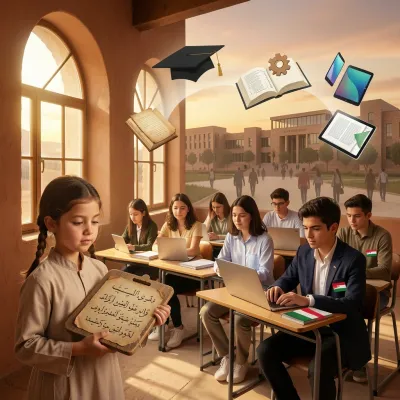
Education in Jordan has evolved from informal religious instruction in mosques and Kuttabs to a comprehensive, modern system encompassing early childhood, basic, secondary, and higher education. Following independence, the state prioritized schooling as a strategic investment in human capital, expanding access through legislation that made basic education compulsory for ten years and establishing the University of Jordan in 1962. The system is structured under two main authorities: the Ministry of Education, which governs pre-primary through secondary schooling, and the Ministry of Higher Education and Scientific Research, which oversees universities and community colleges. This historical progression reflects a nation that has consistently valued knowledge as its most enduring resource, building a diversified educational landscape that includes public and private schools, academic and vocational tracks, and a growing higher education sector.
The educational journey begins with early childhood education, where nurseries and kindergartens focus on holistic development, though access remains uneven. Primary education builds foundational literacy, numeracy, and critical thinking through a centralized curriculum emphasizing Arabic, English, mathematics, sciences, and social studies. Secondary education then branches into academic streams—scientific, literary, and IT—culminating in the high-stakes Tawjihi examination, which determines university admission, or vocational tracks that provide practical skills for direct labor market entry. Higher education offers a mix of public and private universities and community colleges, granting diplomas and degrees across diverse fields. Throughout these stages, the system grapples with aligning curricula and teaching methods with twenty-first-century skills, often balancing student-centered pedagogical reforms against exam-driven instruction.
Quality assurance and teacher development are central to the system’s integrity. The Ministry of Education supervises schools through inspections and national exams, while the Accreditation and Quality Assurance Commission for Higher Education Institutions ensures tertiary programs meet standards. Teacher preparation has shifted to university-based programs, with ongoing professional development focusing on technology integration and innovative pedagogies. However, challenges persist, including disparities between urban and rural schools, the stigma attached to vocational training, and the pressure of the Tawjihi on students and teachers. The influx of Syrian refugees further strained resources, prompting double-shift schooling and international aid to maintain access and quality.
Contemporary reforms emphasize digitalization, inclusion, and sustainable development. The Education Reform for the Knowledge Economy initiative spurred curriculum updates and technology adoption, accelerated by the COVID-19 pandemic’s push toward e-learning. Special education policies promote inclusive classrooms, while environmental and sustainability concepts are woven into curricula. Adult education and lifelong learning initiatives offer second-chance literacy and vocational training. Governance remains centralized but is gradually embracing data-driven decision-making and administrative decentralization. Looking ahead, Jordan’s strategic vision focuses on expanding early childhood education, modernizing curricula, elevating the teaching profession, strengthening technical and vocational training, and deepening technology integration to build a resilient, globally competitive education system.
What You'll Find Inside:
- Explores the historical evolution of Jordan's education system from Ottoman rule to modern innovations, highlighting key milestones like the 1964 Education Law and the establishment of the University of Jordan.
- Details the structure of the education system, including governance by the Ministry of Education and Ministry of Higher Education, and the division between public and private institutions across early childhood, basic, secondary, and higher education.
- Analyzes the role of Technical and Vocational Education and Training (TVET) and vocational secondary tracks in addressing labor market needs and reducing youth unemployment.
- Examines the impact of the Syrian refugee crisis on Jordan's education system, including challenges like overcrowding and the expansion of informal learning programs to support vulnerable populations.
- Discusses ongoing educational challenges and opportunities, such as digitalization, curriculum reforms for 21st-century skills, and strategies for sustainable development and international cooperation.
Who's It For:
This book is essential for policymakers, educators, researchers, and students interested in understanding the complexities of educational systems in the Middle East. It provides valuable insights for professionals working in international education, development, and humanitarian sectors, particularly those focusing on refugee education and inclusive practices in resource-constrained environments.
Table of Contents:
- Introduction
- Chapter 1: Historical Development of Education in Jordan
- Chapter 2: The Structure of the Jordanian Education System
- Chapter 3: Early Childhood Education: Nurseries and Kindergartens
- Chapter 4: Primary Education: Curriculum and Pedagogy
- Chapter 5: Secondary Education: Academic and Vocational Tracks
- Chapter 6: Technical and Vocational Education and Training (TVET)
- Chapter 7: Higher Education Landscape: Universities and Community Colleges
- Chapter 8: Admission Systems and Pathways to Higher Education
- Chapter 9: Quality Assurance and Accreditation in Jordanian Education
- Chapter 10: Teacher Education and Professional Development
- Chapter 11: Curriculum Development and Educational Reforms
- Chapter 12: Educational Policies and Legislation
- Chapter 13: Funding and Financing of Education
- Chapter 14: The Role of Private Education in Jordan
- Chapter 15: Special Education and Inclusive Practices
- Chapter 16: Digitalization and Technology in Education
- Chapter 17: Challenges and Opportunities in Jordanian Education
- Chapter 18: Education for Sustainable Development in Jordan
- Chapter 19: International Cooperation and Partnerships in Education
- Chapter 20: The Impact of Syrian Refugee Crisis on Education in Jordan
- Chapter 21: Adult Education and Lifelong Learning Initiatives
- Chapter 22: Educational Research and Innovation
- Chapter 23: Student Assessment and Evaluation Practices
- Chapter 24: Governance and Administration of the Education System
- Chapter 25: Future Outlook and Strategic Directions for Education in Jordan
Author:
Published By:
Date Published:
June 27, 2026
Type:
Nonfiction
Language:
English
Word Count:
49,672 words
Reading Time:
3 hours 29 minutes
Sample:
Order:
Order Education In Jordan (Paperback) on MixCache.com:
Buy NowPrint copy is made to order and ships worldwide. Includes the ebook free, ready to read instantly.
$5 account credit for all new MixCache.com accounts, usable toward any ebook purchase!*