Browse by Category
Fiction
- Action & Adventure
- African American
- Anthologies
- Children's Fiction
- Classics
- Comics & Graphic Novels
- Coming of Age
- Contemporary
- Cultural & Regional
- Drama
- Erotica
- Fantasy
- General
- Historical Fiction
- Horror
- Humor & Satire
- Literary Fiction
- Mystery, Thriller & Suspense
- Poetry
- Religious & Inspirational
- Romance
- Science Fiction
- Short Stories
- War & Military
- Westerns
- Women's Fiction
- Young Adult
Non-Fiction
- Antiques & Collectibles
- Arts & Photography
- Biographies & Memoirs
- Business & Money
- Children's Non-Fiction
-
Computers & Technology
- Artificial Intelligence
- Computer Science
- Cybersecurity & Cryptography
- Data Science & Analytics
- Databases & Big Data
- Game Development & Design
- General
- Hardware & DIY
- Mobile App Development
- Networking & Cloud Computing
- Operating Systems
- Programming
- Robotics
- Software
- Software Engineering
- User Experience (UX) & Design
- Web Development & Design
- Cooking, Food & Wine
- Crafts, Hobbies & Home
- Education & Teaching
- Engineering
- General
- Health, Fitness & Dieting
-
History
- African History
- African History - North Africa
- African History - Sub-Saharan Africa
- American History
- American History - 20th Century
- American History - Civil War
- American History - Colonial Period
- Ancient History
- Asian History
- Asian History - China
- Asian History - India
- Asian History - Japan
- Asian History - Southeast Asia
- European History
- European History - Ancient Greece
- European History - Ancient Rome
- European History - Medieval
- European History - Modern
- European History - Renaissance
- General
- Middle Eastern History
- Military History
- Military History - Aviation
- Military History - Naval
- Social & Cultural History
- World History
- Humor & Entertainment
- Industrial Technology
- Language Learning
- Law
- LGBTQ+ Non-Fiction
- Literary Criticism
- Medical Books
- Parenting & Relationships
- Philosophy
- Politics & Social Sciences
- Reference
- Religion & Spirituality
-
Science & Math
- Agricultural Sciences
- Astronomy & Space Science
- Behavioral Sciences
- Biological Sciences
- Botany & Plant Science
- Chemistry
- Earth Sciences
- Engineering - Chemical
- Engineering - Civil
- Engineering - Electrical
- Engineering - Mechanical
- Environment
- General
- Geology
- Mathematics
- Nature & Ecology
- Oceanography
- Paleontology
- Physics
- Statistics
- Self-Help
- Sports & Outdoors
- Study Aids
- Sustainability & Green Living
- Textbooks
- Transportation
- Travel
- True Crime
- Urban Planning & Development
- Veterinary Medicine
- Writing & Publishing
Jump to Section
MixCache.com Total Access
Unlimited reading and audiobooks for every book published by MixCache.com.
Included titles carry the MTA badge.
Learn more →
Pest Control
A History of Humanity's War Against Nature's Most Persistent Foes
About this book:
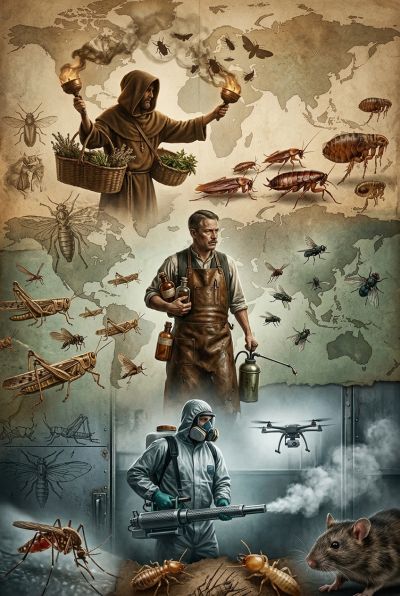
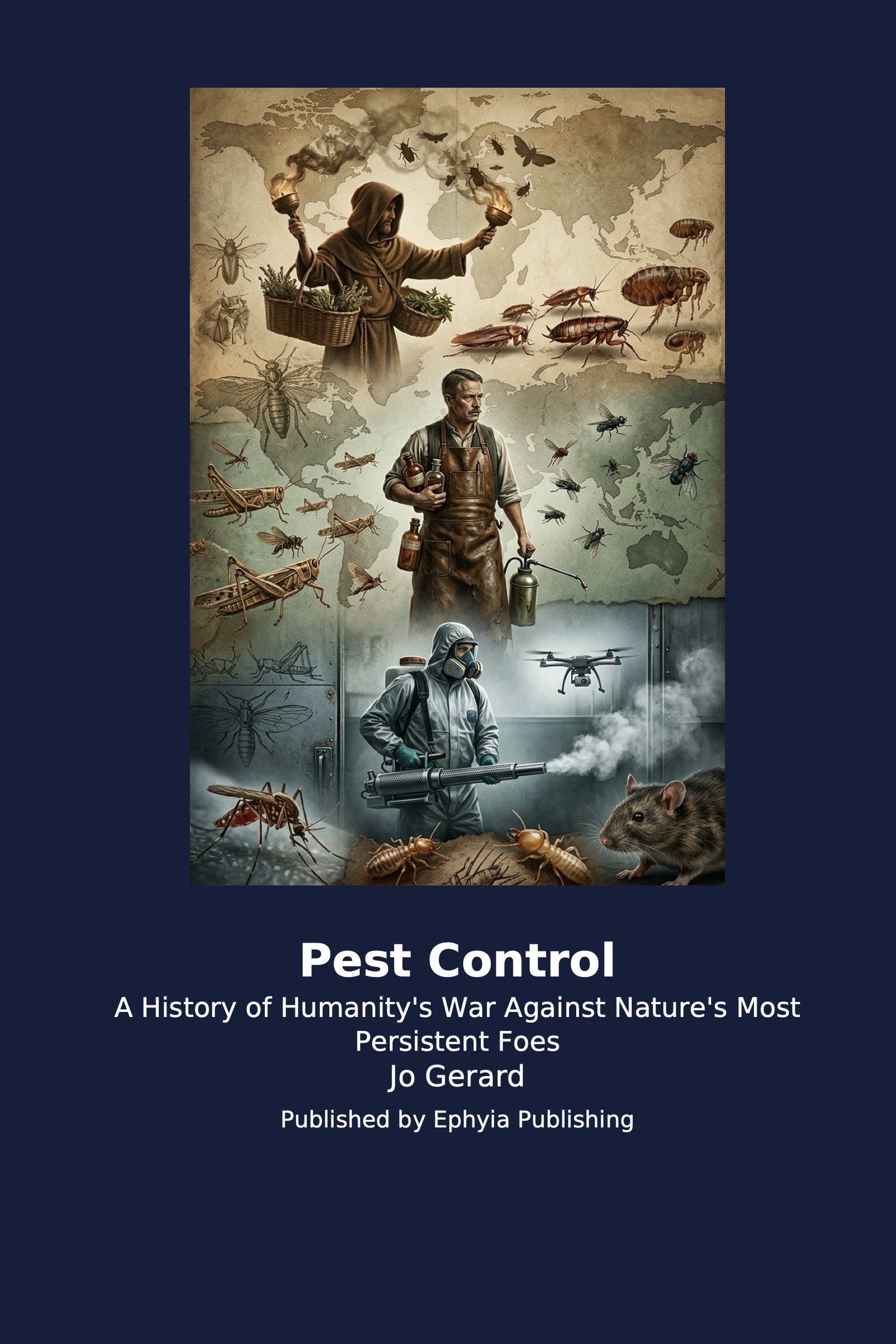
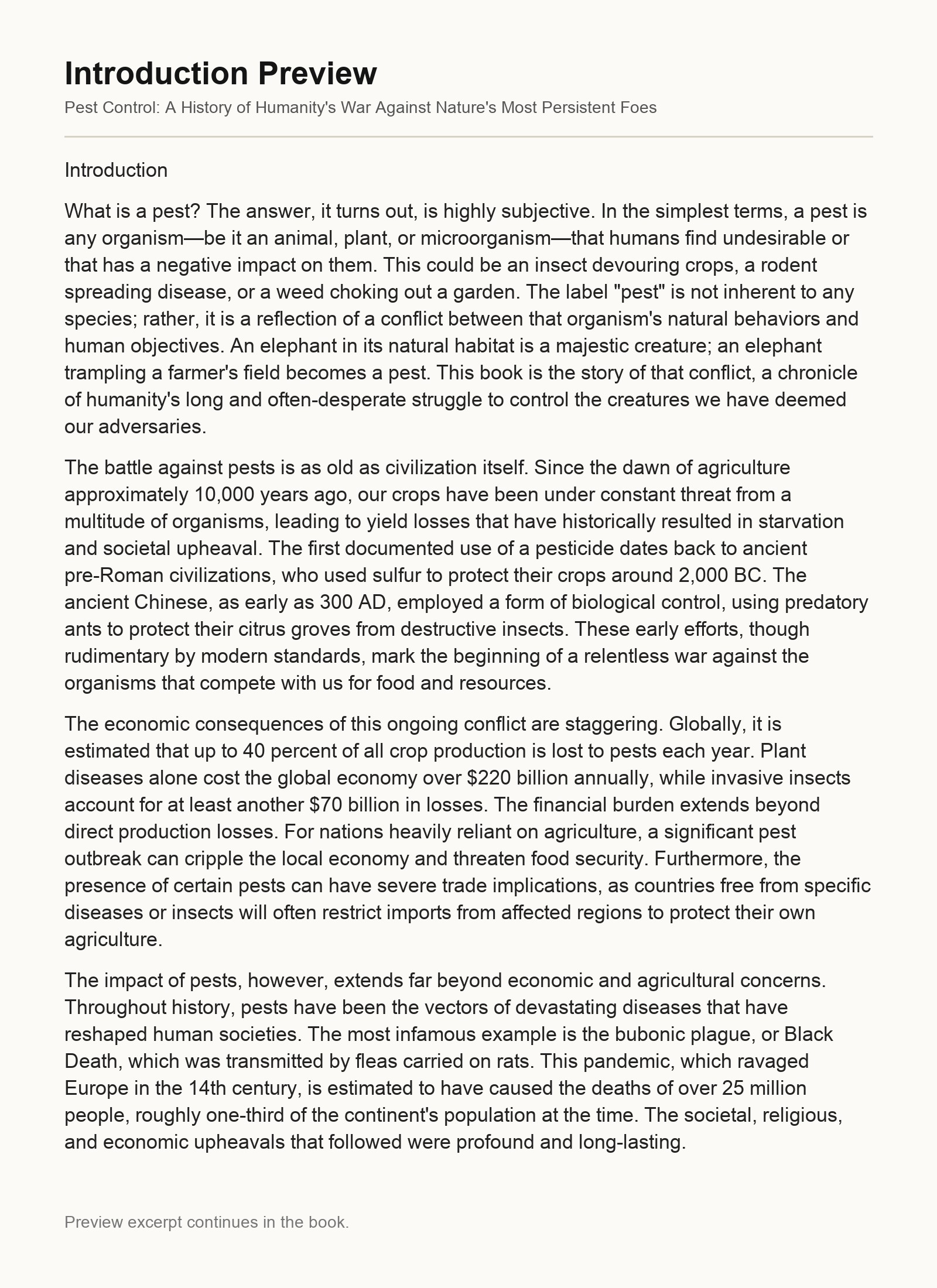
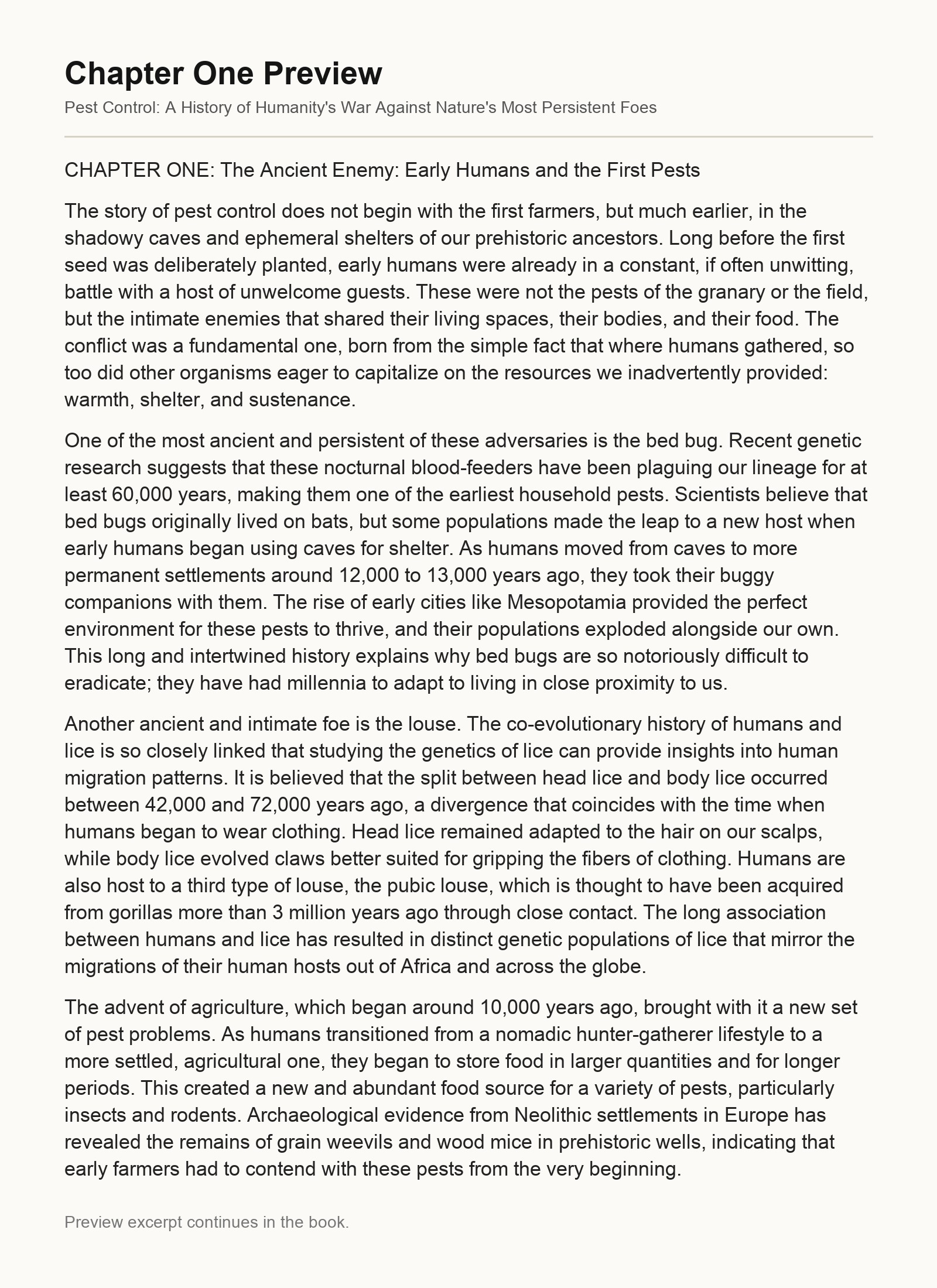
Pest Control: A History of Humanity's War Against Nature's Most Persistent Foes takes readers on an expansive journey from the first encounters of prehistoric humans with bed bugs and lice to the cutting‑edge laboratories where CRISPR gene drives are being tested. Along the way you will discover how early farmers used fire, aromatic plants, and simple traps to protect their stores, how ancient Egyptians turned cats into granary guardians, and how the Romans engineered airtight silos that used carbon dioxide to suffocate insects. Each chapter reveals the ingenuity—and sometimes the desperation—of societies as they turned observation, trial, and error into the first tools of pest management.
The narrative then follows the rise of chemical warfare, from the accidental discovery of Bordeaux mixture to the mass production of DDT and its triumph in World War II typhus campaigns, before confronting the unintended consequences exposed in Rachel Carson’s Silent Spring. You will learn how persistence and broad toxicity led to bioaccumulation, the near‑extinction of birds of prey, and the birth of the modern environmental movement, while also witnessing the relentless evolutionary arms race that spawned pesticide resistance in everything from the Colorado potato beetle to bed bugs, forcing a continual search for new solutions.
Beyond chemicals, the book explores the sophisticated world of biological control—where weaver ants, Vedalia beetles, and parasitoid wasps become living pesticides—and the principles of Integrated Pest Management that prioritize monitoring, thresholds, and prevention over blanket spraying. You will see how urban dwellers battle cockroaches, ants, and bed bugs with baits, heat, and exclusion, how farmers now deploy pheromone traps, laser‑weeding robots, and drone‑released beneficial insects, and how public health officials track mosquito‑borne diseases through surveillance networks and targeted larviciding.
Looking ahead, the text confronts the challenges of a warming world that expands pest ranges, the ethical dilemmas of gene drives that could erase entire species, and the promise of sustainable agriculture built on healthy soils, cover crops, and push‑pull systems. By the end, readers will not only understand the technical evolution of pest control but also appreciate the deeper story of humanity’s relationship with nature—a tale of innovation, unintended consequences, and the ongoing quest for a smarter, more balanced coexistence with the organisms we label as pests.
What You'll Find Inside:
- The historical evolution of pest control from ancient techniques like fire and biological agents to modern genetic and digital technologies
- The dual-edged nature of chemical pesticides exemplified by DDT's disease-fighting success versus its environmental devastation highlighted in Silent Spring
- How pests rapidly develop resistance through metabolic, target-site, and behavioral mechanisms, creating an ongoing pesticide treadmill
- The shift toward integrated and sustainable strategies including IPM, biological control, and ecological approaches that work with natural systems
- Emerging frontiers in pest management including gene drives, AI-driven precision applications, and adaptive strategies for climate-change-driven pest expansion
Who's It For:
This book is ideal for students, researchers, and professionals in entomology, environmental science, public health, agriculture, and urban pest management who seek a comprehensive historical and technical understanding of humanity's struggle with pests. It also appeals to educated general readers interested in narrative non-fiction that explores how pest control has shaped human history, ecology, and technological innovation, particularly those concerned with sustainable solutions and future challenges like climate change and genetic technologies.
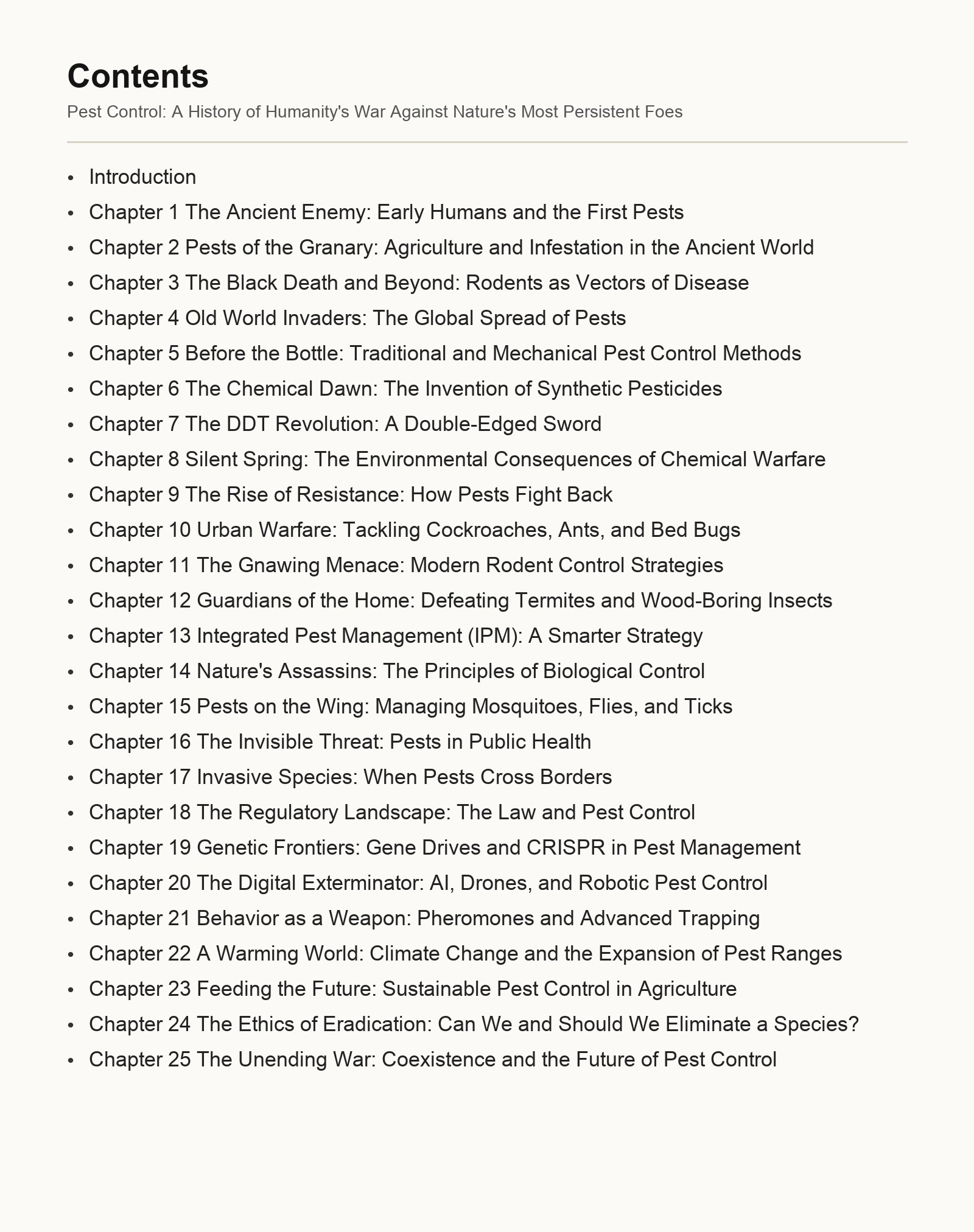
Table of Contents:
- Introduction
- Chapter 1 The Ancient Enemy: Early Humans and the First Pests
- Chapter 2 Pests of the Granary: Agriculture and Infestation in the Ancient World
- Chapter 3 The Black Death and Beyond: Rodents as Vectors of Disease
- Chapter 4 Old World Invaders: The Global Spread of Pests
- Chapter 5 Before the Bottle: Traditional and Mechanical Pest Control Methods
- Chapter 6 The Chemical Dawn: The Invention of Synthetic Pesticides
- Chapter 7 The DDT Revolution: A Double-Edged Sword
- Chapter 8 Silent Spring: The Environmental Consequences of Chemical Warfare
- Chapter 9 The Rise of Resistance: How Pests Fight Back
- Chapter 10 Urban Warfare: Tackling Cockroaches, Ants, and Bed Bugs
- Chapter 11 The Gnawing Menace: Modern Rodent Control Strategies
- Chapter 12 Guardians of the Home: Defeating Termites and Wood-Boring Insects
- Chapter 13 Integrated Pest Management (IPM): A Smarter Strategy
- Chapter 14 Nature's Assassins: The Principles of Biological Control
- Chapter 15 Pests on the Wing: Managing Mosquitoes, Flies, and Ticks
- Chapter 16 The Invisible Threat: Pests in Public Health
- Chapter 17 Invasive Species: When Pests Cross Borders
- Chapter 18 The Regulatory Landscape: The Law and Pest Control
- Chapter 19 Genetic Frontiers: Gene Drives and CRISPR in Pest Management
- Chapter 20 The Digital Exterminator: AI, Drones, and Robotic Pest Control
- Chapter 21 Behavior as a Weapon: Pheromones and Advanced Trapping
- Chapter 22 A Warming World: Climate Change and the Expansion of Pest Ranges
- Chapter 23 Feeding the Future: Sustainable Pest Control in Agriculture
- Chapter 24 The Ethics of Eradication: Can We and Should We Eliminate a Species?
- Chapter 25 The Unending War: Coexistence and the Future of Pest Control
Author:
Published By:
Date Published:
May 27, 2026
Type:
Nonfiction
Language:
English
Also Available In:
Word Count:
45,782 words
Reading Time:
3 hours 12 minutes
Sample:
Order:
Order Pest Control (Paperback) on MixCache.com:
Buy NowPrint copy is made to order and ships worldwide. Includes the ebook free, ready to read instantly.
$5 account credit for all new MixCache.com accounts, usable toward any ebook purchase!*