
Browse by Category
Fiction
- Action & Adventure
- African American
- Anthologies
- Children's Fiction
- Classics
- Comics & Graphic Novels
- Coming of Age
- Contemporary
- Cultural & Regional
- Drama
- Erotica
- Fantasy
- General
- Historical Fiction
- Horror
- Humor & Satire
- Literary Fiction
- Mystery, Thriller & Suspense
- Poetry
- Religious & Inspirational
- Romance
- Science Fiction
- Short Stories
- War & Military
- Westerns
- Women's Fiction
- Young Adult
Non-Fiction
- Antiques & Collectibles
- Arts & Photography
- Biographies & Memoirs
- Business & Money
- Children's Non-Fiction
-
Computers & Technology
- Artificial Intelligence
- Computer Science
- Cybersecurity & Cryptography
- Data Science & Analytics
- Databases & Big Data
- Game Development & Design
- General
- Hardware & DIY
- Mobile App Development
- Networking & Cloud Computing
- Operating Systems
- Programming
- Robotics
- Software
- Software Engineering
- User Experience (UX) & Design
- Web Development & Design
- Cooking, Food & Wine
- Crafts, Hobbies & Home
- Education & Teaching
- Engineering
- General
- Health, Fitness & Dieting
-
History
- African History
- African History - North Africa
- African History - Sub-Saharan Africa
- American History
- American History - 20th Century
- American History - Civil War
- American History - Colonial Period
- Ancient History
- Asian History
- Asian History - China
- Asian History - India
- Asian History - Japan
- Asian History - Southeast Asia
- European History
- European History - Ancient Greece
- European History - Ancient Rome
- European History - Medieval
- European History - Modern
- European History - Renaissance
- General
- Middle Eastern History
- Military History
- Military History - Aviation
- Military History - Naval
- Social & Cultural History
- World History
- Humor & Entertainment
- Industrial Technology
- Language Learning
- Law
- LGBTQ+ Non-Fiction
- Literary Criticism
- Medical Books
- Parenting & Relationships
- Philosophy
- Politics & Social Sciences
- Reference
- Religion & Spirituality
-
Science & Math
- Agricultural Sciences
- Astronomy & Space Science
- Behavioral Sciences
- Biological Sciences
- Botany & Plant Science
- Chemistry
- Earth Sciences
- Engineering - Chemical
- Engineering - Civil
- Engineering - Electrical
- Engineering - Mechanical
- Environment
- General
- Geology
- Mathematics
- Nature & Ecology
- Oceanography
- Paleontology
- Physics
- Statistics
- Self-Help
- Sports & Outdoors
- Study Aids
- Sustainability & Green Living
- Textbooks
- Transportation
- Travel
- True Crime
- Urban Planning & Development
- Veterinary Medicine
- Writing & Publishing
Jump to Section
MixCache.com Total Access
Unlimited reading and audiobooks for every book published by MixCache.com.
Included titles carry the MTA badge.
Learn more →A History of The Philippines
About this book:
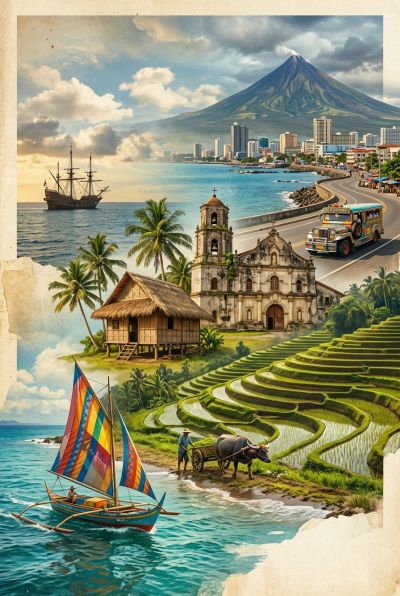
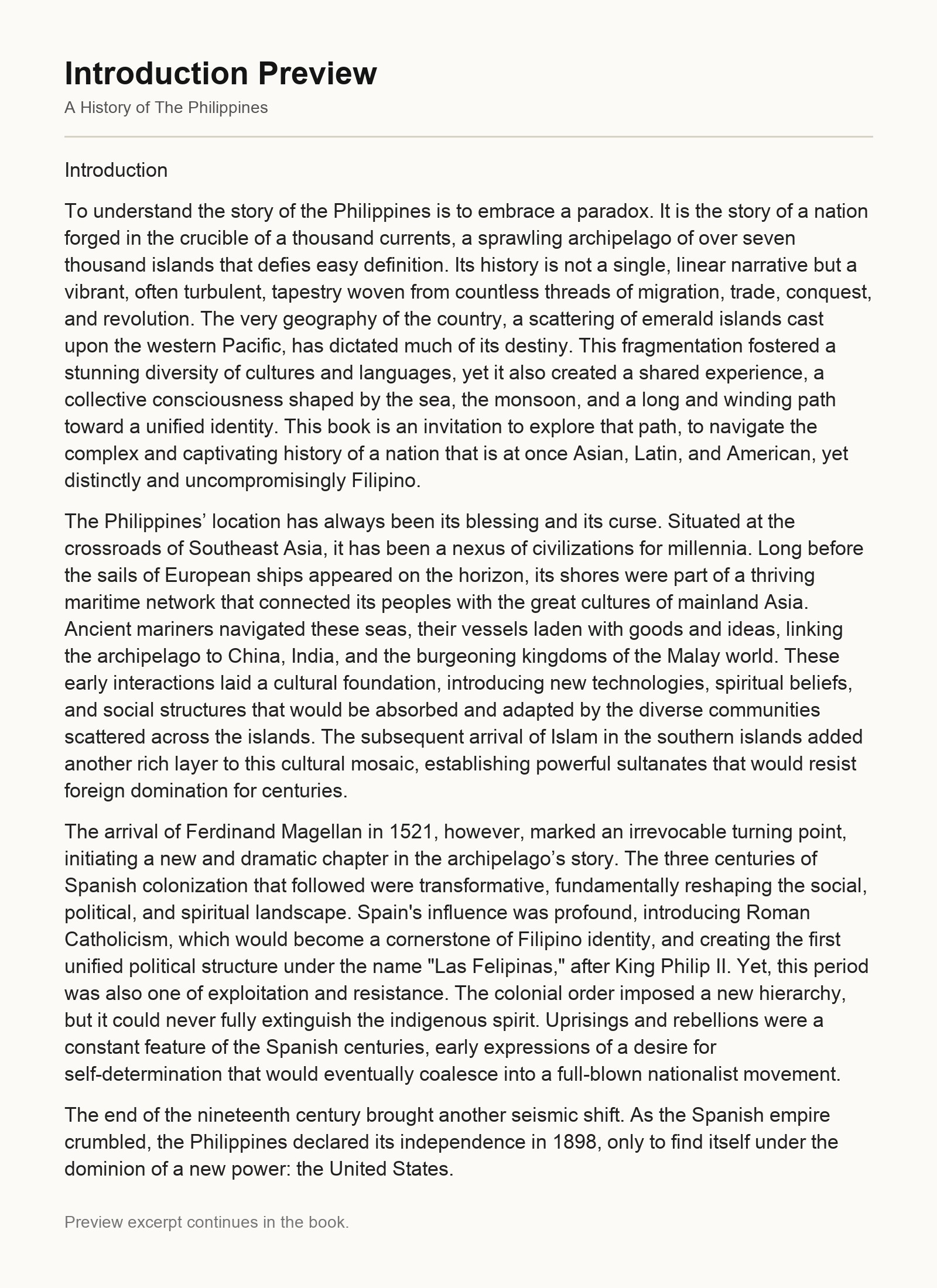
This book invites readers on a comprehensive journey through the complex and captivating history of the Philippines, revealing how a nation forged in the crucible of diverse influences developed its unique identity. Rather than presenting history as something done to the Philippines, this narrative centers on what Filipinos have done for themselves - their struggles, adaptations, resistances, and continuous efforts to shape their own destiny across more than seven thousand islands. Readers will experience the evolution from scattered pre-colonial communities through centuries of foreign encounter, discovering how geography both fostered stunning diversity and created shared experiences that ultimately contributed to a national consciousness.
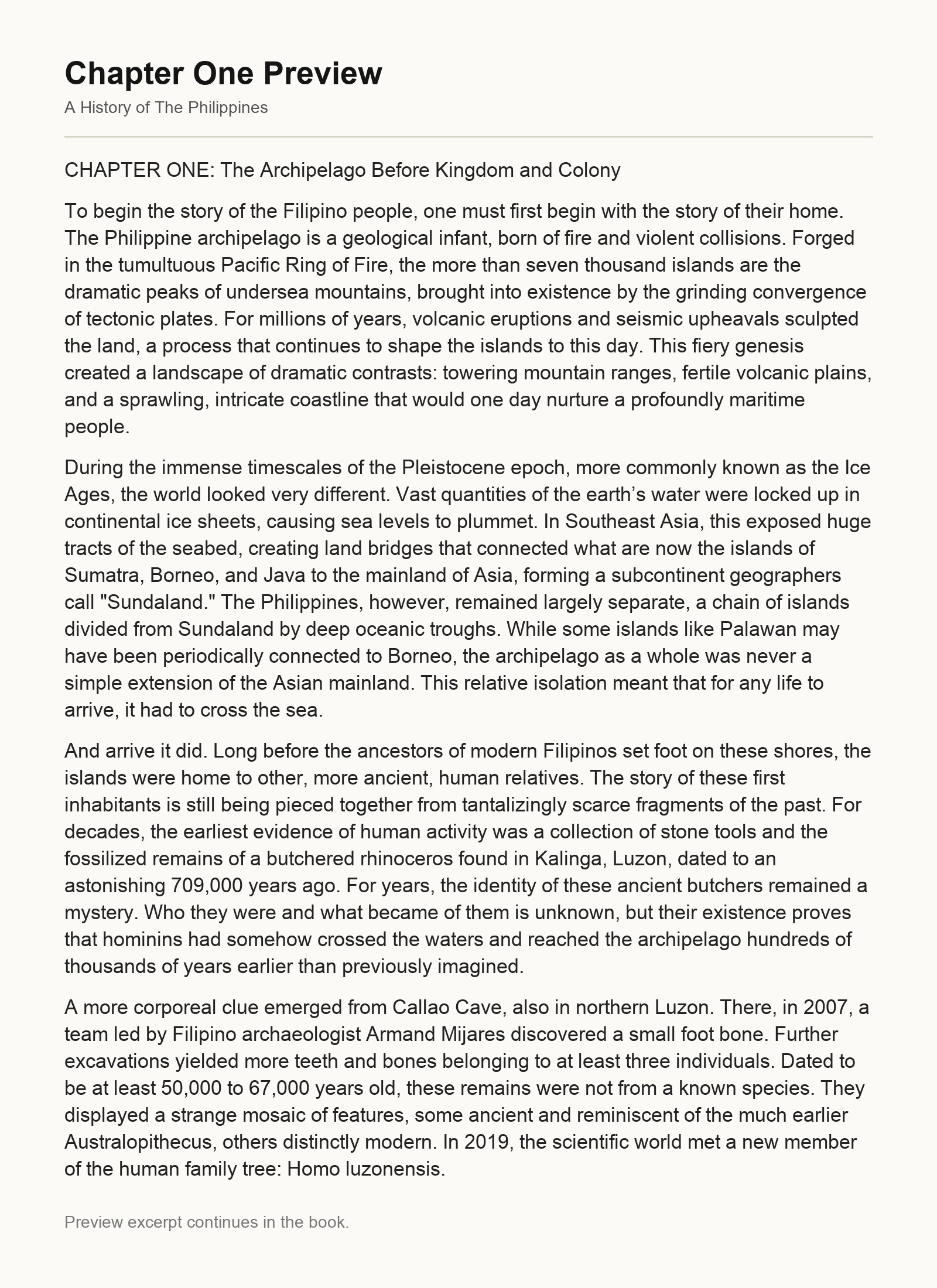
Readers will learn about the sophisticated societies that existed long before European contact, including the Austronesian migrations that transformed the archipelago through farming, maritime trade, and the development of the barangay system led by datus. The book details early polities like Butuan and Tondo that thrived as nodes in Asian trade networks, connecting the Philippines to China, India, and beyond. It explores the vibrant spiritual world of anito and diwata, the intricate social structures, and artistic expressions like the Manunggul Jar and tattoo traditions that reveal a rich pre-colonial world often overlooked in conventional narratives. This foundation establishes that Philippine history did not begin with colonization but with dynamic, sea-oriented communities actively engaging with the wider world.
The narrative then moves through the transformative periods of Spanish and American colonization, showing how these encounters were complex cultural exchanges rather than simple impositions. Readers will understand the significance of the Galleon Trade as an early globalization phenomenon that linked Manila to Acapulco for 250 years, turning the Philippines into a crucial hub between Asia and the Americas. The book examines the evolution of Filipino consciousness from localized revolts to the Propaganda Movement led by José Rizal and the revolutionary Katipunan that ignited Asia's first anti-colonial uprising. It covers the tragic power struggles within the revolution, the brief First Philippine Republic, and the subsequent American colonial period marked by "benevolent assimilation," public education infrastructure development, and the persistent tension between political tutelage and nationalist aspirations.
Finally, readers will explore contemporary Philippines through its economic transformation from the "Sick Man of Asia" to an emerging market driven by industries like BPO and OFW remittances, its vibrant syncretic culture blending indigenous traditions with Hispanic and American influences, and the enduring challenges of democracy, identity, and nation-building in the 21st century. Throughout, recurring themes emerge: the fluid nature of Filipino identity as a "work in progress" that synthesizes diverse influences, the remarkable resilience expressed through bayanihan in the face of natural disasters and political turmoil, and the ongoing struggle to balance external forces with internal aspirations. This history provides essential context for understanding not just where the Philippines has been, but the continuing journey of a people shaping their own unique and compelling destiny.
What You'll Find Inside:
- The complete historical arc of the Philippines from prehistoric settlements through Spanish colonization, American rule, Japanese occupation, and into the modern democratic era
- The evolution of Filipino national identity and consciousness, tracing resistance movements from early revolts to the Propaganda Movement, Katipunan, and People Power Revolution
- The economic transformation of the Philippines, particularly the Galleon Trade system that linked Asia and the Americas for 250 years and shaped colonial society
- The People Power Revolution of 1986 as a pivotal moment that restored democracy through non-violent resistance after Marcos' authoritarian rule
- Contemporary challenges facing the Philippines including economic development, democratic consolidation, and navigating 21st-century geopolitical tensions
Who's It For:
This book is ideal for students of Philippine or Southeast Asian history, general readers interested in world history and post-colonial studies, Filipinos seeking to understand their national heritage, and academics researching colonialism, nationalism, and democratization processes. It appeals to anyone wanting to grasp the complex story of a nation shaped by centuries of external influences yet defined by its resilient spirit and ongoing struggle for self-determination.
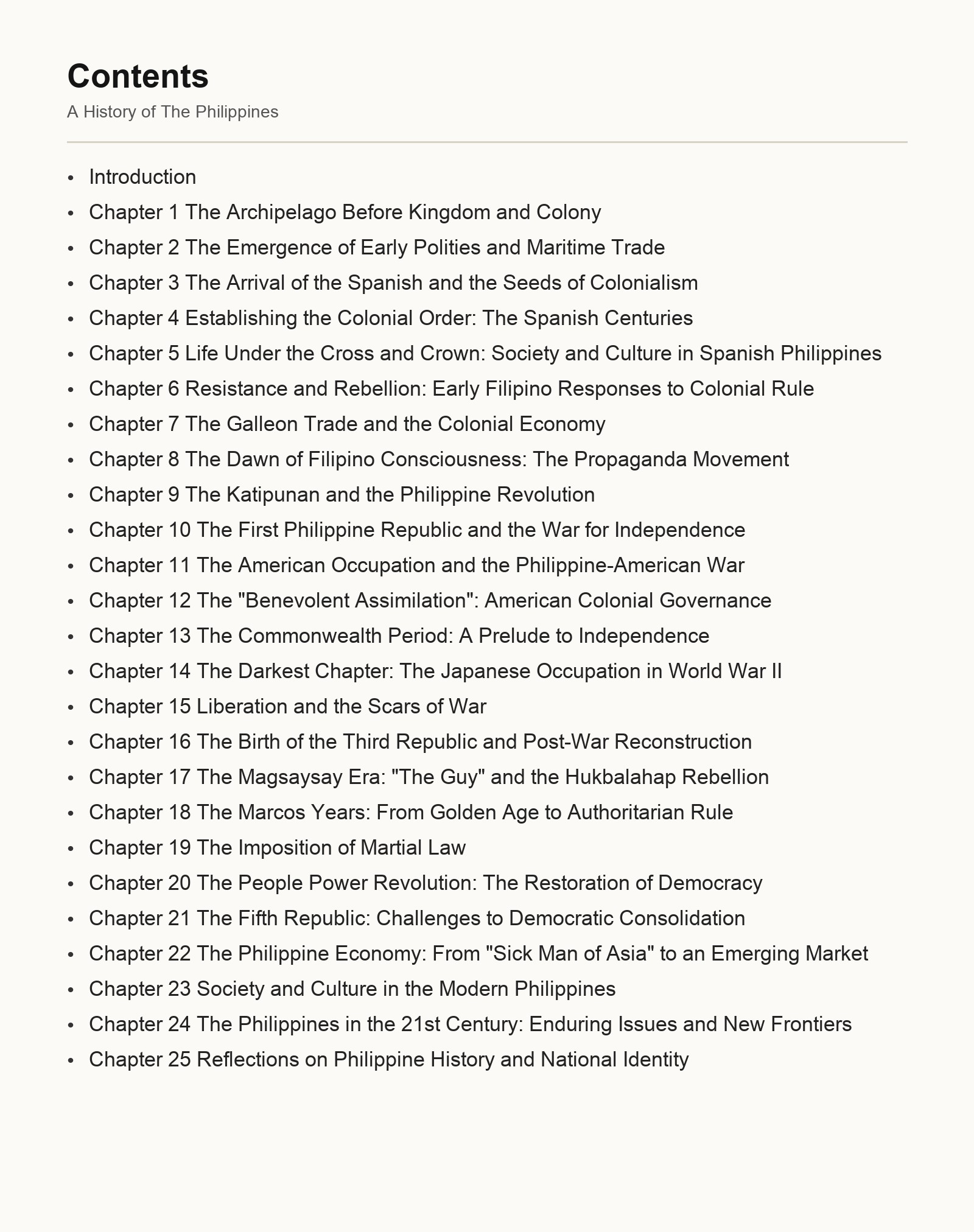
Table of Contents:
- Introduction
- Chapter 1 The Archipelago Before Kingdom and Colony
- Chapter 2 The Emergence of Early Polities and Maritime Trade
- Chapter 3 The Arrival of the Spanish and the Seeds of Colonialism
- Chapter 4 Establishing the Colonial Order: The Spanish Centuries
- Chapter 5 Life Under the Cross and Crown: Society and Culture in Spanish Philippines
- Chapter 6 Resistance and Rebellion: Early Filipino Responses to Colonial Rule
- Chapter 7 The Galleon Trade and the Colonial Economy
- Chapter 8 The Dawn of Filipino Consciousness: The Propaganda Movement
- Chapter 9 The Katipunan and the Philippine Revolution.
- Chapter 10 The First Philippine Republic and the War for Independence.
- Chapter 11 The American Occupation and the Philippine-American War.
- Chapter 12 The "Benevolent Assimilation": American Colonial Governance
- Chapter 13 The Commonwealth Period: A Prelude to Independence.
- Chapter 14 The Darkest Chapter: The Japanese Occupation in World War II.
- Chapter 15 Liberation and the Scars of War
- Chapter 16 The Birth of the Third Republic and Post-War Reconstruction.
- Chapter 17 The Magsaysay Era: "The Guy" and the Hukbalahap Rebellion
- Chapter 18 The Marcos Years: From Golden Age to Authoritarian Rule
- Chapter 19 The Imposition of Martial Law.
- Chapter 20 The People Power Revolution: The Restoration of Democracy
- Chapter 21 The Fifth Republic: Challenges to Democratic Consolidation.
- Chapter 22 The Philippine Economy: From "Sick Man of Asia" to an Emerging Market
- Chapter 23 Society and Culture in the Modern Philippines
- Chapter 24 The Philippines in the 21st Century: Enduring Issues and New Frontiers
- Chapter 25 Reflections on Philippine History and National Identity
Author:
Published By:
Date Published:
May 18, 2026
Type:
Nonfiction
Language:
English
Also Available In:
Word Count:
56,023 words
Reading Time:
3 hours 55 minutes
Sample:
Order:
Buy the A History of The Philippines ebook on MixCache.com:
Buy NowThe full ebook will be available immediately to read instantly on any device.
$5 account credit for all new MixCache.com accounts, usable toward any ebook purchase!*


Ratings & Reviews
Ask Questions About This Book
Have a question about the content? Ask our AI assistant!
Start by asking a question about "A History of The Philippines"
Example: "Does this book mention William Shakespeare?"
Thinking...