Browse by Category
Fiction
- Action & Adventure
- African American
- Anthologies
- Children's Fiction
- Classics
- Comics & Graphic Novels
- Coming of Age
- Contemporary
- Cultural & Regional
- Drama
- Erotica
- Fantasy
- General
- Historical Fiction
- Horror
- Humor & Satire
- Literary Fiction
- Mystery, Thriller & Suspense
- Poetry
- Religious & Inspirational
- Romance
- Science Fiction
- Short Stories
- War & Military
- Westerns
- Women's Fiction
- Young Adult
Non-Fiction
- Antiques & Collectibles
- Arts & Photography
- Biographies & Memoirs
- Business & Money
- Children's Non-Fiction
-
Computers & Technology
- Artificial Intelligence
- Computer Science
- Cybersecurity & Cryptography
- Data Science & Analytics
- Databases & Big Data
- Game Development & Design
- General
- Hardware & DIY
- Mobile App Development
- Networking & Cloud Computing
- Operating Systems
- Programming
- Robotics
- Software
- Software Engineering
- User Experience (UX) & Design
- Web Development & Design
- Cooking, Food & Wine
- Crafts, Hobbies & Home
- Education & Teaching
- Engineering
- General
- Health, Fitness & Dieting
-
History
- African History
- African History - North Africa
- African History - Sub-Saharan Africa
- American History
- American History - 20th Century
- American History - Civil War
- American History - Colonial Period
- Ancient History
- Asian History
- Asian History - China
- Asian History - India
- Asian History - Japan
- Asian History - Southeast Asia
- European History
- European History - Ancient Greece
- European History - Ancient Rome
- European History - Medieval
- European History - Modern
- European History - Renaissance
- General
- Middle Eastern History
- Military History
- Military History - Aviation
- Military History - Naval
- Social & Cultural History
- World History
- Humor & Entertainment
- Industrial Technology
- Language Learning
- Law
- LGBTQ+ Non-Fiction
- Literary Criticism
- Medical Books
- Parenting & Relationships
- Philosophy
- Politics & Social Sciences
- Reference
- Religion & Spirituality
-
Science & Math
- Agricultural Sciences
- Astronomy & Space Science
- Behavioral Sciences
- Biological Sciences
- Botany & Plant Science
- Chemistry
- Earth Sciences
- Engineering - Chemical
- Engineering - Civil
- Engineering - Electrical
- Engineering - Mechanical
- Environment
- General
- Geology
- Mathematics
- Nature & Ecology
- Oceanography
- Paleontology
- Physics
- Statistics
- Self-Help
- Sports & Outdoors
- Study Aids
- Sustainability & Green Living
- Textbooks
- Transportation
- Travel
- True Crime
- Urban Planning & Development
- Veterinary Medicine
- Writing & Publishing
Jump to Section

Want unlimited access to all books published by MixCache.com (plus their audiobooks)? Try MixCache.com Total Access. Look for the MTA badge on book covers to identify included titles.
Access to infinite ebooks: Don't see the book you want? Suggest it and we'll create it (free!) for you from scratch with our powerful AI book writer. Then read it with MTA - besides profiting from any sales it makes!
The National Security Memorandum on Artificial Intelligence
A Commentary on the Memorandum of October 24, 2024 Issued by President Joe Biden
About this book:

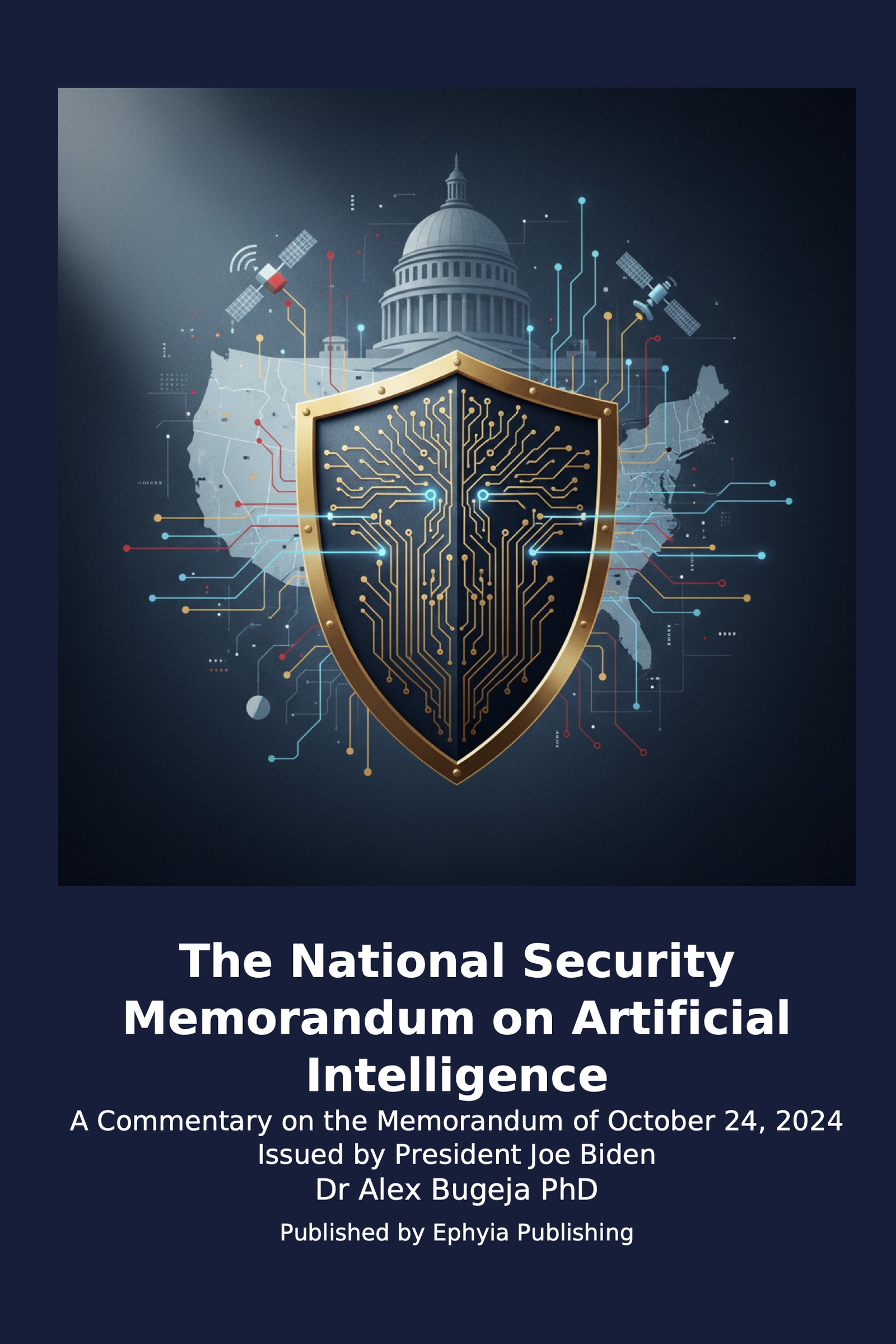
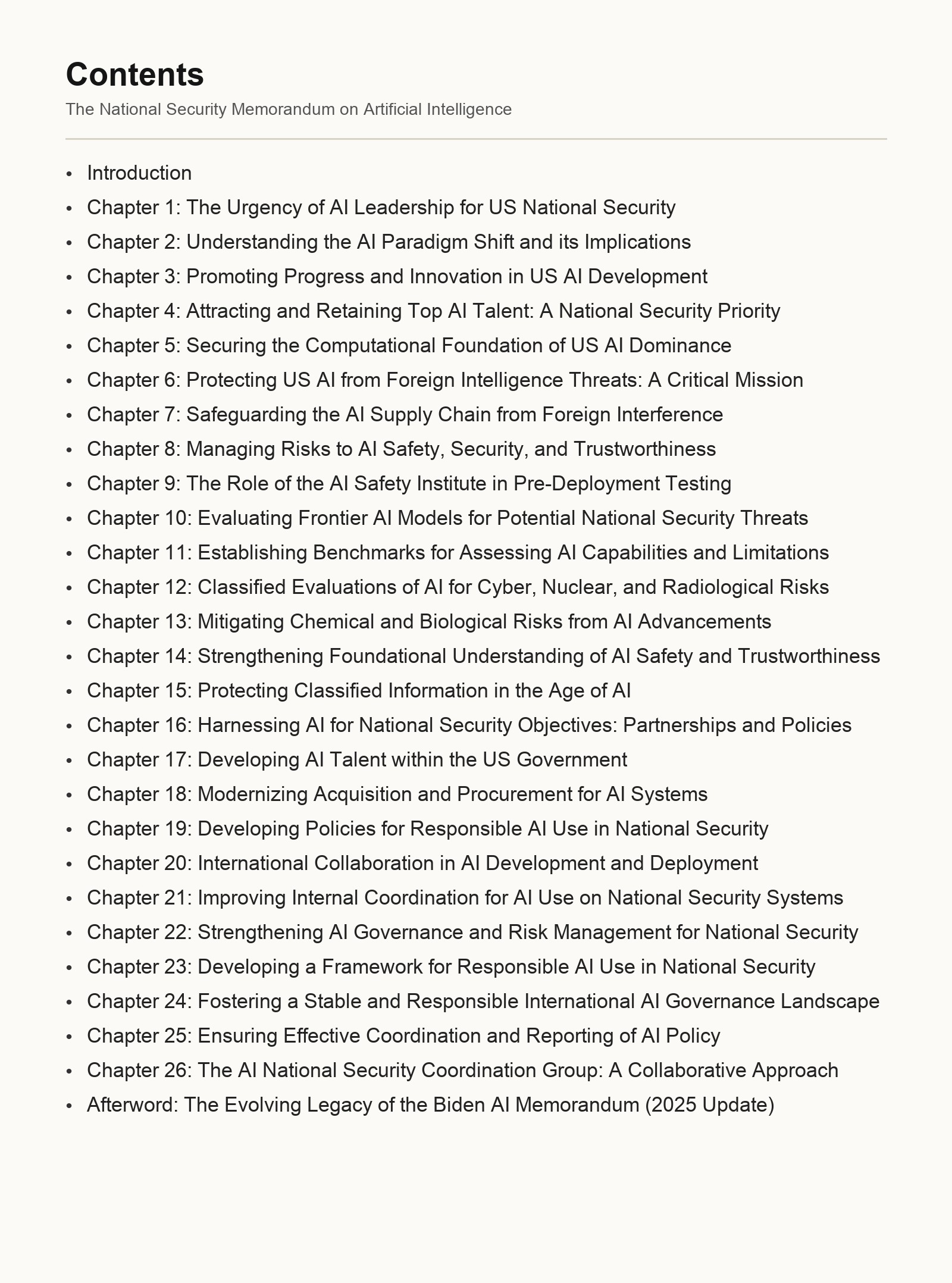
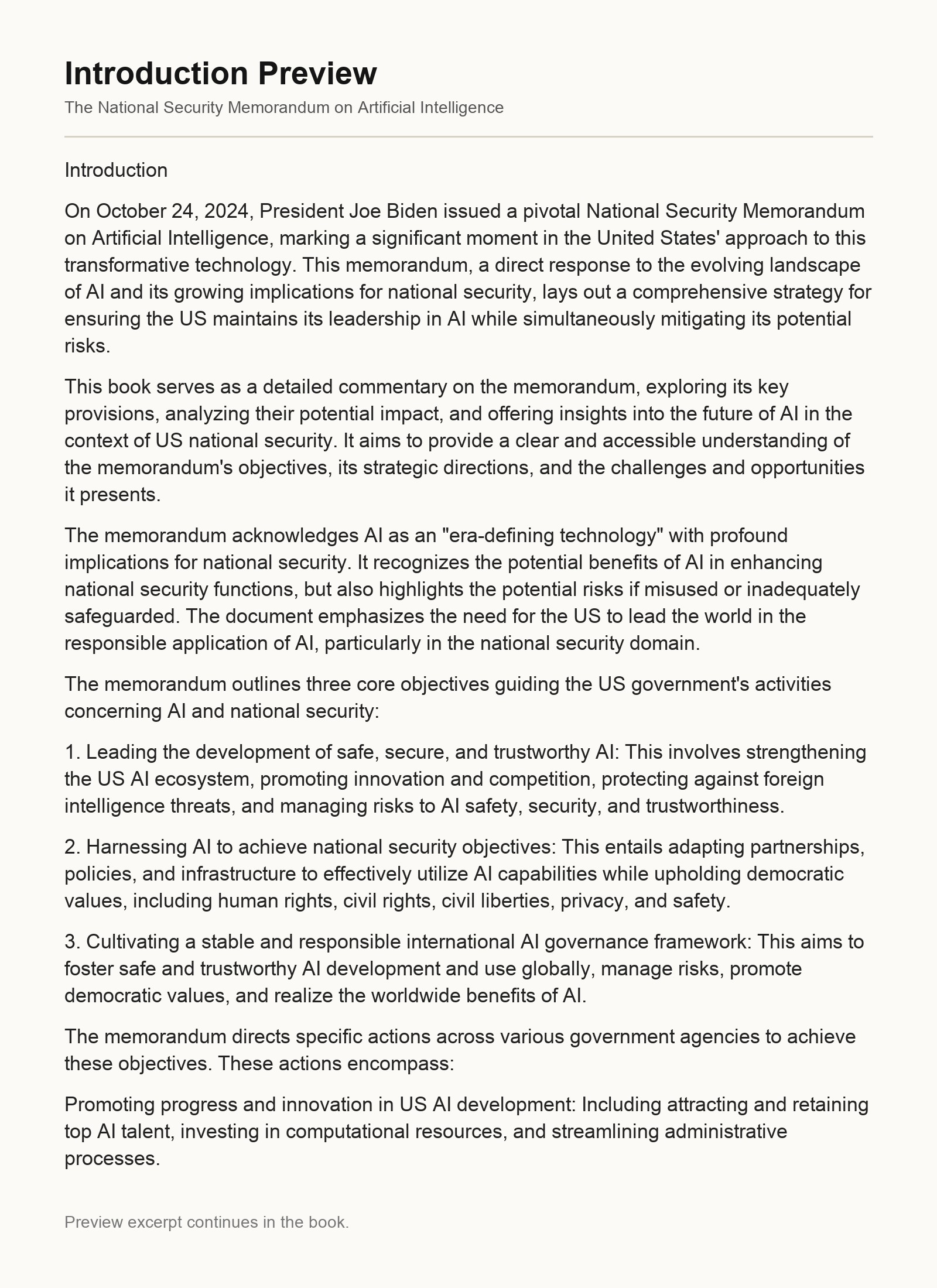
This book offers a detailed, chapter‑by‑chapter commentary on President Biden’s National Security Memorandum on Artificial Intelligence issued in October 2024, updated with developments through October 2025. Readers will walk through the memorandum’s three core objectives—leading safe and trustworthy AI development, harnessing AI for national security goals, and fostering a responsible international AI governance framework—and see how each directive translates into concrete actions across the federal government. By breaking down the memorandum’s language and linking it to real‑world initiatives, the text equips policymakers, strategists, and technologists with a clear map of where the United States is heading in the AI era and what it must do to maintain its competitive edge while safeguarding democratic values.
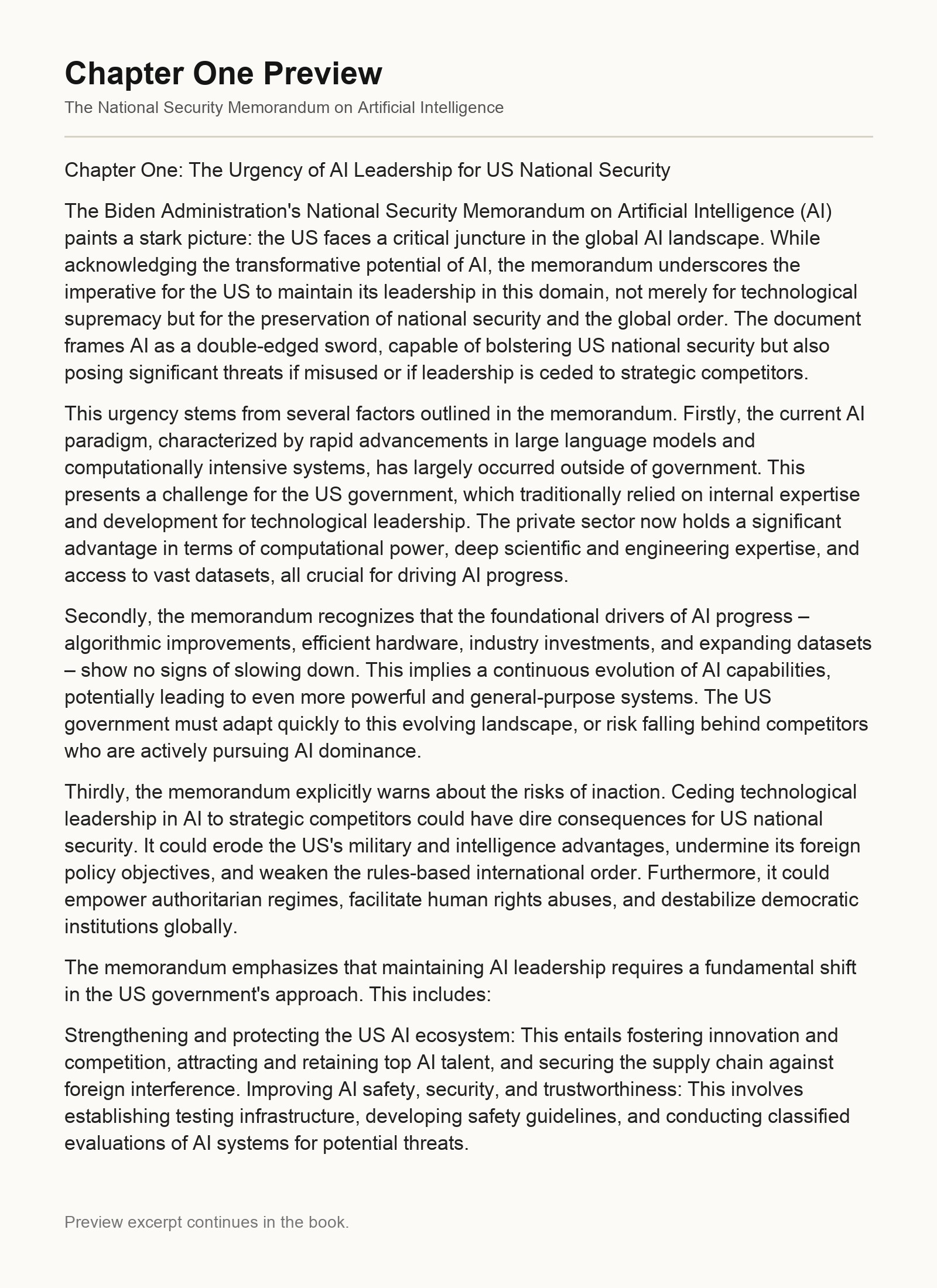
The work opens with an analysis of why AI leadership has become an urgent national security priority. It explains the paradigm shift driven by unprecedented scale and generalization in models such as large language models, and shows how these advances reshape intelligence gathering, cyber operations, military planning, and information warfare. Readers will gain insight into the challenges posed by the concentration of AI expertise in the private sector, the rapid pace of algorithmic and hardware innovation, and the risks of ceding technological leadership to strategic competitors. The commentary makes these abstract trends tangible by connecting them to specific vulnerabilities and opportunities that national security planners must address.
Subsequent chapters detail the memorandum’s practical playbook. Readers will learn how the government intends to attract and retain top AI talent through streamlined visa processes, talent market analyses, and domestic STEM pipelines; how it plans to secure the computational foundation of AI dominance via investments in AI‑dedicated infrastructure, the National AI Research Resource, and public‑private partnerships; and how it aims to protect the AI supply chain from foreign interference by diversifying sources, strengthening export controls, and enhancing cybersecurity. The book also walks through the risk‑management framework, describing the establishment of the AI Safety Institute for pre‑deployment testing, the creation of benchmarks for assessing AI capabilities, classified evaluations for cyber, nuclear, and radiological threats, and mitigation strategies for chemical and biological risks. Each section highlights what readers will need to know to implement or evaluate these policies in their own organizations.
Beyond domestic measures, the commentary explores the United States’ approach to shaping a stable and responsible global AI landscape. It outlines strategies for international cooperation, including bilateral and multilateral agreements, shared norms and standards, joint research consortia, and data‑sharing pacts with allies. Readers will see how the memorandum seeks to promote responsible military use of AI, prevent an AI arms race, and encourage equitable access to AI benefits while upholding human rights and democratic principles. The text also explains the emerging governance structures—such as the AI National Security Coordination Group, the AI Framework, and the National Security AI Executive Talent Committee—that are designed to ensure consistency, interoperability, and accountability across agencies.
Finally, the book provides a forward‑looking assessment of the memorandum’s legacy, examining early implementation results, ongoing accountability mechanisms, and the geopolitical dimensions of U.S. AI strategy. It notes how the framework has influenced agency policies, spurred joint pilot programs with partners like the United Kingdom, Canada, Japan, and Australia, and informed discussions in the G7, OECD, and United Nations. By presenting both achievements and remaining gaps, the commentary gives readers a balanced view of what has been accomplished and what still requires vigilance. This makes the volume an indispensable resource for anyone seeking to understand, influence, or operate within the evolving intersection of artificial intelligence and U.S. national security.
What You'll Find Inside:
- Analysis of the Biden Administration's National Security Memorandum on AI and its three core objectives for US AI leadership
- Strategies for promoting US AI innovation through talent acquisition, computational infrastructure, and streamlined government processes
- Comprehensive risk management frameworks including the AI Safety Institute, pre-deployment testing, and classified threat evaluations
- Development of governance structures for responsible AI use in national security, including the AI Framework and interagency coordination
- Examination of international collaboration efforts to establish global norms and standards for responsible AI development
Who's It For:
This book is essential for government officials, national security professionals, and policymakers involved in AI strategy and implementation. It also serves AI researchers, developers, and technology leaders working on systems with defense and intelligence applications, as well as anyone seeking to understand the governance challenges and opportunities at the intersection of artificial intelligence and national security.
Author:
Published By:
Date Published:
May 16, 2026
Type:
Nonfiction
Language:
English
Also Available In:
Word Count:
40,522 words
Reading Time:
2 hours 50 minutes
Sample:
Order:
Order The National Security Memorandum on Artificial Intelligence (Paperback) on MixCache.com:
Buy NowPrint copy is made to order and ships worldwide. Includes the ebook free, ready to read instantly.
$5 account credit for all new MixCache.com accounts, usable toward any ebook purchase!*