Browse by Category
Fiction
- Action & Adventure
- African American
- Anthologies
- Children's Fiction
- Classics
- Comics & Graphic Novels
- Coming of Age
- Contemporary
- Cultural & Regional
- Drama
- Erotica
- Fantasy
- General
- Historical Fiction
- Horror
- Humor & Satire
- Literary Fiction
- Mystery, Thriller & Suspense
- Poetry
- Religious & Inspirational
- Romance
- Science Fiction
- Short Stories
- War & Military
- Westerns
- Women's Fiction
- Young Adult
Non-Fiction
- Antiques & Collectibles
- Arts & Photography
- Biographies & Memoirs
- Business & Money
- Children's Non-Fiction
-
Computers & Technology
- Artificial Intelligence
- Computer Science
- Cybersecurity & Cryptography
- Data Science & Analytics
- Databases & Big Data
- Game Development & Design
- General
- Hardware & DIY
- Mobile App Development
- Networking & Cloud Computing
- Operating Systems
- Programming
- Robotics
- Software
- Software Engineering
- User Experience (UX) & Design
- Web Development & Design
- Cooking, Food & Wine
- Crafts, Hobbies & Home
- Education & Teaching
- Engineering
- General
- Health, Fitness & Dieting
-
History
- African History
- African History - North Africa
- African History - Sub-Saharan Africa
- American History
- American History - 20th Century
- American History - Civil War
- American History - Colonial Period
- Ancient History
- Asian History
- Asian History - China
- Asian History - India
- Asian History - Japan
- Asian History - Southeast Asia
- European History
- European History - Ancient Greece
- European History - Ancient Rome
- European History - Medieval
- European History - Modern
- European History - Renaissance
- General
- Middle Eastern History
- Military History
- Military History - Aviation
- Military History - Naval
- Social & Cultural History
- World History
- Humor & Entertainment
- Industrial Technology
- Language Learning
- Law
- LGBTQ+ Non-Fiction
- Literary Criticism
- Medical Books
- Parenting & Relationships
- Philosophy
- Politics & Social Sciences
- Reference
- Religion & Spirituality
-
Science & Math
- Agricultural Sciences
- Astronomy & Space Science
- Behavioral Sciences
- Biological Sciences
- Botany & Plant Science
- Chemistry
- Earth Sciences
- Engineering - Chemical
- Engineering - Civil
- Engineering - Electrical
- Engineering - Mechanical
- Environment
- General
- Geology
- Mathematics
- Nature & Ecology
- Oceanography
- Paleontology
- Physics
- Statistics
- Self-Help
- Sports & Outdoors
- Study Aids
- Sustainability & Green Living
- Textbooks
- Transportation
- Travel
- True Crime
- Urban Planning & Development
- Veterinary Medicine
- Writing & Publishing
Jump to Section
MixCache.com Total Access
Unlimited reading and audiobooks for every book published by MixCache.com.
Included titles carry the MTA badge.
Learn more →
Urban Warfare: Fighting in Cities and Protecting Populations
MTA
Tactics, Technology, and Ethical Constraints in Built Environments
About this book:
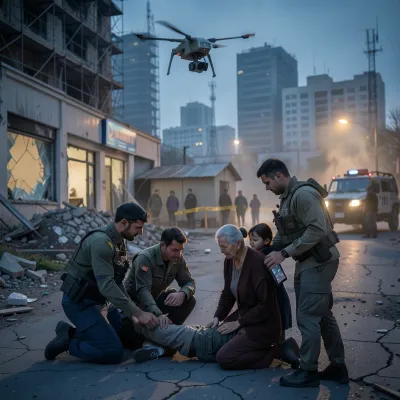
"Urban Warfare: Fighting in Cities and Protecting Populations" systematically analyzes the complexities of modern military operations within urban environments, emphasizing that civilian protection and military necessity are mutually reinforcing objectives. The book begins by dissecting the unique characteristics of the urban battlespace, highlighting its three-dimensional nature—streets, multi-story buildings, and subterranean networks—and the dense intermingling of military objectives with civilian populations and critical infrastructure. It stresses that understanding a city as a living system, rather than just an obstacle, is fundamental for effective operations and minimizing harm.
A significant portion of the book is dedicated to the legal, ethical, and humanitarian dimensions of urban warfare. It thoroughly examines international humanitarian law (IHL) principles like distinction, proportionality, and precaution, detailing how these translate into practical decision-making under fire and the critical role of legal advisors. The text also covers the challenges of humanitarian access, civilian evacuation, and the fraught concept of "safe areas," underscoring the moral imperative to protect noncombatants and the operational necessity of coordination with humanitarian actors. Furthermore, it delves into the strategic importance of community engagement and risk communication, arguing that building trust with local populations is crucial for legitimacy and intelligence gathering.
The book then explores a comprehensive range of tactical and technological considerations. It details dismounted maneuver in streets and structures, the nuanced employment of armor, the persistent threat of snipers from elevated positions, and the complexities of subterranean warfare. Chapters are dedicated to the transformative impact of unmanned systems (drones, robots, sensors), the critical importance of cyber, spectrum, and information operations in the digital city, and the specific challenges of medical support and casualty evacuation in densely populated areas. It also addresses the necessity of protecting critical infrastructure and essential services to prevent cascading humanitarian crises, and the extensive efforts required for explosive hazard mitigation and risk education.
Finally, "Urban Warfare" emphasizes the crucial role of training, simulation, and after-action learning in preparing forces for these complex environments. It advocates for rigorous data governance and privacy protocols to maintain trust and accountability. The book concludes by stressing that successful urban operations extend beyond military victory to the long-term process of building urban resilience and post-conflict recovery. It posits that the decisions made during conflict—from tactical engagements to coordination with civilian agencies—directly shape a city's ability to heal, rebuild, and prevent future instability, making civilian protection not just an ethical obligation but a strategic imperative for enduring success.
What You'll Find Inside:
- Cities must be understood as complex living systems where military actions have cascading effects across physical, social, and infrastructure domains
- Civilian protection is both a legal obligation and operational necessity that enhances mission effectiveness in urban environments
- Successful urban operations require integrated civil-military coordination with humanitarian organizations and local authorities
- Technology in urban warfare must be balanced with human judgment, ethical considerations, and accountability mechanisms
- Urban operations demand multidimensional thinking that addresses vertical, subterranean, electromagnetic, and information environments
Who's It For:
This book is designed for military professionals, urban planners, humanitarian workers, and policymakers engaged in or preparing for urban operations. It will be particularly valuable for those seeking to balance security objectives with civilian protection in complex built environments, including commanders, planners, civil affairs officers, and disaster response specialists working in conflict-affected cities.
Table of Contents:
- Introduction
- Chapter 1 The Urban Battlespace: Characteristics and Challenges
- Chapter 2 Law, Ethics, and Civilian Protection in Urban Operations
- Chapter 3 Intelligence and Mapping the City as a System
- Chapter 4 Operational Design and Mission Command in Dense Terrain
- Chapter 5 Interagency and Civil–Military Coordination
- Chapter 6 Community Engagement and Risk Communication
- Chapter 7 Nonlethal Options and Escalation Management
- Chapter 8 Precision Effects and Collateral Damage Mitigation
- Chapter 9 Dismounted Maneuver in Streets and Structures
- Chapter 10 Armor, Mobility, and Route Security
- Chapter 11 Counter-Sniper Threats and Elevated Firing Positions
- Chapter 12 Subterranean and Vertical Dimensions of the City
- Chapter 13 Unmanned Systems: Drones, Ground Robots, and Sensors
- Chapter 14 Cyber, Spectrum, and Information Operations in Cities
- Chapter 15 Medical Support, CASEVAC, and Civilian Casualty Care
- Chapter 16 Protecting Critical Infrastructure and Essential Services
- Chapter 17 Humanitarian Access, Evacuation, and Safe Areas
- Chapter 18 Negotiation, De-escalation, and Ceasefire Arrangements
- Chapter 19 Stabilization Under Fire: Restoring Services Amid Conflict
- Chapter 20 Explosive Hazard Mitigation and UXO Risk Education
- Chapter 21 Safeguarding Cultural Heritage and Protected Sites
- Chapter 22 Data Governance, Privacy, and Open-Source Intelligence
- Chapter 23 Training and Simulation for Urban Operations
- Chapter 24 Measuring Harm, Accountability, and After-Action Learning
- Chapter 25 Building Urban Resilience and Post-Conflict Recovery
Author:
Published By:
Date Published:
May 13, 2026
Type:
Nonfiction
Language:
English
Word Count:
68,283 words
Reading Time:
4 hours 47 minutes
Sample:
Order:
Order Urban Warfare: Fighting in Cities and Protecting Populations (Paperback) on MixCache.com:
Buy NowPrint copy is made to order and ships worldwide. Includes the ebook free, ready to read instantly.
$5 account credit for all new MixCache.com accounts, usable toward any ebook purchase!*