Browse by Category
Fiction
- Action & Adventure
- African American
- Anthologies
- Children's Fiction
- Classics
- Comics & Graphic Novels
- Coming of Age
- Contemporary
- Cultural & Regional
- Drama
- Erotica
- Fantasy
- General
- Historical Fiction
- Horror
- Humor & Satire
- Literary Fiction
- Mystery, Thriller & Suspense
- Poetry
- Religious & Inspirational
- Romance
- Science Fiction
- Short Stories
- War & Military
- Westerns
- Women's Fiction
- Young Adult
Non-Fiction
- Antiques & Collectibles
- Arts & Photography
- Biographies & Memoirs
- Business & Money
- Children's Non-Fiction
-
Computers & Technology
- Artificial Intelligence
- Computer Science
- Cybersecurity & Cryptography
- Data Science & Analytics
- Databases & Big Data
- Game Development & Design
- General
- Hardware & DIY
- Mobile App Development
- Networking & Cloud Computing
- Operating Systems
- Programming
- Robotics
- Software
- Software Engineering
- User Experience (UX) & Design
- Web Development & Design
- Cooking, Food & Wine
- Crafts, Hobbies & Home
- Education & Teaching
- Engineering
- General
- Health, Fitness & Dieting
-
History
- African History
- African History - North Africa
- African History - Sub-Saharan Africa
- American History
- American History - 20th Century
- American History - Civil War
- American History - Colonial Period
- Ancient History
- Asian History
- Asian History - China
- Asian History - India
- Asian History - Japan
- Asian History - Southeast Asia
- European History
- European History - Ancient Greece
- European History - Ancient Rome
- European History - Medieval
- European History - Modern
- European History - Renaissance
- General
- Middle Eastern History
- Military History
- Military History - Aviation
- Military History - Naval
- Social & Cultural History
- World History
- Humor & Entertainment
- Industrial Technology
- Language Learning
- Law
- LGBTQ+ Non-Fiction
- Literary Criticism
- Medical Books
- Parenting & Relationships
- Philosophy
- Politics & Social Sciences
- Reference
- Religion & Spirituality
-
Science & Math
- Agricultural Sciences
- Astronomy & Space Science
- Behavioral Sciences
- Biological Sciences
- Botany & Plant Science
- Chemistry
- Earth Sciences
- Engineering - Chemical
- Engineering - Civil
- Engineering - Electrical
- Engineering - Mechanical
- Environment
- General
- Geology
- Mathematics
- Nature & Ecology
- Oceanography
- Paleontology
- Physics
- Statistics
- Self-Help
- Sports & Outdoors
- Study Aids
- Sustainability & Green Living
- Textbooks
- Transportation
- Travel
- True Crime
- Urban Planning & Development
- Veterinary Medicine
- Writing & Publishing
Jump to Section
MixCache.com Total Access
Unlimited reading and audiobooks for every book published by MixCache.com.
Included titles carry the MTA badge.
Learn more →
Opening the Dragon: Deng Xiaoping and China's Economic Transformation
MTA
Policy shifts, economic liberalization, and the rise of reform-era China since 1978
About this book:
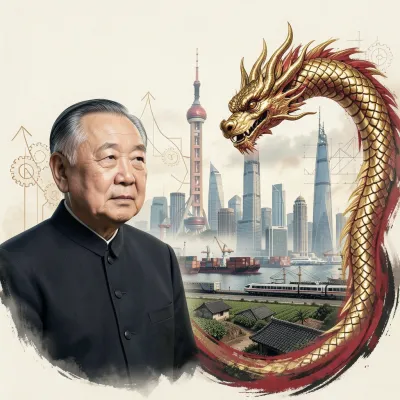
This book provides a comprehensive analysis of China's economic transformation from 1978 through the early 2020s, focusing on the pragmatic "experimentation under hierarchy" model championed by Deng Xiaoping. It details how the shift began in the rural sector with the Household Responsibility System and moved into urban centers through dual-track pricing, the rise of Township and Village Enterprises (TVEs), and the strategic creation of Special Economic Zones (SEZs). By prioritizing incentive alignment and local autonomy over rigid ideological purity, China transitioned from a command economy to a global manufacturing powerhouse while maintaining the political authority of the state.
The narrative tracks the institutional "stress tests" and recalibrations that defined the reform era, including the management of the 1988 inflationary crisis, the catalytic effect of Deng’s 1992 Southern Tour, and the pivotal 1994 tax-sharing reforms. These episodes led to deeper structural changes, such as the corporatization of state-owned enterprises, the cleanup of the banking sector, and the massive buildout of national infrastructure. The 2001 accession to the World Trade Organization (WTO) served as a critical forcing function, locking in domestic market reforms and integrating China fully into global supply chains.
The book also addresses the significant externalities and social costs of this rapid growth, specifically rising inequality, the complexities of the hukou (household registration) system, and environmental degradation. It examines how China moved from mere imitation and assembly toward high-tech innovation and digital platform dominance, while simultaneously navigating the Asian and global financial crises. These challenges prompted a shift toward "social contract" policies aimed at poverty reduction, welfare expansion, and ecological modernization, reflecting a move toward a more balanced, albeit debt-burdened, economic model.
Ultimately, the text evaluates the legacy of the Deng era as a successful but unfinished project of institutional adaptation. It concludes that the "Next China" faces structural headwinds, including demographic shifts, financial fragility, and geopolitical friction, which require a transition from high-speed growth to high-quality, sustainable development. The book argues that China’s enduring strength lies in its ability to utilize local experimentation and pragmatic governance to navigate the ongoing tensions between state control and market vitality.
What You'll Find Inside:
- How Deng Xiaoping's pragmatic approach of 'seeking truth from facts' and 'crossing the river by feeling the stones' enabled gradual, experimental reforms that transformed China's economy while maintaining Party control.
- The critical role of incentive alignment in driving reform, from the Household Responsibility System in agriculture to dual-track pricing and Special Economic Zones that created margins for productivity and entrepreneurship.
- The sequenced and incremental nature of China's reforms, starting with agriculture, then moving to industry, trade, finance, and social systems, with each phase building on previous successes and addressing emerging challenges.
- How China managed the tension between market mechanisms and state control through institutions like fiscal contracting, tax sharing, and cadre evaluation systems that aligned local incentives with national goals.
- The social, environmental, and economic costs of breakneck growth—including inequality, pollution, financial fragility—and the ongoing efforts to address these unfinished business items in the reform legacy.
Who's It For:
This book is ideal for policymakers, business leaders, investors, and students seeking to understand China's economic transformation since 1978. It provides an evidence-based analysis of how specific policy decisions, incentive structures, and institutional reforms drove China's rapid development, offering valuable insights for anyone interested in development economics, emerging markets, or the political economy of reform.
Table of Contents:
- Introduction
- Chapter 1 The Third Plenum and the Turn to Reform
- Chapter 2 Rural Beginnings: The Household Responsibility System
- Chapter 3 Letting Some Get Rich: Incentives and Ideology
- Chapter 4 Experiments at the Edge: Special Economic Zones
- Chapter 5 Dual-Track Pricing and Market Emergence
- Chapter 6 Township and Village Enterprises: The Rise of Local Industry
- Chapter 7 Opening the Doors: Trade, FDI, and the Coastal Strategy
- Chapter 8 Managing Inflation and Retrenchment: The 1988–1991 Pause
- Chapter 9 Deng’s Southern Tour: Reaccelerating Reform
- Chapter 10 Reforming State-Owned Enterprises: Ownership, Control, and Competition
- Chapter 11 Fiscal Contracting to Tax Sharing: Rewiring Center–Local Relations
- Chapter 12 Banking on Growth: Credit, NPLs, and Financial Deepening
- Chapter 13 Building Markets: Law, Property Rights, and Regulation
- Chapter 14 Urbanization and Housing Reform: From Danwei to Real Estate
- Chapter 15 Migrants and the Hukou System: Labor, Mobility, and Inclusion
- Chapter 16 Infrastructure as Strategy: Ports, Power, and Highways
- Chapter 17 Technology and Learning: From Imitation to Innovation
- Chapter 18 Integration into the World Economy: The 2001 WTO Accession
- Chapter 19 Private Enterprise and Entrepreneurship: The Wenzhou and Zhejiang Models
- Chapter 20 The Social Contract: Inequality, Poverty Reduction, and Welfare
- Chapter 21 Environment and Externalities: The Costs of Breakneck Growth
- Chapter 22 Crisis and Resilience: 1997–1998 and 2008–2009 Stress Tests
- Chapter 23 The Party, the State, and the Market: Governance and Cadre Incentives
- Chapter 24 Beyond Deng: Continuities and Departures in the 2000s–2020s
- Chapter 25 The Next China: Reform Legacies and Unfinished Business
Author:
Published By:
Date Published:
May 4, 2026
Type:
Nonfiction
Language:
English
Word Count:
72,179 words
Reading Time:
5 hours 3 minutes
Sample:
Order:
Order Opening the Dragon: Deng Xiaoping and China's Economic Transformation (Hardcover) on MixCache.com:
Buy NowPrint copy is made to order and ships worldwide. Includes the ebook free, ready to read instantly.
$5 account credit for all new MixCache.com accounts, usable toward any ebook purchase!*