
Browse by Category
Fiction
- Action & Adventure
- African American
- Anthologies
- Children's Fiction
- Classics
- Comics & Graphic Novels
- Coming of Age
- Contemporary
- Cultural & Regional
- Drama
- Erotica
- Fantasy
- General
- Historical Fiction
- Horror
- Humor & Satire
- Literary Fiction
- Mystery, Thriller & Suspense
- Poetry
- Religious & Inspirational
- Romance
- Science Fiction
- Short Stories
- War & Military
- Westerns
- Women's Fiction
- Young Adult
Non-Fiction
- Antiques & Collectibles
- Arts & Photography
- Biographies & Memoirs
- Business & Money
- Children's Non-Fiction
-
Computers & Technology
- Artificial Intelligence
- Computer Science
- Cybersecurity & Cryptography
- Data Science & Analytics
- Databases & Big Data
- Game Development & Design
- General
- Hardware & DIY
- Mobile App Development
- Networking & Cloud Computing
- Operating Systems
- Programming
- Robotics
- Software
- Software Engineering
- User Experience (UX) & Design
- Web Development & Design
- Cooking, Food & Wine
- Crafts, Hobbies & Home
- Education & Teaching
- Engineering
- General
- Health, Fitness & Dieting
-
History
- African History
- African History - North Africa
- African History - Sub-Saharan Africa
- American History
- American History - 20th Century
- American History - Civil War
- American History - Colonial Period
- Ancient History
- Asian History
- Asian History - China
- Asian History - India
- Asian History - Japan
- Asian History - Southeast Asia
- European History
- European History - Ancient Greece
- European History - Ancient Rome
- European History - Medieval
- European History - Modern
- European History - Renaissance
- General
- Middle Eastern History
- Military History
- Military History - Aviation
- Military History - Naval
- Social & Cultural History
- World History
- Humor & Entertainment
- Industrial Technology
- Language Learning
- Law
- LGBTQ+ Non-Fiction
- Literary Criticism
- Medical Books
- Parenting & Relationships
- Philosophy
- Politics & Social Sciences
- Reference
- Religion & Spirituality
-
Science & Math
- Agricultural Sciences
- Astronomy & Space Science
- Behavioral Sciences
- Biological Sciences
- Botany & Plant Science
- Chemistry
- Earth Sciences
- Engineering - Chemical
- Engineering - Civil
- Engineering - Electrical
- Engineering - Mechanical
- Environment
- General
- Geology
- Mathematics
- Nature & Ecology
- Oceanography
- Paleontology
- Physics
- Statistics
- Self-Help
- Sports & Outdoors
- Study Aids
- Sustainability & Green Living
- Textbooks
- Transportation
- Travel
- True Crime
- Urban Planning & Development
- Veterinary Medicine
- Writing & Publishing
Jump to Section
MixCache.com Total Access
Unlimited reading and audiobooks for every book published by MixCache.com.
Included titles carry the MTA badge.
Learn more →
Rice Bowls and Revolution: The Social History of Food in China
MTA
Food production, consumption, symbolism, and policy from household kitchens to national grain plans
About this book:
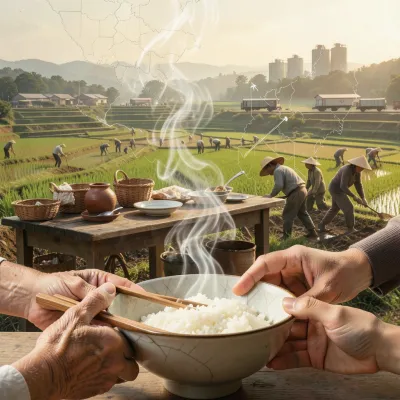
*Rice Bowls and Revolution* provides a comprehensive social history of China through the lens of its food systems, tracing the evolution of production, consumption, and policy from the dynastic era to the digital age. The book begins by establishing the geographical and cultural foundations of Chinese staples—rice, wheat, and millet—and explores how household kitchens and urban guilds originally managed food as a site of status, gendered labor, and ritual. It situates the "rice bowl" as a central metaphor for the relationship between the state and the people, where the ability to provide nourishment served as a primary marker of political legitimacy.
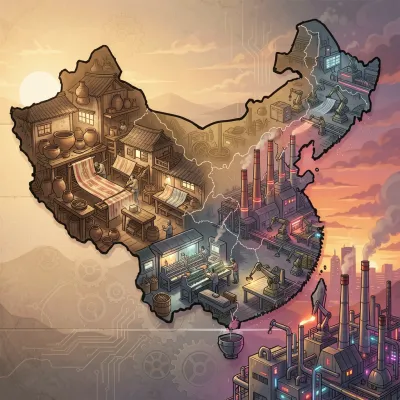
The middle chapters focus on the radical transformations of the twentieth century, particularly the shift from traditional famine cycles to the ideological upheavals of the People’s Republic. The text details the transition from land reform to the collectivization of the Great Leap Forward, a period marked by the transition to communal pots and the subsequent catastrophe of the "thin harvest." The book examines the meticulously managed scarcity of the planned era, defined by ration coupons, work-unit canteens, and national procurement strategies designed to prioritize industrial growth while securing a basic floor of survival for the urban masses.
The final section addresses the "Reform and Opening" period, documenting the transition from state-mandated scarcity to a marketplace of choice and abundance. It explores the rise of private restaurants, the impact of rural-to-urban migration on culinary diversity, and the recent "datafication" of food through e-commerce and delivery platforms. This modern era is characterized by new challenges, including the professionalization of agribusiness, the globalization of Chinese culinary soft power, and recurring anxieties over food safety and trust.
The book concludes by looking toward the future, analyzing the intersection of food security with environmental sustainability and climate change. It highlights the persistent inequalities in the modern food system and the tension between high-tech "digital foodways" and the preservation of traditional heritage. Ultimately, the work argues that the history of China is inextricably linked to the management of its larder, suggesting that the future stability of the nation depends on balancing modern appetite with the ecological limits of soil and water.
What You'll Find Inside:
- How staple grains (rice, millet, wheat) shaped regional identities, political power, and social hierarchies from ancient dynasties through modern state procurement systems
- The evolution of gendered food labor divisions, examining how cooking, preservation, and household management reflected and reinforced social norms across historical periods
- Analysis of how major historical events—including wars, famines, land reform, the Great Leap Forward, and economic reforms—transformed food production, distribution, and consumption patterns
- Exploration of food as a symbol of status, morality, and identity in rituals, banquets, propaganda, literature, and daily life across Chinese history
- Examination of the persistent tension between state planning and market forces in China's food systems, from imperial granaries to collective farming and modern agribusiness/e-commerce
Who's It For:
This book is ideal for students and scholars of Chinese history, food studies, and sociology who seek to understand how food systems reflect and shape social structures. It will particularly benefit researchers interested in the intersection of everyday life with political economy, as well as policy analysts working on food security, agricultural development, or rural transformation in China. General readers with a strong interest in Chinese cultural history and the social dimensions of food will also find valuable insights into how meals have served as both personal sustenance and political barometers throughout China's long history.
Table of Contents:
- Introduction
- Chapter 1 Rice, Millet, and Wheat: Staples Across Dynasties
- Chapter 2 Kitchens and Courtyards: Household Food Production
- Chapter 3 Markets and Guilds: Urban Food Economies
- Chapter 4 Banquets and Hierarchy: Status Through Cuisine
- Chapter 5 Hunger and Relief: Famine Cycles Before 1949
- Chapter 6 War, Displacement, and the Food Front
- Chapter 7 Land Reform and the Politics of the Bowl (1949–1955)
- Chapter 8 Communal Pots: The People’s Communes and Everyday Eating
- Chapter 9 The Great Leap and the Thin Harvest: Catastrophe and Memory
- Chapter 10 Ration Coupons and Queues: Scarcity in the Planned Era
- Chapter 11 Grain First: National Procurement and State Capacity
- Chapter 12 Ethnicity on the Table: Regional and Minority Foodways
- Chapter 13 Gendered Labors: Cooking, Care, and Control
- Chapter 14 Work Units and Canteens: Feeding the Socialist Workplace
- Chapter 15 Symbolism of Taste: Food in Ritual, Propaganda, and Literature
- Chapter 16 Reform and Opening: From Scarcity to Choice
- Chapter 17 Restaurants, Street Stalls, and the Informal Economy
- Chapter 18 Migrant Kitchens: Rural Labor and Urban Appetite
- Chapter 19 Food Safety, Scandals, and Trust
- Chapter 20 Agribusiness, Seeds, and the New Rural Capitalism
- Chapter 21 Water, Soil, and Climate: Ecologies of the Larder
- Chapter 22 Digital Foodways: E-commerce, Delivery, and Datafication
- Chapter 23 Global China: Diaspora, Diplomacy, and Culinary Soft Power
- Chapter 24 Heritage and Innovation: Revival, Fusion, and Authenticity Debates
- Chapter 25 Food Futures: Sustainability, Inequality, and Policy Pathways
Author:
Published By:
Date Published:
May 4, 2026
Type:
Nonfiction
Language:
English
Word Count:
62,723 words
Reading Time:
4 hours 24 minutes
Sample:
MixCache.com Total Access
Get unlimited access to this book + all books published by MixCache.com for $11.99/month
Subscribe to MTAOr purchase this book individually below
Order:
Buy the Rice Bowls and Revolution: The Social History of Food in China ebook on MixCache.com:
Buy Now
Full ebook will be available immediately
- read online or download as a PDF file.
$5 account credit for all new MixCache.com accounts, usable toward any ebook purchase!*





Ratings & Reviews
Ask Questions About This Book
Have a question about the content? Ask our AI assistant!
Start by asking a question about "Rice Bowls and Revolution: The Social History of Food in China"
Example: "Does this book mention William Shakespeare?"
Thinking...