Browse by Category
Fiction
- Action & Adventure
- African American
- Anthologies
- Children's Fiction
- Classics
- Comics & Graphic Novels
- Coming of Age
- Contemporary
- Cultural & Regional
- Drama
- Erotica
- Fantasy
- General
- Historical Fiction
- Horror
- Humor & Satire
- Literary Fiction
- Mystery, Thriller & Suspense
- Poetry
- Religious & Inspirational
- Romance
- Science Fiction
- Short Stories
- War & Military
- Westerns
- Women's Fiction
- Young Adult
Non-Fiction
- Antiques & Collectibles
- Arts & Photography
- Biographies & Memoirs
- Business & Money
- Children's Non-Fiction
-
Computers & Technology
- Artificial Intelligence
- Computer Science
- Cybersecurity & Cryptography
- Data Science & Analytics
- Databases & Big Data
- Game Development & Design
- General
- Hardware & DIY
- Mobile App Development
- Networking & Cloud Computing
- Operating Systems
- Programming
- Robotics
- Software
- Software Engineering
- User Experience (UX) & Design
- Web Development & Design
- Cooking, Food & Wine
- Crafts, Hobbies & Home
- Education & Teaching
- Engineering
- General
- Health, Fitness & Dieting
-
History
- African History
- African History - North Africa
- African History - Sub-Saharan Africa
- American History
- American History - 20th Century
- American History - Civil War
- American History - Colonial Period
- Ancient History
- Asian History
- Asian History - China
- Asian History - India
- Asian History - Japan
- Asian History - Southeast Asia
- European History
- European History - Ancient Greece
- European History - Ancient Rome
- European History - Medieval
- European History - Modern
- European History - Renaissance
- General
- Middle Eastern History
- Military History
- Military History - Aviation
- Military History - Naval
- Social & Cultural History
- World History
- Humor & Entertainment
- Industrial Technology
- Language Learning
- Law
- LGBTQ+ Non-Fiction
- Literary Criticism
- Medical Books
- Parenting & Relationships
- Philosophy
- Politics & Social Sciences
- Reference
- Religion & Spirituality
-
Science & Math
- Agricultural Sciences
- Astronomy & Space Science
- Behavioral Sciences
- Biological Sciences
- Botany & Plant Science
- Chemistry
- Earth Sciences
- Engineering - Chemical
- Engineering - Civil
- Engineering - Electrical
- Engineering - Mechanical
- Environment
- General
- Geology
- Mathematics
- Nature & Ecology
- Oceanography
- Paleontology
- Physics
- Statistics
- Self-Help
- Sports & Outdoors
- Study Aids
- Sustainability & Green Living
- Textbooks
- Transportation
- Travel
- True Crime
- Urban Planning & Development
- Veterinary Medicine
- Writing & Publishing
Jump to Section
MixCache.com Total Access
Unlimited reading and audiobooks for every book published by MixCache.com.
Included titles carry the MTA badge.
Learn more →
Grand Strategy in the Middle East: Competing Visions of Regional Order
MTA
U.S., Russian, Chinese, and Regional Power Strategies and Future Scenarios
About this book:

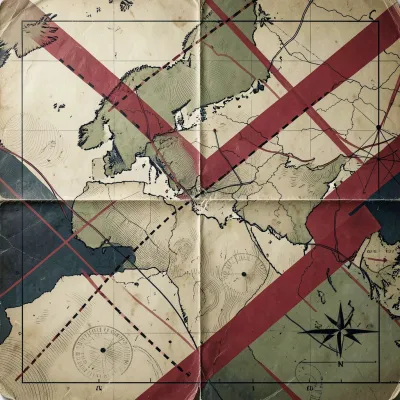
*Grand Strategy in the Middle East* examines the evolving regional order through the lens of competing interests among global superpowers (the U.S., Russia, and China) and assertive regional players (Iran, Saudi Arabia, Israel, Turkey, Egypt, and the Gulf micro-states). The book posits that the contemporary Middle East is no longer defined by American primacy but by a "pluralized" environment where states pursue strategic autonomy through "hedging"—cultivating multiple patrons and issue-based alignments rather than rigid blocs. This landscape is shaped by diversified instruments of power, including precision missiles, drone swarms, cyber warfare, and geoeconomic statecraft such as sanctions and infrastructure investments like China’s Belt and Road Initiative.
The analysis disaggregates the region into interconnected "conflict systems"—the Levant, Gulf, Red Sea, and North Africa—linked by maritime chokepoints like the Strait of Hormuz and the Suez Canal. It details how the internal political economies of these states, particularly the urgent need for economic diversification in the face of the global energy transition and climate stress, now drive foreign policy as much as traditional security dilemmas. While the book highlights the sophisticated "battle networks" and proxy warfare that define modern deterrence, it also identifies an undercurrent of pragmatic "cooperative security," where rivals engage in de-confliction and confidence-building measures to avoid catastrophic escalation.
The final section of the book utilizes strategic foresight to project two primary scenarios for the decade 2026–2036. The first, "Fragmented Multipolarity," envisions a period of competitive stabilization where great powers maintain a wary, "over-the-horizon" presence, leaving regional actors to manage a precarious balance marked by intermittent proxy crises. The second, "Concerted Security Architecture," explores a more optimistic path where a shared recognition of common threats—such as water scarcity and economic obsolescence—leads to institutionalized de-escalation and deeper regional economic integration. Ultimately, the book serves as a framework for decision-makers to navigate a region where the traditional rules of order are being rewritten by technological change and shifting global priorities.
What You'll Find Inside:
- Examination of how the United States, Russia, and China employ distinct toolkits—military, economic, technological, and ideational—to pursue their interests in a contested Middle East.
- Analysis of regional order as a fluid equilibrium of hierarchy, legitimacy, and mechanisms such as deterrence, alliances, and issue‑based coalitions that shape state and non‑state behavior.
- Exploration of asymmetric instruments—proxy networks, missile programs, cyber capabilities, and drone warfare—that enable actors like Iran and non‑state groups to project influence despite conventional limitations.
- Assessment of economic statecraft, including sanctions, Belt and Road investments, and the energy transition, as central levers of influence and sources of vulnerability across the region.
- Presentation of two contrasting 2026‑2036 scenarios—fragmented multipolarity versus concerted security architecture—to stress‑test strategies and identify early‑warning indicators.
Who's It For:
The book is intended for policymakers, security analysts, and government officials involved in Middle Eastern affairs, as well as scholars and graduate students in international relations, strategic studies, and regional security. It will also benefit professionals in defense, energy, and finance who need to understand how geopolitical rivalries, economic statecraft, and technological change intersect in the region. Think‑tank researchers and journalists seeking a comprehensive, comparative framework for assessing contemporary and future regional dynamics will find it valuable.
Table of Contents:
- Introduction
- Chapter 1 Mapping the Strategic Landscape: Geography, Demography, and Political Economies
- Chapter 2 What Is Regional Order? Concepts, Hierarchies, and Mechanisms
- Chapter 3 The Instruments of Power: Military, Economic, Technological, and Ideational Tools
- Chapter 4 United States Strategy: Objectives, Toolkits, and Domestic Constraints
- Chapter 5 Russia’s Strategy: Leverage from Limited Means
- Chapter 6 China’s Strategy: Geoeconomics, Connectivity, and Risk Aversion
- Chapter 7 Iran’s Strategy: Deterrence, Proxies, and Negotiated Space
- Chapter 8 Saudi Arabia’s Strategy: Vision, Diversification, and Security Guarantees
- Chapter 9 Israel’s Strategy: Edge Maintenance, Normalization, and Red Lines
- Chapter 10 Turkey’s Strategy: Strategic Autonomy and Regional Reach
- Chapter 11 Egypt’s Strategy: Regime Security, Canal Leverage, and Balancing
- Chapter 12 The Gulf Micro-States: UAE, Qatar, and Bahrain as Agile Powers
- Chapter 13 Non‑State Armed Actors: Influence, Governance, and External Patrons
- Chapter 14 Energy, Transition, and Hydrocarbon Politics in a Warming Region
- Chapter 15 Technology and the Battle Networks: Missiles, Air Defense, Drones, Cyber, and AI
- Chapter 16 Maritime Chokepoints and Overland Corridors: SLOCs, Straits, and Logistics
- Chapter 17 Economic Statecraft: Sanctions, Finance, and Industrial Policy Plays
- Chapter 18 Information Operations and the Contest for Narratives
- Chapter 19 Alignment Choices: Hedging, Balancing, Bandwagoning, and Issue‑Based Coalitions
- Chapter 20 Deterrence Dynamics: Escalation Ladders, Signaling, and Crisis Management
- Chapter 21 Conflict Systems: Levant, Gulf, Red Sea, and North Africa Interlinkages
- Chapter 22 Cooperative Security: Confidence‑Building, Arms Control, and De‑Escalation Mechanisms
- Chapter 23 Scenario Design: Methods, Indicators, and Early‑Warning Models
- Chapter 24 Scenarios 2026–2036: Fragmented Multipolarity and Competitive Stabilization
- Chapter 25 Scenarios 2026–2036: Concerted Security Architecture and Economic Integration
Author:
Published By:
Date Published:
March 13, 2026
Type:
Nonfiction
Language:
English
Word Count:
50,772 words
Reading Time:
3 hours 33 minutes
Sample:
Order:
Order Grand Strategy in the Middle East: Competing Visions of Regional Order (Hardcover) on MixCache.com:
Buy NowPrint copy is made to order and ships worldwide. Includes the ebook free, ready to read instantly.
$5 account credit for all new MixCache.com accounts, usable toward any ebook purchase!*