Browse by Category
Fiction
- Action & Adventure
- African American
- Anthologies
- Children's Fiction
- Classics
- Comics & Graphic Novels
- Coming of Age
- Contemporary
- Cultural & Regional
- Drama
- Erotica
- Family Life
- Fantasy
- General
- Historical Fiction
- Horror
- Humor & Satire
- Literary Fiction
- Mystery, Thriller & Suspense
- Poetry
- Religious & Inspirational
- Romance
- Science Fiction
- Short Stories
- War & Military
- Westerns
- Women's Fiction
- Young Adult
Non-Fiction
- Antiques & Collectibles
- Arts & Photography
- Biographies & Memoirs
- Business & Money
- Children's Non-Fiction
-
Computers & Technology
- Artificial Intelligence
- Computer Science
- Cybersecurity & Cryptography
- Data Science & Analytics
- Databases & Big Data
- Game Development & Design
- General
- Hardware & DIY
- Mobile App Development
- Networking & Cloud Computing
- Operating Systems
- Programming
- Robotics
- Software
- Software Engineering
- User Experience (UX) & Design
- Web Development & Design
- Cooking, Food & Wine
- Crafts, Hobbies & Home
- Education & Teaching
- Engineering
- General
- Health, Fitness & Dieting
-
History
- African History
- African History - North Africa
- African History - Sub-Saharan Africa
- American History
- American History - 20th Century
- American History - Civil War
- American History - Colonial Period
- Ancient History
- Asian History
- Asian History - China
- Asian History - India
- Asian History - Japan
- Asian History - Southeast Asia
- European History
- European History - Ancient Greece
- European History - Ancient Rome
- European History - Medieval
- European History - Modern
- European History - Renaissance
- General
- Middle Eastern History
- Military History
- Military History - Aviation
- Military History - Naval
- Social & Cultural History
- World History
- Humor & Entertainment
- Industrial Technology
- Language Learning
- Law
- LGBTQ+ Non-Fiction
- Literary Criticism
- Medical Books
- Parenting & Relationships
- Philosophy
- Politics & Social Sciences
- Reference
- Religion & Spirituality
-
Science & Math
- Agricultural Sciences
- Astronomy & Space Science
- Behavioral Sciences
- Biological Sciences
- Botany & Plant Science
- Chemistry
- Earth Sciences
- Engineering - Chemical
- Engineering - Civil
- Engineering - Electrical
- Engineering - Mechanical
- Environment
- General
- Geology
- Mathematics
- Nature & Ecology
- Oceanography
- Paleontology
- Physics
- Statistics
- Self-Help
- Sports & Outdoors
- Study Aids
- Sustainability & Green Living
- Textbooks
- Transportation
- Travel
- True Crime
- Urban Planning & Development
- Veterinary Medicine
- Writing & Publishing
Jump to Section
MixCache.com Total Access
Unlimited reading and audiobooks for every book published by MixCache.com.
Included titles carry the MTA badge.
Learn more →A History of Paraguay MTA
About this book:
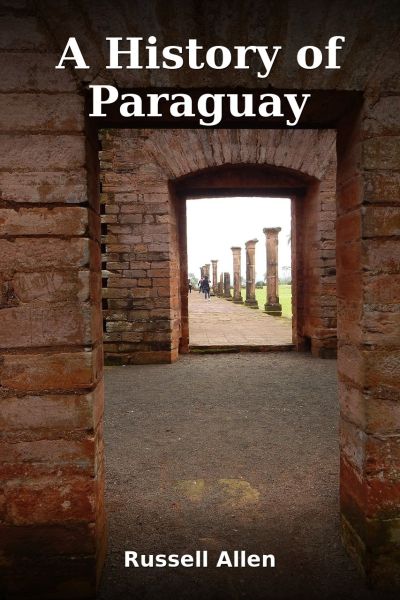
Explore the unique and compelling history of Paraguay, a landlocked nation in the heart of South America whose story is one of remarkable resilience against overwhelming odds. From its ancient roots shaped by the mighty Paraná and Paraguay rivers and the vibrant cultures of indigenous peoples like the Guaraní, the book traces the arrival of Europeans and the distinct path of colonial Paraguay. Lacking the mineral wealth that defined other Spanish colonies, Paraguay developed a unique blend of Spanish and Guaraní life, marked by relative isolation, the fascinating social experiment of the Jesuit missions, and the emergence of a predominantly mestizo society. The narrative delves into the struggles for independence, the definitive rejection of subordination to Buenos Aires, and the subsequent establishment of fierce autonomy under enigmatic figures like Dr. José Gaspar Rodríguez de Francia, who famously sealed Paraguay off from the outside world in a radical quest for national survival.
Discover how this period of isolation under Francia and the ambitious modernization efforts of the López dynasty ultimately led Paraguay into the devastating War of the Triple Alliance (1864-1870), a catastrophic conflict that decimated the nation's population and left it in ruins under foreign occupation. The book chronicles the arduous post-war recovery, marked by political instability, the consolidation of land ownership by a few, and enduring social inequality. It examines the equally brutal Chaco War (1932-1935) against Bolivia, another costly struggle that, while confirming Paraguay's territorial claims, further scarred the nation. The narrative then explores the subsequent cycle of authoritarianism and civil strife, culminating in the long and repressive dictatorship of Alfredo Stroessner (1954-1989), a period of enforced stability maintained through widespread control and human rights abuses.
Finally, the book brings the story to the present day, analyzing Paraguay's challenging transition to democracy since 1989. It explores the ongoing struggles to consolidate democratic institutions, combat pervasive corruption, address deep-seated social and economic inequalities, and strengthen the rule of law. Yet, amidst these challenges, it highlights the enduring strength of Paraguayan national identity, rooted in its unique cultural fusion and the widespread use of the Guaraní language, and reflects on the hopes for a more just, equitable, and prosperous future as the nation continues to navigate the complex legacies of its past and forge its path in the modern world.
What You'll Find Inside:
- Explore the pre-colonial world of the Guaraní and other indigenous groups and the unique development of early colonial society around Asunción.
- Understand the rise and fall of the Jesuit Reductions, a unique social and economic experiment within the Spanish Empire.
- Examine Paraguay's fierce assertion of independence from both Spain and Buenos Aires, leading to decades of self-imposed isolation under Dr. Francia.
- Learn about the ambitious López dynasty, the factors leading to the devastating War of the Triple Alliance, and the conflict's tragic consequences.
- Trace Paraguay's turbulent 20th century, from the Chaco War and civil strife to the long Stroessner dictatorship and the complex return to democracy.
Who's It For:
This book is for anyone seeking a comprehensive understanding of Paraguay's history, from its indigenous origins and unique colonial development to its post-independence struggles, devastating wars, long dictatorships, and complex transition to democracy. It will particularly benefit students and readers interested in the history of Latin America, offering insights into a nation often overlooked but with a truly singular historical journey shaped by geography, culture, and fierce independence.
Introduction
Paraguay is a country that stands apart in South America, not only for its geography but for the dramatic twists and turns of its historical journey. Landlocked and often overlooked in regional or global narratives, its story is both unique and compelling—a tale marked by interactions among indigenous communities, centuries of colonial entanglements, war, dictatorship, resilience, and renewal. The course of Paraguayan history is one of survival against overwhelming odds, adaptation to near-constant upheaval, and an enduring search for national identity.
The earliest chapters of Paraguayan history are rooted in a landscape shaped by the Paraná, Paraguay, and Pilcomayo rivers, home to various indigenous groups with the Guaraní as the most influential. Long before the arrival of Europeans, the region’s peoples had built vibrant cultures, spiritual beliefs, and systems of cooperation that would leave an indelible imprint on national life. The persistence of the Guaraní language and traditions in modern Paraguay is a testament to the strength and adaptability of these foundational societies.
The colonial era transformed Paraguay in unexpected ways. Lacking the mineral wealth that drew settlers elsewhere, Paraguay became a province on the margins, defined by its isolation, economic constraints, and complex relations between Spanish settlers and indigenous populations.
Enjoying it? The full book includes every chapter.
Table of Contents:
- Introduction Free
- Chapter 1 The Land and Its Peoples: Geography and Ancient Roots Free
- Chapter 2 The World of the Guaraní and Other Indigenous Groups
- Chapter 3 First Encounters: Europeans Arrive in the Río de la Plata
- Chapter 4 Foundation of Asunción and Early Colonial Paraguay
- Chapter 5 Colonial Society: Spanish Settlers, Mestizaje, and Indigenous Life
- Chapter 6 The Rise and Fall of Jesuit Reductions
- Chapter 7 Life on the Frontier: Paraguay’s Periphery in the Spanish Empire
- Chapter 8 Seeds of Change: The Late Colonial Period and Provincial Challenges
- Chapter 9 The Road to Independence: Conflicts with Buenos Aires
- Chapter 10 Birth of a Nation: The Independence Movement (1810–1814)
- Chapter 11 Dr. Francia and the Creation of an Isolationist State
- Chapter 12 Reforms and Repression: Francia’s Dictatorship in Practice
- Chapter 13 The López Dynasty: Modernization and Ambitions
- Chapter 14 International Rivalries and the Path to War
- Chapter 15 The War of the Triple Alliance: Outbreak and Early Battles
- Chapter 16 Catastrophe and Survival: The Tragedy of 1864–1870
- Chapter 17 Aftermath and Occupation: Rebuilding a Broken Nation
- Chapter 18 Political Realignment: The Liberal Era and Its Discontents
- Chapter 19 Land, Labor, and the Social Question
- Chapter 20 The Chaco War: Struggle with Bolivia
- Chapter 21 Authoritarianism and Civil Strife: From the 1930s to the Stroessner Coup
- Chapter 22 Alfredo Stroessner: Paraguay Under Dictatorship
- Chapter 23 Resistance, Repression, and the Seeds of Change
- Chapter 24 Return to Democracy: Transition and Challenges (1989–Present)
- Chapter 25 Paraguay Today: National Identity, Challenges, and Hopes for the Future
Included when you buy the full book.
Author:
Published By:
Date Published:
May 21, 2025
Type:
Nonfiction
Language:
English
Word Count:
36,873 words
Reading Time:
2 hours 35 minutes
Sample:
Order:
Order A History of Paraguay (Paperback) on MixCache.com:
Buy NowIncludes every chapter. Not sure yet? Read the opening free.
Print copy is made to order and ships worldwide. Includes the ebook free, ready to read instantly.
$5 account credit for all new MixCache.com accounts, usable toward any ebook purchase!*