
Browse by Category
Fiction
- Action & Adventure
- African American
- Anthologies
- Children's Fiction
- Classics
- Comics & Graphic Novels
- Coming of Age
- Contemporary
- Cultural & Regional
- Drama
- Erotica
- Fantasy
- General
- Historical Fiction
- Horror
- Humor & Satire
- Literary Fiction
- Mystery, Thriller & Suspense
- Poetry
- Religious & Inspirational
- Romance
- Science Fiction
- Short Stories
- War & Military
- Westerns
- Women's Fiction
- Young Adult
Non-Fiction
- Antiques & Collectibles
- Arts & Photography
- Biographies & Memoirs
- Business & Money
- Children's Non-Fiction
-
Computers & Technology
- Artificial Intelligence
- Computer Science
- Cybersecurity & Cryptography
- Data Science & Analytics
- Databases & Big Data
- Game Development & Design
- General
- Hardware & DIY
- Mobile App Development
- Networking & Cloud Computing
- Operating Systems
- Programming
- Robotics
- Software
- Software Engineering
- User Experience (UX) & Design
- Web Development & Design
- Cooking, Food & Wine
- Crafts, Hobbies & Home
- Education & Teaching
- Engineering
- General
- Health, Fitness & Dieting
-
History
- African History
- African History - North Africa
- African History - Sub-Saharan Africa
- American History
- American History - 20th Century
- American History - Civil War
- American History - Colonial Period
- Ancient History
- Asian History
- Asian History - China
- Asian History - India
- Asian History - Japan
- Asian History - Southeast Asia
- European History
- European History - Ancient Greece
- European History - Ancient Rome
- European History - Medieval
- European History - Modern
- European History - Renaissance
- General
- Middle Eastern History
- Military History
- Military History - Aviation
- Military History - Naval
- Social & Cultural History
- World History
- Humor & Entertainment
- Industrial Technology
- Language Learning
- Law
- LGBTQ+ Non-Fiction
- Literary Criticism
- Medical Books
- Parenting & Relationships
- Philosophy
- Politics & Social Sciences
- Reference
- Religion & Spirituality
-
Science & Math
- Agricultural Sciences
- Astronomy & Space Science
- Behavioral Sciences
- Biological Sciences
- Botany & Plant Science
- Chemistry
- Earth Sciences
- Engineering - Chemical
- Engineering - Civil
- Engineering - Electrical
- Engineering - Mechanical
- Environment
- General
- Geology
- Mathematics
- Nature & Ecology
- Oceanography
- Paleontology
- Physics
- Statistics
- Self-Help
- Sports & Outdoors
- Study Aids
- Sustainability & Green Living
- Textbooks
- Transportation
- Travel
- True Crime
- Urban Planning & Development
- Veterinary Medicine
- Writing & Publishing
Jump to Section
MixCache.com Total Access
Unlimited reading and audiobooks for every book published by MixCache.com.
Included titles carry the MTA badge.
Learn more →
Pickleball
MTA
A Concise History
About this book:
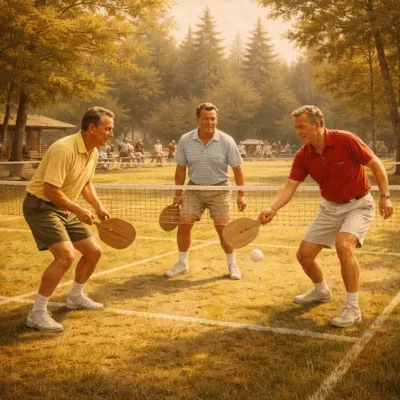
"Pickleball: A Concise History" chronicles the remarkable journey of a sport that originated in 1965 on Bainbridge Island, Washington, as an improvised backyard game created by Joel Pritchard, Bill Bell, and Barney McCallum. Initially using plywood paddles and a Wiffle ball with a lowered badminton net, the trio developed a unique set of rules blending badminton, tennis, and ping-pong, including the defining "non-volley zone" (the kitchen) and double-bounce rule. Their goal was to create a fun, accessible activity for families, leading to the sport’s organic spread through local communities, with early growth fueled by word-of-mouth and the informal adoption of courts in public spaces.
The 1970s and 1980s saw formalized efforts to standardize and promote the sport, culminating in the establishment of the United States Amateur Pickleball Association (USAPA) in 1984, which provided unified rules, player rankings, and sanctioned tournaments. Equipment evolved from basic wooden paddles to advanced composite materials, enhancing performance while maintaining accessibility. The 1990s and early 2000s marked a surge in growth, particularly among retirees in Sun Belt states, as communities invested in dedicated facilities. The 2010s ushered in professional tours like the PPA and APP, elevating pickleball into a spectator sport and attracting elite athletes, while social media amplified its reach and global appeal.
The book highlights pickleball’s unique inclusivity, appealing to all ages and skill levels due to its low-impact nature, strategic depth, and social focus. Its intergenerational play and welcoming community ethos have fostered a global network of clubs, tournaments, and online engagement. Technological advancements in paddles and balls further refined gameplay, while the sport’s integration into retirement communities and public recreation centers underscored its adaptability and broad demographic appeal. Health and wellness benefits, including cardiovascular fitness and mental acuity, are emphasized as key drivers of its popularity.
Looking forward, the text outlines pickleball’s continued evolution, including infrastructure development, professionalization, and global expansion, alongside challenges like noise management and equitable access. The sport’s enduring legacy rests on its foundation of community, accessibility, and the joy of play, transforming a simple backyard idea into a worldwide phenomenon. The narrative celebrates how pickleball’s inclusive design and human-centered growth have secured its place as a dynamic, cross-generational sport.
What You'll Find Inside:
- The whimsical backyard origins of pickleball on Bainbridge Island in 1965, created by Joel Pritchard, Bill Bell, and Barney McCallum to entertain their bored families
- The evolution of equipment from rudimentary plywood paddles and Wiffle balls to today's high-tech composite designs with specialized cores and surfaces
- How governing bodies like USAPA/USA Pickleball standardized rules, sanctioned tournaments, and facilitated the sport's national and international growth
- The pivotal role retirement communities played in pickleball's explosive popularity, particularly among active seniors seeking low-impact social activity
- The unique rules that define pickleball, including the 'kitchen' (non-volley zone) and double-bounce rule, which create its distinctive strategic gameplay and accessibility
Who's It For:
This book is ideal for pickleball players of all levels who want to understand the rich history and evolution of their sport, sports history enthusiasts interested in how recreational games develop, and anyone curious about the origins of America's fastest-growing sport. It will particularly appeal to those who appreciate detailed historical narratives combined with insights into how community, innovation, and inclusivity have shaped pickleball's remarkable journey from a backyard pastime to a global phenomenon.
Table of Contents:
- Introduction
- Chapter 1 The Unexpected Origins
- Chapter 2 Bainbridge Island's Backyard Birth
- Chapter 3 The Founding Fathers: Joel Pritchard, Barney McCallum, and Bill Bell
- Chapter 4 Naming the Game: A Dog or a Wife's Idea?
- Chapter 5 Early Equipment: Plywood Paddles and Wiffle Balls
- Chapter 6 The First Ruleset: A Blend of Badminton, Tennis, and Ping-Pong
- Chapter 7 Spreading the Word: From Backyard Fun to Community Courts
- Chapter 8 The 1970s: Growth and Early Tournaments
- Chapter 9 Formalizing the Sport: The Establishment of the USAPA
- Chapter 10 The 1980s: Standardization and National Recognition
- Chapter 11 Technological Advancements: Paddle and Ball Evolution
- Chapter 12 The 1990s: Club Growth and Competitive Play
- Chapter 13 The New Millennium: A Surge in Popularity
- Chapter 14 The Role of Retirement Communities in Pickleball's Boom
- Chapter 15 Professional Pickleball: The Rise of Elite Players
- Chapter 16 Major Tournaments and Leagues
- Chapter 17 Pickleball Goes Global: International Expansion
- Chapter 18 The Impact of Social Media on Pickleball's Growth
- Chapter 19 Equipment Innovations: From Wood to High-Tech Composites
- Chapter 20 The "Kitchen" and Other Unique Rules Explained
- Chapter 21 Pickleball's Inclusivity: A Sport for All Ages and Skill Levels
- Chapter 22 Health and Wellness Benefits of Playing Pickleball
- Chapter 23 The Future of Pickleball: Continued Growth and Evolution
- Chapter 24 Pickleball and its Community: More Than Just a Game
- Chapter 25 A Look Back: The Enduring Legacy of Pickleball
Author:
Published By:
Date Published:
July 14, 2026
Type:
Nonfiction
Language:
English
Word Count:
33,853 words
Reading Time:
2 hours 22 minutes
Sample:
MixCache.com Total Access
Get unlimited access to this book + all books published by MixCache.com for $11.99/month
Subscribe to MTAOr purchase this book individually below
Order:
Buy the Pickleball ebook on MixCache.com:
Buy Now
Full ebook will be available immediately
- read online or download as a PDF file.
$5 account credit for all new MixCache.com accounts, usable toward any ebook purchase!*



Ratings & Reviews
Ask Questions About This Book
Have a question about the content? Ask our AI assistant!
Start by asking a question about "Pickleball"
Example: "Does this book mention William Shakespeare?"
Thinking...