Browse by Category
Fiction
- Action & Adventure
- African American
- Anthologies
- Children's Fiction
- Classics
- Comics & Graphic Novels
- Coming of Age
- Contemporary
- Cultural & Regional
- Drama
- Erotica
- Fantasy
- General
- Historical Fiction
- Horror
- Humor & Satire
- Literary Fiction
- Mystery, Thriller & Suspense
- Poetry
- Religious & Inspirational
- Romance
- Science Fiction
- Short Stories
- War & Military
- Westerns
- Women's Fiction
- Young Adult
Non-Fiction
- Antiques & Collectibles
- Arts & Photography
- Biographies & Memoirs
- Business & Money
- Children's Non-Fiction
-
Computers & Technology
- Artificial Intelligence
- Computer Science
- Cybersecurity & Cryptography
- Data Science & Analytics
- Databases & Big Data
- Game Development & Design
- General
- Hardware & DIY
- Mobile App Development
- Networking & Cloud Computing
- Operating Systems
- Programming
- Robotics
- Software
- Software Engineering
- User Experience (UX) & Design
- Web Development & Design
- Cooking, Food & Wine
- Crafts, Hobbies & Home
- Education & Teaching
- Engineering
- General
- Health, Fitness & Dieting
-
History
- African History
- African History - North Africa
- African History - Sub-Saharan Africa
- American History
- American History - 20th Century
- American History - Civil War
- American History - Colonial Period
- Ancient History
- Asian History
- Asian History - China
- Asian History - India
- Asian History - Japan
- Asian History - Southeast Asia
- European History
- European History - Ancient Greece
- European History - Ancient Rome
- European History - Medieval
- European History - Modern
- European History - Renaissance
- General
- Middle Eastern History
- Military History
- Military History - Aviation
- Military History - Naval
- Social & Cultural History
- World History
- Humor & Entertainment
- Industrial Technology
- Language Learning
- Law
- LGBTQ+ Non-Fiction
- Literary Criticism
- Medical Books
- Parenting & Relationships
- Philosophy
- Politics & Social Sciences
- Reference
- Religion & Spirituality
-
Science & Math
- Agricultural Sciences
- Astronomy & Space Science
- Behavioral Sciences
- Biological Sciences
- Botany & Plant Science
- Chemistry
- Earth Sciences
- Engineering - Chemical
- Engineering - Civil
- Engineering - Electrical
- Engineering - Mechanical
- Environment
- General
- Geology
- Mathematics
- Nature & Ecology
- Oceanography
- Paleontology
- Physics
- Statistics
- Self-Help
- Sports & Outdoors
- Study Aids
- Sustainability & Green Living
- Textbooks
- Transportation
- Travel
- True Crime
- Urban Planning & Development
- Veterinary Medicine
- Writing & Publishing
Jump to Section
MixCache.com Total Access
Unlimited reading and audiobooks for every book published by MixCache.com.
Included titles carry the MTA badge.
Learn more →
Education In Saint Vincent and The Grenadines
MTA
A Comprehensive Overview from Early Childhood to Higher Education
About this book:
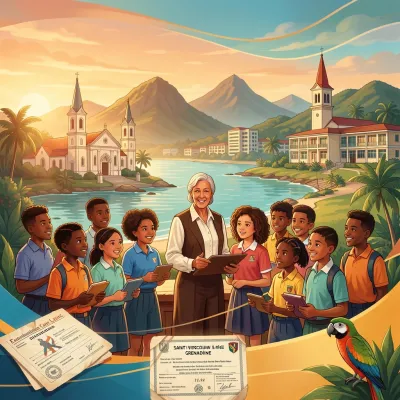
Education in Saint Vincent and the Grenadines is a comprehensive and dynamic system that has evolved from its colonial origins into a nationally driven enterprise aimed at fostering human capital and national development. The book traces this journey from informal, community-based learning and sporadic missionary schooling during the colonial era, through a post-independence push for universal access and curriculum localization, to the current complex structure overseen by the Ministry of Education. This structure encompasses a diverse range of providers, including government, denominational, and private institutions, all working within a framework of centralized policy-making and localized implementation designed to meet the needs of a multi-island state. The system is characterized by a continuous effort to balance regional standards, particularly those of the Caribbean Examinations Council (CXC), with national priorities and cultural relevance.
The book provides an in-depth examination of each educational stage, from the play-based, developmentally appropriate focus of Early Childhood Education (ECE) to the foundational literacy and numeracy emphasis of primary school, and the specialized academic and vocational pathways of secondary education. A key theme is the strategic importance of Technical and Vocational Education and Training (TVET), which is positioned not as a secondary option but as a vital engine for economic growth, offering practical skills in fields ranging from hospitality to information technology. Higher education is anchored by the Saint Vincent and the Grenadines Community College (SVGCC) and the University of the West Indies (UWI) Open Campus, which provide accessible pathways for tertiary study, including flexible online and blended learning modalities that are crucial for a geographically dispersed population.
Significant attention is paid to the cross-cutting challenges and strategic priorities that shape the entire system. These include the persistent issues of equitable access and quality across rural and remote Grenadine islands, the profound impact of socioeconomic factors on educational attainment, and the ongoing effort to create a truly inclusive environment for students with special educational needs. The text also explores critical support systems, such as the role of technology in bridging the digital divide, the importance of teacher training and continuous professional development, and the necessity of integrated health and well-being programs in schools. The effective functioning of the system is shown to depend heavily on robust partnerships between the government, parents, communities, non-governmental organizations (NGOs), and international donors, all of whom contribute to a shared responsibility for educational outcomes.
Looking toward the future, the book emphasizes a deliberate and strategic shift towards preparing students with 21st-century skills—critical thinking, creativity, collaboration, communication, and digital literacy—to thrive in a rapidly evolving global landscape. This forward-looking vision is underpinned by a strong commitment to Education for Sustainable Development (ESD), which integrates environmental stewardship and disaster risk reduction into the curriculum. Through a series of case studies, the book highlights tangible examples of success and innovation, from community-led preschools and eco-schools to transformative TVET academies and inclusive education centers. These stories illustrate that despite ongoing challenges related to funding, infrastructure, and resource allocation, the Vincentian education system is resilient, adaptive, and deeply committed to empowering every citizen with the knowledge and skills needed for a prosperous future.
What You'll Find Inside:
- Traces the historical evolution of Vincentian education from colonial missionary efforts to post-independence reforms, highlighting the enduring impact of slavery and plantation economies on access and curriculum.
- Provides a detailed breakdown of the education system's structure and governance, from the Ministry of Education to school boards, covering early childhood, primary, secondary, TVET, and higher education.
- Examines persistent challenges of equity and access, including socioeconomic disparities, the digital divide, and geographical barriers affecting rural and Grenadine island students.
- Focuses on the integration of 21st-century skills, technology in education, and Education for Sustainable Development (ESD) as key strategies for preparing students for a globalized future.
- Dedicates significant attention to special education needs and inclusive practices, outlining policies, individualized education plans, and the role of NGOs in supporting diverse learners.
Who's It For:
This comprehensive overview is an essential resource for educators, policymakers, researchers, and students of education in small island developing states. It is particularly valuable for Vincentian teachers, school administrators, and Ministry of Education officials seeking a deep understanding of their system's history, structure, and reform priorities, as well as for international development practitioners and scholars focused on Caribbean education.
Table of Contents:
- Introduction
- Chapter 1 Historical Foundations of Education in Saint Vincent and the Grenadines
- Chapter 2 The Structure and Governance of the Education System
- Chapter 3 Early Childhood Education: Policies and Practices
- Chapter 4 Primary Education: Curriculum and Challenges
- Chapter 5 Secondary Education: Pathways and Reforms
- Chapter 6 Technical and Vocational Education and Training (TVET)
- Chapter 7 Higher Education Institutions and Programs
- Chapter 8 Teacher Training and Professional Development
- Chapter 9 Special Education Needs and Inclusive Practices
- Chapter 10 The Role of Technology in Education
- Chapter 11 Curriculum Development and Assessment
- Chapter 12 Funding and Financing of Education
- Chapter 13 Access, Equity, and Equality in Education
- Chapter 14 The Impact of Socioeconomic Factors on Educational Attainment
- Chapter 15 Education for Sustainable Development
- Chapter 16 Health and Well-being in Schools
- Chapter 17 Parental and Community Involvement in Education
- Chapter 18 Educational Partnerships and International Cooperation
- Chapter 19 Challenges and Opportunities in Rural Education
- Chapter 20 Addressing Learning Gaps and Academic Underachievement
- Chapter 21 The Role of Non-Governmental Organizations (NGOs) in Education
- Chapter 22 Education Policy and Planning
- Chapter 23 Distance Learning and Online Education
- Chapter 24 Preparing for the Future: Skills for the 21st Century
- Chapter 25 Case Studies and Success Stories in Vincentian Education
Author:
Published By:
Date Published:
July 3, 2026
Type:
Nonfiction
Language:
English
Word Count:
46,110 words
Reading Time:
3 hours 14 minutes
Sample:
Order:
Order Education In Saint Vincent and The Grenadines (Paperback) on MixCache.com:
Buy NowPrint copy is made to order and ships worldwide. Includes the ebook free, ready to read instantly.
$5 account credit for all new MixCache.com accounts, usable toward any ebook purchase!*