Browse by Category
Fiction
- Action & Adventure
- African American
- Anthologies
- Children's Fiction
- Classics
- Comics & Graphic Novels
- Coming of Age
- Contemporary
- Cultural & Regional
- Drama
- Erotica
- Fantasy
- General
- Historical Fiction
- Horror
- Humor & Satire
- Literary Fiction
- Mystery, Thriller & Suspense
- Poetry
- Religious & Inspirational
- Romance
- Science Fiction
- Short Stories
- War & Military
- Westerns
- Women's Fiction
- Young Adult
Non-Fiction
- Antiques & Collectibles
- Arts & Photography
- Biographies & Memoirs
- Business & Money
- Children's Non-Fiction
-
Computers & Technology
- Artificial Intelligence
- Computer Science
- Cybersecurity & Cryptography
- Data Science & Analytics
- Databases & Big Data
- Game Development & Design
- General
- Hardware & DIY
- Mobile App Development
- Networking & Cloud Computing
- Operating Systems
- Programming
- Robotics
- Software
- Software Engineering
- User Experience (UX) & Design
- Web Development & Design
- Cooking, Food & Wine
- Crafts, Hobbies & Home
- Education & Teaching
- Engineering
- General
- Health, Fitness & Dieting
-
History
- African History
- African History - North Africa
- African History - Sub-Saharan Africa
- American History
- American History - 20th Century
- American History - Civil War
- American History - Colonial Period
- Ancient History
- Asian History
- Asian History - China
- Asian History - India
- Asian History - Japan
- Asian History - Southeast Asia
- European History
- European History - Ancient Greece
- European History - Ancient Rome
- European History - Medieval
- European History - Modern
- European History - Renaissance
- General
- Middle Eastern History
- Military History
- Military History - Aviation
- Military History - Naval
- Social & Cultural History
- World History
- Humor & Entertainment
- Industrial Technology
- Language Learning
- Law
- LGBTQ+ Non-Fiction
- Literary Criticism
- Medical Books
- Parenting & Relationships
- Philosophy
- Politics & Social Sciences
- Reference
- Religion & Spirituality
-
Science & Math
- Agricultural Sciences
- Astronomy & Space Science
- Behavioral Sciences
- Biological Sciences
- Botany & Plant Science
- Chemistry
- Earth Sciences
- Engineering - Chemical
- Engineering - Civil
- Engineering - Electrical
- Engineering - Mechanical
- Environment
- General
- Geology
- Mathematics
- Nature & Ecology
- Oceanography
- Paleontology
- Physics
- Statistics
- Self-Help
- Sports & Outdoors
- Study Aids
- Sustainability & Green Living
- Textbooks
- Transportation
- Travel
- True Crime
- Urban Planning & Development
- Veterinary Medicine
- Writing & Publishing
Jump to Section
MixCache.com Total Access
Unlimited reading and audiobooks for every book published by MixCache.com.
Included titles carry the MTA badge.
Learn more →
Education In Rwanda
MTA
A Comprehensive Overview from Early Childhood to Higher Education
About this book:
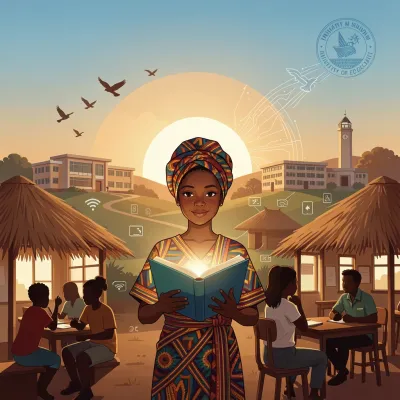
Rwanda’s education system has evolved from informal, community‑based learning through a colonial era marked by ethnic discrimination, to a post‑genocide reconstruction that prioritized equity, national unity, and human‑capital development. The Ministry of Education (MINEDUC) oversees a decentralized structure that includes Early Childhood Development, six‑year free and compulsory primary education, a three‑year Ordinary Level and three‑year Advanced Level secondary cycle, Technical and Vocational Education and Training (TVET), and a growing higher‑education sector led by the University of Rwanda and regulated by the Higher Education Council. Policy frameworks such as Vision 2050, the National Strategy for Transformation, and the Education Sector Strategic Plan guide reforms toward a competency‑based curriculum, English as the medium of instruction from Primary Four, inclusive education, gender equality, and extensive integration of ICT.
Significant progress has been made in expanding access—primary gross enrollment now exceeds 95 % and secondary enrollment has risen sharply—while challenges persist in quality, teacher capacity, infrastructure, and equitable resource distribution, especially between urban and rural areas. Curriculum reforms emphasize critical thinking, problem‑solving, and cross‑cutting themes like peace, entrepreneurship, and environmental sustainability. Assessment systems combine continuous assessment with national examinations (PLE, O‑Level, A‑Level) and competency‑based TVET certification. Teacher training, both pre‑service and in‑service, is centralized through the University of Rwanda–College of Education and the Rwanda Education Board, with ongoing professional development to support curriculum shifts, language transitions, and inclusive practices. Partnerships with international donors, NGOs, and the private sector have provided funding, expertise, and innovation, particularly in TVET, digital learning, and research.
Education is credited with driving Rwanda’s socio‑economic transformation: reducing poverty, improving health outcomes, fostering a skilled workforce, stimulating entrepreneurship, and reinforcing social cohesion and reconciliation. Higher education institutions are increasingly oriented toward research and innovation in areas such as sustainable agriculture, public health, renewable energy, and ICT, while TVET programs align with industry needs to produce employable graduates. Private education providers expand access and choice across all levels, though concerns about equity and quality remain. Ongoing policy efforts focus on sustaining financing, deepening labor‑market relevance, strengthening data‑driven decision‑making, and ensuring that education continues to serve as a tool for national unity, sustainable development, and a prosperous, knowledge‑based future for all Rwandans.
What You'll Find Inside:
- A comprehensive examination of Rwanda's education system from early childhood through higher education, including the historical context from pre-colonial traditions through post-genocide reconstruction.
- Detailed analysis of the competency-based curriculum (CBC) reform and the shift to English as the primary language of instruction, highlighting implementation challenges and pedagogical shifts.
- In-depth coverage of Technical and Vocational Education and Training (TVET) as a strategic driver for workforce development and economic growth, including industry partnerships and entrepreneurship education.
- Exploration of cross-cutting themes such as inclusive education for special needs, gender equality in STEM, the role of technology in classrooms, and education for sustainable development.
- Critical examination of funding mechanisms, international partnerships, teacher training and professional development, and the disparities between urban and rural educational settings.
Who's It For:
This book is ideal for policymakers, education researchers, and development practitioners working in or studying African education systems, particularly those interested in post-conflict reconstruction and systemic reform. It also serves as a valuable resource for educators, university students in education or international development programs, and anyone seeking a detailed, data-rich understanding of how Rwanda has transformed its education sector to drive national unity and socio-economic development.
Table of Contents:
- Introduction
- Chapter 1: Historical Context of Education in Rwanda
- Chapter 2: The Rwandan Education System: Structure and Governance
- Chapter 3: Early Childhood Education: Policies, Access, and Quality
- Chapter 4: Primary Education: Curriculum, Enrollment, and Challenges
- Chapter 5: Secondary Education: Diversification and Pathways
- Chapter 6: Technical and Vocational Education and Training (TVET)
- Chapter 7: Higher Education Landscape: Universities and Institutions
- Chapter 8: Teacher Training and Professional Development
- Chapter 9: Language of Instruction in Rwandan Education
- Chapter 10: Curriculum Development and Reform
- Chapter 11: Assessment and Examinations System
- Chapter 12: Inclusive Education: Addressing Special Needs
- Chapter 13: Gender Equality in Education
- Chapter 14: The Role of Technology in Education
- Chapter 15: Education in Post-Conflict Rwanda: Reconstruction and Reconciliation
- Chapter 16: Funding and Financing of Education
- Chapter 17: Partnerships and International Cooperation in Education
- Chapter 18: Challenges and Opportunities in Rural Education
- Chapter 19: Urban Education: Dynamics and Disparities
- Chapter 20: The Impact of Education on Socio-Economic Development
- Chapter 21: Research and Innovation in Rwandan Higher Education
- Chapter 22: Education for Sustainable Development
- Chapter 23: The Role of Private Education Providers
- Chapter 24: Policy Frameworks and Future Directions for Education
- Chapter 25: Case Studies and Success Stories in Rwandan Education
Author:
Published By:
Date Published:
July 3, 2026
Type:
Nonfiction
Language:
English
Word Count:
42,879 words
Reading Time:
3 hours
Sample:
Order:
Order Education In Rwanda (Hardcover) on MixCache.com:
Buy NowPrint copy is made to order and ships worldwide. Includes the ebook free, ready to read instantly.
$5 account credit for all new MixCache.com accounts, usable toward any ebook purchase!*