Browse by Category
Fiction
- Action & Adventure
- African American
- Anthologies
- Children's Fiction
- Classics
- Comics & Graphic Novels
- Coming of Age
- Contemporary
- Cultural & Regional
- Drama
- Erotica
- Fantasy
- General
- Historical Fiction
- Horror
- Humor & Satire
- Literary Fiction
- Mystery, Thriller & Suspense
- Poetry
- Religious & Inspirational
- Romance
- Science Fiction
- Short Stories
- War & Military
- Westerns
- Women's Fiction
- Young Adult
Non-Fiction
- Antiques & Collectibles
- Arts & Photography
- Biographies & Memoirs
- Business & Money
- Children's Non-Fiction
-
Computers & Technology
- Artificial Intelligence
- Computer Science
- Cybersecurity & Cryptography
- Data Science & Analytics
- Databases & Big Data
- Game Development & Design
- General
- Hardware & DIY
- Mobile App Development
- Networking & Cloud Computing
- Operating Systems
- Programming
- Robotics
- Software
- Software Engineering
- User Experience (UX) & Design
- Web Development & Design
- Cooking, Food & Wine
- Crafts, Hobbies & Home
- Education & Teaching
- Engineering
- General
- Health, Fitness & Dieting
-
History
- African History
- African History - North Africa
- African History - Sub-Saharan Africa
- American History
- American History - 20th Century
- American History - Civil War
- American History - Colonial Period
- Ancient History
- Asian History
- Asian History - China
- Asian History - India
- Asian History - Japan
- Asian History - Southeast Asia
- European History
- European History - Ancient Greece
- European History - Ancient Rome
- European History - Medieval
- European History - Modern
- European History - Renaissance
- General
- Middle Eastern History
- Military History
- Military History - Aviation
- Military History - Naval
- Social & Cultural History
- World History
- Humor & Entertainment
- Industrial Technology
- Language Learning
- Law
- LGBTQ+ Non-Fiction
- Literary Criticism
- Medical Books
- Parenting & Relationships
- Philosophy
- Politics & Social Sciences
- Reference
- Religion & Spirituality
-
Science & Math
- Agricultural Sciences
- Astronomy & Space Science
- Behavioral Sciences
- Biological Sciences
- Botany & Plant Science
- Chemistry
- Earth Sciences
- Engineering - Chemical
- Engineering - Civil
- Engineering - Electrical
- Engineering - Mechanical
- Environment
- General
- Geology
- Mathematics
- Nature & Ecology
- Oceanography
- Paleontology
- Physics
- Statistics
- Self-Help
- Sports & Outdoors
- Study Aids
- Sustainability & Green Living
- Textbooks
- Transportation
- Travel
- True Crime
- Urban Planning & Development
- Veterinary Medicine
- Writing & Publishing
Jump to Section
MixCache.com Total Access
Unlimited reading and audiobooks for every book published by MixCache.com.
Included titles carry the MTA badge.
Learn more →
Education In Philippines
MTA
A Comprehensive Overview from Early Childhood to Higher Education
About this book:
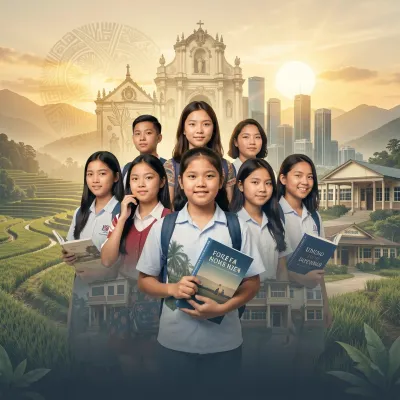
The book provides a thorough examination of the Philippine educational system, tracing its evolution from pre-colonial informal learning through Spanish and American colonial influences to post-independence efforts to forge a national identity. It details how indigenous practices were initially supplanted by religion-centric Spanish schooling and later reshaped by the American introduction of a widespread, secular public system using English as the medium of instruction, which laid the groundwork for modern structures despite creating lasting linguistic and cultural tensions. The post-independence era saw efforts to Filipinize the curriculum and expand access, setting the stage for contemporary reforms.
Central to the current system is the K-12 Basic Education Program, which restructured learning into Kindergarten, six years of elementary, four years of junior high, and two years of senior high school with specialized tracks (Academic, TVL, Sports, Arts and Design). The book explains the governance framework involving DepEd for basic education, CHED for higher education, and TESDA for technical-vocational training, alongside the implementation of policies like Mother Tongue-Based Multilingual Education (MTB-MLE) in early grades and the Universal Access to Quality Tertiary Education Act. It covers all educational stages, highlighting early childhood foundations, primary literacy and numeracy development, secondary specialization, TVET pathways for job-ready skills, and the diverse landscape of public and private higher education institutions.
The work critically addresses persistent challenges including disparities in access and quality linked to geography, poverty, and disability; ongoing struggles with teacher quality, compensation, and training; infrastructure gaps; the digital divide; and issues of curriculum relevance and implementation. It emphasizes efforts to promote equity through initiatives like the Alternative Learning System (ALS), Indigenous Peoples Education (IPEd) Program, Special Education (SPED) inclusion, and community engagement via School Governing Councils and local funding mechanisms, while acknowledging barriers such as resource allocation, societal attitudes, and vulnerability to natural disasters.
Looking ahead, the book discusses innovations driven by the K-12 refinement (e.g., MATATAG Curriculum), technological integration (EdTech, AI exploration), teacher development reforms (Teacher Education Excellence Centers), expanded lifelong learning and TVET for upskilling, strengthened public-private partnerships for infrastructure, and a deepening focus on Education for Sustainable Development and green skills. It concludes by envisioning a future system prioritizing curriculum decongestion, personalized learning through technology, modernized teacher training, enhanced inclusivity, sustainable practices, global competitiveness through internationalization, and innovative financing to meet the nation's developmental aspirations and empower every Filipino learner.
What You'll Find Inside:
- Comprehensive overview of Philippine education from early childhood through higher education, including the K-12 system structure and implementation.
- Historical evolution from pre-colonial indigenous practices through Spanish and American influences to modern educational reforms and policies.
- Detailed exploration of specialized education sectors including Technical-Vocational-Livelihood training, Indigenous Peoples Education, and Special Education programs.
- Analysis of contemporary challenges such as funding disparities, access and equity issues, digital divide, and language barriers in multilingual education.
- Insights into future directions including AI integration, lifelong learning initiatives, sustainable development education, and ongoing curriculum innovations like the MATATAG program.
Who's It For:
This book is essential for educators, policymakers, researchers, and students seeking a thorough understanding of the Philippine educational system. It particularly benefits teacher education students, educational administrators, curriculum developers, and government officials involved in education planning. Additionally, parents, community leaders, and international stakeholders interested in comparative education systems and inclusive policy frameworks will find valuable insights into the challenges and innovations shaping the future of learning in the Philippines.
Table of Contents:
- Introduction
- Chapter 1: Historical Foundations of Philippine Education
- Chapter 2: The Structure of the Philippine Educational System
- Chapter 3: Early Childhood Education: Laying the Foundation
- Chapter 4: Primary Education: K-6 Curriculum and Pedagogy
- Chapter 5: Secondary Education: Junior and Senior High School Tracks
- Chapter 6: The K-12 Program: Implementation and Impact
- Chapter 7: Technical and Vocational Education and Training (TVET)
- Chapter 8: Higher Education: Universities and Colleges
- Chapter 9: Access and Equity in Philippine Education
- Chapter 10: Indigenous Education and Cultural Preservation
- Chapter 11: Special Education: Catering to Diverse Needs
- Chapter 12: The Role of Language in Philippine Education
- Chapter 13: Teacher Education and Professional Development
- Chapter 14: Curriculum Development and Educational Standards
- Chapter 15: Assessment and Evaluation in the Philippine Context
- Chapter 16: Educational Technology and Digital Learning
- Chapter 17: Funding and Financing Education in the Philippines
- Chapter 18: Governance and Administration of Educational Institutions
- Chapter 19: Challenges and Issues in Philippine Education
- Chapter 20: Innovations and Reforms in the Educational Landscape
- Chapter 21: The Impact of Global Trends on Philippine Education
- Chapter 22: Education for Sustainable Development in the Philippines
- Chapter 23: Lifelong Learning and Continuing Education
- Chapter 24: The Role of Parents and Community in Education
- Chapter 25: Future Directions and Prospects for Philippine Education
Author:
Published By:
Date Published:
July 2, 2026
Type:
Nonfiction
Language:
English
Word Count:
44,490 words
Reading Time:
3 hours 7 minutes
Sample:
Order:
Order Education In Philippines (Paperback) on MixCache.com:
Buy NowPrint copy is made to order and ships worldwide. Includes the ebook free, ready to read instantly.
$5 account credit for all new MixCache.com accounts, usable toward any ebook purchase!*