
Browse by Category
Fiction
- Action & Adventure
- African American
- Anthologies
- Children's Fiction
- Classics
- Comics & Graphic Novels
- Coming of Age
- Contemporary
- Cultural & Regional
- Drama
- Erotica
- Fantasy
- General
- Historical Fiction
- Horror
- Humor & Satire
- Literary Fiction
- Mystery, Thriller & Suspense
- Poetry
- Religious & Inspirational
- Romance
- Science Fiction
- Short Stories
- War & Military
- Westerns
- Women's Fiction
- Young Adult
Non-Fiction
- Antiques & Collectibles
- Arts & Photography
- Biographies & Memoirs
- Business & Money
- Children's Non-Fiction
-
Computers & Technology
- Artificial Intelligence
- Computer Science
- Cybersecurity & Cryptography
- Data Science & Analytics
- Databases & Big Data
- Game Development & Design
- General
- Hardware & DIY
- Mobile App Development
- Networking & Cloud Computing
- Operating Systems
- Programming
- Robotics
- Software
- Software Engineering
- User Experience (UX) & Design
- Web Development & Design
- Cooking, Food & Wine
- Crafts, Hobbies & Home
- Education & Teaching
- Engineering
- General
- Health, Fitness & Dieting
-
History
- African History
- African History - North Africa
- African History - Sub-Saharan Africa
- American History
- American History - 20th Century
- American History - Civil War
- American History - Colonial Period
- Ancient History
- Asian History
- Asian History - China
- Asian History - India
- Asian History - Japan
- Asian History - Southeast Asia
- European History
- European History - Ancient Greece
- European History - Ancient Rome
- European History - Medieval
- European History - Modern
- European History - Renaissance
- General
- Middle Eastern History
- Military History
- Military History - Aviation
- Military History - Naval
- Social & Cultural History
- World History
- Humor & Entertainment
- Industrial Technology
- Language Learning
- Law
- LGBTQ+ Non-Fiction
- Literary Criticism
- Medical Books
- Parenting & Relationships
- Philosophy
- Politics & Social Sciences
- Reference
- Religion & Spirituality
-
Science & Math
- Agricultural Sciences
- Astronomy & Space Science
- Behavioral Sciences
- Biological Sciences
- Botany & Plant Science
- Chemistry
- Earth Sciences
- Engineering - Chemical
- Engineering - Civil
- Engineering - Electrical
- Engineering - Mechanical
- Environment
- General
- Geology
- Mathematics
- Nature & Ecology
- Oceanography
- Paleontology
- Physics
- Statistics
- Self-Help
- Sports & Outdoors
- Study Aids
- Sustainability & Green Living
- Textbooks
- Transportation
- Travel
- True Crime
- Urban Planning & Development
- Veterinary Medicine
- Writing & Publishing
Jump to Section
MixCache.com Total Access
Unlimited reading and audiobooks for every book published by MixCache.com.
Included titles carry the MTA badge.
Learn more →
Education In Papua New Guinea
MTA
A Comprehensive Overview from Early Childhood to Higher Education
About this book:
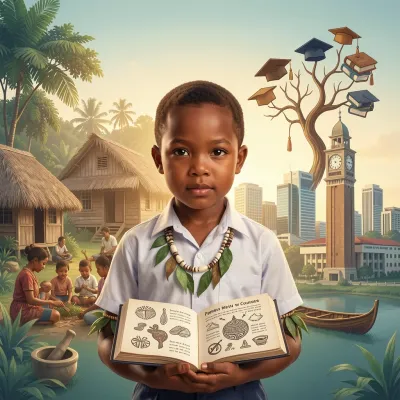
Educationin Papua New Guinea is shaped by profound linguistic and cultural diversity, with over 800 indigenous languages influencing learning from birth through community-based observation and participation in practical skills, social norms, and spiritual knowledge. The late 19th century saw Christian missionaries establish the first Western-style schools focused on religious conversion and literacy in local languages or lingua francas like Motu and Tok Pisin. Colonial administrations, particularly German and later Australian, initially delegated education to missions, with limited direct involvement until after World War II when Australia established a Department of Education, introduced the New South Wales curriculum, and laid foundations for higher education through initiatives like the Currie Commission, leading to the founding of the University of Papua New Guinea in 1965. The 1970 Papua New Guinea Education Ordinance aimed to unify government and mission schools ahead of independence in 1975.
The contemporary system is governed by the National Department of Education (NDOE) for basic education and the Department of Higher Education, Research, Science and Technology (DHERST) for tertiary levels, operating alongside provincial governments and significant church agency partnerships that manage numerous schools. Early Childhood Education features the Elementary Prep-2 program, initiating literacy in vernacular languages before transitioning to English-medium instruction from Grade 3. Primary education (Grades 3-8) emphasizes English as the medium of instruction while delivering a national curriculum in core subjects, facing challenges in resource allocation, teacher quality, and infrastructure. Secondary education (Grades 9-12) offers academic pathways determined by high-stakes Grade 10 and 12 examinations, with ongoing reforms to expand access and relevance. Technical and Vocational Education and Training (TVET) provides competency-based training aligned with industry needs through technical colleges and vocational centers. Higher education centers on the University of Papua New Guinea and Papua New Guinea University of Technology, alongside specialized institutions such as the University of Technology, while higher education institutions operate under DHERST oversight, competing for entry via Grade 12 results and grappling with funding, brain drain, and global competitiveness.
Persistent challenges include geographical isolation hindering access and quality in rural areas, socioeconomic barriers exacerbated by indirect costs despite Tuition Fee Free policies, gender disparities affecting girls' retention due to early marriage, safety concerns, and inadequate sanitation, and difficulties in implementing inclusive education for children with disabilities. Language policy remains complex, balancing vernacular foundations in early years with English dominance later, hampered by material development across hundreds of languages and teacher capacity. Funding relies heavily on national budgets, provincial contributions, and international aid from partners like Australia, New Zealand, the World Bank, and NGOs, with teacher salaries consuming the majority of recurrent expenditure. Quality assurance efforts by NDOE and DHERST face obstacles in monitoring, assessment consistency, and resource distribution, while technology integration struggles with electricity, internet access, and digital literacy gaps. Education for Sustainable Development seeks to weave traditional ecological knowledge and climate resilience into curricula across all levels.
Future directions focus on strengthening foundational learning through improved vernacular instruction and English transition support, expanding relevant secondary and TVET pathways with greater industry alignment, leveraging digital technology via off-grid solutions and teacher training, and deepening equity through targeted support for marginalized groups, including rural communities, girls, and children with disabilities. Reforms aim to enhance governance, financial management, and leadership capacity, reduce dependency on aid through domestic resource mobilization, integrate Education for Sustainable Development more fully, and address brain drain by improving teacher incentives, working conditions, and professional development. The system continues to navigate the tension between global standards and local relevance, striving to empower Papua New Guineans through education that honors cultural heritage while preparing for contemporary demands.
What You'll Find Inside:
- The book traces PNG's educational evolution from traditional community-based learning systems through colonial missionary and administration influences to modern post-independence reforms, highlighting how historical foundations continue to shape contemporary education.
- It provides a comprehensive analysis of PNG's education structure and governance, examining the complex interplay between the National Department of Education, Provincial Education Boards, church agencies, and school-level management in delivering education across the nation.
- The text details critical challenges and innovations at each education level - from early childhood vernacular instruction policies to primary education curriculum implementation, secondary education access reforms, TVET workforce development, and higher education institution dynamics.
- It explores essential cross-cutting themes including language policy and medium of instruction transitions, inclusive education for students with disabilities, gender disparities in girls' education, and the unique complexities of delivering education in rural and remote areas.
- The book examines vital support systems and challenges, covering education financing mechanisms, quality assurance standards, technology integration impacts, the role of NGOs and international partnerships, and ongoing issues like brain drain of skilled educators.
Who's It For:
This book serves as an invaluable resource for educators, policymakers, researchers, development practitioners, and anyone with a vested interest in the future of Papua New Guinea's education system. It offers a comprehensive overview that fosters deeper understanding of the triumphs and tribulations within PNG's educational journey, highlights areas of success, and identifies pathways for continued growth and improvement. The content is particularly valuable for those seeking to engage with the complexities of education in a developing nation context while appreciating the rich cultural tapestry that shapes learning in PNG.
Table of Contents:
- Introduction
- Chapter 1: Historical Foundations of Education in Papua New Guinea
- Chapter 2: Traditional Education Systems and Their Influence
- Chapter 3: The Impact of Colonialism on PNG Education
- Chapter 4: Structure and Governance of the PNG Education System
- Chapter 5: Early Childhood Education: Policies and Practices
- Chapter 6: Access and Equity in Early Childhood Education
- Chapter 7: Primary Education: Curriculum and Challenges
- Chapter 8: Teacher Training and Development for Primary Schools
- Chapter 9: Secondary Education: Pathways and Reforms
- Chapter 10: Technical and Vocational Education and Training (TVET) in PNG
- Chapter 11: Higher Education Institutions: Universities and Colleges
- Chapter 12: Curriculum Development and Implementation Across All Levels
- Chapter 13: Language Policy and Medium of Instruction
- Chapter 14: Inclusive Education: Addressing Special Needs and Disabilities
- Chapter 15: Education in Rural and Remote Areas
- Chapter 16: Gender Disparities and Girls' Education
- Chapter 17: The Role of Non-Government Organizations (NGOs) in Education
- Chapter 18: Funding and Financing of Education in Papua New Guinea
- Chapter 19: Quality Assurance and Standards in Education
- Chapter 20: The Impact of Technology on Education
- Chapter 21: Education for Sustainable Development
- Chapter 22: Challenges and Opportunities in Educational Planning
- Chapter 23: Brain Drain and Retention of Skilled Educators
- Chapter 24: International Partnerships and Educational Aid
- Chapter 25: Future Directions and Reforms in PNG Education
Author:
Published By:
Date Published:
July 2, 2026
Type:
Nonfiction
Language:
English
Word Count:
43,059 words
Reading Time:
3 hours 1 minutes
Sample:
MixCache.com Total Access
Get unlimited access to this book + all books published by MixCache.com for $11.99/month
Subscribe to MTAOr purchase this book individually below
Order:
Buy the Education In Papua New Guinea ebook on MixCache.com:
Buy Now
Full ebook will be available immediately
- read online or download as a PDF file.
$5 account credit for all new MixCache.com accounts, usable toward any ebook purchase!*


Ratings & Reviews
Ask Questions About This Book
Have a question about the content? Ask our AI assistant!
Start by asking a question about "Education In Papua New Guinea"
Example: "Does this book mention William Shakespeare?"
Thinking...