Browse by Category
Fiction
- Action & Adventure
- African American
- Anthologies
- Children's Fiction
- Classics
- Comics & Graphic Novels
- Coming of Age
- Contemporary
- Cultural & Regional
- Drama
- Erotica
- Fantasy
- General
- Historical Fiction
- Horror
- Humor & Satire
- Literary Fiction
- Mystery, Thriller & Suspense
- Poetry
- Religious & Inspirational
- Romance
- Science Fiction
- Short Stories
- War & Military
- Westerns
- Women's Fiction
- Young Adult
Non-Fiction
- Antiques & Collectibles
- Arts & Photography
- Biographies & Memoirs
- Business & Money
- Children's Non-Fiction
-
Computers & Technology
- Artificial Intelligence
- Computer Science
- Cybersecurity & Cryptography
- Data Science & Analytics
- Databases & Big Data
- Game Development & Design
- General
- Hardware & DIY
- Mobile App Development
- Networking & Cloud Computing
- Operating Systems
- Programming
- Robotics
- Software
- Software Engineering
- User Experience (UX) & Design
- Web Development & Design
- Cooking, Food & Wine
- Crafts, Hobbies & Home
- Education & Teaching
- Engineering
- General
- Health, Fitness & Dieting
-
History
- African History
- African History - North Africa
- African History - Sub-Saharan Africa
- American History
- American History - 20th Century
- American History - Civil War
- American History - Colonial Period
- Ancient History
- Asian History
- Asian History - China
- Asian History - India
- Asian History - Japan
- Asian History - Southeast Asia
- European History
- European History - Ancient Greece
- European History - Ancient Rome
- European History - Medieval
- European History - Modern
- European History - Renaissance
- General
- Middle Eastern History
- Military History
- Military History - Aviation
- Military History - Naval
- Social & Cultural History
- World History
- Humor & Entertainment
- Industrial Technology
- Language Learning
- Law
- LGBTQ+ Non-Fiction
- Literary Criticism
- Medical Books
- Parenting & Relationships
- Philosophy
- Politics & Social Sciences
- Reference
- Religion & Spirituality
-
Science & Math
- Agricultural Sciences
- Astronomy & Space Science
- Behavioral Sciences
- Biological Sciences
- Botany & Plant Science
- Chemistry
- Earth Sciences
- Engineering - Chemical
- Engineering - Civil
- Engineering - Electrical
- Engineering - Mechanical
- Environment
- General
- Geology
- Mathematics
- Nature & Ecology
- Oceanography
- Paleontology
- Physics
- Statistics
- Self-Help
- Sports & Outdoors
- Study Aids
- Sustainability & Green Living
- Textbooks
- Transportation
- Travel
- True Crime
- Urban Planning & Development
- Veterinary Medicine
- Writing & Publishing
Jump to Section
MixCache.com Total Access
Unlimited reading and audiobooks for every book published by MixCache.com.
Included titles carry the MTA badge.
Learn more →
Education In Mongolia
MTA
A Comprehensive Overview from Early Childhood to Higher Education
About this book:
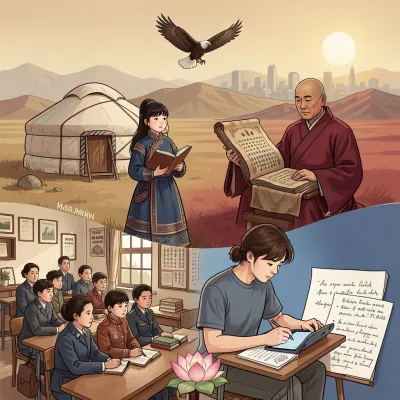
Educationin Mongolia has evolved from its deep roots in nomadic traditions and Buddhist monastic learning to a modern, centrally influenced system shaped by Soviet reforms and post-socialist transition. For centuries, knowledge was transmitted orally and through practical skills essential for survival on the steppe, later formalized under Tibetan Buddhism where monasteries became centers of scholarly study in philosophy, medicine, and the arts. The 20th century brought Soviet-era reforms that established a universal, secular, centralized education system, dramatically increasing literacy and access through state-controlled schools, teacher training institutes, and the founding of the National University of Mongolia, albeit with heavy ideological indoctrination and suppression of traditional practices. The democratic shift of the 1990s dismantled this system, triggering economic hardship, teacher shortages, curriculum de-ideologization, decentralization, and the rise of private education, creating both opportunities for reform and significant challenges in quality, equity, and resource allocation.
Today, Mongolia's education system is structured under the Ministry of Education and Science, spanning early childhood education, a compulsory 12-year general education (primary and secondary), vocational training, and higher education institutions including universities, institutes, and colleges. Governance blends central policy-setting with provincial and local administration, though disparities persist. Curriculum development emphasizes competency-based learning, Mongolian language and script alongside foreign languages (especially English), STEM skills, and ICT integration. National examinations, particularly the General Entrance Examination for higher education, remain high-stakes gatekeepers, while ongoing efforts focus on teacher training reform, inclusive education for students with disabilities, quality assurance and accreditation in higher education, and addressing the urban-rural divide in access to resources, qualified teachers, and infrastructure. Technology's impact is growing but uneven, offering potential to bridge geographical gaps while highlighting a significant digital divide between urban and rural schools.
Persistent challenges include ensuring equitable access, especially for nomadic and low-income families; maintaining quality across under-resourced rural schools; retaining skilled educators amid brain drain driven by low salaries, limited professional growth, and better opportunities abroad; and financing education sustainably through a mix of strained public budgets, private investment (particularly in preschools and higher education), and international aid. Non-governmental organizations play a vital role in piloting innovative models like mobile and ger-kindergartens, supporting inclusive education, and providing teacher training. Lifelong learning and adult education initiatives are expanding to meet workforce demands for upskilling in a changing economy, while inclusion policies strive to integrate students with special needs into mainstream settings wherever possible.
Looking ahead, Mongolia's educational future is tightly aligned with the UN Sustainable Development Goal 4, aiming for inclusive, equitable, quality education and lifelong learning for all. Key prospects include expanding access to quality early childhood education through innovative mobile and community-based models; deepening competency-based curricula with greater emphasis on critical thinking, creativity, and STEM; achieving comprehensive digital transformation to overcome geographical barriers; strengthening teacher retention through improved salaries, working conditions, and career pathways; enhancing higher education quality, research, and industry alignment; and fostering inclusive, culturally rooted learning that preserves Mongolian heritage while preparing citizens for global engagement. Despite ongoing hurdles, the system continues to adapt, driven by a commitment to education as a cornerstone of national development and a sustainable, prosperous future.
What You'll Find Inside:
- Explores the historical evolution of Mongolian education from nomadic traditions through Buddhist influences to Soviet-era reforms and post-socialist transformations.
- Analyzes the current structure, governance, and curriculum development of Mongolia's education system, including early childhood, primary, secondary, and higher education sectors.
- Addresses key challenges such as rural-urban disparities, teacher retention, brain drain, and the integration of technology and inclusive education practices.
- Examines the role of international cooperation, NGO partnerships, and financing mechanisms in shaping modern educational policies and access across diverse communities.
- Highlights future prospects aligned with Sustainable Development Goals, focusing on lifelong learning, STEM education, and strategies to enhance educational equity and quality.
Who's It For:
This book is essential for educators, policymakers, and researchers interested in the development of education systems in post-socialist or developing nations. It will also benefit those studying educational equity, cultural preservation in education, and the integration of traditional and modern pedagogical approaches. International development professionals and stakeholders in global education initiatives will find valuable insights into Mongolia's unique challenges and innovations.
Table of Contents:
- Introduction
- Chapter 1: Historical Foundations of Mongolian Education
- Chapter 2: Traditional Nomadic Education and Its Legacy
- Chapter 3: The Influence of Buddhism on Early Mongolian Learning
- Chapter 4: Soviet Era Reforms and the Centralized System
- Chapter 5: Post-Socialist Transition and Educational Challenges
- Chapter 6: Structure and Governance of the Mongolian Education System
- Chapter 7: Early Childhood Education: Policies and Practices
- Chapter 8: Access and Equity in Preschool Education
- Chapter 9: Primary Education: Curriculum and Pedagogy
- Chapter 10: Secondary Education: General and Vocational Tracks
- Chapter 11: The Role of National Examinations and Assessments
- Chapter 12: Higher Education Landscape: Universities and Institutes
- Chapter 13: Quality Assurance and Accreditation in Higher Education
- Chapter 14: Teacher Training and Professional Development
- Chapter 15: Curriculum Development and Educational Standards
- Chapter 16: Inclusive Education for Students with Special Needs
- Chapter 17: Rural-Urban Disparities in Educational Provision
- Chapter 18: The Impact of Technology on Mongolian Classrooms
- Chapter 19: International Cooperation and Educational Exchange
- Chapter 20: Financing Education: Public and Private Investment
- Chapter 21: Challenges and Reforms in Educational Governance
- Chapter 22: Brain Drain and Retention of Skilled Educators
- Chapter 23: The Role of Non-Governmental Organizations in Education
- Chapter 24: Lifelong Learning and Adult Education Initiatives
- Chapter 25: Future Prospects and Sustainable Development Goals in Mongolian Education
Author:
Published By:
Date Published:
July 1, 2026
Type:
Nonfiction
Language:
English
Word Count:
38,527 words
Reading Time:
2 hours 42 minutes
Sample:
Order:
Order Education In Mongolia (Hardcover) on MixCache.com:
Buy NowPrint copy is made to order and ships worldwide. Includes the ebook free, ready to read instantly.
$5 account credit for all new MixCache.com accounts, usable toward any ebook purchase!*