Browse by Category
Fiction
- Action & Adventure
- African American
- Anthologies
- Children's Fiction
- Classics
- Comics & Graphic Novels
- Coming of Age
- Contemporary
- Cultural & Regional
- Drama
- Erotica
- Fantasy
- General
- Historical Fiction
- Horror
- Humor & Satire
- Literary Fiction
- Mystery, Thriller & Suspense
- Poetry
- Religious & Inspirational
- Romance
- Science Fiction
- Short Stories
- War & Military
- Westerns
- Women's Fiction
- Young Adult
Non-Fiction
- Antiques & Collectibles
- Arts & Photography
- Biographies & Memoirs
- Business & Money
- Children's Non-Fiction
-
Computers & Technology
- Artificial Intelligence
- Computer Science
- Cybersecurity & Cryptography
- Data Science & Analytics
- Databases & Big Data
- Game Development & Design
- General
- Hardware & DIY
- Mobile App Development
- Networking & Cloud Computing
- Operating Systems
- Programming
- Robotics
- Software
- Software Engineering
- User Experience (UX) & Design
- Web Development & Design
- Cooking, Food & Wine
- Crafts, Hobbies & Home
- Education & Teaching
- Engineering
- General
- Health, Fitness & Dieting
-
History
- African History
- African History - North Africa
- African History - Sub-Saharan Africa
- American History
- American History - 20th Century
- American History - Civil War
- American History - Colonial Period
- Ancient History
- Asian History
- Asian History - China
- Asian History - India
- Asian History - Japan
- Asian History - Southeast Asia
- European History
- European History - Ancient Greece
- European History - Ancient Rome
- European History - Medieval
- European History - Modern
- European History - Renaissance
- General
- Middle Eastern History
- Military History
- Military History - Aviation
- Military History - Naval
- Social & Cultural History
- World History
- Humor & Entertainment
- Industrial Technology
- Language Learning
- Law
- LGBTQ+ Non-Fiction
- Literary Criticism
- Medical Books
- Parenting & Relationships
- Philosophy
- Politics & Social Sciences
- Reference
- Religion & Spirituality
-
Science & Math
- Agricultural Sciences
- Astronomy & Space Science
- Behavioral Sciences
- Biological Sciences
- Botany & Plant Science
- Chemistry
- Earth Sciences
- Engineering - Chemical
- Engineering - Civil
- Engineering - Electrical
- Engineering - Mechanical
- Environment
- General
- Geology
- Mathematics
- Nature & Ecology
- Oceanography
- Paleontology
- Physics
- Statistics
- Self-Help
- Sports & Outdoors
- Study Aids
- Sustainability & Green Living
- Textbooks
- Transportation
- Travel
- True Crime
- Urban Planning & Development
- Veterinary Medicine
- Writing & Publishing
Jump to Section
MixCache.com Total Access
Unlimited reading and audiobooks for every book published by MixCache.com.
Included titles carry the MTA badge.
Learn more →
Education In Niger
MTA
A Comprehensive Overview from Early Childhood to Higher Education
About this book:
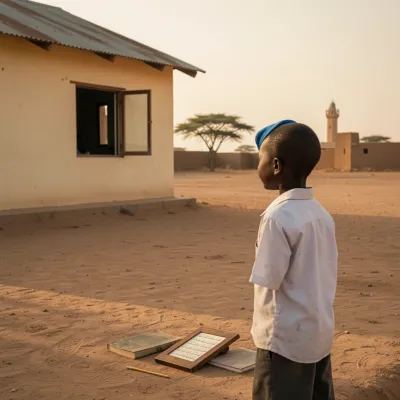
Educationin Niger traces its roots from informal oral traditions and Islamic Koranic schools, through a French colonial system designed to serve administrative needs, to post‑independence efforts to expand access and Africanize the curriculum. The contemporary system is overseen by the Ministry of National Education, Literacy, Vocational Training, and the Promotion of National Languages (with higher education under a separate ministry) and organized into national, regional, and departmental directorates. Funding relies on government budgets, substantial international aid, and community contributions, while teacher training proceeds through Écoles Normales and in‑service programs, though shortages and uneven quality persist, especially in rural areas.
Early childhood education includes Koranic schools, public and private kindergartens, and community crèches, but access remains limited by trained‑teacher shortages, inadequate materials, and language barriers. Primary education is officially compulsory and free, yet enrollment is hindered by poverty, distance, gender norms, and nomadic lifestyles; the curriculum centers on French, mathematics, environmental studies, civic and moral education, and suffers from overcrowding, lack of materials, and high repetition and dropout rates. Secondary education splits into a four‑year collège and a three‑year lycée, offering general academic tracks (culminating in the Baccalauréat) and technical/vocational pathways (leading to CAP, BT, or Baccalauréat Technique); transition rates are low due to BEPC failures, financial constraints, early marriage, and labor‑market perceptions. Higher education features Abdou Moumouni University, regional public institutions, and a growing private sector, with the LMD system aligning degrees to Bologna standards; challenges include limited capacity, graduate‑employment mismatches, brain drain, and insufficient funding for research and infrastructure.
Socio‑economic factors—poverty, child labor, malnutrition, health, parental education, gender norms, and geographic location—strongly shape attainment, while cultural and religious influences, especially the prominence of Koranic schools and early marriage practices, affect enrollment and curriculum relevance. Crisis situations caused by conflict and displacement destroy infrastructure, close schools, and traumatize learners, necessitating flexible, psychosocial‑supportive programs. Vocational and technical training is viewed as vital for economic diversification and youth unemployment reduction, yet it struggles with stigma, funding gaps, and weak private‑sector linkages. Non‑formal education and adult literacy programs provide second‑chance learning, especially for women and marginalized groups, while special needs education remains hampered by limited trained personnel, inaccessible infrastructure, and scarce assistive technologies. Quality assurance rests on national examinations (CEPE, BEPC, Bac) and inspection systems, though data collection, assessment validity, and inclusive practices need strengthening. Decentralization aims to bring decision‑making closer to communities via regional directorates, departmental inspectorates, and school management committees, but capacity and equity challenges persist.
The book concludes that Niger’s educational reform must confront rapid population growth, chronic underfunding, teacher quality deficits, inequities across gender, region, and nomadic groups, curriculum relevance, language‑of‑instruction debates, insecurity, and governance weaknesses. Opportunities lie in the youth bulge, strong community demand for education, international cooperation, ICT integration, decentralized governance, expanded and market‑driven TVET, harmonizing Koranic and secular schooling, and evidence‑based policy‑making. Future strategic directions emphasize scaling early childhood development, continuous teacher training, relevance‑focused curricula (entrepreneurship, digital literacy, peace education), sustainable ICT investment, targeted equity interventions, TVET‑private sector partnerships, higher‑education capacity and research expansion, balanced language policies, strengthened governance and EMIS, crisis‑responsive education, diversified financing, and a culture of continuous learning aligned with national development goals. Ultimately, a well‑funded, inclusive, and quality‑driven education system is presented as essential for Niger’s economic growth, poverty reduction, and long‑term prosperity.
What You'll Find Inside:
- Historical foundations tracing education from pre-colonial Islamic learning systems through French colonial reforms to post-independence nation-building efforts
- Comprehensive structure and administration of Niger's educational system covering early childhood through higher education, including governance frameworks and regional implementation
- Analysis of disparities in primary education focusing on gender gaps, rural-urban divides, and unique challenges faced by nomadic populations with proposed interventions
- Teacher training and professional development across all education levels, addressing initial preparation, ongoing support, and challenges in rural and remote areas
- The critical role of vocational and technical training in national development, including its contribution to economic diversification, youth employment, and private sector linkages
Who's It For:
This book is intended for policymakers, researchers, educators, development practitioners, and students with a vested interest in Niger's educational future. It serves as an authoritative reference for understanding the current state of education, persistent challenges, and opportunities for reform and strategic growth in the country.
Table of Contents:
- Introduction
- Chapter 1: Historical Foundations of Education in Niger
- Chapter 2: The Structure and Administration of the Nigerien Educational System
- Chapter 3: Early Childhood Education: Access, Quality, and Challenges
- Chapter 4: Primary Education in Niger: Curriculum and Enrollment Trends
- Chapter 5: Addressing Disparities in Primary Education: Gender, Rural-Urban Gaps, and Nomadic Populations
- Chapter 6: Secondary Education: General, Technical, and Vocational Tracks
- Chapter 7: Curriculum Development and Reform in Nigerien Schools
- Chapter 8: Teacher Training and Professional Development for All Levels
- Chapter 9: Higher Education in Niger: Universities, Institutes, and Specializations
- Chapter 10: Access and Equity in Higher Education
- Chapter 11: The Role of Vocational and Technical Training in National Development
- Chapter 12: Non-Formal Education and Adult Literacy Programs
- Chapter 13: The Impact of Socioeconomic Factors on Educational Attainment
- Chapter 14: Language of Instruction and Multilingualism in Nigerien Education
- Chapter 15: Education in Crisis: Challenges Posed by Conflict and Displacement
- Chapter 16: Funding and Financing Education in Niger: Domestic and International Contributions
- Chapter 17: The Role of Information and Communication Technologies (ICTs) in Education
- Chapter 18: Special Needs Education and Inclusive Practices
- Chapter 19: Educational Outcomes and Their Link to Employment and Economic Growth
- Chapter 20: The Influence of Cultural and Religious Factors on Education
- Chapter 21: International Cooperation and Partnerships in Nigerien Education
- Chapter 22: Decentralization and Local Governance in Education
- Chapter 23: Quality Assurance and Assessment in the Educational System
- Chapter 24: Challenges and Opportunities for Educational Reform
- Chapter 25: Future Perspectives and Strategic Directions for Education in Niger
Author:
Published By:
Date Published:
July 1, 2026
Type:
Nonfiction
Language:
English
Word Count:
43,844 words
Reading Time:
3 hours 4 minutes
Sample:
Order:
Order Education In Niger (Paperback) on MixCache.com:
Buy NowPrint copy is made to order and ships worldwide. Includes the ebook free, ready to read instantly.
$5 account credit for all new MixCache.com accounts, usable toward any ebook purchase!*