Browse by Category
Fiction
- Action & Adventure
- African American
- Anthologies
- Children's Fiction
- Classics
- Comics & Graphic Novels
- Coming of Age
- Contemporary
- Cultural & Regional
- Drama
- Erotica
- Fantasy
- General
- Historical Fiction
- Horror
- Humor & Satire
- Literary Fiction
- Mystery, Thriller & Suspense
- Poetry
- Religious & Inspirational
- Romance
- Science Fiction
- Short Stories
- War & Military
- Westerns
- Women's Fiction
- Young Adult
Non-Fiction
- Antiques & Collectibles
- Arts & Photography
- Biographies & Memoirs
- Business & Money
- Children's Non-Fiction
-
Computers & Technology
- Artificial Intelligence
- Computer Science
- Cybersecurity & Cryptography
- Data Science & Analytics
- Databases & Big Data
- Game Development & Design
- General
- Hardware & DIY
- Mobile App Development
- Networking & Cloud Computing
- Operating Systems
- Programming
- Robotics
- Software
- Software Engineering
- User Experience (UX) & Design
- Web Development & Design
- Cooking, Food & Wine
- Crafts, Hobbies & Home
- Education & Teaching
- Engineering
- General
- Health, Fitness & Dieting
-
History
- African History
- African History - North Africa
- African History - Sub-Saharan Africa
- American History
- American History - 20th Century
- American History - Civil War
- American History - Colonial Period
- Ancient History
- Asian History
- Asian History - China
- Asian History - India
- Asian History - Japan
- Asian History - Southeast Asia
- European History
- European History - Ancient Greece
- European History - Ancient Rome
- European History - Medieval
- European History - Modern
- European History - Renaissance
- General
- Middle Eastern History
- Military History
- Military History - Aviation
- Military History - Naval
- Social & Cultural History
- World History
- Humor & Entertainment
- Industrial Technology
- Language Learning
- Law
- LGBTQ+ Non-Fiction
- Literary Criticism
- Medical Books
- Parenting & Relationships
- Philosophy
- Politics & Social Sciences
- Reference
- Religion & Spirituality
-
Science & Math
- Agricultural Sciences
- Astronomy & Space Science
- Behavioral Sciences
- Biological Sciences
- Botany & Plant Science
- Chemistry
- Earth Sciences
- Engineering - Chemical
- Engineering - Civil
- Engineering - Electrical
- Engineering - Mechanical
- Environment
- General
- Geology
- Mathematics
- Nature & Ecology
- Oceanography
- Paleontology
- Physics
- Statistics
- Self-Help
- Sports & Outdoors
- Study Aids
- Sustainability & Green Living
- Textbooks
- Transportation
- Travel
- True Crime
- Urban Planning & Development
- Veterinary Medicine
- Writing & Publishing
Jump to Section
MixCache.com Total Access
Unlimited reading and audiobooks for every book published by MixCache.com.
Included titles carry the MTA badge.
Learn more →
Education In Lithuania
MTA
A Comprehensive Overview from Early Childhood to Higher Education
About this book:
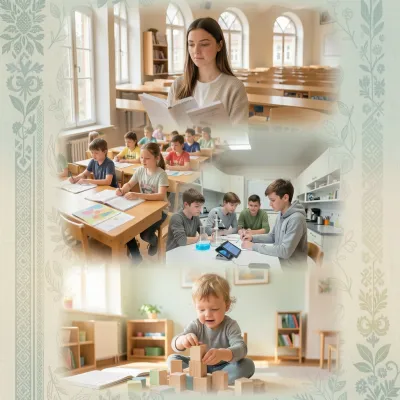
The Lithuanian education system, shaped by centuries of historical evolution from religious and monastic roots through periods of foreign rule and independence, has become a comprehensive, multi-tiered framework. It is governed centrally by the Ministry of Education, Science and Sport, with municipalities playing a key role in general education. The system spans early childhood through higher education, including nurseries, kindergartens, primary, basic, secondary, vocational, and university levels, each with distinct structures and objectives. Over the years, significant reforms post-independence and EU integration have aligned it with European standards, emphasizing quality, accessibility, and modernization.
Early childhood education lays the foundation with a focus on holistic development through play-based learning, while pre-primary education prepares children for formal schooling. The general education stages—primary (grades 1-4), basic (grades 5-8), and secondary (grades 9-12)—build literacy, numeracy, and critical thinking skills, culminating in the matriculation examinations for higher education entry. The curriculum is centrally guided but allows for local adaptation, incorporating technology and modern competencies. Assessment methods blend formative and summative approaches, with a strong emphasis on national exams and quality assurance mechanisms overseen by the Centre for Quality Assessment in Higher Education (SKVC).
Vocational education and training (VET) offers practical pathways for workforce preparation, with programs aligned with labor market needs and supported by EU funds. Lithuania’s higher education sector includes universities and colleges, offering Bachelor’s, Master’s, and Doctoral programs, with a strong emphasis on internationalization through initiatives like Erasmus+. Teacher education focuses on pedagogical expertise and continuous professional development, while inclusive education supports students with special needs through individualized plans and multidisciplinary teams. Gifted and talented students receive tailored programs and opportunities to explore their potential, with the system aiming to foster equity and excellence.
Non-formal and adult education provides flexible learning opportunities, crucial for lifelong learning and workforce adaptation. Funding is a blend of state, municipal, and private contributions, with ongoing efforts to address equity between urban and rural areas. Educational policy and reforms prioritize digital integration, curriculum relevance, and addressing demographic challenges. Future directions emphasize personalized learning, AI and VR technologies, 21st-century skills, and strengthening international collaborations. Despite challenges like demographic shifts and teacher recruitment, Lithuania’s commitment to innovation, inclusivity, and strategic adaptation positions its education system to meet evolving societal and global needs.
What You'll Find Inside:
- Comprehensive coverage of Lithuania's entire education system, from early childhood nurseries and kindergartens through general education (primary, basic, and secondary), vocational training, to higher education institutions including universities and colleges.
- In-depth exploration of historical development, tracing Lithuanian education from its origins in monastic schools and the founding of Vilnius University in 1579 through periods of foreign occupation, Soviet influence, and post-independence reforms aligned with European standards.
- Detailed analysis of curriculum, assessment methods, and quality assurance mechanisms across all educational levels, including the national matriculation examinations (Brandos Egzaminai) and the role of the Centre for Quality Assessment in Higher Education (SKVC).
- Examination of critical contemporary issues including inclusive education for students with special needs, provisions for gifted and talented students, the internationalization of Lithuanian education through programs like Erasmus+, and the integration of digital technology in teaching and learning.
- Thorough discussion of teacher education and professional development pathways, funding and financing mechanisms, educational policy reforms, student support services, parental involvement, and future directions for the Lithuanian education system.
Who's It For:
This book is designed for a broad audience seeking a comprehensive understanding of the Lithuanian education system. It will be particularly valuable for international educators, researchers, and policymakers interested in comparative education or the Baltic states, as well as Lithuanian education professionals, school administrators, and teachers looking for a systemic overview. Additionally, prospective international students, parents considering education in Lithuania, and anyone involved in educational development or reform will find this resource insightful and practical.
Table of Contents:
- Introduction
- Chapter 1 Historical Development of Lithuanian Education
- Chapter 2 Structure and Governance of the Lithuanian Education System
- Chapter 3 Early Childhood Education: Nurseries and Kindergartens
- Chapter 4 Pre-primary Education: Preparing for School
- Chapter 5 General Education: Primary School (1-4 Grades)
- Chapter 6 General Education: Basic School (5-8 Grades)
- Chapter 7 General Education: Secondary School (9-12 Grades)
- Chapter 8 Curriculum and Assessment in General Education
- Chapter 9 Vocational Education and Training (VET) System
- Chapter 10 Higher Education Institutions: Universities and Colleges
- Chapter 11 Bachelor's, Master's, and Doctoral Studies in Lithuania
- Chapter 12 Quality Assurance in Lithuanian Higher Education
- Chapter 13 Teacher Education and Professional Development
- Chapter 14 Inclusive Education: Supporting Students with Special Needs
- Chapter 15 Education for Gifted and Talented Students
- Chapter 16 Non-formal and Adult Education
- Chapter 17 Funding and Financing of Education in Lithuania
- Chapter 18 Educational Policy and Reforms
- Chapter 19 Internationalization of Lithuanian Education
- Chapter 20 The Role of Technology in Education
- Chapter 21 Challenges and Opportunities in the Lithuanian Education System
- Chapter 22 Student Support Services and Well-being
- Chapter 23 Parental Involvement in Education
- Chapter 24 Research and Innovation in Education
- Chapter 25 Future Directions for Education in Lithuania
Author:
Published By:
Date Published:
June 30, 2026
Type:
Nonfiction
Language:
English
Word Count:
42,858 words
Reading Time:
3 hours
Sample:
Order:
Order Education In Lithuania (Paperback) on MixCache.com:
Buy NowPrint copy is made to order and ships worldwide. Includes the ebook free, ready to read instantly.
$5 account credit for all new MixCache.com accounts, usable toward any ebook purchase!*