
Browse by Category
Fiction
- Action & Adventure
- African American
- Anthologies
- Children's Fiction
- Classics
- Comics & Graphic Novels
- Coming of Age
- Contemporary
- Cultural & Regional
- Drama
- Erotica
- Fantasy
- General
- Historical Fiction
- Horror
- Humor & Satire
- Literary Fiction
- Mystery, Thriller & Suspense
- Poetry
- Religious & Inspirational
- Romance
- Science Fiction
- Short Stories
- War & Military
- Westerns
- Women's Fiction
- Young Adult
Non-Fiction
- Antiques & Collectibles
- Arts & Photography
- Biographies & Memoirs
- Business & Money
- Children's Non-Fiction
-
Computers & Technology
- Artificial Intelligence
- Computer Science
- Cybersecurity & Cryptography
- Data Science & Analytics
- Databases & Big Data
- Game Development & Design
- General
- Hardware & DIY
- Mobile App Development
- Networking & Cloud Computing
- Operating Systems
- Programming
- Robotics
- Software
- Software Engineering
- User Experience (UX) & Design
- Web Development & Design
- Cooking, Food & Wine
- Crafts, Hobbies & Home
- Education & Teaching
- Engineering
- General
- Health, Fitness & Dieting
-
History
- African History
- African History - North Africa
- African History - Sub-Saharan Africa
- American History
- American History - 20th Century
- American History - Civil War
- American History - Colonial Period
- Ancient History
- Asian History
- Asian History - China
- Asian History - India
- Asian History - Japan
- Asian History - Southeast Asia
- European History
- European History - Ancient Greece
- European History - Ancient Rome
- European History - Medieval
- European History - Modern
- European History - Renaissance
- General
- Middle Eastern History
- Military History
- Military History - Aviation
- Military History - Naval
- Social & Cultural History
- World History
- Humor & Entertainment
- Industrial Technology
- Language Learning
- Law
- LGBTQ+ Non-Fiction
- Literary Criticism
- Medical Books
- Parenting & Relationships
- Philosophy
- Politics & Social Sciences
- Reference
- Religion & Spirituality
-
Science & Math
- Agricultural Sciences
- Astronomy & Space Science
- Behavioral Sciences
- Biological Sciences
- Botany & Plant Science
- Chemistry
- Earth Sciences
- Engineering - Chemical
- Engineering - Civil
- Engineering - Electrical
- Engineering - Mechanical
- Environment
- General
- Geology
- Mathematics
- Nature & Ecology
- Oceanography
- Paleontology
- Physics
- Statistics
- Self-Help
- Sports & Outdoors
- Study Aids
- Sustainability & Green Living
- Textbooks
- Transportation
- Travel
- True Crime
- Urban Planning & Development
- Veterinary Medicine
- Writing & Publishing
Jump to Section
MixCache.com Total Access
Unlimited reading and audiobooks for every book published by MixCache.com.
Included titles carry the MTA badge.
Learn more →
Education In Myanmar
MTA
A Comprehensive Overview from Early Childhood to Higher Education
About this book:
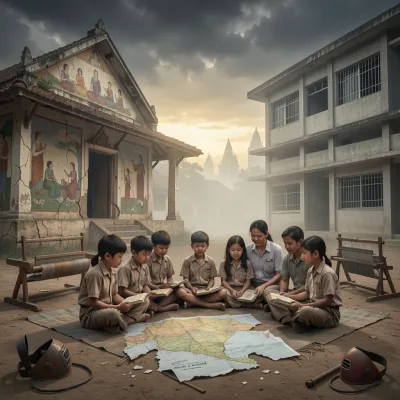
Education in Myanmar is a complex system shaped by its historical legacy, cultural diversity, and ongoing political upheaval. From its roots in monastic education and colonial influences to the centralization under military rule and recent democratic transitions, the sector has faced persistent underfunding, inadequate infrastructure, and limited access, particularly in remote and ethnic minority regions. The 2021 military coup exacerbated these challenges, causing widespread school closures, teacher shortages due to the Civil Disobedience Movement, and the militarization of educational facilities, resulting in a sharp decline in enrollment and significant learning disruptions. These crises highlight the sector's vulnerability to political instability, which has created a humanitarian and educational emergency affecting millions of students.
The education system spans early childhood, primary, secondary, technical and vocational training (TVET), and higher education, each facing distinct challenges. Primary and secondary education struggle with a shortage of qualified teachers, outdated curricula, and the high-stakes matriculation examination system, which perpetuates rote learning and disparities. TVET has seen reforms aimed at aligning training with labor market needs, though infrastructure and industry collaboration remain inadequate. Higher education institutions, historically centers of intellectual activity, have been plagued by underinvestment, political interference, and conflict, leading to a "brain drain" as academics and students seek opportunities abroad. Despite efforts to modernize curricula and enhance quality, implementation has been inconsistent due to resource constraints and instability.
Myanmar’s multilingual and multiethnic diversity poses significant challenges, particularly in providing inclusive, culturally relevant education. While policies have recognized the need for mother tongue-based multilingual education, implementation remains limited. Students with disabilities and those from marginalized communities face barriers in access and support, necessitating stronger inclusive education policies and teacher training. Non-formal education and lifelong learning programs address gaps in formal schooling, offering alternatives for out-of-school youth and adults, yet rely heavily on NGOs and community initiatives. International aid and partnerships have been crucial in supporting reforms, but donor restrictions and the junta’s crackdown have disrupted these efforts, leaving alternative education systems to fill the void.
Looking forward, sustainable educational reform hinges on restoring political stability and democratic governance. Recommendations include prioritizing safety and academic freedom, increasing equitable funding, enhancing teacher training and retention, and implementing inclusive, culturally responsive curricula. Addressing the digital divide, strengthening TVET-industry linkages, and developing transparent quality assurance frameworks are vital. While the private sector has grown, equitable access and regulation remain concerns. Ultimately, Myanmar’s educational future depends on rebuilding a unified, resilient system that respects diversity, fosters critical thinking, and aligns with global standards, ensuring every child can access quality education despite geographical, ethnic, or economic barriers. Without peace and inclusive governance, these reforms risk remaining unattainable, perpetuating cycles of deprivation and conflict.
What You'll Find Inside:
- The historical evolution of Myanmar's education system, from traditional monastic schools and colonial impositions to post-independence nationalization and recent political disruptions.
- The structure and challenges across all levels of education, including early childhood, primary, secondary, technical and vocational (TVET), and higher education.
- Critical issues of access, equity, and quality, with a focus on remote and ethnic minority regions, inclusive education for students with disabilities, and the impact of language of instruction.
- The profound effects of political instability, conflict, and the 2021 military coup on educational continuity, teacher shortages, and student displacement.
- The roles of teacher training, curriculum reform, assessment systems, international aid, non-formal education, and technology in shaping the educational landscape.
Who's It For:
This book is designed for a diverse audience, including policymakers, researchers, educators, students, and anyone with a vested interest in the future of Myanmar. It is particularly valuable for those seeking a comprehensive, nuanced understanding of Myanmar's educational system, its historical context, contemporary challenges, and potential pathways for reform.
Table of Contents:
- Introduction
- Chapter 1: Historical Foundations of Education in Myanmar
- Chapter 2: Early Childhood Education: Policies and Practices
- Chapter 3: Primary Education: Curriculum and Challenges
- Chapter 4: Secondary Education: Structure and Pathways
- Chapter 5: Technical and Vocational Education and Training (TVET)
- Chapter 6: Higher Education Landscape: Universities and Colleges
- Chapter 7: Teacher Training and Professional Development
- Chapter 8: Language of Instruction and Multilingual Education
- Chapter 9: Education in Remote and Ethnic Minority Regions
- Chapter 10: Inclusive Education for Students with Disabilities
- Chapter 11: Non-Formal Education and Lifelong Learning
- Chapter 12: Impact of Conflict and Political Instability on Education
- Chapter 13: Education Financing and Budget Allocation
- Chapter 14: Role of International Aid and NGOs in Education
- Chapter 15: Curriculum Development and Reform Efforts
- Chapter 16: Assessment and Examination Systems
- Chapter 17: Challenges in Educational Access and Equity
- Chapter 18: Quality Assurance in Education
- Chapter 19: The Brain Drain Phenomenon in Higher Education
- Chapter 20: The Role of Technology in Education
- Chapter 21: Education and Sustainable Development Goals (SDGs)
- Chapter 22: Private Education Sector: Growth and Regulation
- Chapter 23: Student Life and Culture in Myanmar's Educational Institutions
- Chapter 24: Educational Policy Making and Governance
- Chapter 25: Future Prospects and Recommendations for Educational Reform
Author:
Published By:
Date Published:
June 30, 2026
Type:
Nonfiction
Language:
English
Word Count:
39,505 words
Reading Time:
2 hours 46 minutes
Sample:
MixCache.com Total Access
Get unlimited access to this book + all books published by MixCache.com for $11.99/month
Subscribe to MTAOr purchase this book individually below
Order:
Buy the Education In Myanmar ebook on MixCache.com:
Buy Now
Full ebook will be available immediately
- read online or download as a PDF file.
$5 account credit for all new MixCache.com accounts, usable toward any ebook purchase!*


Ratings & Reviews
Ask Questions About This Book
Have a question about the content? Ask our AI assistant!
Start by asking a question about "Education In Myanmar"
Example: "Does this book mention William Shakespeare?"
Thinking...