Browse by Category
Fiction
- Action & Adventure
- African American
- Anthologies
- Children's Fiction
- Classics
- Comics & Graphic Novels
- Coming of Age
- Contemporary
- Cultural & Regional
- Drama
- Erotica
- Fantasy
- General
- Historical Fiction
- Horror
- Humor & Satire
- Literary Fiction
- Mystery, Thriller & Suspense
- Poetry
- Religious & Inspirational
- Romance
- Science Fiction
- Short Stories
- War & Military
- Westerns
- Women's Fiction
- Young Adult
Non-Fiction
- Antiques & Collectibles
- Arts & Photography
- Biographies & Memoirs
- Business & Money
- Children's Non-Fiction
-
Computers & Technology
- Artificial Intelligence
- Computer Science
- Cybersecurity & Cryptography
- Data Science & Analytics
- Databases & Big Data
- Game Development & Design
- General
- Hardware & DIY
- Mobile App Development
- Networking & Cloud Computing
- Operating Systems
- Programming
- Robotics
- Software
- Software Engineering
- User Experience (UX) & Design
- Web Development & Design
- Cooking, Food & Wine
- Crafts, Hobbies & Home
- Education & Teaching
- Engineering
- General
- Health, Fitness & Dieting
-
History
- African History
- African History - North Africa
- African History - Sub-Saharan Africa
- American History
- American History - 20th Century
- American History - Civil War
- American History - Colonial Period
- Ancient History
- Asian History
- Asian History - China
- Asian History - India
- Asian History - Japan
- Asian History - Southeast Asia
- European History
- European History - Ancient Greece
- European History - Ancient Rome
- European History - Medieval
- European History - Modern
- European History - Renaissance
- General
- Middle Eastern History
- Military History
- Military History - Aviation
- Military History - Naval
- Social & Cultural History
- World History
- Humor & Entertainment
- Industrial Technology
- Language Learning
- Law
- LGBTQ+ Non-Fiction
- Literary Criticism
- Medical Books
- Parenting & Relationships
- Philosophy
- Politics & Social Sciences
- Reference
- Religion & Spirituality
-
Science & Math
- Agricultural Sciences
- Astronomy & Space Science
- Behavioral Sciences
- Biological Sciences
- Botany & Plant Science
- Chemistry
- Earth Sciences
- Engineering - Chemical
- Engineering - Civil
- Engineering - Electrical
- Engineering - Mechanical
- Environment
- General
- Geology
- Mathematics
- Nature & Ecology
- Oceanography
- Paleontology
- Physics
- Statistics
- Self-Help
- Sports & Outdoors
- Study Aids
- Sustainability & Green Living
- Textbooks
- Transportation
- Travel
- True Crime
- Urban Planning & Development
- Veterinary Medicine
- Writing & Publishing
Jump to Section
MixCache.com Total Access
Unlimited reading and audiobooks for every book published by MixCache.com.
Included titles carry the MTA badge.
Learn more →
Education In Monaco
MTA
A Comprehensive Overview from Early Childhood to Higher Education
About this book:
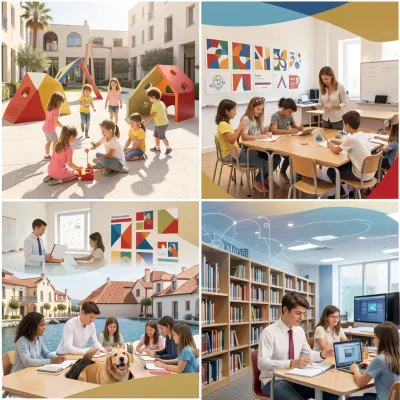
Monaco's educational system, as detailed in *Education In Monaco: A Comprehensive Overview from Early Childhood to Higher Education*, is a sophisticated blend of French pedagogical traditions and global adaptability. Rooted in the French curriculum, the system emphasizes academic excellence while fostering holistic development, integrating cultural identity, and promoting multilingualism through French, English, and the indigenous Monégasque language. The Ministry of National Education, Youth and Sport governs the public system, ensuring free, high-quality education from early childhood to secondary levels, bolstered by modern infrastructure, favorable student-teacher ratios, and generous funding. Early years focus on play-based learning and foundational skills, progressing to structured academic curricula in primary and secondary schools, culminating in the French Baccalaureate and vocational pathways like the BTS. Key features include inclusive practices for students with special needs, robust language programs, and the integration of arts, sports, and technology to nurture well-rounded individuals.
Secondary education in Monaco is divided into *collège* (ages 11-15) and *lycée* (ages 15-18), offering both general and technical Baccalaureate options. The International University of Monaco (IUM) provides specialized higher education in business and luxury management, while vocational training, particularly through the Lycée Technique et Hôtelier, addresses the principality’s economic needs. International schools and exchange programs further diversify the landscape, catering to expatriate communities and fostering global perspectives. The system prioritizes digital literacy, with cutting-edge technology integrated into pedagogy, and emphasizes global citizenship through multilingualism, cultural awareness, and preparation for international careers. Challenges include maintaining educational relevance in a rapidly evolving world, ensuring equity in a diverse population, and balancing the demands of a small-scale educational ecosystem with the needs of a globally connected student body.
International cooperation is central to Monaco’s educational identity, aligning with French systems while embracing European initiatives and global partnerships. This collaboration enhances curriculum standards, facilitates student exchanges, and ensures internationally recognized qualifications, such as the Baccalaureate. Comparative analysis reveals Monaco’s unique strengths in resource allocation, multilingual education, and vocational excellence, while differing from larger European nations in its focused higher education offerings and reliance on international institutions. Despite challenges like curriculum adaptation and global competitiveness, Monaco’s commitment to innovation, inclusivity, and sustainability ensures its graduates are academically prepared and culturally aware, ready to contribute to and lead in an interconnected world. The principality’s educational model exemplifies how a small, wealthy state can strategically design a system that harmonizes tradition with modernity and local identity with global engagement.
What You'll Find Inside:
- A comprehensive journey through Monaco's entire educational system, from early childhood nurseries and preschools through primary, secondary, vocational training, and higher education pathways.
- Detailed exploration of the unique trilingual curriculum emphasizing French as the primary language of instruction, robust English language programs, and the preservation of the indigenous Monégasque language and culture.
- In-depth analysis of governance, administration, and funding mechanisms, highlighting Monaco's centralized model, generous state investment, and the resulting modern infrastructure and favorable teacher-to-student ratios.
- Thorough coverage of specialized topics including the General and Technical Baccalaureate programs, vocational apprenticeships, special education needs and inclusive practices, and the significant role of international schools offering curricula like the International Baccalaureate.
- Forward-looking perspectives on educational technology integration, international cooperation, preparation for global citizenship and future careers, and a comparative analysis situating Monaco's system within the broader European educational context.
Who's It For:
This book is ideal for educators, policymakers, and researchers interested in international education systems, as well as parents—both Monégasque residents and expatriates—seeking a thorough understanding of the educational options and structures available in Monaco. It also serves anyone fascinated by the principality's unique socio-cultural landscape and how a small, wealthy city-state designs a world-class education system that balances French pedagogical traditions with global perspectives and national identity preservation.
Table of Contents:
- Introduction
- Chapter 1: The Monégasque Educational Landscape: An Overview
- Chapter 2: Historical Development of Education in Monaco
- Chapter 3: Governance and Administration of the Monégasque Education System
- Chapter 4: Funding and Resources for Education in Monaco
- Chapter 5: Early Childhood Education: Nurseries and Preschools
- Chapter 6: The Curriculum in Monégasque Early Childhood Education
- Chapter 7: Primary Education: Structure and Objectives
- Chapter 8: Key Subjects and Pedagogical Approaches in Primary Schools
- Chapter 9: Assessment and Progression in Primary Education
- Chapter 10: Secondary Education: Collège and Lycée Stages
- Chapter 11: General and Technical Baccalaureate Programs
- Chapter 12: Vocational Training and Apprenticeships in Monaco
- Chapter 13: Special Education Needs and Inclusive Practices
- Chapter 14: Language Education: French, English, and Monégasque
- Chapter 15: The Role of Culture and Arts in Monégasque Education
- Chapter 16: Sports and Physical Education in Schools
- Chapter 17: Higher Education Institutions and Opportunities
- Chapter 18: International Schools and Their Contribution to Monégasque Education
- Chapter 19: Teacher Training and Professional Development
- Chapter 20: Parental Involvement and Community Engagement in Schools
- Chapter 21: Educational Technology and Digital Learning Initiatives
- Chapter 22: Challenges and Future Directions in Monégasque Education
- Chapter 23: The Impact of International Cooperation on Education in Monaco
- Chapter 24: Preparing Students for Global Citizenship and Future Careers
- Chapter 25: A Comparative Perspective: Monaco's Education System in the European Context
Author:
Published By:
Date Published:
June 29, 2026
Type:
Nonfiction
Language:
English
Word Count:
45,426 words
Reading Time:
3 hours 11 minutes
Sample:
Order:
Order Education In Monaco (Paperback) on MixCache.com:
Buy NowPrint copy is made to order and ships worldwide. Includes the ebook free, ready to read instantly.
$5 account credit for all new MixCache.com accounts, usable toward any ebook purchase!*