
Browse by Category
Fiction
- Action & Adventure
- African American
- Anthologies
- Children's Fiction
- Classics
- Comics & Graphic Novels
- Coming of Age
- Contemporary
- Cultural & Regional
- Drama
- Erotica
- Fantasy
- General
- Historical Fiction
- Horror
- Humor & Satire
- Literary Fiction
- Mystery, Thriller & Suspense
- Poetry
- Religious & Inspirational
- Romance
- Science Fiction
- Short Stories
- War & Military
- Westerns
- Women's Fiction
- Young Adult
Non-Fiction
- Antiques & Collectibles
- Arts & Photography
- Biographies & Memoirs
- Business & Money
- Children's Non-Fiction
-
Computers & Technology
- Artificial Intelligence
- Computer Science
- Cybersecurity & Cryptography
- Data Science & Analytics
- Databases & Big Data
- Game Development & Design
- General
- Hardware & DIY
- Mobile App Development
- Networking & Cloud Computing
- Operating Systems
- Programming
- Robotics
- Software
- Software Engineering
- User Experience (UX) & Design
- Web Development & Design
- Cooking, Food & Wine
- Crafts, Hobbies & Home
- Education & Teaching
- Engineering
- General
- Health, Fitness & Dieting
-
History
- African History
- African History - North Africa
- African History - Sub-Saharan Africa
- American History
- American History - 20th Century
- American History - Civil War
- American History - Colonial Period
- Ancient History
- Asian History
- Asian History - China
- Asian History - India
- Asian History - Japan
- Asian History - Southeast Asia
- European History
- European History - Ancient Greece
- European History - Ancient Rome
- European History - Medieval
- European History - Modern
- European History - Renaissance
- General
- Middle Eastern History
- Military History
- Military History - Aviation
- Military History - Naval
- Social & Cultural History
- World History
- Humor & Entertainment
- Industrial Technology
- Language Learning
- Law
- LGBTQ+ Non-Fiction
- Literary Criticism
- Medical Books
- Parenting & Relationships
- Philosophy
- Politics & Social Sciences
- Reference
- Religion & Spirituality
-
Science & Math
- Agricultural Sciences
- Astronomy & Space Science
- Behavioral Sciences
- Biological Sciences
- Botany & Plant Science
- Chemistry
- Earth Sciences
- Engineering - Chemical
- Engineering - Civil
- Engineering - Electrical
- Engineering - Mechanical
- Environment
- General
- Geology
- Mathematics
- Nature & Ecology
- Oceanography
- Paleontology
- Physics
- Statistics
- Self-Help
- Sports & Outdoors
- Study Aids
- Sustainability & Green Living
- Textbooks
- Transportation
- Travel
- True Crime
- Urban Planning & Development
- Veterinary Medicine
- Writing & Publishing
Jump to Section
MixCache.com Total Access
Unlimited reading and audiobooks for every book published by MixCache.com.
Included titles carry the MTA badge.
Learn more →
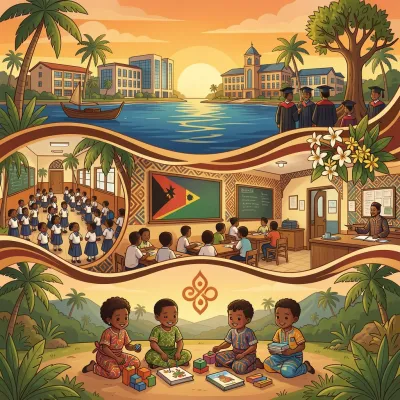
Education In Liberia
MTA
A Comprehensive Overview from Early Childhood to Higher Education
About this book:

**Summary of "Education In Liberia: A Comprehensive Overview from Early Childhood to Higher Education"**
This comprehensive book traces the evolution of Liberia's education system from its historical foundations rooted in American missionary influence and the post-conflict recovery efforts following devastating civil wars (1989-2003). It details the system's current structure, encompassing early childhood education, six-year primary schooling, divided secondary education (junior and senior), and higher education institutions like the University of Liberia and Cuttington University, alongside vocational and technical programs and special education. The narrative underscores the profound impact of the civil wars, which destroyed infrastructure, displaced educators, and created a generation of uneducated youth, necessitating massive international aid and gradual reforms to rebuild a fragile system. The book examines critical challenges including poverty and indirect costs hindering access, geographical barriers in rural areas, teacher shortages, gender disparities in enrollment and completion rates, and the persistent issue of brain drain affecting qualified educators and professionals. Funding mechanisms, primarily reliant on limited government budgets supplemented by significant international support (e.g., Global Partnership for Education, USAID), are analyzed alongside policy governance through the Ministry of Education and the National Commission on Higher Education.
Beyond foundational challenges, the book explores specific themes like gender inequities, particularly in secondary education and STEM fields, and the importance of vocational training for economic development. It highlights successful innovations such as the Liberia Education Advancement Program (LEAP), USAID's Read Liberia initiative, and community-led accelerated learning programs that have improved literacy and numeracy outcomes. The role of international aid, private schools, and community involvement in filling access and quality gaps is emphasized, while chapters on technology integration and special education needs (SEN) acknowledge emerging efforts to modernize and include marginalized populations. Non-formal and adult education programs are shown to provide crucial second chances, especially for out-of-school youth. The book concludes with forward-looking recommendations focusing on decentralizing governance, prioritizing foundational learning outcomes, strengthening teacher professional development, leveraging technology for equity, expanding vocational education aligned with labor market demands, and fostering domestic resource mobilization for long-term sustainability, aiming to create an adaptive and resilient education system that truly serves all Liberians.
What You'll Find Inside:
- Explores the historical evolution of Liberia's education system, including missionary influences, civil war impacts, and post-conflict recovery efforts.
- Analyzes the structure and governance of the education system, from early childhood to higher education, highlighting administrative bodies and decentralization efforts.
- Examines persistent challenges in access, equity, and quality, including gender disparities, infrastructure deficits, and systemic barriers to education.
- Discusses the critical role of international aid, partnerships, and funding mechanisms in rebuilding and sustaining Liberia's education infrastructure.
- Highlights innovations, success stories, and future recommendations to address brain drain, technology integration, and sustainable development in education.
Who's It For:
This book is essential for policymakers, educators, researchers, and international development stakeholders interested in post-conflict education systems. It benefits those involved in educational planning, reform, or advocacy in Liberia and similar contexts, offering insights into systemic challenges, reform strategies, and the intersection of technology, equity, and global partnerships in shaping educational futures.
Table of Contents:
- Introduction
- Chapter 1: Historical Foundations of Liberian Education
- Chapter 2: The Structure of the Liberian Education System
- Chapter 3: Early Childhood Education: Foundations and Challenges
- Chapter 4: Primary Education: Access, Equity, and Quality
- Chapter 5: Secondary Education: Curriculum and Opportunities
- Chapter 6: Vocational and Technical Education: Skills for Development
- Chapter 7: Higher Education Landscape in Liberia
- Chapter 8: Teacher Training and Professional Development
- Chapter 9: Education Policy and Governance in Liberia
- Chapter 10: Funding and Financing Education
- Chapter 11: The Role of International Aid in Liberian Education
- Chapter 12: Challenges and Barriers to Education Access
- Chapter 13: Gender Disparities in Education
- Chapter 14: Education in Post-Conflict Liberia
- Chapter 15: Curriculum Development and Reform
- Chapter 16: Assessment and Evaluation Practices
- Chapter 17: The Impact of Technology on Education
- Chapter 18: Special Education Needs in Liberia
- Chapter 19: Community Involvement in Education
- Chapter 20: The Brain Drain and its Impact on Education
- Chapter 21: Non-Formal and Adult Education Initiatives
- Chapter 22: Education for Sustainable Development
- Chapter 23: The Role of Private Schools in Liberia
- Chapter 24: Success Stories and Innovations in Liberian Education
- Chapter 25: Future Prospects and Recommendations for Educational Advancement
Author:
Published By:
Date Published:
June 29, 2026
Type:
Nonfiction
Language:
English
Word Count:
41,643 words
Reading Time:
2 hours 55 minutes
Sample:
MixCache.com Total Access
Get unlimited access to this book + all books published by MixCache.com for $11.99/month
Subscribe to MTAOr purchase this book individually below
Order:
Buy the Education In Liberia ebook on MixCache.com:
Buy Now
Full ebook will be available immediately
- read online or download as a PDF file.
$5 account credit for all new MixCache.com accounts, usable toward any ebook purchase!*





Ratings & Reviews
Ask Questions About This Book
Have a question about the content? Ask our AI assistant!
Start by asking a question about "Education In Liberia"
Example: "Does this book mention William Shakespeare?"
Thinking...