Browse by Category
Fiction
- Action & Adventure
- African American
- Anthologies
- Children's Fiction
- Classics
- Comics & Graphic Novels
- Coming of Age
- Contemporary
- Cultural & Regional
- Drama
- Erotica
- Fantasy
- General
- Historical Fiction
- Horror
- Humor & Satire
- Literary Fiction
- Mystery, Thriller & Suspense
- Poetry
- Religious & Inspirational
- Romance
- Science Fiction
- Short Stories
- War & Military
- Westerns
- Women's Fiction
- Young Adult
Non-Fiction
- Antiques & Collectibles
- Arts & Photography
- Biographies & Memoirs
- Business & Money
- Children's Non-Fiction
-
Computers & Technology
- Artificial Intelligence
- Computer Science
- Cybersecurity & Cryptography
- Data Science & Analytics
- Databases & Big Data
- Game Development & Design
- General
- Hardware & DIY
- Mobile App Development
- Networking & Cloud Computing
- Operating Systems
- Programming
- Robotics
- Software
- Software Engineering
- User Experience (UX) & Design
- Web Development & Design
- Cooking, Food & Wine
- Crafts, Hobbies & Home
- Education & Teaching
- Engineering
- General
- Health, Fitness & Dieting
-
History
- African History
- African History - North Africa
- African History - Sub-Saharan Africa
- American History
- American History - 20th Century
- American History - Civil War
- American History - Colonial Period
- Ancient History
- Asian History
- Asian History - China
- Asian History - India
- Asian History - Japan
- Asian History - Southeast Asia
- European History
- European History - Ancient Greece
- European History - Ancient Rome
- European History - Medieval
- European History - Modern
- European History - Renaissance
- General
- Middle Eastern History
- Military History
- Military History - Aviation
- Military History - Naval
- Social & Cultural History
- World History
- Humor & Entertainment
- Industrial Technology
- Language Learning
- Law
- LGBTQ+ Non-Fiction
- Literary Criticism
- Medical Books
- Parenting & Relationships
- Philosophy
- Politics & Social Sciences
- Reference
- Religion & Spirituality
-
Science & Math
- Agricultural Sciences
- Astronomy & Space Science
- Behavioral Sciences
- Biological Sciences
- Botany & Plant Science
- Chemistry
- Earth Sciences
- Engineering - Chemical
- Engineering - Civil
- Engineering - Electrical
- Engineering - Mechanical
- Environment
- General
- Geology
- Mathematics
- Nature & Ecology
- Oceanography
- Paleontology
- Physics
- Statistics
- Self-Help
- Sports & Outdoors
- Study Aids
- Sustainability & Green Living
- Textbooks
- Transportation
- Travel
- True Crime
- Urban Planning & Development
- Veterinary Medicine
- Writing & Publishing
Jump to Section
MixCache.com Total Access
Unlimited reading and audiobooks for every book published by MixCache.com.
Included titles carry the MTA badge.
Learn more →
Education In Liechtenstein
MTA
A Comprehensive Overview from Early Childhood to Higher Education
About this book:

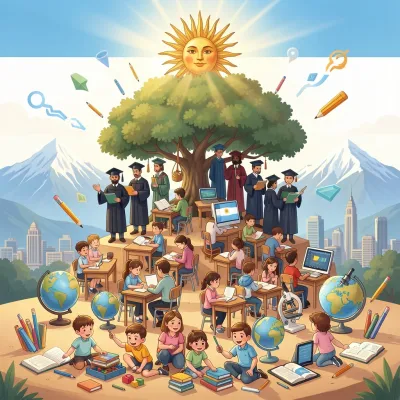
Liechtenstein’s education system has evolved from modest, religion‑linked beginnings in the early 17th century to a modern, state‑supervised framework that guarantees compulsory schooling from age six to fifteen and boasts a 100 % literacy rate. Historical milestones include the introduction of compulsory education in 1805, the establishment of the Gymnasium in 1937, the state’s assumption of full responsibility in 1971, and the 2004 consolidation of education decrees. The system is governed by the Ministry of Education and Culture, with the Office of Education handling day‑to‑day administration, and it blends centralized policy with local municipal implementation, ensuring equity while allowing community involvement. Influenced heavily by Swiss and Austrian models, Liechtenstein emphasizes holistic development, individualized support, critical thinking, multilingualism, civic responsibility, lifelong learning, quality assurance, and strong parental and community engagement.
The curriculum framework (Lehrplan) is competency‑based, progressing from play‑based early childhood education—where nurseries and kindergartens foster social, linguistic, and motor skills—through a five‑year primary school (Primarschule) that builds literacy, numeracy, and broad general education, to the four‑year Orientierungsschule (lower secondary) that guides students toward appropriate upper‑secondary pathways. Upper secondary offers the academically rigorous Gymnasium (leading to the Matura) and diverse vocational education and training (VET) routes, the latter anchored by the dual system that combines school‑based instruction with paid apprenticeships in companies. VET pathways yield nationally recognized qualifications (e.g., the Federal VET Diploma) and can lead to higher education via the Vocational Baccalaureate. Higher education is anchored by the University of Liechtenstein, which specializes in Architecture and Spatial Development and Business Economics (including Entrepreneurship, Finance, Information Systems, and Business Law), supplemented by private providers such as the International Academy of Philosophy and the Liechtenstein Institute. Teacher preparation relies on high‑quality programs in Switzerland and Austria, reinforced by continuous professional development focused on digital literacy, inclusive practices, and subject‑specific didactics.
Inclusive education is a core principle, seeking to integrate learners with special needs, multilingual backgrounds, and social‑emotional challenges within mainstream settings through individualized learning plans, differentiated instruction, and assistive technologies, while specialized provision exists at institutions like the Heilpädagogische Zentrum for more intensive needs. Language education prioritizes German from early childhood, introduces English in primary school, and often offers French, with a strong emphasis on communicative competence and multilingualism. Technology is woven throughout the system, from basic digital literacy in primary schools to advanced applications in vocational training and university research, supported by learning management systems, teacher training, and a focus on digital citizenship. Assessment combines formative feedback with summative examinations (including the Matura and VET qualification procedures) and is embedded in a robust quality‑assurance framework that includes internal self‑evaluation, external inspections, and international benchmarking such as PISA. Funding is primarily state‑based with municipal contributions, shared financing in the dual system, and targeted support for special needs, early childhood, and higher education. Parental involvement, community engagement, and international cooperation—especially through bilateral agreements with Switzerland and Austria, Erasmus+, and research collaborations—are integral to the system’s vitality. Ongoing challenges include teacher recruitment, balancing tradition with digital innovation, maintaining VET relevance, preserving cultural identity amid globalization, and ensuring equitable resources across municipalities, yet Liechtenstein continues to adapt its policies to meet future demands while leveraging education as a driver of social cohesion, economic prosperity, and international reputation.
What You'll Find Inside:
- The dual vocational education and training system combining classroom instruction with practical, on-the-job apprenticeships - a cornerstone of Liechtenstein's workforce development and economic success.
- Liechtenstein's educational philosophy emphasizing holistic development, individualized learning, critical thinking, multilingualism, civic responsibility, and lifelong learning from early childhood through higher education.
- The comprehensive structure of Liechtenstein's education system covering nurseries and kindergartens, primary education, Orientierungsschule, diverse secondary pathways, vocational training, and higher education institutions.
- Specialized focus areas at the University of Liechtenstein including Architecture and Spatial Development, and Business Economics with concentrations in Entrepreneurship, Finance, Information Systems, and Business Law.
- Liechtenstein's commitment to inclusive education and specialized support for diverse learners, including comprehensive special needs education and multilingual language support programs.
Who's It For:
This book is ideal for educators, policymakers, and researchers seeking insights into how a small state can develop and maintain a high-quality, effective education system. It will particularly benefit those interested in vocational training models, educational philosophy implementation, and the relationship between education and economic/social development in compact nations. Anyone studying comparative education or looking for adaptable educational excellence models will find valuable lessons in Liechtenstein's approach.
Table of Contents:
- Introduction
- Chapter 1: The Historical Development of Education in Liechtenstein
- Chapter 2: Educational Philosophy and Principles in Liechtenstein
- Chapter 3: Structure and Governance of the Liechtenstein Education System
- Chapter 4: Early Childhood Education: Nurseries and Kindergartens
- Chapter 5: The Liechtenstein Curriculum Framework
- Chapter 6: Primary Education: A Foundation for Learning
- Chapter 7: Secondary Education I: Orientierungsschule
- Chapter 8: Secondary Education II: Diverse Pathways and Specializations
- Chapter 9: Vocational Education and Training (VET) in Liechtenstein
- Chapter 10: The Dual System: Apprenticeships and Practical Learning
- Chapter 11: Higher Education Institutions in Liechtenstein
- Chapter 12: University of Liechtenstein: Focus Areas and Research
- Chapter 13: Private Higher Education Providers and Specialized Programs
- Chapter 14: Teacher Education and Professional Development
- Chapter 15: Inclusive Education: Supporting Diverse Learners
- Chapter 16: Special Needs Education in Liechtenstein
- Chapter 17: Language Education: German and Multilingualism
- Chapter 18: The Role of Technology in Liechtenstein Education
- Chapter 19: Assessment, Evaluation, and Quality Assurance
- Chapter 20: Funding and Financing of Education
- Chapter 21: Parental Involvement and Community Engagement
- Chapter 22: International Cooperation and Educational Exchange
- Chapter 23: Challenges and Future Directions in Liechtenstein Education
- Chapter 24: Educational Policy and Reform Initiatives
- Chapter 25: The Impact of Education on Liechtenstein's Society and Economy
Author:
Published By:
Date Published:
June 28, 2026
Type:
Nonfiction
Language:
English
Word Count:
40,941 words
Reading Time:
2 hours 52 minutes
Sample:
Order:
Order Education In Liechtenstein (Paperback) on MixCache.com:
Buy NowPrint copy is made to order and ships worldwide. Includes the ebook free, ready to read instantly.
$5 account credit for all new MixCache.com accounts, usable toward any ebook purchase!*