Browse by Category
Fiction
- Action & Adventure
- African American
- Anthologies
- Children's Fiction
- Classics
- Comics & Graphic Novels
- Coming of Age
- Contemporary
- Cultural & Regional
- Drama
- Erotica
- Fantasy
- General
- Historical Fiction
- Horror
- Humor & Satire
- Literary Fiction
- Mystery, Thriller & Suspense
- Poetry
- Religious & Inspirational
- Romance
- Science Fiction
- Short Stories
- War & Military
- Westerns
- Women's Fiction
- Young Adult
Non-Fiction
- Antiques & Collectibles
- Arts & Photography
- Biographies & Memoirs
- Business & Money
- Children's Non-Fiction
-
Computers & Technology
- Artificial Intelligence
- Computer Science
- Cybersecurity & Cryptography
- Data Science & Analytics
- Databases & Big Data
- Game Development & Design
- General
- Hardware & DIY
- Mobile App Development
- Networking & Cloud Computing
- Operating Systems
- Programming
- Robotics
- Software
- Software Engineering
- User Experience (UX) & Design
- Web Development & Design
- Cooking, Food & Wine
- Crafts, Hobbies & Home
- Education & Teaching
- Engineering
- General
- Health, Fitness & Dieting
-
History
- African History
- African History - North Africa
- African History - Sub-Saharan Africa
- American History
- American History - 20th Century
- American History - Civil War
- American History - Colonial Period
- Ancient History
- Asian History
- Asian History - China
- Asian History - India
- Asian History - Japan
- Asian History - Southeast Asia
- European History
- European History - Ancient Greece
- European History - Ancient Rome
- European History - Medieval
- European History - Modern
- European History - Renaissance
- General
- Middle Eastern History
- Military History
- Military History - Aviation
- Military History - Naval
- Social & Cultural History
- World History
- Humor & Entertainment
- Industrial Technology
- Language Learning
- Law
- LGBTQ+ Non-Fiction
- Literary Criticism
- Medical Books
- Parenting & Relationships
- Philosophy
- Politics & Social Sciences
- Reference
- Religion & Spirituality
-
Science & Math
- Agricultural Sciences
- Astronomy & Space Science
- Behavioral Sciences
- Biological Sciences
- Botany & Plant Science
- Chemistry
- Earth Sciences
- Engineering - Chemical
- Engineering - Civil
- Engineering - Electrical
- Engineering - Mechanical
- Environment
- General
- Geology
- Mathematics
- Nature & Ecology
- Oceanography
- Paleontology
- Physics
- Statistics
- Self-Help
- Sports & Outdoors
- Study Aids
- Sustainability & Green Living
- Textbooks
- Transportation
- Travel
- True Crime
- Urban Planning & Development
- Veterinary Medicine
- Writing & Publishing
Jump to Section
MixCache.com Total Access
Unlimited reading and audiobooks for every book published by MixCache.com.
Included titles carry the MTA badge.
Learn more →
Education In Israel
MTA
A Comprehensive Overview from Early Childhood to Higher Education
About this book:
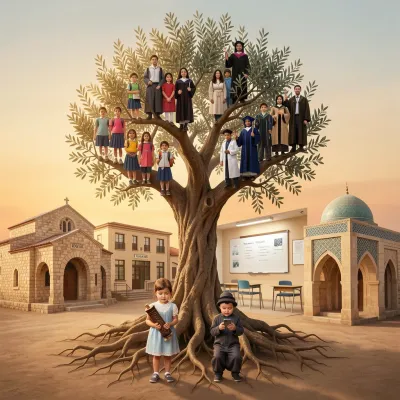
"Education In Israel: A Comprehensive Overview from Early Childhood to Higher Education" provides an exhaustive examination of a dynamic and multifaceted system deeply intertwined with the nation's identity. The book traces the historical roots of Israeli education from ancient religious traditions and Ottoman-era community schools through the British Mandate period, highlighting how the Zionist movement and the revival of Hebrew laid the groundwork for a unified yet diverse national system after 1948. It then meticulously details the structural architecture, which is organized into four stages—early childhood, primary, secondary, and higher education—and uniquely divided into multiple state-recognized streams. These include secular (Mamlachti), state-religious (Mamlachti Dati), independent Haredi (Chinuch Atzmai), and separate Arab, Druze, and Circassian systems, each balancing a core national curriculum with distinct cultural, religious, and linguistic emphases.
The book delves into the specific pedagogical and administrative components at each level. Early childhood education is praised for its play-based, holistic philosophy and the significant expansion of free kindergartens, though challenges remain for infant care. Primary education builds foundational academic skills through a broad curriculum, while secondary education introduces specialized academic and vocational tracks, culminating in the high-stakes Bagrut matriculation examinations that serve as the primary gateway to higher education. The higher education landscape is characterized by world-renowned research universities and vocationally focused academic colleges, both operating under the centralized oversight of the Council for Higher Education. The text also explores critical cross-cutting themes such as the educational provisions for an extraordinarily diverse population, including robust special education inclusion efforts, the complexities of separate religious and minority systems, and the profound impact of continuous immigration. It examines the pivotal role of teacher training, ongoing professional development, and a layered administrative structure that spans from the Ministry of Education to the local school principal.
Finally, the book addresses the persistent challenges and continuous evolution of the system. It critically analyzes policy debates surrounding equity and achievement gaps, the intense societal pressure around the Bagrut, the struggle to integrate Haredi and Arab citizens into the broader workforce, and the need to balance technological innovation with traditional pedagogy. The concluding sections look toward the future, emphasizing the system's adaptive nature and its unwavering, though constantly contested, mission to foster social cohesion, drive economic innovation, and uphold a timeless legacy of learning for all its citizens.
What You'll Find Inside:
- The Israeli education system is structured into distinct streams—State (secular), State-Religious, Independent Haredi, Arab, Druze, and Circassian—each with unique curricula reflecting diverse cultural, religious, and linguistic identities while operating under the overarching authority of the Ministry of Education.
- The Bagrut matriculation examination serves as the critical gateway to higher education and professional opportunities, assessing students across mandatory and elective subjects through a standardized unit-based system that emphasizes academic rigor but faces ongoing debate over stress and equity.
- Special education in Israel prioritizes inclusion through early identification, individualized education programs (IEPs), and resource support in mainstream schools, though challenges remain in funding, teacher training, and timely access to diagnostic services.
- Immigration has profoundly shaped the system, requiring continuous adaptation through Hebrew language instruction (Ulpan), cultural integration programs, and targeted support for diverse immigrant groups such as those from the former Soviet Union and Ethiopia.
- Technology and innovation are deeply embedded in Israeli education, with national emphasis on digital literacy, STEM, coding, and ed-tech startups, though disparities in access and the need for balanced pedagogy remain key challenges.
Who's It For:
This book is ideal for educators, policymakers, researchers, and students of comparative education seeking a comprehensive understanding of the Israeli education system. It will particularly benefit those interested in how a nation balances cultural diversity, religious pluralism, and academic excellence within a centralized yet multi-stream framework. Additionally, professionals involved in immigrant integration, special education, or educational technology will find valuable insights into Israel’s innovative approaches and persistent challenges.
Table of Contents:
- Introduction
- Chapter 1 Historical Foundations of Israeli Education
- Chapter 2 The Structure of the Israeli Education System
- Chapter 3 Early Childhood Education: Frameworks and Philosophy
- Chapter 4 The Role of Kindergartens and Daycares
- Chapter 5 Primary Education: Curriculum and Pedagogy
- Chapter 6 Special Education Needs in Early Childhood and Primary School
- Chapter 7 Secondary Education: Tracks and Specializations
- Chapter 8 Bagrut: The Israeli Matriculation Examination
- Chapter 9 Vocational Training and Technical Education
- Chapter 10 The Arab Education System in Israel
- Chapter 11 Religious Education: State-Religious and Haredi Schools
- Chapter 12 Education in the Druze and Circassian Communities
- Chapter 13 Higher Education: Universities and Colleges
- Chapter 14 Academic Degrees and Research in Israel
- Chapter 15 Teacher Training and Professional Development
- Chapter 16 Educational Leadership and Administration
- Chapter 17 Funding and Governance of the Education System
- Chapter 18 Educational Reforms and Policy Challenges
- Chapter 19 Technology and Innovation in Israeli Education
- Chapter 20 Promoting Equity and Inclusion in Education
- Chapter 21 The Impact of Immigration on the Education System
- Chapter 22 Informal Education and Youth Movements
- Chapter 23 Adult Education and Lifelong Learning
- Chapter 24 International Cooperation and Educational Exchange
- Chapter 25 Future Directions and Challenges for Israeli Education
Author:
Published By:
Date Published:
June 27, 2026
Type:
Nonfiction
Language:
English
Word Count:
47,769 words
Reading Time:
3 hours 21 minutes
Sample:
Order:
Order Education In Israel (Hardcover) on MixCache.com:
Buy NowPrint copy is made to order and ships worldwide. Includes the ebook free, ready to read instantly.
$5 account credit for all new MixCache.com accounts, usable toward any ebook purchase!*