Browse by Category
Fiction
- Action & Adventure
- African American
- Anthologies
- Children's Fiction
- Classics
- Comics & Graphic Novels
- Coming of Age
- Contemporary
- Cultural & Regional
- Drama
- Erotica
- Fantasy
- General
- Historical Fiction
- Horror
- Humor & Satire
- Literary Fiction
- Mystery, Thriller & Suspense
- Poetry
- Religious & Inspirational
- Romance
- Science Fiction
- Short Stories
- War & Military
- Westerns
- Women's Fiction
- Young Adult
Non-Fiction
- Antiques & Collectibles
- Arts & Photography
- Biographies & Memoirs
- Business & Money
- Children's Non-Fiction
-
Computers & Technology
- Artificial Intelligence
- Computer Science
- Cybersecurity & Cryptography
- Data Science & Analytics
- Databases & Big Data
- Game Development & Design
- General
- Hardware & DIY
- Mobile App Development
- Networking & Cloud Computing
- Operating Systems
- Programming
- Robotics
- Software
- Software Engineering
- User Experience (UX) & Design
- Web Development & Design
- Cooking, Food & Wine
- Crafts, Hobbies & Home
- Education & Teaching
- Engineering
- General
- Health, Fitness & Dieting
-
History
- African History
- African History - North Africa
- African History - Sub-Saharan Africa
- American History
- American History - 20th Century
- American History - Civil War
- American History - Colonial Period
- Ancient History
- Asian History
- Asian History - China
- Asian History - India
- Asian History - Japan
- Asian History - Southeast Asia
- European History
- European History - Ancient Greece
- European History - Ancient Rome
- European History - Medieval
- European History - Modern
- European History - Renaissance
- General
- Middle Eastern History
- Military History
- Military History - Aviation
- Military History - Naval
- Social & Cultural History
- World History
- Humor & Entertainment
- Industrial Technology
- Language Learning
- Law
- LGBTQ+ Non-Fiction
- Literary Criticism
- Medical Books
- Parenting & Relationships
- Philosophy
- Politics & Social Sciences
- Reference
- Religion & Spirituality
-
Science & Math
- Agricultural Sciences
- Astronomy & Space Science
- Behavioral Sciences
- Biological Sciences
- Botany & Plant Science
- Chemistry
- Earth Sciences
- Engineering - Chemical
- Engineering - Civil
- Engineering - Electrical
- Engineering - Mechanical
- Environment
- General
- Geology
- Mathematics
- Nature & Ecology
- Oceanography
- Paleontology
- Physics
- Statistics
- Self-Help
- Sports & Outdoors
- Study Aids
- Sustainability & Green Living
- Textbooks
- Transportation
- Travel
- True Crime
- Urban Planning & Development
- Veterinary Medicine
- Writing & Publishing
Jump to Section
MixCache.com Total Access
Unlimited reading and audiobooks for every book published by MixCache.com.
Included titles carry the MTA badge.
Learn more →
Education In Hungary
MTA
A Comprehensive Overview from Early Childhood to Higher Education
About this book:
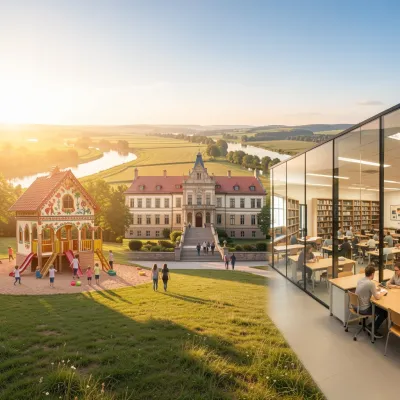
Educationin Hungary has evolved from monastic and church‑run schools in the medieval period through Habsburg‑era reforms, the Counter‑Reformation, and the nationalistic language movements of the 19th century, laying a foundation that blends religious tradition, state centralization, and cultural identity. Today the system is primarily public and overseen by the Ministry of Human Resources, beginning with compulsory nursery care (bölcsőde) from 20 weeks to age 3, followed by mandatory kindergarten (óvoda) from ages 3‑6 emphasizing play‑based learning, and an eight‑year single‑structure primary school (általános iskola) divided into lower (grades 1‑4) and upper (grades 5‑8) stages. After primary school, students choose among three secondary pathways: the academically focused Gimnázium preparing for university, the vocational‑general Szakgimnázium offering both a Matura and a trade qualification, and the vocational‑only Szakképző Iskola delivering direct workforce preparation. The Matura examination, with compulsory subjects in Hungarian language and literature, mathematics, history, a foreign language, and an elective, together with school performance and additional points, determines university admission under a centralized 500‑point system.
Higher education follows the Bologna Process, offering three‑cycle Bachelor’s, Master’s, and Doctoral degrees, integrated one‑tier programs in fields such as medicine and law, and two‑year vocational higher education tracks. Quality is assured by the Hungarian Accreditation Committee, while institutions are increasingly internationalized through English‑taught programs, Erasmus+ mobility, and the Stipendium Hungaricum scholarship. Assessment in primary and secondary schools combines continuous formative feedback, descriptive reports in early grades, and a 1‑5 numerical scale later on, complemented by national competency measurements. Teacher training is specialized by level—early childhood educators at pedagogical colleges, primary teachers with a bachelor’s in education, and secondary teachers with a master’s in two subjects—supported by mandatory continuous professional development. Inclusive education seeks to place students with special needs in mainstream classrooms via individualized education plans, specialist support, and assistive technology, while EU policies have driven harmonization, funding for digitalization, vocational training, teacher development, language learning, and student mobility.
Persistent challenges include equity gaps between urban and rural areas, teacher recruitment and retention, curriculum relevance to labor‑market demands, financing pressures, and the need for lifelong learning. Reforms have targeted vocational‑industry partnerships, digital infrastructure, teacher training, inclusive practices, and greater institutional autonomy via asset‑management foundations. Parental involvement is facilitated through regular meetings, parent‑teacher associations, and the nationwide KRÉTA platform, while community engagement links schools with local businesses, cultural organizations, and religious communities. Adult education offers vocational retraining, second‑chance Matura pathways, digital literacy, language courses, and validation of prior learning, often co‑funded by the EU. Employment outcomes show a clear advantage for higher‑education graduates, though vocational secondary graduates enjoy strong immediate employability, and early leavers face higher unemployment. Looking ahead, Hungarian education will deepen digitalization and AI literacy, expand personalized and interdisciplinary learning, strengthen teacher attractiveness, further align VET with industry, increase higher‑education internationalization, promote lifelong learning, and continue to address equity, mental‑health, environmental education, and sustainable funding to meet future demographic and labor‑market needs.
What You'll Find Inside:
- Historical Evolution: Traces the development of Hungarian education from medieval monastic schools through major reforms like the Ratio Educationis to modern EU-aligned structures.
- System Structure: Covers all educational stages—from compulsory kindergarten through primary and diverse secondary tracks to the Bologna-compliant higher education system.
- The Matura Exam: Explains the structure, scoring, and critical role of the national leaving examination in university admissions and its point-based selection system.
- Policy and Inclusion: Addresses funding mechanisms, teacher training, inclusive education for special needs students, and the impact of EU policies and digitalization.
- Future Challenges: Analyzes current issues like the urban-rural divide, teacher shortages, and trends internationalization, lifelong learning, and AI integration.
Who's It For:
This comprehensive volume is essential for international educators, comparative education researchers, policymakers, and relocated families seeking a detailed understanding of Hungary’s educational heritage, structural complexity, and future trajectory. It also serves as an invaluable resource for students and scholars focusing on European educational systems.
Table of Contents:
- Introduction
- Chapter 1: Historical Foundations of Hungarian Education
- Chapter 2: The Structure of the Hungarian Education System
- Chapter 3: Early Childhood Education: Nurseries and Kindergartens
- Chapter 4: The Role of Play-Based Learning in Early Years
- Chapter 5: Primary Education: Curriculum and Key Stages
- Chapter 6: Assessment and Evaluation in Primary Schools
- Chapter 7: Secondary Education: General and Vocational Tracks
- Chapter 8: The Matura Examination and University Entry
- Chapter 9: Vocational Education and Training (VET) in Hungary
- Chapter 10: Higher Education: Universities and Colleges
- Chapter 11: Admission Processes and Requirements for Higher Education
- Chapter 12: Funding and Financing of Education in Hungary
- Chapter 13: Teacher Training and Professional Development
- Chapter 14: Inclusive Education for Students with Special Needs
- Chapter 15: The Impact of European Union Policies on Hungarian Education
- Chapter 16: Digitalization and Technology in Hungarian Classrooms
- Chapter 17: Language Education and Bilingual Programs
- Chapter 18: The Role of Arts and Sports in the Curriculum
- Chapter 19: Education in Rural vs. Urban Areas
- Chapter 20: Challenges and Reforms in the Hungarian Education System
- Chapter 21: Parental Involvement and Community Engagement in Schools
- Chapter 22: Internationalization of Hungarian Higher Education
- Chapter 23: Adult Education and Lifelong Learning Initiatives
- Chapter 24: Educational Attainment and Employment Outcomes
- Chapter 25: Future Perspectives and Trends in Hungarian Education
Author:
Published By:
Date Published:
June 26, 2026
Type:
Nonfiction
Language:
English
Word Count:
45,734 words
Reading Time:
3 hours 12 minutes
Sample:
Order:
Order Education In Hungary (Paperback) on MixCache.com:
Buy NowPrint copy is made to order and ships worldwide. Includes the ebook free, ready to read instantly.
$5 account credit for all new MixCache.com accounts, usable toward any ebook purchase!*