
Browse by Category
Fiction
- Action & Adventure
- African American
- Anthologies
- Children's Fiction
- Classics
- Comics & Graphic Novels
- Coming of Age
- Contemporary
- Cultural & Regional
- Drama
- Erotica
- Fantasy
- General
- Historical Fiction
- Horror
- Humor & Satire
- Literary Fiction
- Mystery, Thriller & Suspense
- Poetry
- Religious & Inspirational
- Romance
- Science Fiction
- Short Stories
- War & Military
- Westerns
- Women's Fiction
- Young Adult
Non-Fiction
- Antiques & Collectibles
- Arts & Photography
- Biographies & Memoirs
- Business & Money
- Children's Non-Fiction
-
Computers & Technology
- Artificial Intelligence
- Computer Science
- Cybersecurity & Cryptography
- Data Science & Analytics
- Databases & Big Data
- Game Development & Design
- General
- Hardware & DIY
- Mobile App Development
- Networking & Cloud Computing
- Operating Systems
- Programming
- Robotics
- Software
- Software Engineering
- User Experience (UX) & Design
- Web Development & Design
- Cooking, Food & Wine
- Crafts, Hobbies & Home
- Education & Teaching
- Engineering
- General
- Health, Fitness & Dieting
-
History
- African History
- African History - North Africa
- African History - Sub-Saharan Africa
- American History
- American History - 20th Century
- American History - Civil War
- American History - Colonial Period
- Ancient History
- Asian History
- Asian History - China
- Asian History - India
- Asian History - Japan
- Asian History - Southeast Asia
- European History
- European History - Ancient Greece
- European History - Ancient Rome
- European History - Medieval
- European History - Modern
- European History - Renaissance
- General
- Middle Eastern History
- Military History
- Military History - Aviation
- Military History - Naval
- Social & Cultural History
- World History
- Humor & Entertainment
- Industrial Technology
- Language Learning
- Law
- LGBTQ+ Non-Fiction
- Literary Criticism
- Medical Books
- Parenting & Relationships
- Philosophy
- Politics & Social Sciences
- Reference
- Religion & Spirituality
-
Science & Math
- Agricultural Sciences
- Astronomy & Space Science
- Behavioral Sciences
- Biological Sciences
- Botany & Plant Science
- Chemistry
- Earth Sciences
- Engineering - Chemical
- Engineering - Civil
- Engineering - Electrical
- Engineering - Mechanical
- Environment
- General
- Geology
- Mathematics
- Nature & Ecology
- Oceanography
- Paleontology
- Physics
- Statistics
- Self-Help
- Sports & Outdoors
- Study Aids
- Sustainability & Green Living
- Textbooks
- Transportation
- Travel
- True Crime
- Urban Planning & Development
- Veterinary Medicine
- Writing & Publishing
Jump to Section
MixCache.com Total Access
Unlimited reading and audiobooks for every book published by MixCache.com.
Included titles carry the MTA badge.
Learn more →
Self-Driving Cars
How They Will Change The World
About this book:
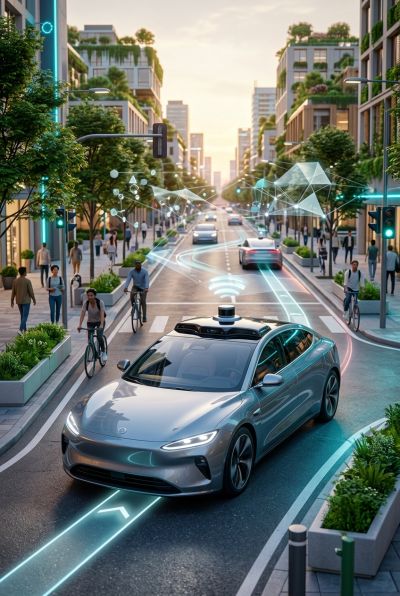
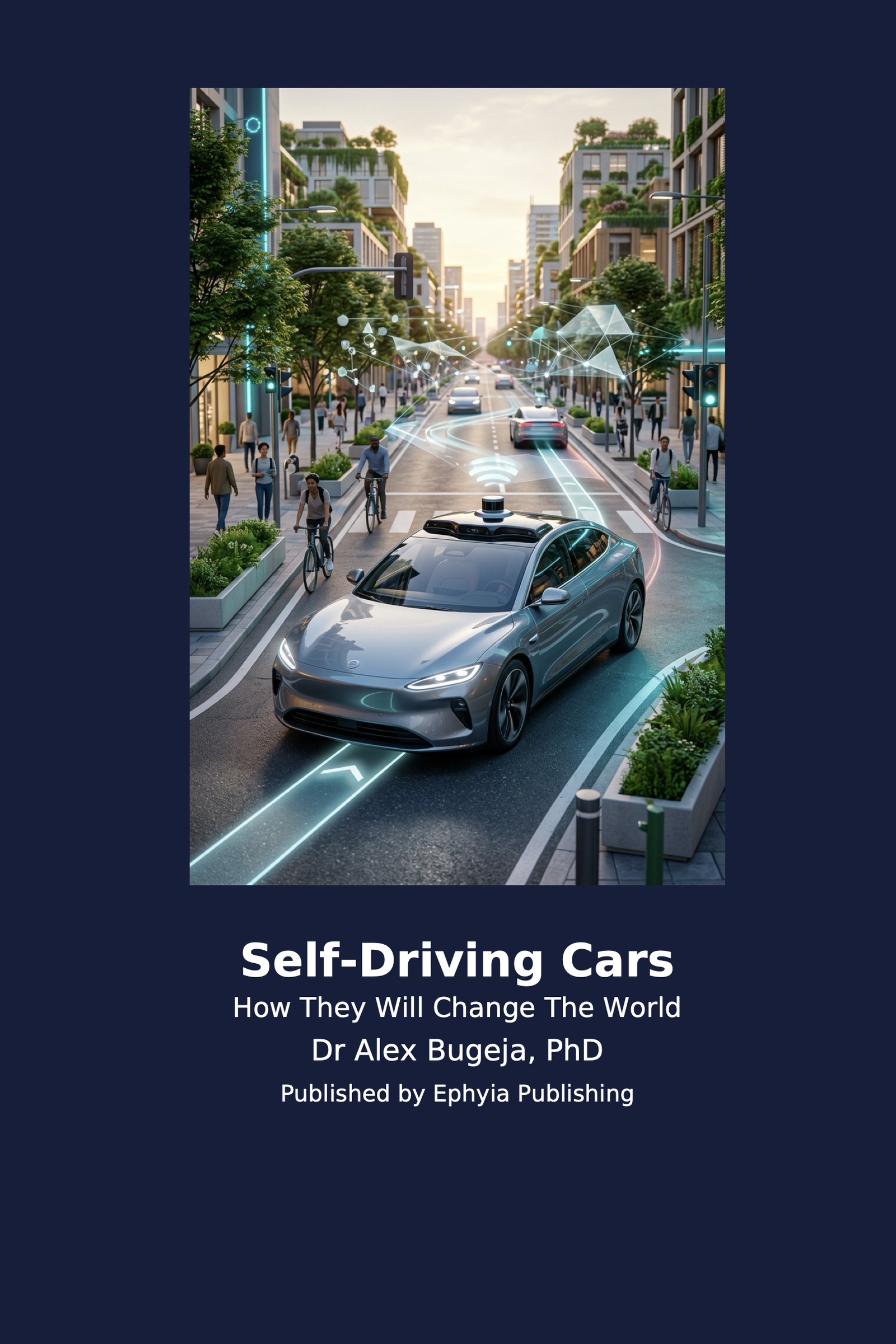
Self‑Driving Cars: How They Will Change The World offers a sweeping, accessible guide to the technology that is already reshaping our roads, cities, and daily lives. Readers will walk through the complete story of autonomy—from early 20th‑century visions at World’s Fairs and the breakthroughs of the DARPA Challenges to today’s commercial robotaxi fleets in Phoenix and San Francisco. Each chapter builds a clear picture of how sensors, AI, and high‑definition maps give a car its eyes, ears, and brain, and how those systems fuse data to make split‑second decisions about steering, braking, and acceleration.
The book explains the six SAE levels of automation, showing where today’s driver‑assistance features sit and where true driver‑less operation begins. Readers will learn why removing human error could prevent over 90 % of traffic fatalities, how autonomous trucks could save the freight industry hundreds of billions of dollars, and why shared, electric robotaxis promise to lower travel costs while reclaiming vast amounts of urban parking space for parks, housing, and bike lanes. Ethical dilemmas such as the trolley problem, liability shifts, cybersecurity threats, and privacy concerns are examined in depth, giving readers a balanced view of the promise and the perils.
Beyond the mechanics, the text explores the socioeconomic ripple effects: the transformation of industries from insurance to public transit, the creation of new jobs in AI, fleet management, and tele‑operations, and the challenges of retraining millions of workers whose roles may be displaced. Readers will also discover how autonomous mobility could change personal routines—turning commutes into productive or restorative time, reshaping family logistics, and enabling greater independence for seniors and people with disabilities—while weighing the risks of increased sprawl, rebound effects, and social isolation.
Finally, the book looks ahead to the hurdles that must be cleared for mass adoption, including weather‑dependent performance, edge‑case handling, cost reduction, regulatory fragmentation, and public trust. It concludes with an inspiring vision of a fully autonomous society where traffic lights give way to choreographed, slot‑based intersections, city streets prioritize people over parked cars, and mobility becomes a seamless, on‑demand service accessed through a single app. By the end, readers will not only understand how self‑driving cars work but also grasp how they could remake the world around them—equipping them to engage confidently in the conversations, investments, and decisions that will shape the next era of transportation.
What You'll Find Inside:
- How autonomous vehicle technology works, including sensor fusion (LiDAR, cameras, radar), AI perception systems, and decision-making algorithms that enable cars to navigate complex environments.
- The profound safety potential of self-driving cars to eliminate up to 94% of accidents caused by human error, while examining remaining challenges like edge cases and cybersecurity threats.
- The economic disruption across industries including trucking, insurance, urban planning, and mobility services, with analysis of job displacement, new business models, and productivity gains.
- How autonomous vehicles will transform urban landscapes by reclaiming parking space, enabling narrower lanes, creating fluid intersections, and making cities more livable through Mobility-as-a-Service ecosystems.
- The ethical, legal, and social challenges of autonomous vehicles, including the trolley problem, liability shifts, privacy concerns, accessibility for disadvantaged groups, and building public trust in driverless technology.
Who's It For:
This book is ideal for technology professionals, urban planners, policymakers, and business leaders seeking to understand the comprehensive impact of autonomous vehicles on society. It will also benefit students of engineering, economics, or sociology who need a detailed examination of how self-driving technology intersects with safety, ethics, urban design, and economic systems. Anyone interested in the future of transportation and its societal implications will find valuable insights into both the opportunities and challenges of the driverless revolution.
Table of Contents:
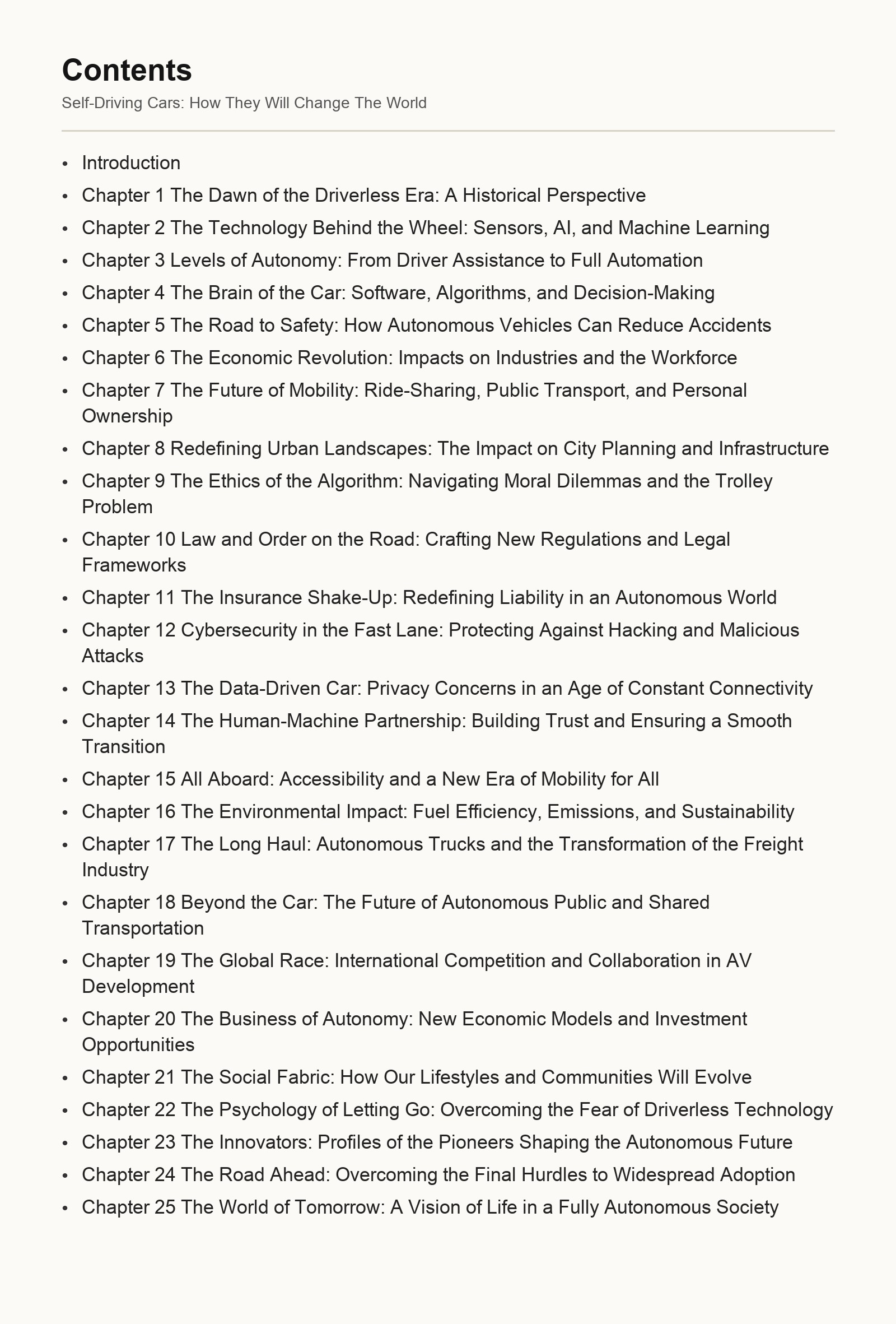
- Introduction
- Chapter 1 The Dawn of the Driverless Era: A Historical Perspective
- Chapter 2 The Technology Behind the Wheel: Sensors, AI, and Machine Learning.
- Chapter 3 Levels of Autonomy: From Driver Assistance to Full Automation
- Chapter 4 The Brain of the Car: Software, Algorithms, and Decision-Making
- Chapter 5 The Road to Safety: How Autonomous Vehicles Can Reduce Accidents.
- Chapter 6 The Economic Revolution: Impacts on Industries and the Workforce.
- Chapter 7 The Future of Mobility: Ride-Sharing, Public Transport, and Personal Ownership.
- Chapter 8 Redefining Urban Landscapes: The Impact on City Planning and Infrastructure.
- Chapter 9 The Ethics of the Algorithm: Navigating Moral Dilemmas and the Trolley Problem.
- Chapter 10 Law and Order on the Road: Crafting New Regulations and Legal Frameworks
- Chapter 11 The Insurance Shake-Up: Redefining Liability in an Autonomous World.
- Chapter 12 Cybersecurity in the Fast Lane: Protecting Against Hacking and Malicious Attacks.
- Chapter 13 The Data-Driven Car: Privacy Concerns in an Age of Constant Connectivity
- Chapter 14 The Human-Machine Partnership: Building Trust and Ensuring a Smooth Transition
- Chapter 15 All Aboard: Accessibility and a New Era of Mobility for All.
- Chapter 16 The Environmental Impact: Fuel Efficiency, Emissions, and Sustainability.
- Chapter 17 The Long Haul: Autonomous Trucks and the Transformation of the Freight Industry
- Chapter 18 Beyond the Car: The Future of Autonomous Public and Shared Transportation
- Chapter 19 The Global Race: International Competition and Collaboration in AV Development
- Chapter 20 The Business of Autonomy: New Economic Models and Investment Opportunities.
- Chapter 21 The Social Fabric: How Our Lifestyles and Communities Will Evolve.
- Chapter 22 The Psychology of Letting Go: Overcoming the Fear of Driverless Technology
- Chapter 23 The Innovators: Profiles of the Pioneers Shaping the Autonomous Future
- Chapter 24 The Road Ahead: Overcoming the Final Hurdles to Widespread Adoption
- Chapter 25 The World of Tomorrow: A Vision of Life in a Fully Autonomous Society
Author:
Published By:
Date Published:
May 28, 2026
Type:
Nonfiction
Language:
English
Also Available In:
Word Count:
47,188 words
Reading Time:
3 hours 18 minutes
Sample:
Order:
Buy the Self-Driving Cars ebook on MixCache.com:
Buy NowThe full ebook will be available immediately to read instantly on any device.
$5 account credit for all new MixCache.com accounts, usable toward any ebook purchase!*


Ratings & Reviews
Ask Questions About This Book
Have a question about the content? Ask our AI assistant!
Start by asking a question about "Self-Driving Cars"
Example: "Does this book mention William Shakespeare?"
Thinking...