Browse by Category
Fiction
- Action & Adventure
- African American
- Anthologies
- Children's Fiction
- Classics
- Comics & Graphic Novels
- Coming of Age
- Contemporary
- Cultural & Regional
- Drama
- Erotica
- Family Life
- Fantasy
- General
- Historical Fiction
- Horror
- Humor & Satire
- Literary Fiction
- Mystery, Thriller & Suspense
- Poetry
- Religious & Inspirational
- Romance
- Science Fiction
- Short Stories
- War & Military
- Westerns
- Women's Fiction
- Young Adult
Non-Fiction
- Antiques & Collectibles
- Arts & Photography
- Biographies & Memoirs
- Business & Money
- Children's Non-Fiction
-
Computers & Technology
- Artificial Intelligence
- Computer Science
- Cybersecurity & Cryptography
- Data Science & Analytics
- Databases & Big Data
- Game Development & Design
- General
- Hardware & DIY
- Mobile App Development
- Networking & Cloud Computing
- Operating Systems
- Programming
- Robotics
- Software
- Software Engineering
- User Experience (UX) & Design
- Web Development & Design
- Cooking, Food & Wine
- Crafts, Hobbies & Home
- Education & Teaching
- Engineering
- General
- Health, Fitness & Dieting
-
History
- African History
- African History - North Africa
- African History - Sub-Saharan Africa
- American History
- American History - 20th Century
- American History - Civil War
- American History - Colonial Period
- Ancient History
- Asian History
- Asian History - China
- Asian History - India
- Asian History - Japan
- Asian History - Southeast Asia
- European History
- European History - Ancient Greece
- European History - Ancient Rome
- European History - Medieval
- European History - Modern
- European History - Renaissance
- General
- Middle Eastern History
- Military History
- Military History - Aviation
- Military History - Naval
- Social & Cultural History
- World History
- Humor & Entertainment
- Industrial Technology
- Language Learning
- Law
- LGBTQ+ Non-Fiction
- Literary Criticism
- Medical Books
- Parenting & Relationships
- Philosophy
- Politics & Social Sciences
- Reference
- Religion & Spirituality
-
Science & Math
- Agricultural Sciences
- Astronomy & Space Science
- Behavioral Sciences
- Biological Sciences
- Botany & Plant Science
- Chemistry
- Earth Sciences
- Engineering - Chemical
- Engineering - Civil
- Engineering - Electrical
- Engineering - Mechanical
- Environment
- General
- Geology
- Mathematics
- Nature & Ecology
- Oceanography
- Paleontology
- Physics
- Statistics
- Self-Help
- Sports & Outdoors
- Study Aids
- Sustainability & Green Living
- Textbooks
- Transportation
- Travel
- True Crime
- Urban Planning & Development
- Veterinary Medicine
- Writing & Publishing
Jump to Section
MixCache.com Total Access
Unlimited reading and audiobooks for every book published by MixCache.com.
Included titles carry the MTA badge.
Learn more →A History of Delhi MTA
About this book:
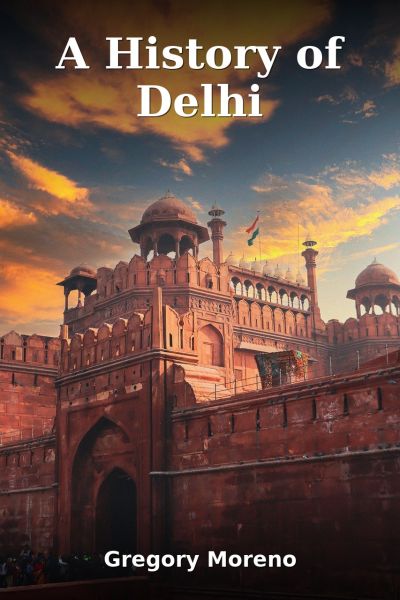
Delhi stands as a city eternally at the crossroads of India’s history, a metropolis where myth, memory, and modernity converge. Its story spans millennia, from its ancient origins perhaps linked to the legendary Indraprastha of the Mahabharata, through periods of early settlements and its recognition as a significant center within the empires of the Mauryans, Kushans, and Guptas. The book traces the city's rise to prominence under the Rajput Tomars, who founded Lal Kot, and their successors, the Chauhans, creators of Qila Rai Pithora. This first historical nucleus was transformed dramatically with the Ghurid invasion and the advent of Muslim rule, leading to the establishment of the Delhi Sultanate by the Mamluks.
Over the next three centuries, successive dynasties of Sultans – the Khaljis, Tughlaqs, Sayyids, and Lodis – expanded the Sultanate's power, built remarkable new cities like Siri, Tughlaqabad, Jahanpanah, and Firozabad, and left behind a rich architectural and administrative legacy, even as they grappled with internal strife and external threats like the Mongol invasions. The Sultanate era culminated in the rise of the Mughal Empire, founded by Babur after the decisive Battle of Panipat. Under the Mughals, Delhi reached its zenith, particularly under Shah Jahan, who built the magnificent walled city of Shahjahanabad with its iconic Red Fort and Jama Masjid, making it a global center of art, culture, and imperial power.
The book navigates the period of Mughal decline, marked by internal weakness and devastating invasions, most notably by Nader Shah, which left Delhi ravaged and vulnerable. The city's fate then transitioned under British ascendancy, culminating in its capture in 1803, the tragic events of the 1857 Revolt that led to the formal end of the Mughal dynasty, and the subsequent decision to build a grand new imperial capital, Lutyens' Delhi, as a monumental statement of colonial power. The final chapters detail the cataclysmic impact of the 1947 Partition, which fundamentally reshaped the city through a massive influx of refugees, and explore Delhi's subsequent journey of rapid growth, resettlement, and the evolution of its governance from a Union Territory to the sprawling, dynamic National Capital Territory it is today, confronting the complex challenges of a modern global metropolis while constantly interacting with its deep and layered historical past.
What You'll Find Inside:
- Traces Delhi's origins from ancient legends of Indraprastha and early settlements to its emergence as a historical town.
- Details the rise and fall of prominent dynasties like the Delhi Sultans (Mamluks, Khaljis, Tughlaqs, Sayyids, Lodis) and the powerful Mughal Empire.
- Explores major periods of upheaval, including devastating invasions by figures like Timur and Nader Shah, and the pivotal 1857 Revolt.
- Chronicles the building and evolution of Delhi's distinct historical cities, from Rajput citadels to Mughal Shahjahanabad and British New Delhi.
- Describes the city's transformation through colonial rule, the trauma of Partition, and its subsequent growth into a complex global metropolis.
Who's It For:
This book is for anyone interested in the long and complex history of India's capital. It will benefit students, researchers, and general readers seeking a deep understanding of the political, cultural, and urban transformations that shaped Delhi over millennia, from ancient legends and the rise of empires to colonial rule, Partition, and its modern status.
Introduction
Delhi stands as a city eternally at the crossroads of India’s history—a metropolis where myth, memory, and modernity converge. Its location by the banks of the Yamuna, opening into the fertile tracts of the Gangetic plains, ensured it would be coveted by rulers and shapes by the ambitions of empires. Over millennia, Delhi has been built and rebuilt, destroyed and revived, each new chapter adding another layer to its intricate historical palimpsest. From ancient legend to contemporary reality, Delhi’s story is both unique and emblematic of the wider subcontinent’s journey.
Throughout its long existence, Delhi has borne witness to, and often taken center stage in, the major political, cultural, and religious transformations of the Indian subcontinent. Its earliest identity, perhaps shrouded in the legends of Indraprastha, echoes with the grand tales of the Mahabharata, suggesting a nexus of power and spirituality stretching into prehistory. Subsequent centuries saw it transformed by dynasties whose ambitions reached across northern India and beyond, weaving an ever richer tapestry of culture, architecture, and governance.
The city’s status as an imperial capital reached its first great zenith during the Delhi Sultanate, when a succession of dynasties made Delhi their seat of rule between the 13th and 16th centuries. The layered remnants of those times—fortifications, minarets, and tombs—endure alongside the later splendors wrought by the Mughal emperors.
Enjoying it? The full book includes every chapter.
Table of Contents:
- Introduction Free
- Chapter 1 The Land and its Legends: Indraprastha and Prehistoric Delhi Free
- Chapter 2 From Khandavaprastha to Indapatta: Delhi in the Ancient Period
- Chapter 3 Early Political Centers: The Mauryans, Kushans, and Guptas
- Chapter 4 Rajput Ascendancy: The Tomars and the Founding of Lal Kot
- Chapter 5 Qila Rai Pithora: The Reign and Legacy of Prithviraj Chauhan
- Chapter 6 The Ghurid Invasion and the Advent of Muslim Rule
- Chapter 7 The Mamluks: Builders of the Delhi Sultanate
- Chapter 8 The Khalji Dynasty: Expansion, Architecture, and Reform
- Chapter 9 Tughlaqs and the Shifting Capitals: Tughlaqabad, Jahanpanah, and Firozabad
- Chapter 10 Timur’s Invasion and the Sayyid Dynasty: An Age of Upheaval
- Chapter 11 The Lodis: Last Sultans of Delhi
- Chapter 12 The Dawn of the Mughals: Babur and the Fall of the Sultanate
- Chapter 13 Humayun, Sher Shah, and the Cities of Dreams: Dinpanah and Shergarh
- Chapter 14 Akbar to Jahangir: Delhi Between Agra and the Mughal Court
- Chapter 15 Shahjahanabad: The Magnificence of Mughal Delhi
- Chapter 16 Decline and Plunder: Aurangzeb to Nader Shah
- Chapter 17 The 18th Century: Marathas, Afghans, and Changing Power
- Chapter 18 British Ascendancy: The Fall of the Mughals and Delhi in Transition
- Chapter 19 The 1857 Revolt: Siege, Suffering, and Aftermath
- Chapter 20 Lutyens’ Delhi: Building the British Imperial Capital
- Chapter 21 Delhi in the Freedom Struggle: Nationalism and Protest
- Chapter 22 Partition and Refuge: 1947 and the Transformation of Delhi
- Chapter 23 Resettlement and Growth: Shaping the Postcolonial City
- Chapter 24 Governance and Politics: From Union Territory to National Capital Territory
- Chapter 25 Delhi Today: A Global Metropolis Facing Tomorrow
Included when you buy the full book.
Author:
Published By:
Date Published:
May 11, 2025
Type:
Nonfiction
Language:
English
Word Count:
58,058 words
Reading Time:
4 hours 4 minutes
Sample:
Order:
Order A History of Delhi (Hardcover) on MixCache.com:
Buy NowIncludes every chapter. Not sure yet? Read the opening free.
Print copy is made to order and ships worldwide. Includes the ebook free, ready to read instantly.
$5 account credit for all new MixCache.com accounts, usable toward any ebook purchase!*
 Includes Audiobook