Browse by Category
Fiction
- Action & Adventure
- African American
- Anthologies
- Children's Fiction
- Classics
- Comics & Graphic Novels
- Coming of Age
- Contemporary
- Cultural & Regional
- Drama
- Erotica
- Fantasy
- General
- Historical Fiction
- Horror
- Humor & Satire
- Literary Fiction
- Mystery, Thriller & Suspense
- Poetry
- Religious & Inspirational
- Romance
- Science Fiction
- Short Stories
- War & Military
- Westerns
- Women's Fiction
- Young Adult
Non-Fiction
- Antiques & Collectibles
- Arts & Photography
- Biographies & Memoirs
- Business & Money
- Children's Non-Fiction
-
Computers & Technology
- Artificial Intelligence
- Computer Science
- Cybersecurity & Cryptography
- Data Science & Analytics
- Databases & Big Data
- Game Development & Design
- General
- Hardware & DIY
- Mobile App Development
- Networking & Cloud Computing
- Operating Systems
- Programming
- Robotics
- Software
- Software Engineering
- User Experience (UX) & Design
- Web Development & Design
- Cooking, Food & Wine
- Crafts, Hobbies & Home
- Education & Teaching
- Engineering
- General
- Health, Fitness & Dieting
-
History
- African History
- African History - North Africa
- African History - Sub-Saharan Africa
- American History
- American History - 20th Century
- American History - Civil War
- American History - Colonial Period
- Ancient History
- Asian History
- Asian History - China
- Asian History - India
- Asian History - Japan
- Asian History - Southeast Asia
- European History
- European History - Ancient Greece
- European History - Ancient Rome
- European History - Medieval
- European History - Modern
- European History - Renaissance
- General
- Middle Eastern History
- Military History
- Military History - Aviation
- Military History - Naval
- Social & Cultural History
- World History
- Humor & Entertainment
- Industrial Technology
- Language Learning
- Law
- LGBTQ+ Non-Fiction
- Literary Criticism
- Medical Books
- Parenting & Relationships
- Philosophy
- Politics & Social Sciences
- Reference
- Religion & Spirituality
-
Science & Math
- Agricultural Sciences
- Astronomy & Space Science
- Behavioral Sciences
- Biological Sciences
- Botany & Plant Science
- Chemistry
- Earth Sciences
- Engineering - Chemical
- Engineering - Civil
- Engineering - Electrical
- Engineering - Mechanical
- Environment
- General
- Geology
- Mathematics
- Nature & Ecology
- Oceanography
- Paleontology
- Physics
- Statistics
- Self-Help
- Sports & Outdoors
- Study Aids
- Sustainability & Green Living
- Textbooks
- Transportation
- Travel
- True Crime
- Urban Planning & Development
- Veterinary Medicine
- Writing & Publishing
Jump to Section
MixCache.com Total Access
Unlimited reading and audiobooks for every book published by MixCache.com.
Included titles carry the MTA badge.
Learn more →A History of Singapore
About this book:
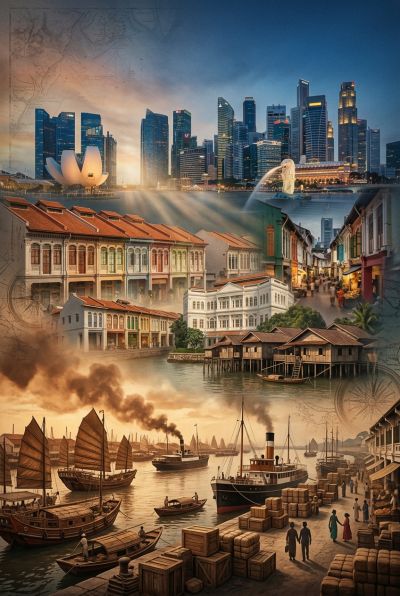
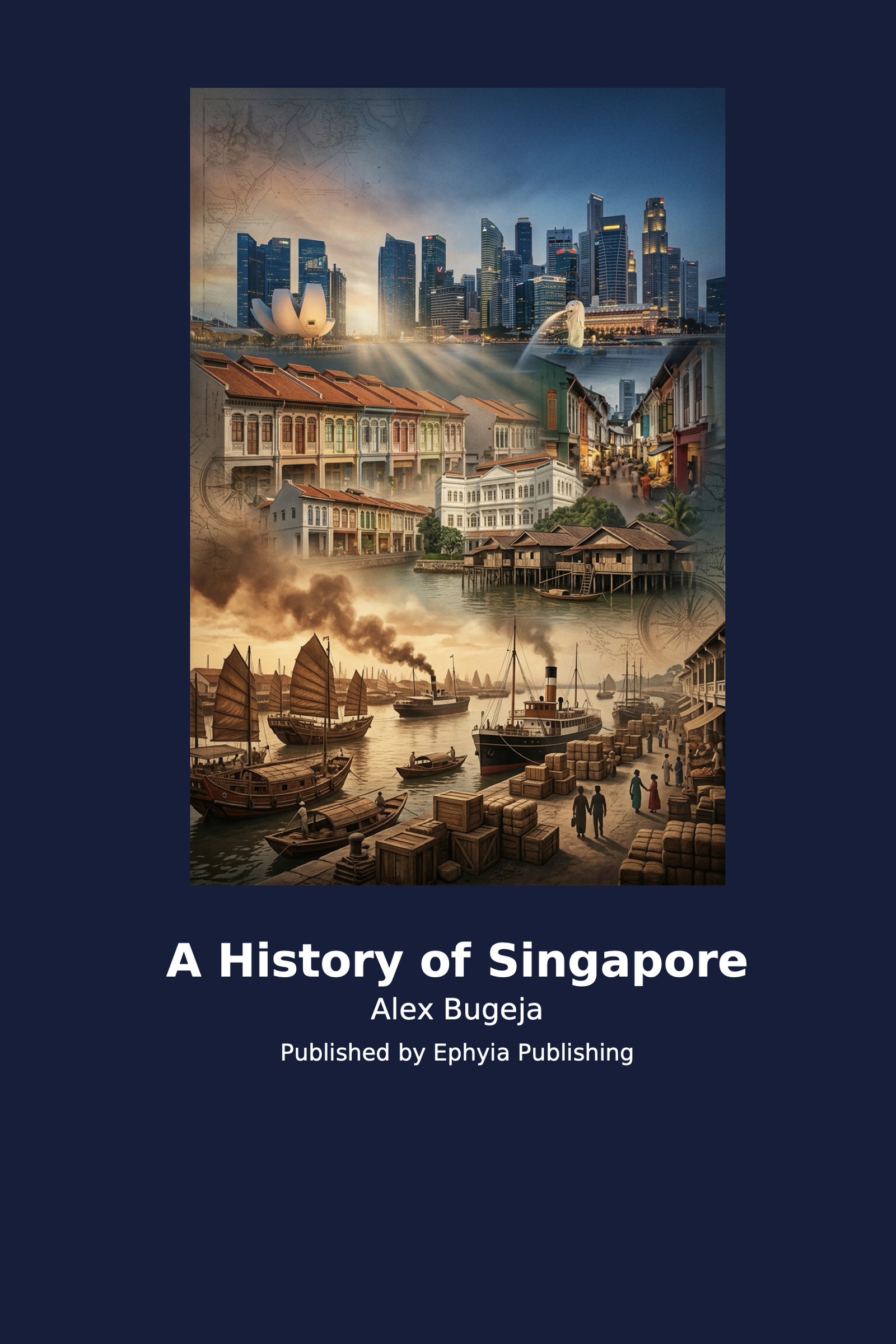
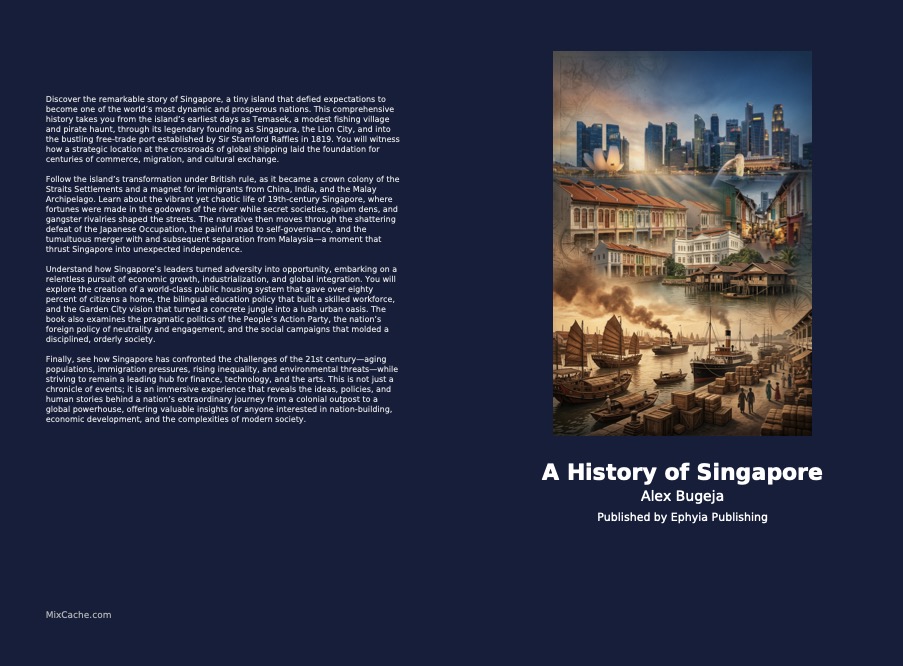
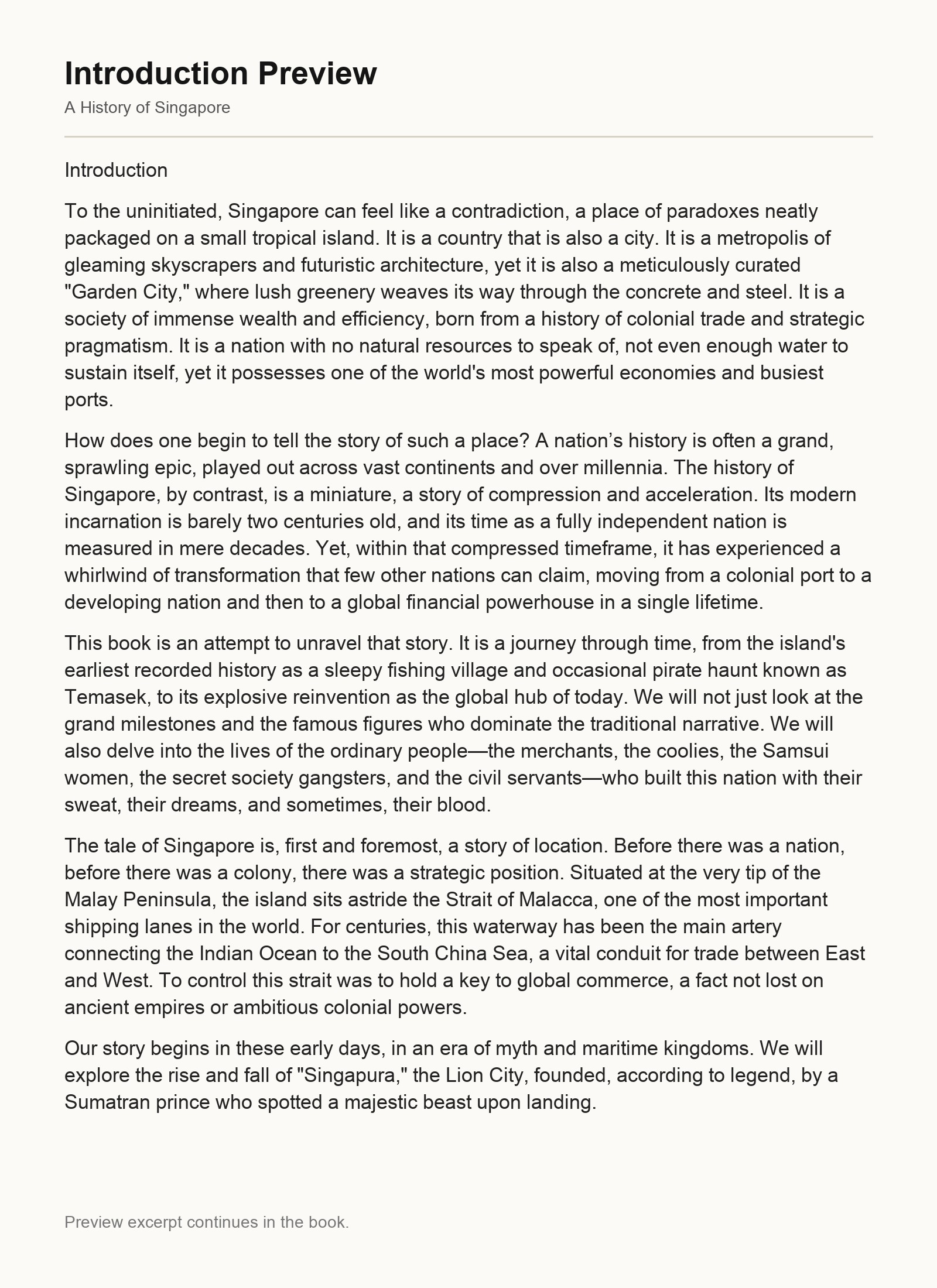
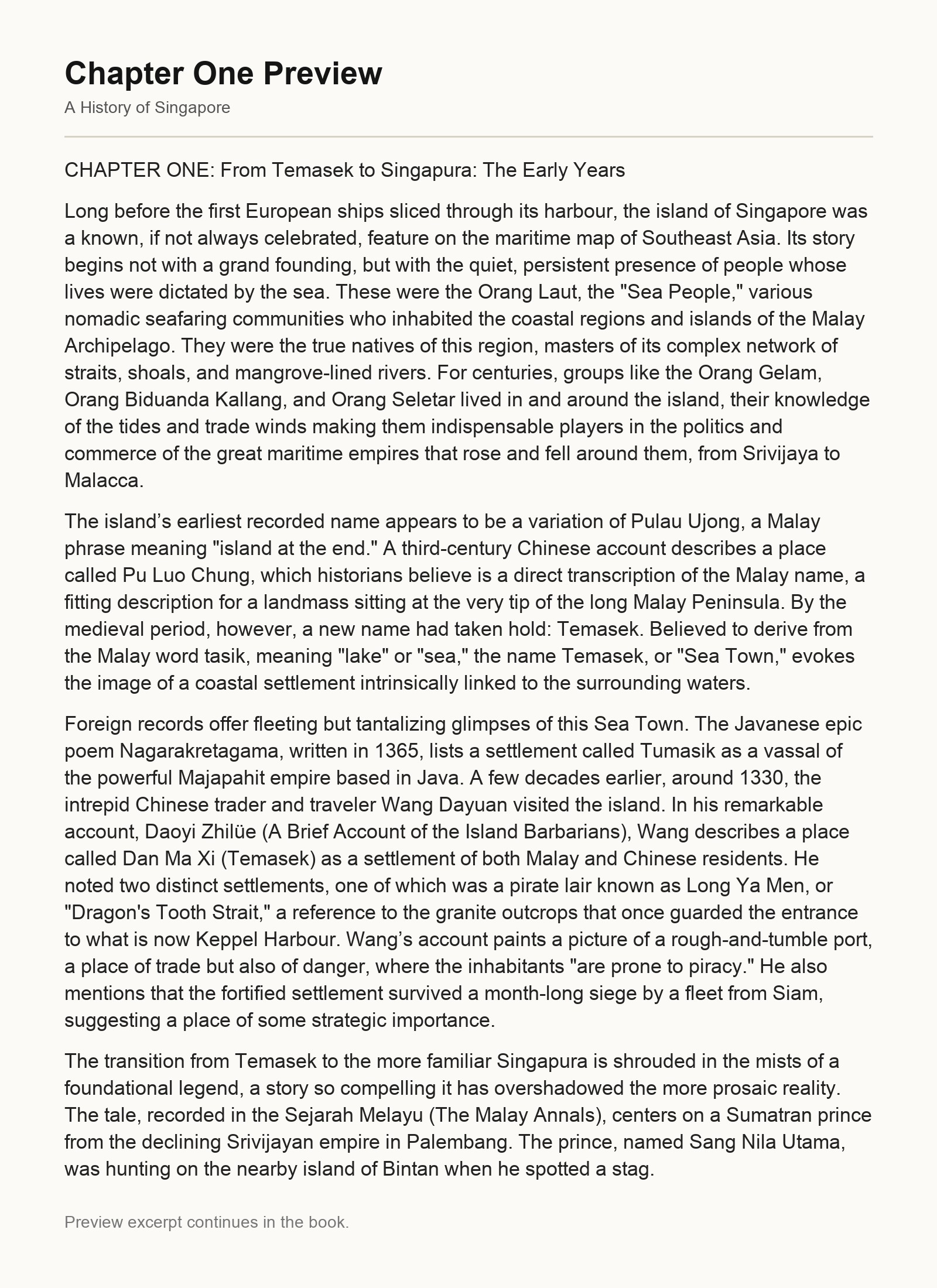
Discover the remarkable story of Singapore, a tiny island that defied expectations to become one of the world’s most dynamic and prosperous nations. This comprehensive history takes you from the island’s earliest days as Temasek, a modest fishing village and pirate haunt, through its legendary founding as Singapura, the Lion City, and into the bustling free‑trade port established by Sir Stamford Raffles in 1819. You will witness how a strategic location at the crossroads of global shipping laid the foundation for centuries of commerce, migration, and cultural exchange.
Follow the island’s transformation under British rule, as it became a crown colony of the Straits Settlements and a magnet for immigrants from China, India, and the Malay Archipelago. Learn about the vibrant yet chaotic life of 19th‑century Singapore, where fortunes were made in the godowns of the river while secret societies, opium dens, and gangster rivalries shaped the streets. The narrative then moves through the shattering defeat of the Japanese Occupation, the painful road to self‑governance, and the tumultuous merger with and subsequent separation from Malaysia—a moment that thrust Singapore into unexpected independence.
Understand how Singapore’s leaders turned adversity into opportunity, embarking on a relentless pursuit of economic growth, industrialization, and global integration. You will explore the creation of a world‑class public housing system that gave over eighty percent of citizens a home, the bilingual education policy that built a skilled workforce, and the Garden City vision that turned a concrete jungle into a lush urban oasis. The book also examines the pragmatic politics of the People’s Action Party, the nation’s foreign policy of neutrality and engagement, and the social campaigns that molded a disciplined, orderly society.
Finally, see how Singapore has confronted the challenges of the 21st century—aging populations, immigration pressures, rising inequality, and environmental threats—while striving to remain a leading hub for finance, technology, and the arts. This is not just a chronicle of events; it is an immersive experience that reveals the ideas, policies, and human stories behind a nation’s extraordinary journey from a colonial outpost to a global powerhouse, offering valuable insights for anyone interested in nation‑building, economic development, and the complexities of modern society.
What You'll Find Inside:
- Singapore's strategic location at the Strait of Malacca made it a vital global trade hub from its founding as a British free port in 1819.
- The book traces how mass migration from China, India, and the Malay archipelago created a multicultural society that the state later forged into a cohesive national identity through policies like bilingualism, public housing, and National Service.
- From independence in 1965, Singapore's rapid economic transformation—driven by export‑oriented industrialization, foreign investment, and strict labor policies—turned it from a struggling port into a global financial and manufacturing powerhouse.
- The People's Action Party's dominance is examined through its performance‑based legitimacy, authoritarian tools (ISA, defamation suits, GRC system), and pragmatic nation‑building projects such as the Garden City initiative and extensive public housing.
- Contemporary challenges—including an aging population, immigration pressures, income inequality, and evolving social values—are analyzed alongside Singapore's forward‑looking strategies like Smart Nation, Industry Transformation Maps, and the Forward Singapore social compact review.
Who's It For:
This book is ideal for students, scholars, and general readers interested in Asian history, nation‑building, and economic development. Policymakers and professionals looking for insights into Singapore's pragmatic governance, urban planning, and social engineering will also find it valuable. Anyone curious about how a small, resource‑poor island became a global hub will benefit from its comprehensive narrative.
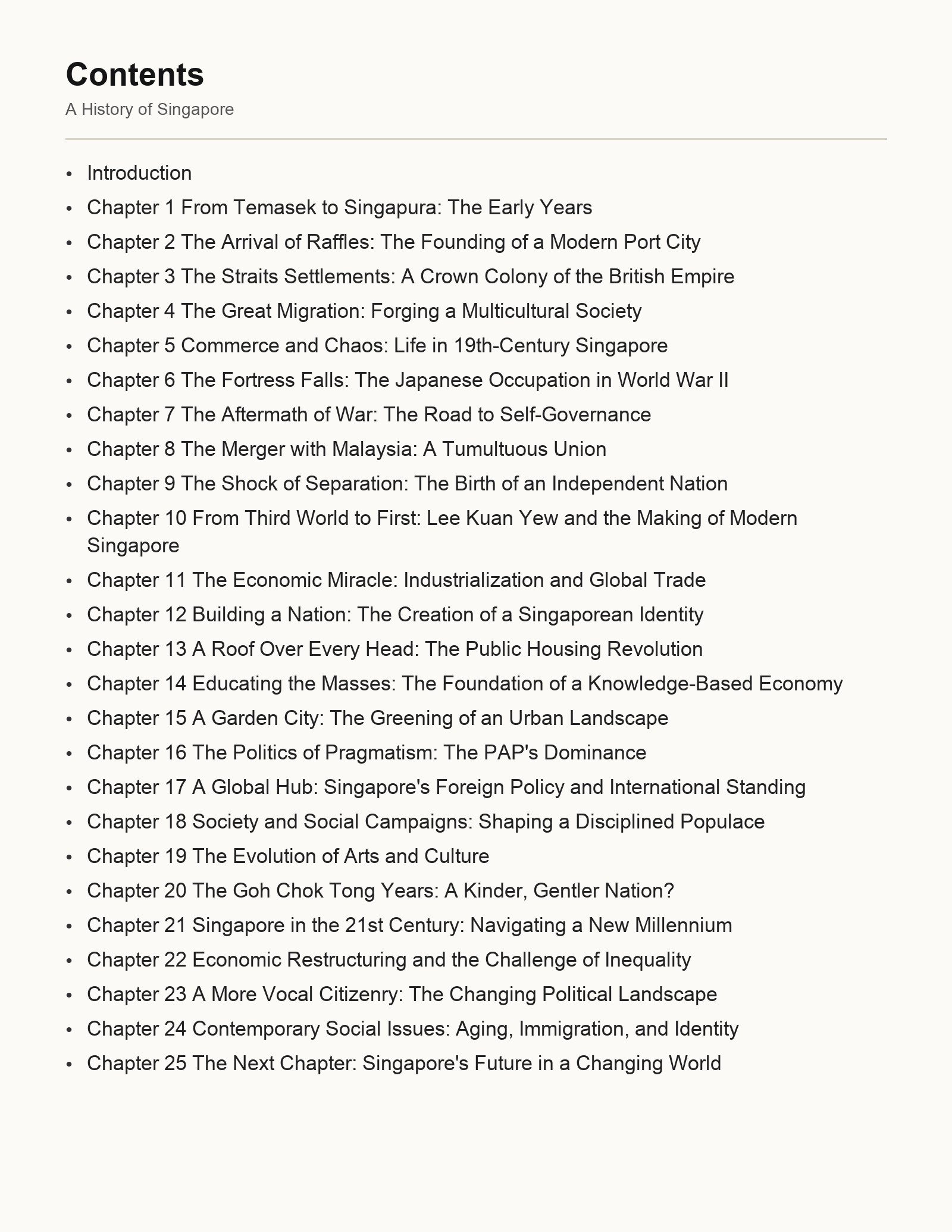
Table of Contents:
- Introduction
- Chapter 1 From Temasek to Singapura: The Early Years
- Chapter 2 The Arrival of Raffles: The Founding of a Modern Port City
- Chapter 3 The Straits Settlements: A Crown Colony of the British Empire
- Chapter 4 The Great Migration: Forging a Multicultural Society
- Chapter 5 Commerce and Chaos: Life in 19th-Century Singapore
- Chapter 6 The Fortress Falls: The Japanese Occupation in World War II
- Chapter 7 The Aftermath of War: The Road to Self-Governance
- Chapter 8 The Merger with Malaysia: A Tumultuous Union
- Chapter 9 The Shock of Separation: The Birth of an Independent Nation
- Chapter 10 From Third World to First: Lee Kuan Yew and the Making of Modern Singapore
- Chapter 11 The Economic Miracle: Industrialization and Global Trade
- Chapter 12 Building a Nation: The Creation of a Singaporean Identity
- Chapter 13 A Roof Over Every Head: The Public Housing Revolution
- Chapter 14 Educating the Masses: The Foundation of a Knowledge-Based Economy
- Chapter 15 A Garden City: The Greening of an Urban Landscape
- Chapter 16 The Politics of Pragmatism: The PAP's Dominance
- Chapter 17 A Global Hub: Singapore's Foreign Policy and International Standing
- Chapter 18 Society and Social Campaigns: Shaping a Disciplined Populace
- Chapter 19 The Evolution of Arts and Culture
- Chapter 20 The Goh Chok Tong Years: A Kinder, Gentler Nation?
- Chapter 21 Singapore in the 21st Century: Navigating a New Millennium
- Chapter 22 Economic Restructuring and the Challenge of Inequality
- Chapter 23 A More Vocal Citizenry: The Changing Political Landscape
- Chapter 24 Contemporary Social Issues: Aging, Immigration, and Identity
- Chapter 25 The Next Chapter: Singapore's Future in a Changing World
Author:
Published By:
Date Published:
May 25, 2026
Type:
Nonfiction
Language:
English
Also Available In:
German, Spanish, Italian, Portuguese
Word Count:
47,632 words
Reading Time:
3 hours 20 minutes
Sample:
Order:
Order A History of Singapore (Paperback) on MixCache.com:
Buy NowPrint copy is made to order and ships worldwide. Includes the ebook free, ready to read instantly.
$5 account credit for all new MixCache.com accounts, usable toward any ebook purchase!*