Browse by Category
Fiction
- Action & Adventure
- African American
- Anthologies
- Children's Fiction
- Classics
- Comics & Graphic Novels
- Coming of Age
- Contemporary
- Cultural & Regional
- Drama
- Erotica
- Fantasy
- General
- Historical Fiction
- Horror
- Humor & Satire
- Literary Fiction
- Mystery, Thriller & Suspense
- Poetry
- Religious & Inspirational
- Romance
- Science Fiction
- Short Stories
- War & Military
- Westerns
- Women's Fiction
- Young Adult
Non-Fiction
- Antiques & Collectibles
- Arts & Photography
- Biographies & Memoirs
- Business & Money
- Children's Non-Fiction
-
Computers & Technology
- Artificial Intelligence
- Computer Science
- Cybersecurity & Cryptography
- Data Science & Analytics
- Databases & Big Data
- Game Development & Design
- General
- Hardware & DIY
- Mobile App Development
- Networking & Cloud Computing
- Operating Systems
- Programming
- Robotics
- Software
- Software Engineering
- User Experience (UX) & Design
- Web Development & Design
- Cooking, Food & Wine
- Crafts, Hobbies & Home
- Education & Teaching
- Engineering
- General
- Health, Fitness & Dieting
-
History
- African History
- African History - North Africa
- African History - Sub-Saharan Africa
- American History
- American History - 20th Century
- American History - Civil War
- American History - Colonial Period
- Ancient History
- Asian History
- Asian History - China
- Asian History - India
- Asian History - Japan
- Asian History - Southeast Asia
- European History
- European History - Ancient Greece
- European History - Ancient Rome
- European History - Medieval
- European History - Modern
- European History - Renaissance
- General
- Middle Eastern History
- Military History
- Military History - Aviation
- Military History - Naval
- Social & Cultural History
- World History
- Humor & Entertainment
- Industrial Technology
- Language Learning
- Law
- LGBTQ+ Non-Fiction
- Literary Criticism
- Medical Books
- Parenting & Relationships
- Philosophy
- Politics & Social Sciences
- Reference
- Religion & Spirituality
-
Science & Math
- Agricultural Sciences
- Astronomy & Space Science
- Behavioral Sciences
- Biological Sciences
- Botany & Plant Science
- Chemistry
- Earth Sciences
- Engineering - Chemical
- Engineering - Civil
- Engineering - Electrical
- Engineering - Mechanical
- Environment
- General
- Geology
- Mathematics
- Nature & Ecology
- Oceanography
- Paleontology
- Physics
- Statistics
- Self-Help
- Sports & Outdoors
- Study Aids
- Sustainability & Green Living
- Textbooks
- Transportation
- Travel
- True Crime
- Urban Planning & Development
- Veterinary Medicine
- Writing & Publishing
Jump to Section
MixCache.com Total Access
Unlimited reading and audiobooks for every book published by MixCache.com.
Included titles carry the MTA badge.
Learn more →
The Plants of the Mediterranean
An Overview of the Native Plants that Grow Around the Mediterranean Sea
About this book:
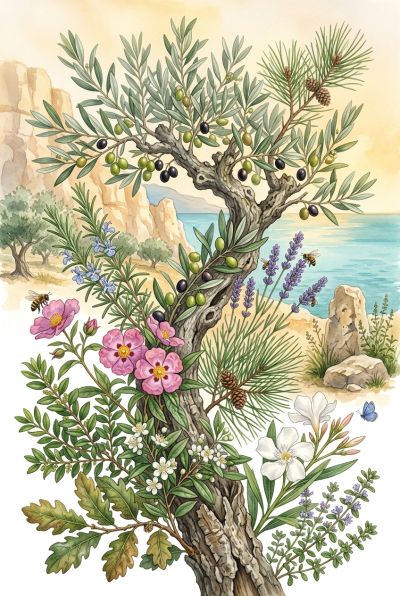
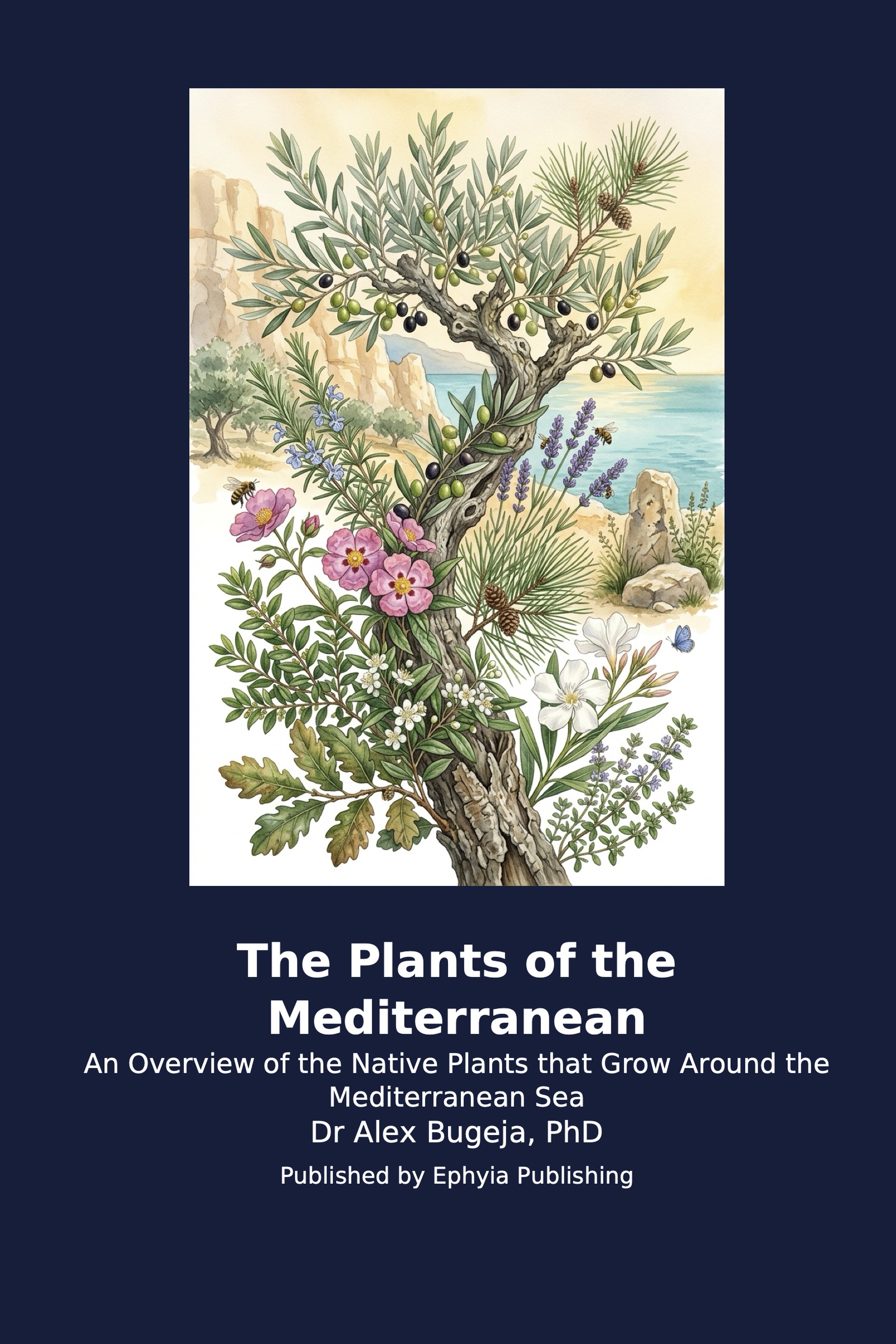
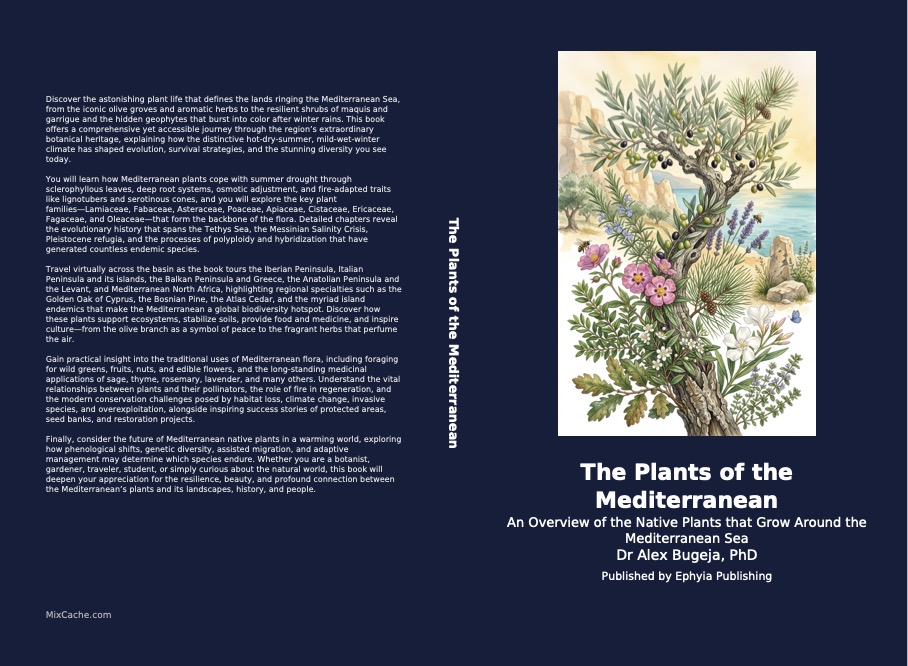
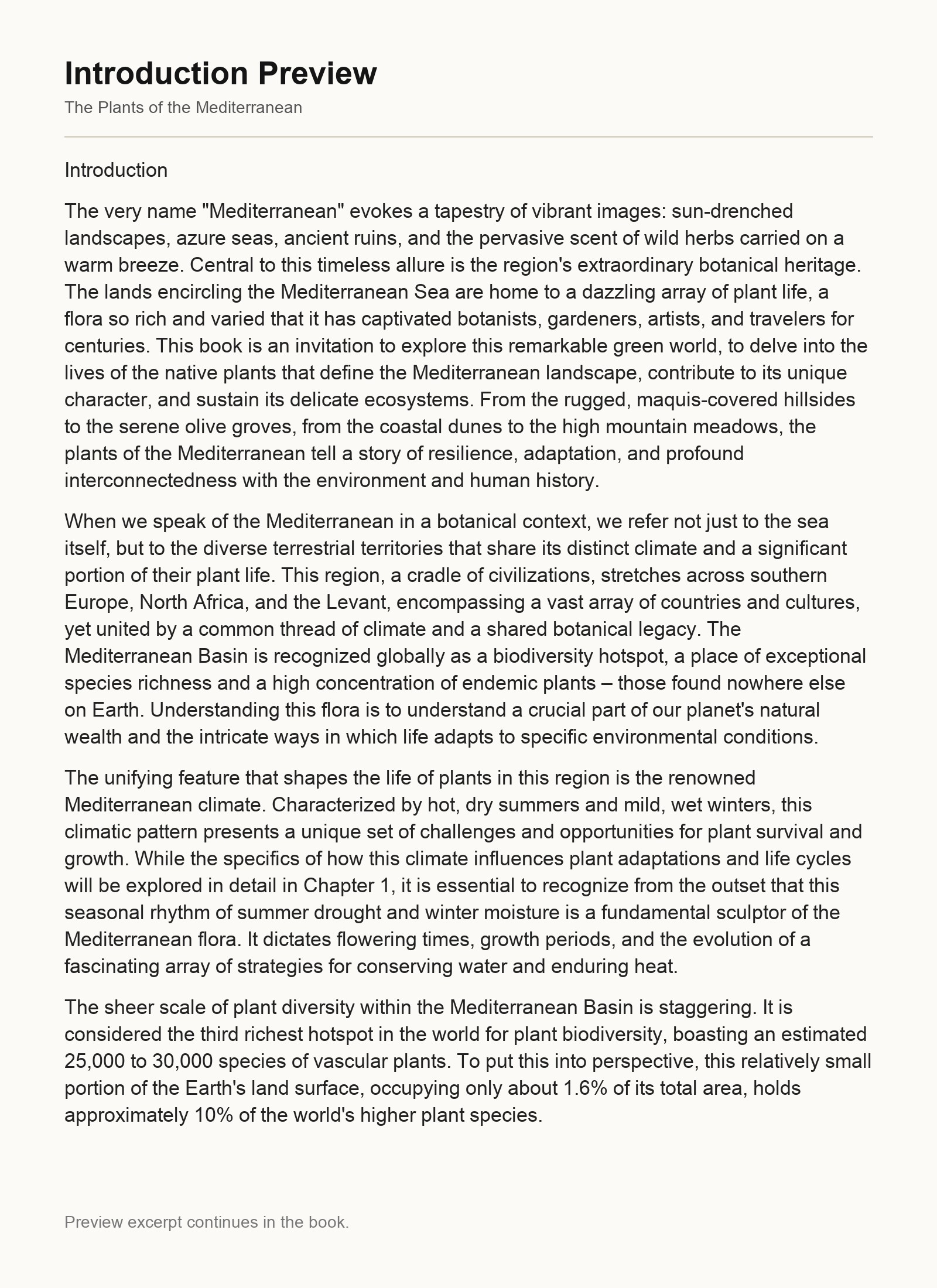
Discover the astonishing plant life that defines the lands ringing the Mediterranean Sea, from the iconic olive groves and aromatic herbs to the resilient shrubs of maquis and garrigue and the hidden geophytes that burst into color after winter rains. This book offers a comprehensive yet accessible journey through the region’s extraordinary botanical heritage, explaining how the distinctive hot‑dry‑summer, mild‑wet‑winter climate has shaped evolution, survival strategies, and the stunning diversity you see today.
You will learn how Mediterranean plants cope with summer drought through sclerophyllous leaves, deep root systems, osmotic adjustment, and fire‑adapted traits like lignotubers and serotinous cones, and you will explore the key plant families—Lamiaceae, Fabaceae, Asteraceae, Poaceae, Apiaceae, Cistaceae, Ericaceae, Fagaceae, and Oleaceae—that form the backbone of the flora. Detailed chapters reveal the evolutionary history that spans the Tethys Sea, the Messinian Salinity Crisis, Pleistocene refugia, and the processes of polyploidy and hybridization that have generated countless endemic species.
Travel virtually across the basin as the book tours the Iberian Peninsula, Italian Peninsula and its islands, the Balkan Peninsula and Greece, the Anatolian Peninsula and the Levant, and Mediterranean North Africa, highlighting regional specialties such as the Golden Oak of Cyprus, the Bosnian Pine, the Atlas Cedar, and the myriad island endemics that make the Mediterranean a global biodiversity hotspot. Discover how these plants support ecosystems, stabilize soils, provide food and medicine, and inspire culture—from the olive branch as a symbol of peace to the fragrant herbs that perfume the air.
Gain practical insight into the traditional uses of Mediterranean flora, including foraging for wild greens, fruits, nuts, and edible flowers, and the long‑standing medicinal applications of sage, thyme, rosemary, lavender, and many others. Understand the vital relationships between plants and their pollinators, the role of fire in regeneration, and the modern conservation challenges posed by habitat loss, climate change, invasive species, and overexploitation, alongside inspiring success stories of protected areas, seed banks, and restoration projects.
Finally, consider the future of Mediterranean native plants in a warming world, exploring how phenological shifts, genetic diversity, assisted migration, and adaptive management may determine which species endure. Whether you are a botanist, gardener, traveler, student, or simply curious about the natural world, this book will deepen your appreciation for the resilience, beauty, and profound connection between the Mediterranean’s plants and its landscapes, history, and people.
What You'll Find Inside:
- The Mediterranean climate's hot, dry summers and mild, wet winters drive unique plant adaptations such as sclerophyllous leaves, deep roots, and summer dormancy.
- The basin hosts extraordinary plant diversity with 25,000‑30,000 vascular species, over half of which are endemic to the region.
- Key families like Lamiaceae (aromatic herbs), Fabaceae (nitrogen‑fixing legumes), and Asteraceae dominate the flora and provide ecological and cultural value.
- Plants employ fire‑responsive strategies (resprouting via lignotubers, serotinous cones, heat‑stimulated germination) and drought‑escape or tolerance mechanisms.
- Human interactions span millennia, from foraging edible wild greens and medicinal herbs to shaping landscapes through agro‑silvo‑pastoral systems, while modern threats require targeted conservation.
Who's It For:
This book is ideal for botanists, ecology students, Mediterranean‑region gardeners, conservation practitioners, and travelers or nature enthusiasts seeking a comprehensive yet accessible overview of the native flora, its adaptations, cultural significance, and conservation status.
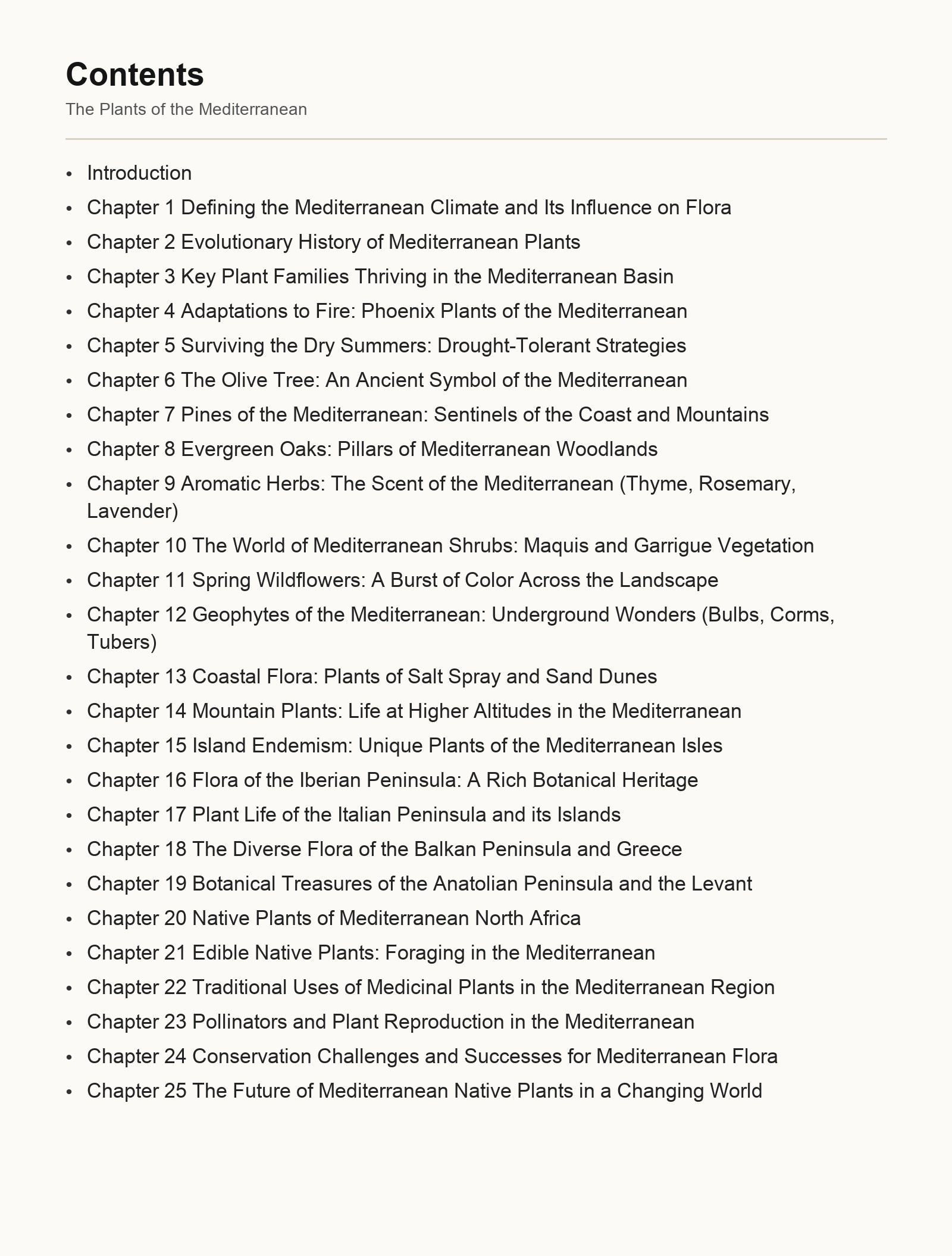
Table of Contents:
- Introduction
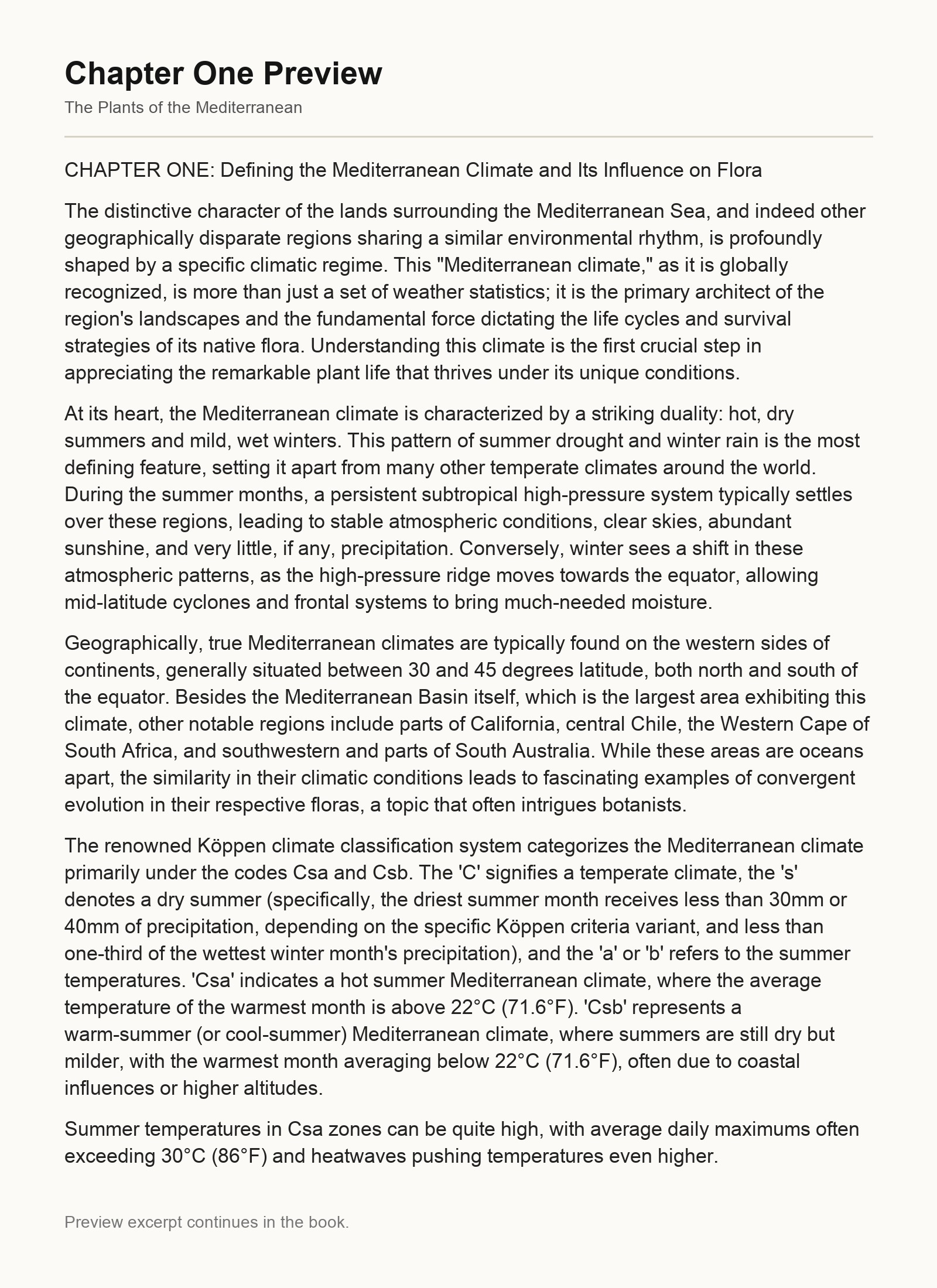
- Chapter 1 Defining the Mediterranean Climate and Its Influence on Flora
- Chapter 2 Evolutionary History of Mediterranean Plants
- Chapter 3 Key Plant Families Thriving in the Mediterranean Basin
- Chapter 4 Adaptations to Fire: Phoenix Plants of the Mediterranean
- Chapter 5 Surviving the Dry Summers: Drought-Tolerant Strategies
- Chapter 6 The Olive Tree: An Ancient Symbol of the Mediterranean
- Chapter 7 Pines of the Mediterranean: Sentinels of the Coast and Mountains
- Chapter 8 Evergreen Oaks: Pillars of Mediterranean Woodlands
- Chapter 9 Aromatic Herbs: The Scent of the Mediterranean (Thyme, Rosemary, Lavender)
- Chapter 10 The World of Mediterranean Shrubs: Maquis and Garrigue Vegetation
- Chapter 11 Spring Wildflowers: A Burst of Color Across the Landscape
- Chapter 12 Geophytes of the Mediterranean: Underground Wonders (Bulbs, Corms, Tubers)
- Chapter 13 Coastal Flora: Plants of Salt Spray and Sand Dunes
- Chapter 14 Mountain Plants: Life at Higher Altitudes in the Mediterranean
- Chapter 15 Island Endemism: Unique Plants of the Mediterranean Isles
- Chapter 16 Flora of the Iberian Peninsula: A Rich Botanical Heritage
- Chapter 17 Plant Life of the Italian Peninsula and its Islands
- Chapter 18 The Diverse Flora of the Balkan Peninsula and Greece
- Chapter 19 Botanical Treasures of the Anatolian Peninsula and the Levant
- Chapter 20 Native Plants of Mediterranean North Africa
- Chapter 21 Edible Native Plants: Foraging in the Mediterranean
- Chapter 22 Traditional Uses of Medicinal Plants in the Mediterranean Region
- Chapter 23 Pollinators and Plant Reproduction in the Mediterranean
- Chapter 24 Conservation Challenges and Successes for Mediterranean Flora
- Chapter 25 The Future of Mediterranean Native Plants in a Changing World
Author:
Published By:
Date Published:
May 24, 2026
Type:
Nonfiction
Language:
English
Also Available In:
Word Count:
53,721 words
Reading Time:
3 hours 46 minutes
Sample:
Order:
Order The Plants of the Mediterranean (Paperback) on MixCache.com:
Buy NowPrint copy is made to order and ships worldwide. Includes the ebook free, ready to read instantly.
$5 account credit for all new MixCache.com accounts, usable toward any ebook purchase!*