
Browse by Category
Fiction
- Action & Adventure
- African American
- Anthologies
- Children's Fiction
- Classics
- Comics & Graphic Novels
- Coming of Age
- Contemporary
- Cultural & Regional
- Drama
- Erotica
- Fantasy
- General
- Historical Fiction
- Horror
- Humor & Satire
- Literary Fiction
- Mystery, Thriller & Suspense
- Poetry
- Religious & Inspirational
- Romance
- Science Fiction
- Short Stories
- War & Military
- Westerns
- Women's Fiction
- Young Adult
Non-Fiction
- Antiques & Collectibles
- Arts & Photography
- Biographies & Memoirs
- Business & Money
- Children's Non-Fiction
-
Computers & Technology
- Artificial Intelligence
- Computer Science
- Cybersecurity & Cryptography
- Data Science & Analytics
- Databases & Big Data
- Game Development & Design
- General
- Hardware & DIY
- Mobile App Development
- Networking & Cloud Computing
- Operating Systems
- Programming
- Robotics
- Software
- Software Engineering
- User Experience (UX) & Design
- Web Development & Design
- Cooking, Food & Wine
- Crafts, Hobbies & Home
- Education & Teaching
- Engineering
- General
- Health, Fitness & Dieting
-
History
- African History
- African History - North Africa
- African History - Sub-Saharan Africa
- American History
- American History - 20th Century
- American History - Civil War
- American History - Colonial Period
- Ancient History
- Asian History
- Asian History - China
- Asian History - India
- Asian History - Japan
- Asian History - Southeast Asia
- European History
- European History - Ancient Greece
- European History - Ancient Rome
- European History - Medieval
- European History - Modern
- European History - Renaissance
- General
- Middle Eastern History
- Military History
- Military History - Aviation
- Military History - Naval
- Social & Cultural History
- World History
- Humor & Entertainment
- Industrial Technology
- Language Learning
- Law
- LGBTQ+ Non-Fiction
- Literary Criticism
- Medical Books
- Parenting & Relationships
- Philosophy
- Politics & Social Sciences
- Reference
- Religion & Spirituality
-
Science & Math
- Agricultural Sciences
- Astronomy & Space Science
- Behavioral Sciences
- Biological Sciences
- Botany & Plant Science
- Chemistry
- Earth Sciences
- Engineering - Chemical
- Engineering - Civil
- Engineering - Electrical
- Engineering - Mechanical
- Environment
- General
- Geology
- Mathematics
- Nature & Ecology
- Oceanography
- Paleontology
- Physics
- Statistics
- Self-Help
- Sports & Outdoors
- Study Aids
- Sustainability & Green Living
- Textbooks
- Transportation
- Travel
- True Crime
- Urban Planning & Development
- Veterinary Medicine
- Writing & Publishing
Jump to Section
MixCache.com Total Access
Unlimited reading and audiobooks for every book published by MixCache.com.
Included titles carry the MTA badge.
Learn more →A History of Kenya
About this book:

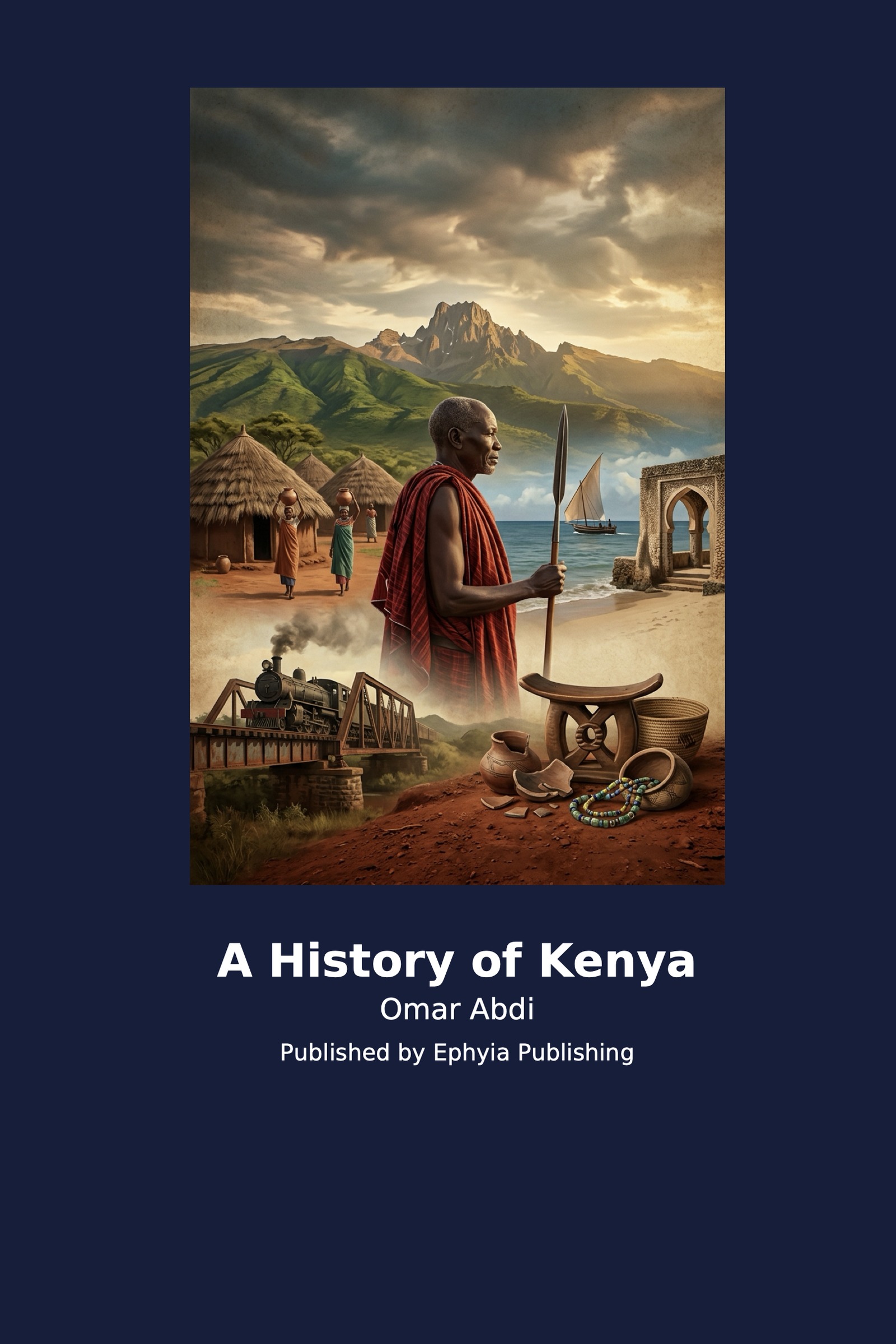
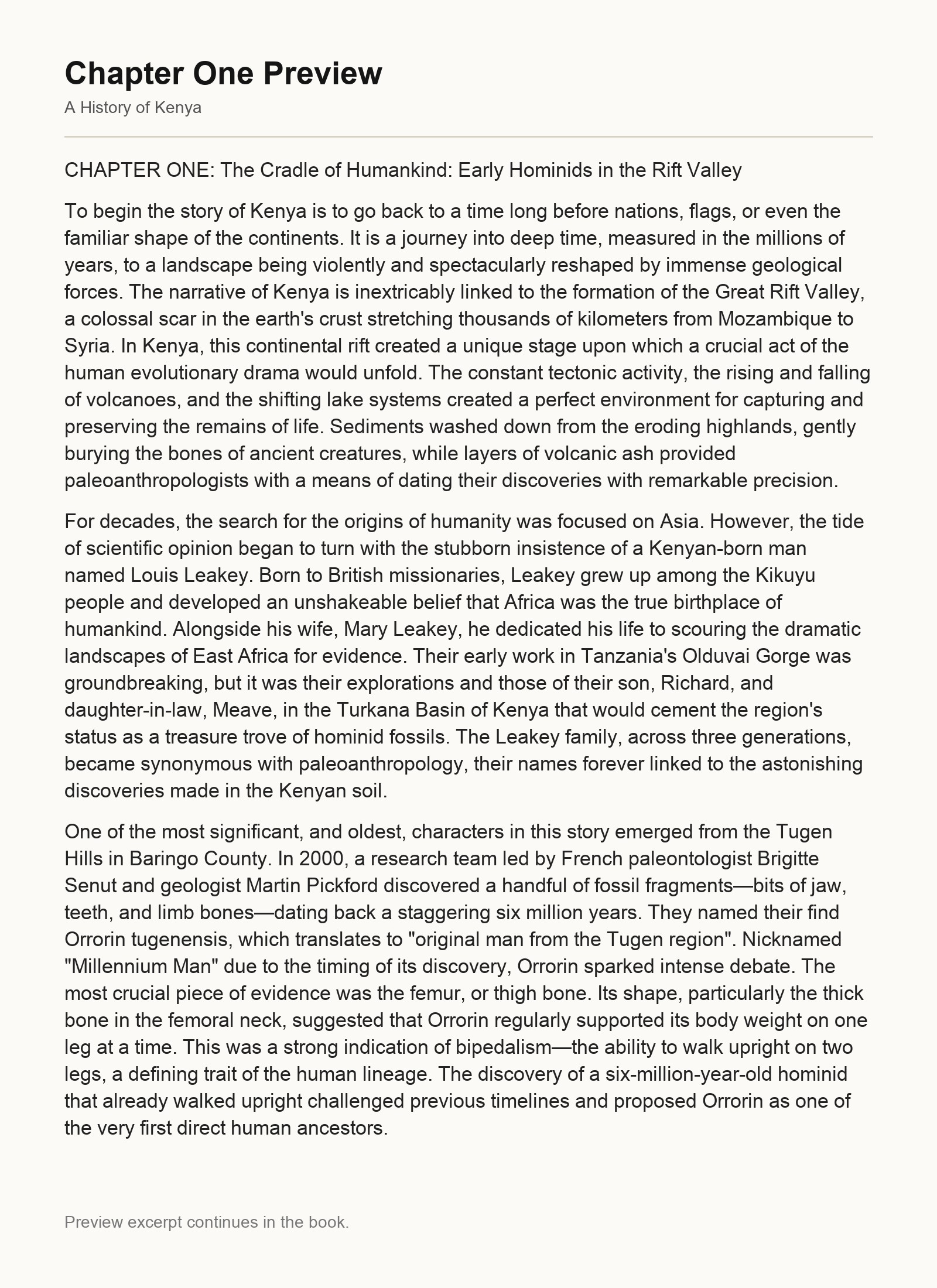
This sweeping historical journey begins where humanity itself began, taking readers deep into Kenya's Rift Valley to discover the fossil evidence that has reshaped our understanding of human origins. From the six-million-year-old Orrorin tugenensis to the remarkable Turkana Boy skeleton, you'll witness how Kenya's unique geological features created a natural laboratory for preserving the story of our earliest ancestors. The book illuminates how these ancient hominids walked upright, crafted the world's oldest stone tools, and gradually evolved into Homo sapiens, establishing Kenya as not just a nation's birthplace but a fundamental chapter in the story of all humanity.
Moving beyond prehistory, the narrative traces the intricate tapestry of human settlement that followed. You'll explore how hunter-gatherer societies gave way to pastoralists around Lake Turkana, how the Bantu migrations brought agriculture and iron technology that transformed the interior, and how the Swahili city-states emerged as cosmopolitan hubs of Indian Ocean trade. The book reveals the vibrant exchange between African, Arab, Persian, and Indian cultures that created the Swahili language and culture, detailing the rise of prosperous ports like Mombasa and Malindi, their architectural marvels, and their role in a medieval global economy that connected Africa to Asia long before European dominance.
The account then turns to the turbulent era of external intervention and resistance. You'll experience the violent disruption of Portuguese arrival, the subsequent Omani dominance that turned Zanzibar into a clove and slave-trading empire, and the scramble for Africa that led to British colonial rule. The narrative details how the Uganda Railway reshaped the landscape, how white settlers alienated vast tracts of fertile land in the White Highlands, and how resistance evolved from early rebellions like the Giriama uprising to the formation of political organizations that planted the seeds of nationalism. Most powerfully, you'll follow the Mau Mau uprising through its forest guerrillas, British counterinsurgency, and ultimate role in making colonial rule untenable.
The journey continues through Kenya's hard-won independence and the complex challenges of nation-building. You'll witness Jomo Kenyatta's rise from imprisoned symbol to first president, the ideological battles between African socialism and capitalist development, Daniel arap Moi's long Nyayo era marked by repression and eventual democratic opening, and Mwai Kibaki's economic revival shattered by the 2007 post-election violence. The book provides deep insight into how land disputes, ethnic tensions, and struggles over power and resources have continually shaped Kenya's political landscape, while also highlighting moments of hope like the 2010 constitution that introduced devolution and an expansive Bill of Rights.
Finally, you'll understand contemporary Kenya through the lens of its profound past. The narrative connects historical patterns to modern challenges: how terrorism from Somalia exploits old border vulnerabilities, how corruption echoes colonial-era patronage systems, and how climate change threatens communities whose ancestors adapted to the Rift Valley's shifting lakes. You'll grasp why Kenya Vision 2030 matters as a response to the structural inequalities exposed by past crises, and how the nation's extraordinary entrepreneurial spirit, technological innovation like M-Pesa, and renewable energy leadership represent both continuity with ancient adaptability and hope for the future. This isn't just history—it's the key to understanding what makes Kenya unique and where it might be headed.
What You'll Find Inside:
- Kenya's Rift Valley is a crucial cradle of humankind, revealing early hominid fossils and the origins of bipedalism and tool-making.
- The Swahili coast flourished as a cosmopolitan trade hub linking Africa, Arabia, India, and China through the Indian Ocean network.
- British colonial rule reshaped Kenya via the Uganda Railway, land alienation in the White Highlands, and settler economies that marginalized African communities.
- Nationalist movements, from early political associations to the Mau Mau uprising, drove Kenya's path to independence in 1963 under Jomo Kenyatta.
- Post-independence Kenya experienced one-party rule, multi-party struggles, constitutional reform, and contemporary challenges like terrorism, corruption, and climate change.
Who's It For:
This book is ideal for university students and scholars of African history, educators seeking a comprehensive overview of Kenya's past, and general readers interested in understanding how Kenya's ancient origins, colonial legacy, and post-independence struggles have shaped its present and future.
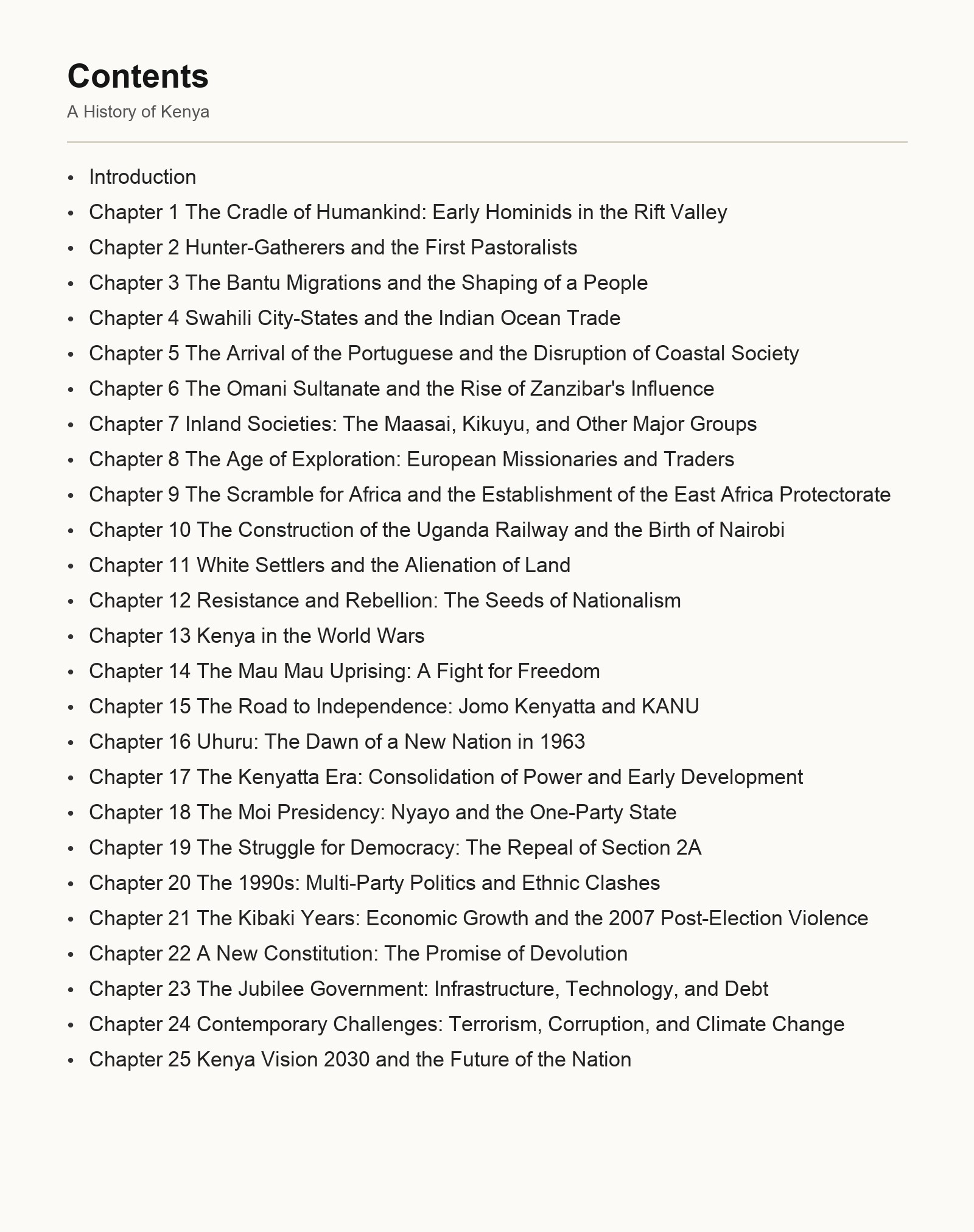
Table of Contents:
- Introduction
- Chapter 1 The Cradle of Humankind: Early Hominids in the Rift Valley
- Chapter 2 Hunter-Gatherers and the First Pastoralists
- Chapter 3 The Bantu Migrations and the Shaping of a People
- Chapter 4 Swahili City-States and the Indian Ocean Trade
- Chapter 5 The Arrival of the Portuguese and the Disruption of Coastal Society
- Chapter 6 The Omani Sultanate and the Rise of Zanzibar's Influence
- Chapter 7 Inland Societies: The Maasai, Kikuyu, and Other Major Groups
- Chapter 8 The Age of Exploration: European Missionaries and Traders
- Chapter 9 The Scramble for Africa and the Establishment of the East Africa Protectorate
- Chapter 10 The Construction of the Uganda Railway and the Birth of Nairobi
- Chapter 11 White Settlers and the Alienation of Land
- Chapter 12 Resistance and Rebellion: The Seeds of Nationalism
- Chapter 13 Kenya in the World Wars
- Chapter 14 The Mau Mau Uprising: A Fight for Freedom
- Chapter 15 The Road to Independence: Jomo Kenyatta and KANU
- Chapter 16 Uhuru: The Dawn of a New Nation in 1963
- Chapter 17 The Kenyatta Era: Consolidation of Power and Early Development
- Chapter 18 The Moi Presidency: Nyayo and the One-Party State
- Chapter 19 The Struggle for Democracy: The Repeal of Section 2A
- Chapter 20 The 1990s: Multi-Party Politics and Ethnic Clashes
- Chapter 21 The Kibaki Years: Economic Growth and the 2007 Post-Election Violence
- Chapter 22 A New Constitution: The Promise of Devolution
- Chapter 23 The Jubilee Government: Infrastructure, Technology, and Debt
- Chapter 24 Contemporary Challenges: Terrorism, Corruption, and Climate Change
- Chapter 25 Kenya Vision 2030 and the Future of the Nation
Author:
Published By:
Date Published:
May 21, 2026
Type:
Nonfiction
Language:
English
Also Available In:
Word Count:
44,251 words
Reading Time:
3 hours 6 minutes
Sample:
Order:
Order A History of Kenya (Paperback) on MixCache.com:
Buy NowPrint copy is made to order and ships worldwide. Includes the ebook free, ready to read instantly.
$5 account credit for all new MixCache.com accounts, usable toward any ebook purchase!*


