Browse by Category
Fiction
- Action & Adventure
- African American
- Anthologies
- Children's Fiction
- Classics
- Comics & Graphic Novels
- Coming of Age
- Contemporary
- Cultural & Regional
- Drama
- Erotica
- Fantasy
- General
- Historical Fiction
- Horror
- Humor & Satire
- Literary Fiction
- Mystery, Thriller & Suspense
- Poetry
- Religious & Inspirational
- Romance
- Science Fiction
- Short Stories
- War & Military
- Westerns
- Women's Fiction
- Young Adult
Non-Fiction
- Antiques & Collectibles
- Arts & Photography
- Biographies & Memoirs
- Business & Money
- Children's Non-Fiction
-
Computers & Technology
- Artificial Intelligence
- Computer Science
- Cybersecurity & Cryptography
- Data Science & Analytics
- Databases & Big Data
- Game Development & Design
- General
- Hardware & DIY
- Mobile App Development
- Networking & Cloud Computing
- Operating Systems
- Programming
- Robotics
- Software
- Software Engineering
- User Experience (UX) & Design
- Web Development & Design
- Cooking, Food & Wine
- Crafts, Hobbies & Home
- Education & Teaching
- Engineering
- General
- Health, Fitness & Dieting
-
History
- African History
- African History - North Africa
- African History - Sub-Saharan Africa
- American History
- American History - 20th Century
- American History - Civil War
- American History - Colonial Period
- Ancient History
- Asian History
- Asian History - China
- Asian History - India
- Asian History - Japan
- Asian History - Southeast Asia
- European History
- European History - Ancient Greece
- European History - Ancient Rome
- European History - Medieval
- European History - Modern
- European History - Renaissance
- General
- Middle Eastern History
- Military History
- Military History - Aviation
- Military History - Naval
- Social & Cultural History
- World History
- Humor & Entertainment
- Industrial Technology
- Language Learning
- Law
- LGBTQ+ Non-Fiction
- Literary Criticism
- Medical Books
- Parenting & Relationships
- Philosophy
- Politics & Social Sciences
- Reference
- Religion & Spirituality
-
Science & Math
- Agricultural Sciences
- Astronomy & Space Science
- Behavioral Sciences
- Biological Sciences
- Botany & Plant Science
- Chemistry
- Earth Sciences
- Engineering - Chemical
- Engineering - Civil
- Engineering - Electrical
- Engineering - Mechanical
- Environment
- General
- Geology
- Mathematics
- Nature & Ecology
- Oceanography
- Paleontology
- Physics
- Statistics
- Self-Help
- Sports & Outdoors
- Study Aids
- Sustainability & Green Living
- Textbooks
- Transportation
- Travel
- True Crime
- Urban Planning & Development
- Veterinary Medicine
- Writing & Publishing
Jump to Section
MixCache.com Total Access
Unlimited reading and audiobooks for every book published by MixCache.com.
Included titles carry the MTA badge.
Learn more →A History of Slovenia
About this book:
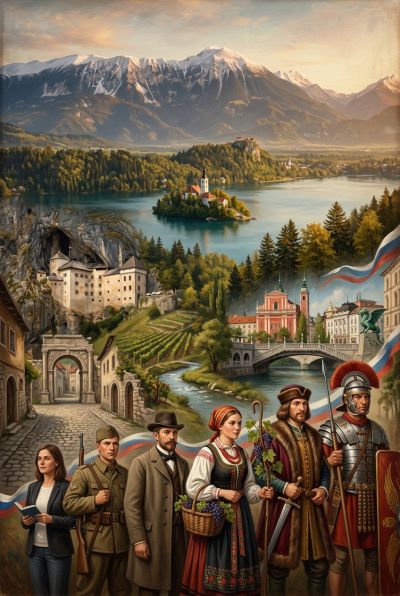
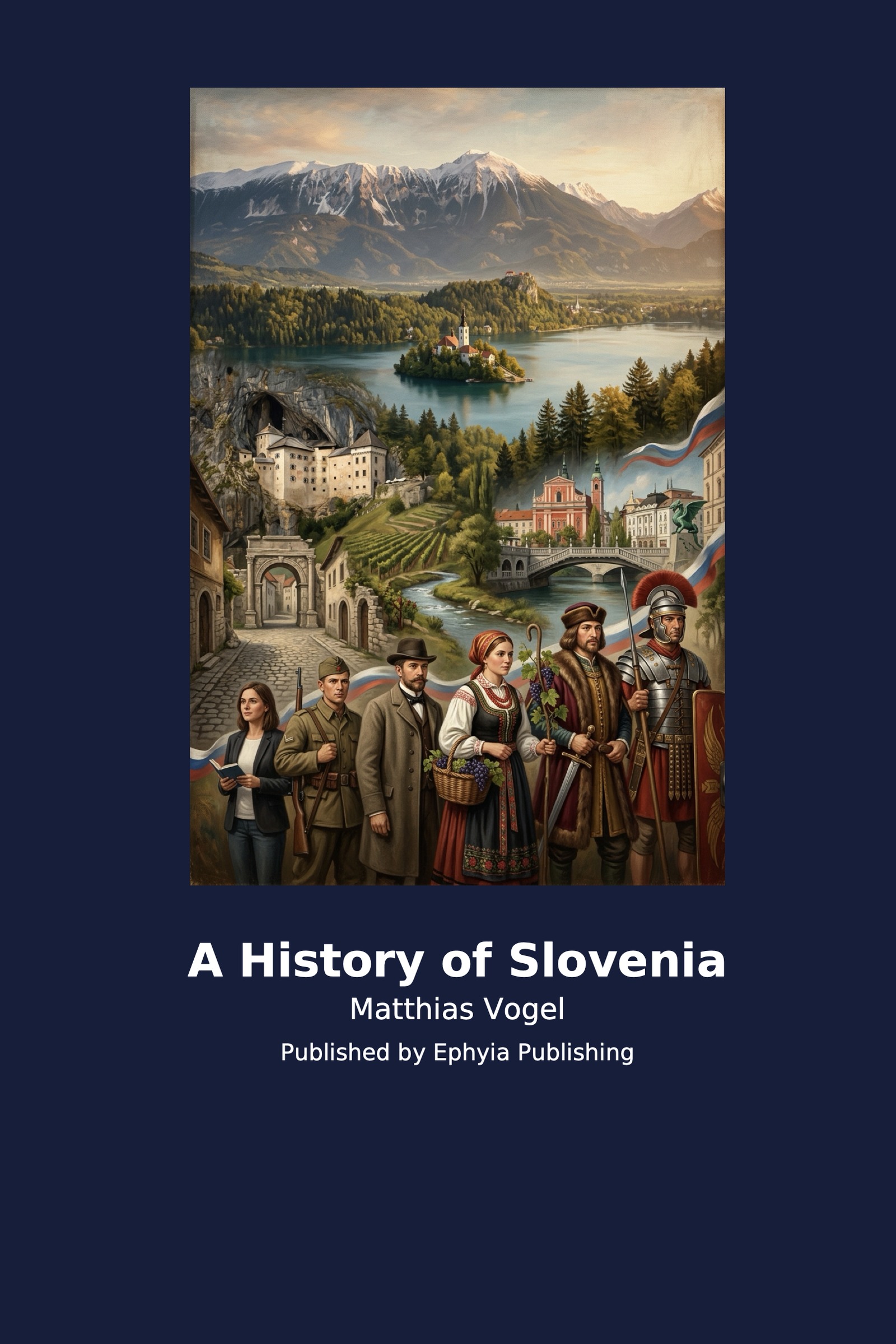
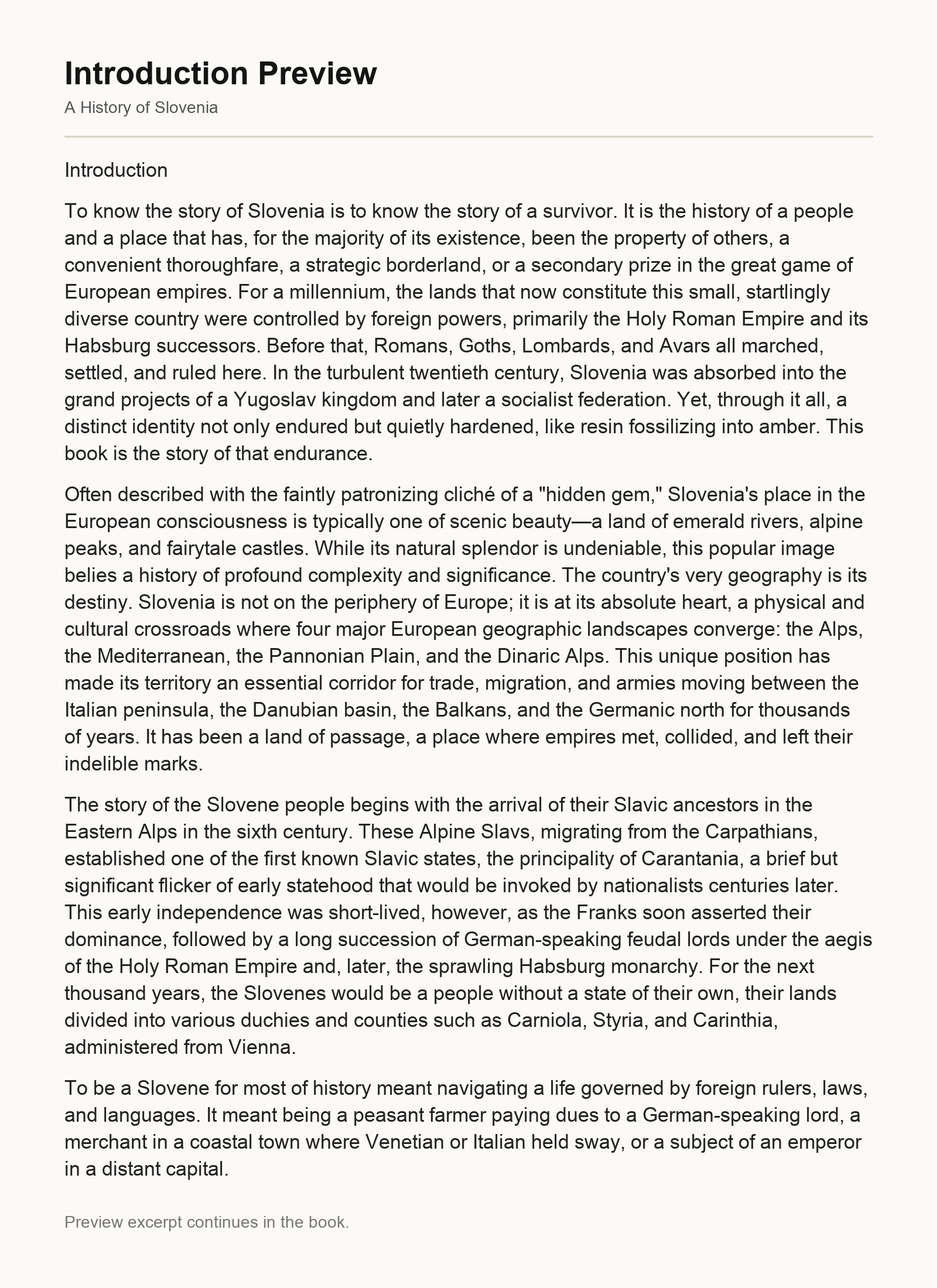
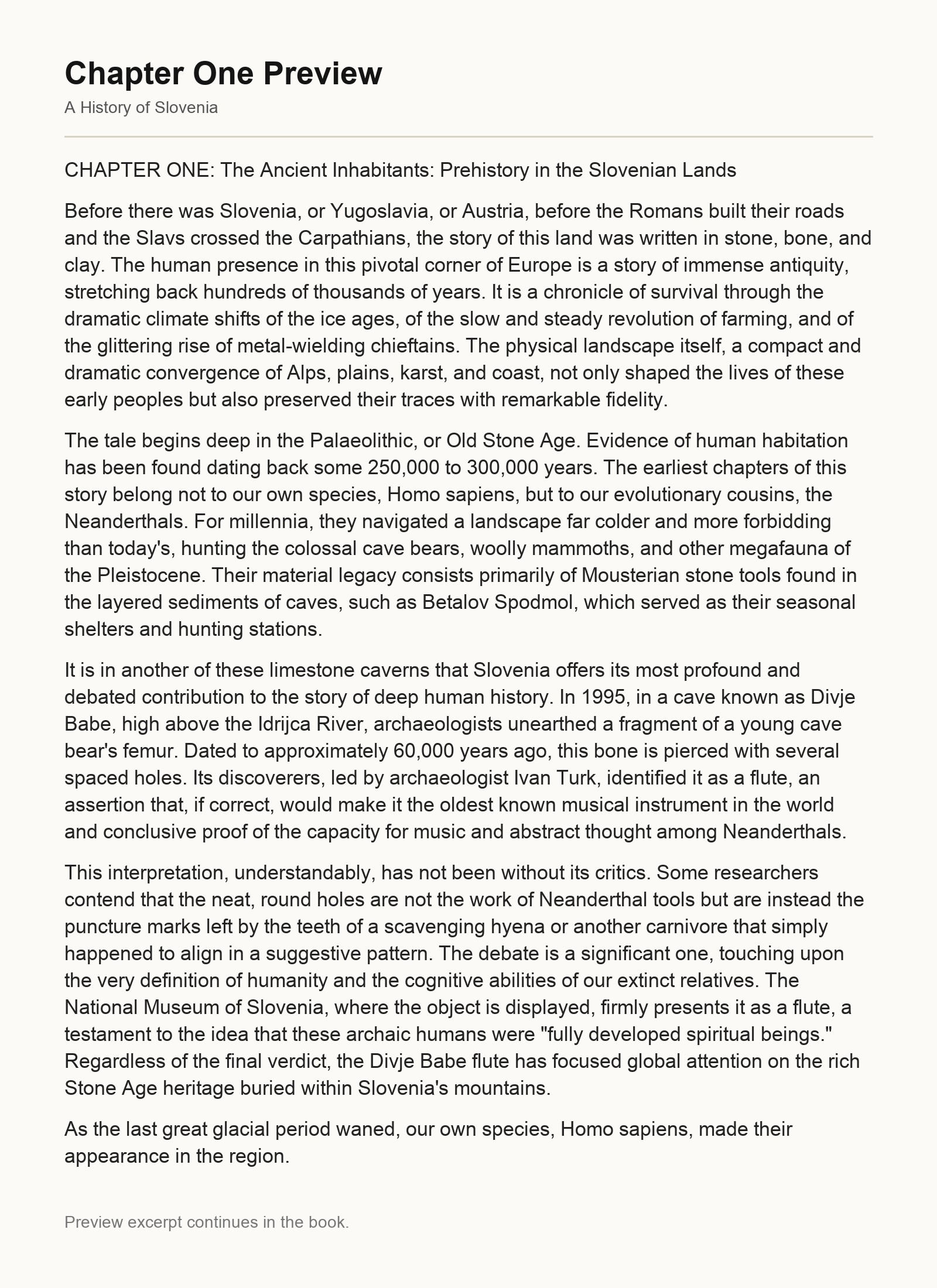
A History of Slovenia offers readers a sweeping journey through the land that has stood at Europe’s crossroads for millennia. From the earliest traces of Neanderthal life in the limestone caves of the Julian Alps to the vibrant, globally connected nation of today, Matthias Vogel weaves archaeological finds, political turning points, and cultural milestones into a single, coherent narrative. Each chapter builds on the last, showing how geography—Alps, Mediterranean, Pannonian plain, and Dinaric range—has repeatedly shaped the fortunes of the peoples who call this territory home.
Readers will discover how the Slavic ancestors of the Slovenes carved out the early principality of Carantania, how centuries of Habsburg rule forged a resilient identity rooted in language and folklore, and how the Protestant Reformation gave the Slovene tongue its first written form. The book illuminates the struggles of peasant revolts, the brief but illuminating era of the Napoleonic Illyrian Provinces, and the passionate national awakening of the nineteenth century that turned a cultural sentiment into a political dream.
The twentieth century unfolds with dramatic clarity: the kingdom of Yugoslavia, the horrors of World War II occupation and civil strife, the socialist experiment under Tito, and the stirring push for independence that culminated in the Ten‑Day War of 1991. Vogel does not merely recount battles and treaties; he explains how economic shifts, educational reforms, and artistic movements—from Prešeren’s poetry to Plečnik’s architecture—have continually renewed Slovenian self‑understanding.
In the final sections, the reader experiences Slovenia’s transformation into a stable, prosperous member of the European Union and NATO, its adoption of the euro, and its emergence as a model of green tourism and technological innovation. The book closes with a thoughtful look at the challenges of the twenty‑first century—demographic change, political polarization, and climate adaptation—offering a nuanced portrait of a nation that has moved from being a subject of other empires to authoring its own destiny.
By the end of this volume, readers will have gained not only a chronological account of events but also a deep appreciation for the enduring themes of language, landscape, and resilience that define Slovenian history. Whether you are a student of European affairs, a traveler drawn to the country’s alpine beauty, or anyone curious about how small nations navigate the tides of empire, this book provides the insight and context to understand Slovenia’s past, present, and future.
What You'll Find Inside:
- The book traces Slovenia's 2,000+ year history from prehistoric inhabitants through Roman rule, Slavic settlement, and centuries of foreign domination by powers including the Franks, Habsburgs, Venetians, and Ottomans.
- It highlights how the Protestant Reformation catalyzed Slovenian national consciousness through Primož Trubar's first Slovenian-language books (1550), establishing the foundation for a literary language.
- It details the 19th-century national awakening where intellectuals like France Prešeren forged a modern Slovenian identity through poetry, language standardization, and political movements like the United Slovenia program.
- It examines Slovenia's complex 20th-century experience: WWII occupation and civil war, Tito-era socialism within Yugoslavia, and the peaceful 1991 independence achieved through the Ten-Day War.
- It chronicles Slovenia's post-independence transformation into a democratic, market economy and its successful integration into NATO (2004) and the EU (2004), including euro adoption (2007).
Who's It For:
This book is ideal for students, scholars, and general readers interested in Central European history, nation-building processes, and the dissolution of Yugoslavia. It will particularly benefit those studying how small nations preserve cultural identity amid foreign domination, transition from socialism to democracy, and achieve successful integration into Western institutions. Travelers to Slovenia seeking deeper understanding of the country's historical context and cultural foundations will also find it invaluable.
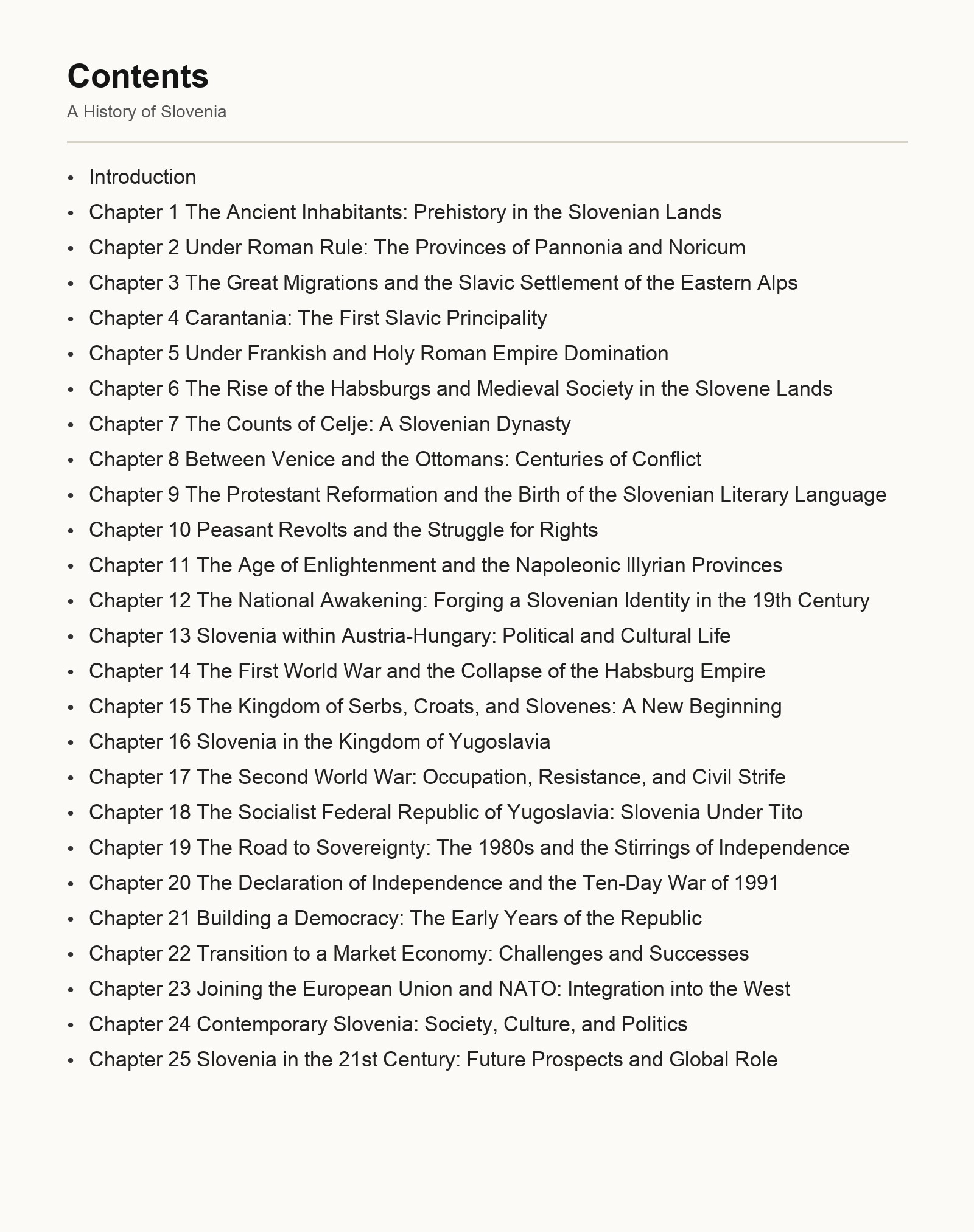
Table of Contents:
- Introduction
- Chapter 1 The Ancient Inhabitants: Prehistory in the Slovenian Lands
- Chapter 2 Under Roman Rule: The Provinces of Pannonia and Noricum
- Chapter 3 The Great Migrations and the Slavic Settlement of the Eastern Alps
- Chapter 4 Carantania: The First Slavic Principality
- Chapter 5 Under Frankish and Holy Roman Empire Domination
- Chapter 6 The Rise of the Habsburgs and Medieval Society in the Slovene Lands
- Chapter 7 The Counts of Celje: A Slovenian Dynasty
- Chapter 8 Between Venice and the Ottomans: Centuries of Conflict
- Chapter 9 The Protestant Reformation and the Birth of the Slovenian Literary Language
- Chapter 10 Peasant Revolts and the Struggle for Rights
- Chapter 11 The Age of Enlightenment and the Napoleonic Illyrian Provinces
- Chapter 12 The National Awakening: Forging a Slovenian Identity in the 19th Century
- Chapter 13 Slovenia within Austria-Hungary: Political and Cultural Life
- Chapter 14 The First World War and the Collapse of the Habsburg Empire
- Chapter 15 The Kingdom of Serbs, Croats, and Slovenes: A New Beginning
- Chapter 16 Slovenia in the Kingdom of Yugoslavia
- Chapter 17 The Second World War: Occupation, Resistance, and Civil Strife
- Chapter 18 The Socialist Federal Republic of Yugoslavia: Slovenia Under Tito
- Chapter 19 The Road to Sovereignty: The 1980s and the Stirrings of Independence
- Chapter 20 The Declaration of Independence and the Ten-Day War of 1991
- Chapter 21 Building a Democracy: The Early Years of the Republic
- Chapter 22 Transition to a Market Economy: Challenges and Successes
- Chapter 23 Joining the European Union and NATO: Integration into the West
- Chapter 24 Contemporary Slovenia: Society, Culture, and Politics
- Chapter 25 Slovenia in the 21st Century: Future Prospects and Global Role
Author:
Published By:
Date Published:
May 20, 2026
Type:
Nonfiction
Language:
English
Also Available In:
Word Count:
45,156 words
Reading Time:
3 hours 10 minutes
Sample:
Order:
Order A History of Slovenia (Hardcover) on MixCache.com:
Buy NowPrint copy is made to order and ships worldwide. Includes the ebook free, ready to read instantly.
$5 account credit for all new MixCache.com accounts, usable toward any ebook purchase!*