
Browse by Category
Fiction
- Action & Adventure
- African American
- Anthologies
- Children's Fiction
- Classics
- Comics & Graphic Novels
- Coming of Age
- Contemporary
- Cultural & Regional
- Drama
- Erotica
- Fantasy
- General
- Historical Fiction
- Horror
- Humor & Satire
- Literary Fiction
- Mystery, Thriller & Suspense
- Poetry
- Religious & Inspirational
- Romance
- Science Fiction
- Short Stories
- War & Military
- Westerns
- Women's Fiction
- Young Adult
Non-Fiction
- Antiques & Collectibles
- Arts & Photography
- Biographies & Memoirs
- Business & Money
- Children's Non-Fiction
-
Computers & Technology
- Artificial Intelligence
- Computer Science
- Cybersecurity & Cryptography
- Data Science & Analytics
- Databases & Big Data
- Game Development & Design
- General
- Hardware & DIY
- Mobile App Development
- Networking & Cloud Computing
- Operating Systems
- Programming
- Robotics
- Software
- Software Engineering
- User Experience (UX) & Design
- Web Development & Design
- Cooking, Food & Wine
- Crafts, Hobbies & Home
- Education & Teaching
- Engineering
- General
- Health, Fitness & Dieting
-
History
- African History
- African History - North Africa
- African History - Sub-Saharan Africa
- American History
- American History - 20th Century
- American History - Civil War
- American History - Colonial Period
- Ancient History
- Asian History
- Asian History - China
- Asian History - India
- Asian History - Japan
- Asian History - Southeast Asia
- European History
- European History - Ancient Greece
- European History - Ancient Rome
- European History - Medieval
- European History - Modern
- European History - Renaissance
- General
- Middle Eastern History
- Military History
- Military History - Aviation
- Military History - Naval
- Social & Cultural History
- World History
- Humor & Entertainment
- Industrial Technology
- Language Learning
- Law
- LGBTQ+ Non-Fiction
- Literary Criticism
- Medical Books
- Parenting & Relationships
- Philosophy
- Politics & Social Sciences
- Reference
- Religion & Spirituality
-
Science & Math
- Agricultural Sciences
- Astronomy & Space Science
- Behavioral Sciences
- Biological Sciences
- Botany & Plant Science
- Chemistry
- Earth Sciences
- Engineering - Chemical
- Engineering - Civil
- Engineering - Electrical
- Engineering - Mechanical
- Environment
- General
- Geology
- Mathematics
- Nature & Ecology
- Oceanography
- Paleontology
- Physics
- Statistics
- Self-Help
- Sports & Outdoors
- Study Aids
- Sustainability & Green Living
- Textbooks
- Transportation
- Travel
- True Crime
- Urban Planning & Development
- Veterinary Medicine
- Writing & Publishing
Jump to Section
MixCache.com Total Access
Unlimited reading and audiobooks for every book published by MixCache.com.
Included titles carry the MTA badge.
Learn more →A History of Yucatán
About this book:
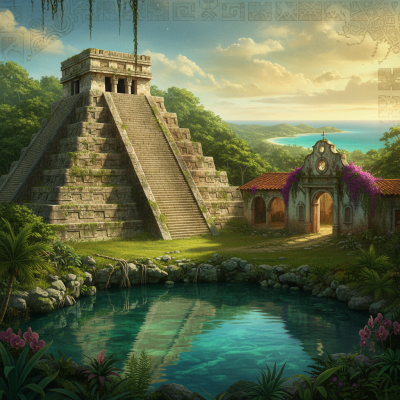
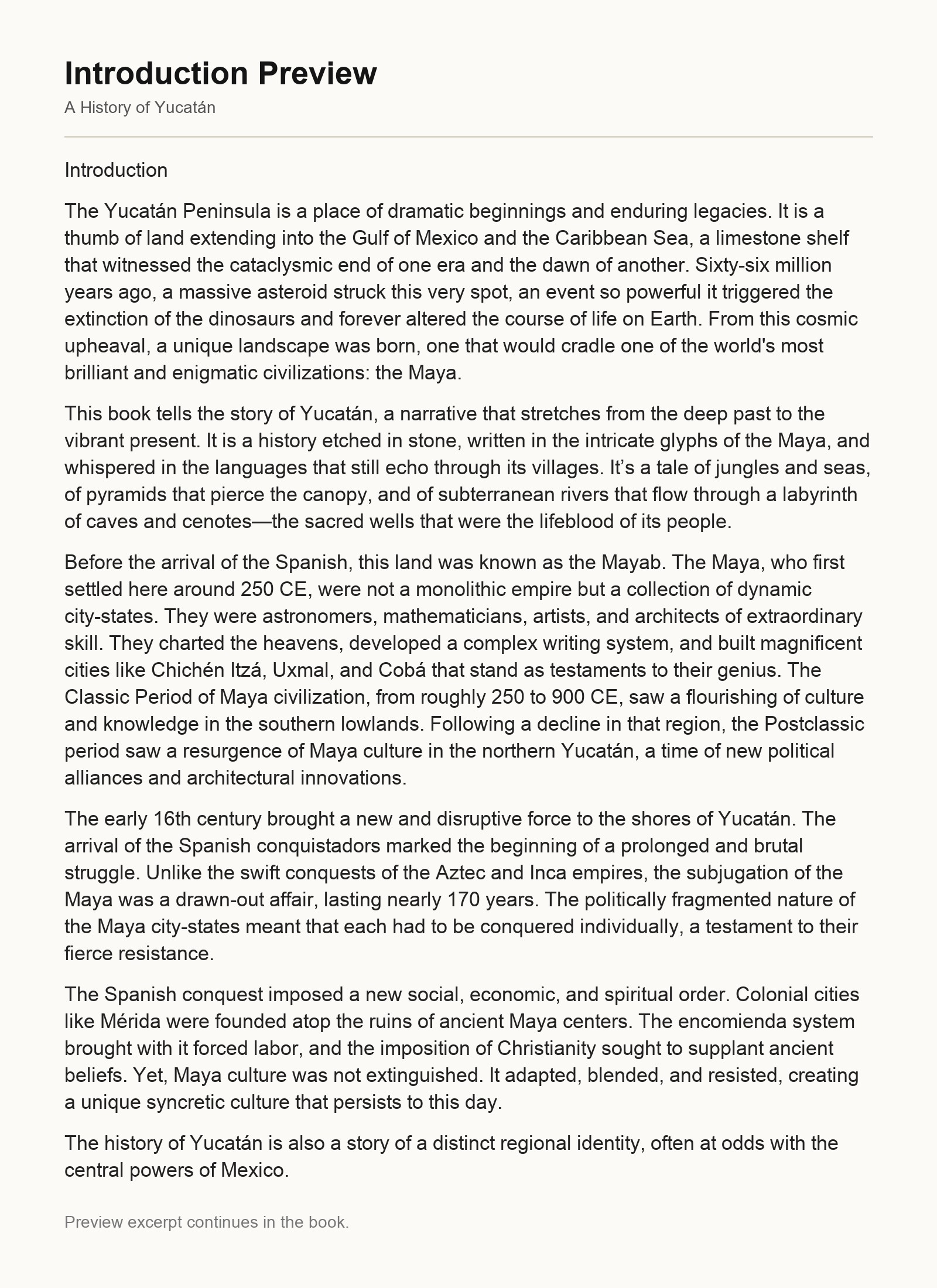
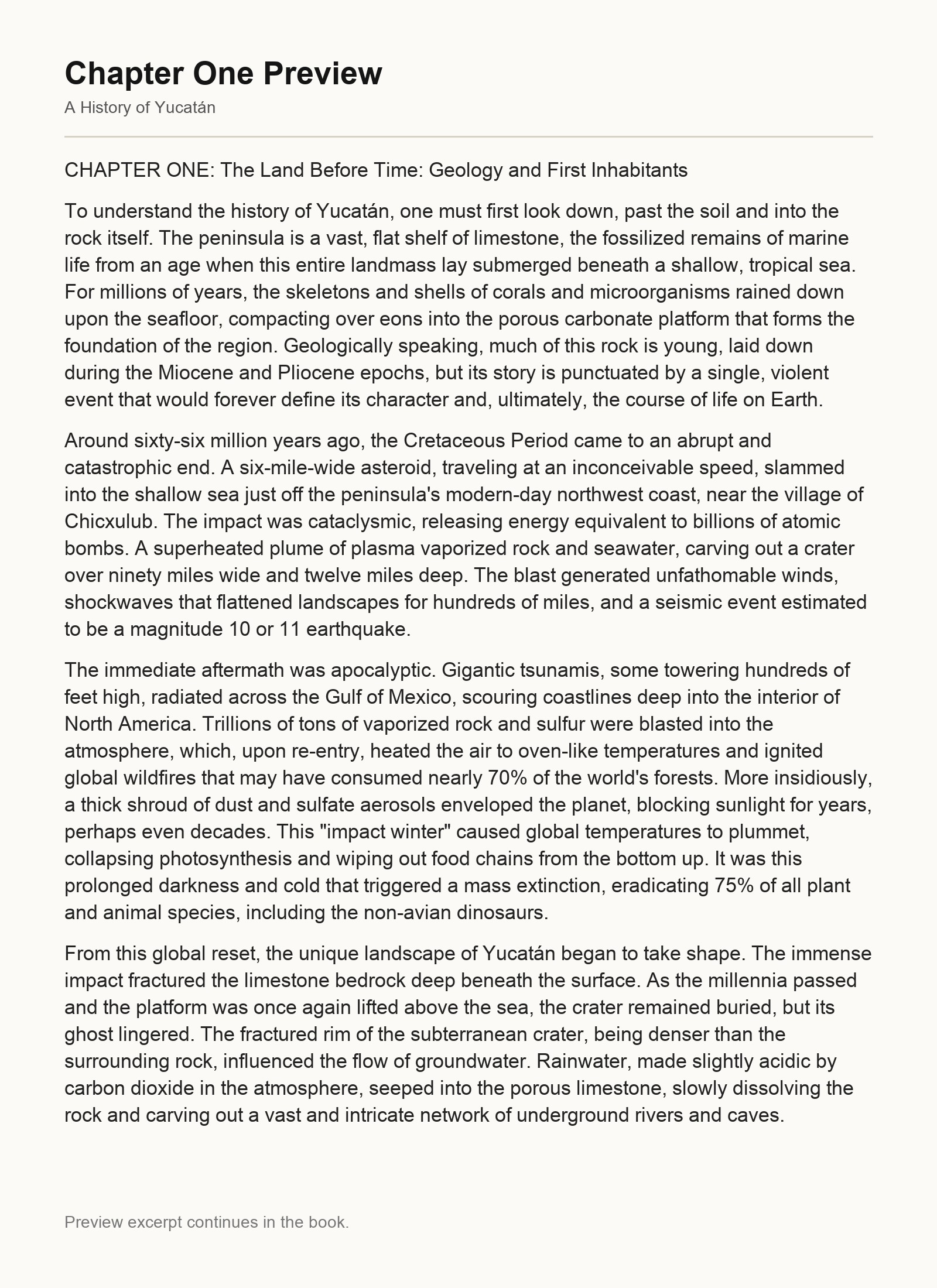
The Yucatán Peninsula’s story begins sixty‑six million years ago with the Chicxulub asteroid impact, which created the limestone platform and cenote network that would later shape human settlement. Paleo‑Indian hunter‑gatherers arrived as early as 13,600 years ago, and by 2000 BCE the region saw the emergence of agriculture and permanent villages. The Preclassic period laid the foundations of Maya civilization—writing, calendars, divine kingship—culminating in the Classic era (250‑900 CE) when city‑states such as Tikal, Calakmul, Cobá, Uxmal, and Edzná flourished with monumental architecture, advanced astronomy, and a stratified society ruled by k’uhul ajaw. A combination of prolonged drought, environmental degradation, internecine warfare, and loss of faith in divine kingship triggered the Classic Collapse, abandoning the southern lowlands while the northern Puuc cities reached their final splendor.
In the Postclassic, power shifted northward: Chichén Itzá rose around 900 CE as a cosmopolitan hub blending Maya and Toltec influences, only to wane by the early 13th century. Mayapán then established a centralized “League of Mayapán” that ruled until its violent overthrow in 1441, leaving the peninsula fragmented into warring cuchcabalob when the Spanish arrived. After initial failed incursions, Francisco de Montejo’s third campaign (1540‑1547) secured Mérida and began a colonial order based on encomiendas, haciendas, and forced conversion, which the Maya resisted through syncretic religion and occasional rebellions such as the 1761 Canek uprising. The Bourbon Reforms of the late 18th century intensified central control and economic exploitation, sowing criollo discontent that, alongside the broader Mexican independence movement, led Yucatán to briefly declare itself the Republic of Yucatán (1841‑1848) before reuniting with Mexico. The republic’s leaders armed Maya militias, a decision that backfired and ignited the Caste War (1847‑1901), a protracted race‑based conflict featuring the Chan Santa Cruz “Talking Cross” state and ending only with Mexican military occupation and devastating loss of life.
The late 19th century henequen boom turned Yucatán into a global supplier of “green gold,” enriching a small elite while trapping Maya peasants in debt peonage. The Porfiriato entrenched this system, but the Mexican Revolution brought General Salvador Alvarado’s abolition of debt peonage and state control of henequen, followed by Felipe Carrillo Puerto’s socialist government that enacted land reform, women’s suffrage, and cultural revival before being overthrown in 1924. Subsequent land reforms under Cárdenas dismantled the haciendas, and the declining henequen market forced economic diversification. Mid‑20th‑century infrastructure—railways and highways—integrated Yucatán into Mexico, while the rise of tourism, beginning with the computer‑sited creation of Cancún in 1970, transformed the coast into the Riviera Maya, generating wealth but also stark inequality and environmental strain.
Today, over a million Maya navigate modernity, balancing milpa farming with work in tourism and migration, reviving language and identity through grassroots activism, literature, and digital media. The peninsula faces 21st‑century crises: aquifer contamination threatens its sole freshwater supply, coral reefs suffer from nutrient runoff and warming seas, beaches erode, sargassum inundates coasts, and the controversial Tren Maya railway risks further damage to caves and forests. Yet Yucatán also seeks new pathways—technology hubs in Mérida, sustainable agriculture, renewable energy, and community‑based tourism—while grappling with climate change, aiming to preserve its unique cultural heritage and ecological legacy amid an uncertain future.
What You'll Find Inside:
- The Chicxulub asteroid impact created Yucatán's limestone platform and cenote network, establishing the unique hydrology that shaped human habitation from prehistoric times.
- Maya civilization rose to remarkable heights in the Preclassic and Classic periods, developing advanced astronomy, writing, and architecture before a complex collapse shifted power northward.
- Spanish conquest involved a prolonged, brutal struggle, forced labor via the encomienda, religious imposition, and resulted in a lasting syncretic Maya‑Spanish culture.
- The 19th‑century henequen boom generated vast wealth for a small elite while imposing debt peonage on Maya laborers, fueling social conflict and the Caste War.
- Contemporary Yucatán navigates tourism‑led economic growth, a Maya cultural renaissance, and critical environmental pressures on its aquifer, reefs, and coastal ecosystems.
Who's It For:
This book is ideal for university students and researchers of Latin American history, anthropology, and archaeology seeking a comprehensive overview of Yucatán's geological, cultural, and political evolution. It also appeals to educated general readers, travelers, and professionals interested in understanding the roots of contemporary Yucatecan society, identity, and challenges. Policymakers and development workers focused on heritage preservation, sustainable tourism, or indigenous rights in southeastern Mexico will find valuable context.
Table of Contents:
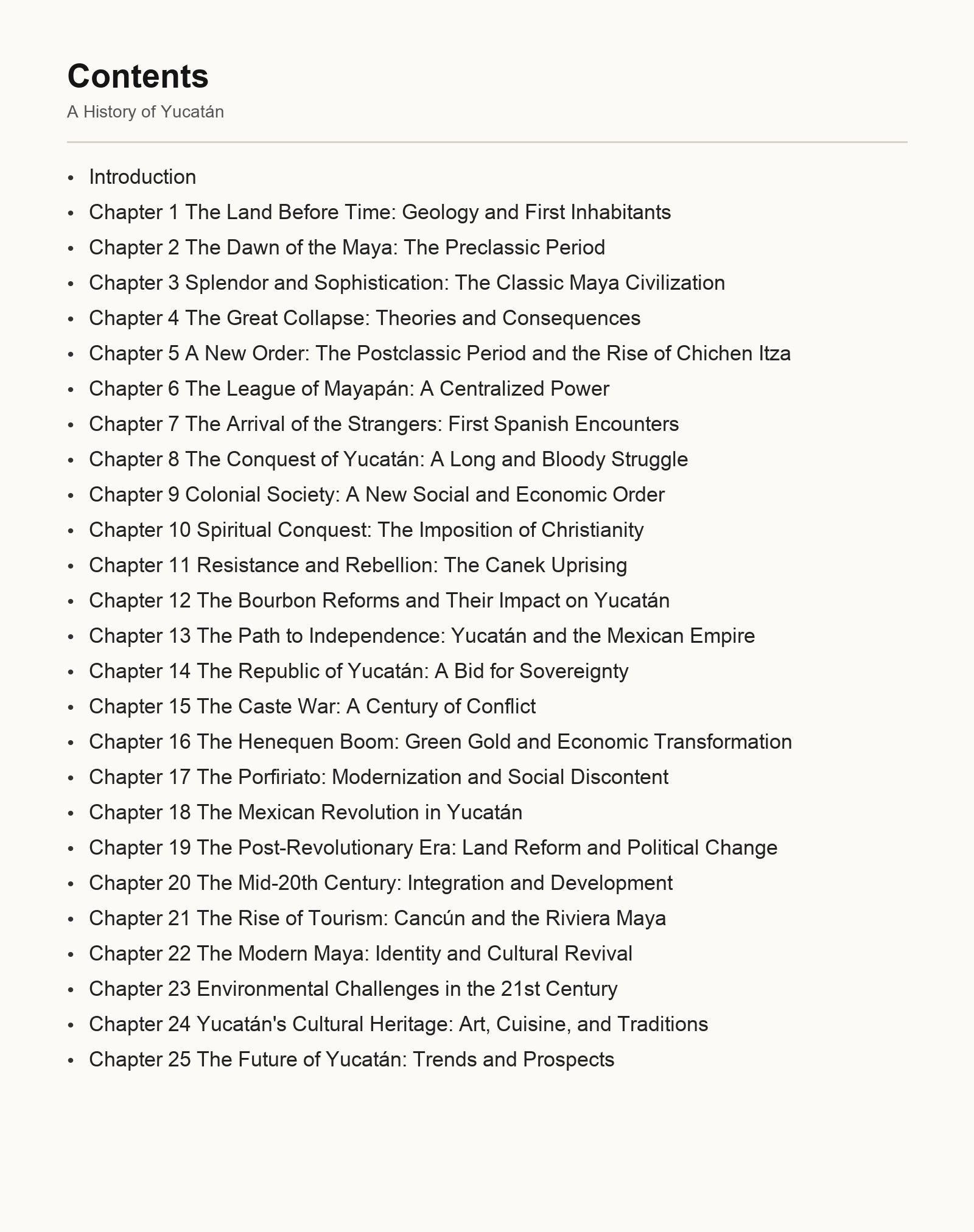
- Introduction
- Chapter 1 The Land Before Time: Geology and First Inhabitants
- Chapter 2 The Dawn of the Maya: The Preclassic Period
- Chapter 3 Splendor and Sophistication: The Classic Maya Civilization
- Chapter 4 The Great Collapse: Theories and Consequences
- Chapter 5 A New Order: The Postclassic Period and the Rise of Chichen Itza
- Chapter 6 The League of Mayapán: A Centralized Power
- Chapter 7 The Arrival of the Strangers: First Spanish Encounters
- Chapter 8 The Conquest of Yucatán: A Long and Bloody Struggle.
- Chapter 9 Colonial Society: A New Social and Economic Order
- Chapter 10 Spiritual Conquest: The Imposition of Christianity
- Chapter 11 Resistance and Rebellion: The Canek Uprising.
- Chapter 12 The Bourbon Reforms and Their Impact on Yucatán
- Chapter 13 The Path to Independence: Yucatán and the Mexican Empire.
- Chapter 14 The Republic of Yucatán: A Bid for Sovereignty.
- Chapter 15 The Caste War: A Century of Conflict.
- Chapter 16 The Henequen Boom: Green Gold and Economic Transformation
- Chapter 17 The Porfiriato: Modernization and Social Discontent
- Chapter 18 The Mexican Revolution in Yucatán
- Chapter 19 The Post-Revolutionary Era: Land Reform and Political Change
- Chapter 20 The Mid-20th Century: Integration and Development
- Chapter 21 The Rise of Tourism: Cancún and the Riviera Maya
- Chapter 22 The Modern Maya: Identity and Cultural Revival
- Chapter 23 Environmental Challenges in the 21st Century
- Chapter 24 Yucatán's Cultural Heritage: Art, Cuisine, and Traditions
- Chapter 25 The Future of Yucatán: Trends and Prospects
Author:
Published By:
Date Published:
May 16, 2026
Type:
Nonfiction
Language:
English
Also Available In:
German, Spanish, Italian, Dutch, Portuguese
Word Count:
46,626 words
Reading Time:
3 hours 16 minutes
Sample:
Order:
Buy the A History of Yucatán ebook on MixCache.com:
Buy NowThe full ebook will be available immediately to read instantly on any device.
$5 account credit for all new MixCache.com accounts, usable toward any ebook purchase!*


Ratings & Reviews
Ask Questions About This Book
Have a question about the content? Ask our AI assistant!
Start by asking a question about "A History of Yucatán"
Example: "Does this book mention William Shakespeare?"
Thinking...