Browse by Category
Fiction
- Action & Adventure
- African American
- Anthologies
- Children's Fiction
- Classics
- Comics & Graphic Novels
- Coming of Age
- Contemporary
- Cultural & Regional
- Drama
- Erotica
- Fantasy
- General
- Historical Fiction
- Horror
- Humor & Satire
- Literary Fiction
- Mystery, Thriller & Suspense
- Poetry
- Religious & Inspirational
- Romance
- Science Fiction
- Short Stories
- War & Military
- Westerns
- Women's Fiction
- Young Adult
Non-Fiction
- Antiques & Collectibles
- Arts & Photography
- Biographies & Memoirs
- Business & Money
- Children's Non-Fiction
-
Computers & Technology
- Artificial Intelligence
- Computer Science
- Cybersecurity & Cryptography
- Data Science & Analytics
- Databases & Big Data
- Game Development & Design
- General
- Hardware & DIY
- Mobile App Development
- Networking & Cloud Computing
- Operating Systems
- Programming
- Robotics
- Software
- Software Engineering
- User Experience (UX) & Design
- Web Development & Design
- Cooking, Food & Wine
- Crafts, Hobbies & Home
- Education & Teaching
- Engineering
- General
- Health, Fitness & Dieting
-
History
- African History
- African History - North Africa
- African History - Sub-Saharan Africa
- American History
- American History - 20th Century
- American History - Civil War
- American History - Colonial Period
- Ancient History
- Asian History
- Asian History - China
- Asian History - India
- Asian History - Japan
- Asian History - Southeast Asia
- European History
- European History - Ancient Greece
- European History - Ancient Rome
- European History - Medieval
- European History - Modern
- European History - Renaissance
- General
- Middle Eastern History
- Military History
- Military History - Aviation
- Military History - Naval
- Social & Cultural History
- World History
- Humor & Entertainment
- Industrial Technology
- Language Learning
- Law
- LGBTQ+ Non-Fiction
- Literary Criticism
- Medical Books
- Parenting & Relationships
- Philosophy
- Politics & Social Sciences
- Reference
- Religion & Spirituality
-
Science & Math
- Agricultural Sciences
- Astronomy & Space Science
- Behavioral Sciences
- Biological Sciences
- Botany & Plant Science
- Chemistry
- Earth Sciences
- Engineering - Chemical
- Engineering - Civil
- Engineering - Electrical
- Engineering - Mechanical
- Environment
- General
- Geology
- Mathematics
- Nature & Ecology
- Oceanography
- Paleontology
- Physics
- Statistics
- Self-Help
- Sports & Outdoors
- Study Aids
- Sustainability & Green Living
- Textbooks
- Transportation
- Travel
- True Crime
- Urban Planning & Development
- Veterinary Medicine
- Writing & Publishing
Jump to Section
MixCache.com Total Access
Unlimited reading and audiobooks for every book published by MixCache.com.
Included titles carry the MTA badge.
Learn more →
Everyday First Response: A Practical First Aid Guide for Common Medical Emergencies
MTA
Concise, confidence-building steps to manage acute injuries, allergic reactions, cardiac events, and breathing crises
About this book:
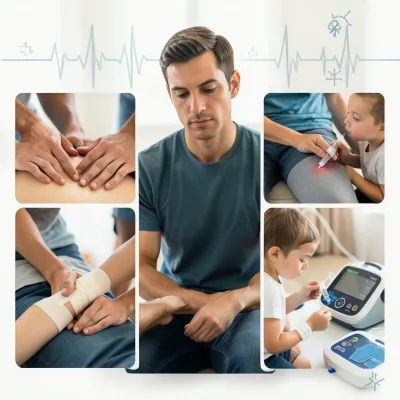
"Everyday First Response" is a practical first aid guide designed to equip ordinary individuals with the confidence and skills to manage common medical emergencies during the critical first minutes before professional help arrives. The book emphasizes a calm, methodical approach, starting with scene safety, the primary survey (checking responsiveness, airway, breathing, and severe bleeding), and effective communication with emergency medical services (EMS). It stresses that a lay responder's role is to stabilize, protect, and provide essential information, rather than to diagnose or cure.
The guide systematically covers a wide range of emergencies, delving into the underlying physiology relevant for understanding "why" certain actions are taken. Chapters address specific crises such as choking (with techniques for all ages), breathing difficulties (asthma, COPD flares), severe allergic reactions and anaphylaxis (including epinephrine auto-injector use), and cardiac emergencies like heart attacks and cardiac arrest (emphasizing hands-only CPR and AED basics). It also provides detailed guidance on controlling severe bleeding (direct pressure, wound packing, tourniquets), managing various wounds and burns, and handling musculoskeletal injuries (sprains, fractures, dislocations).
Further chapters expand into head, neck, and spinal injuries (concussions, suspected spinal trauma), stroke and seizures (using the FAST acronym and safe care), diabetic emergencies (recognizing and treating low and high blood sugar), and various types of poisoning and overdose (household toxins, alcohol, opioids, with a focus on naloxone use). The book also addresses water-related emergencies (drowning, hypothermia), heat and cold illnesses, bites and stings, and inhalation hazards like smoke and carbon monoxide. It dedicates significant attention to "special populations," outlining adaptations for infants, children, pregnant individuals, and older adults, and includes essential advice on mental health first aid, infection control, and the legal/ethical aspects of helping, such as consent and Good Samaritan laws.
The book concludes by offering practical advice on building and customizing first aid kits for home, workplace, and travel, highlighting the importance of accessibility, regular maintenance, and stocking items relevant to specific risks. Crucially, it emphasizes the importance of practice through mental rehearsal, physical drills, and scenario-based training to build muscle memory and reduce panic during real-life emergencies. The overarching message is that while emergencies are unpredictable, preparation empowers individuals to act decisively and make a profound, often life-saving, difference.
What You'll Find Inside:
- Learn a systematic approach to emergency response: scene safety, primary assessment, and life-saving interventions for common crises like cardiac arrest, choking, severe bleeding, and allergic reactions.
- Understand how the body responds to injury and illness to recognize emergency signs and know when to act, including physiology basics for bleeding, breathing difficulties, and neurological events.
- Master essential skills anyone can perform: hands-only CPR, AED use, epinephrine administration, bleeding control with direct pressure and tourniquets, and airway management techniques.
- Get tailored guidance for special populations: infants, children, pregnant people, and older adults, plus considerations for chronic conditions like diabetes and asthma.
- Build confidence through practice scenarios, checklists, and drills while learning your legal protections and ethical responsibilities as a lay responder.
Who's It For:
This book is designed for everyday people with no medical background who want to be prepared to help in common emergencies. It's ideal for parents, caregivers, teachers, workplace safety officers, community volunteers, and anyone who wants to gain confidence in responding to medical crises at home, work, school, or in public settings. The guide assumes no prior medical training and focuses on practical, actionable steps that laypeople can perform safely and effectively while waiting for professional help to arrive.
Table of Contents:
- Introduction
- Chapter 1 Your Role as a First Responder: Scene Safety and the First Five Minutes
- Chapter 2 How the Body Reacts to Injury and Illness: The Physiology You Need
- Chapter 3 Calling for Help: Activating EMS and Working with Dispatch
- Chapter 4 Airway Emergencies: Choking Recognition and Relief Across Ages
- Chapter 5 Breathing Crises: Asthma, COPD Flares, and Respiratory Distress
- Chapter 6 Allergic Reactions and Anaphylaxis: Recognize, Respond, and Epinephrine Use
- Chapter 7 Cardiac Emergencies: Chest Pain, Heart Attack, and When to Act Fast
- Chapter 8 Cardiac Arrest: Hands-Only CPR and AED Basics for Everyone
- Chapter 9 Severe Bleeding Control: Direct Pressure, Wound Packing, and Tourniquets
- Chapter 10 Wounds and Burns: Cuts, Punctures, Thermal, Chemical, and Electrical Injuries
- Chapter 11 Musculoskeletal Injuries: Sprains, Strains, Fractures, and Dislocations
- Chapter 12 Head, Neck, and Spine: Concussions and Suspected Spinal Injury
- Chapter 13 Stroke and Seizures: FAST Action and Safe Care
- Chapter 14 Diabetic Emergencies: Low Sugar, High Sugar, and What to Do
- Chapter 15 Poisoning and Overdose: Household Toxins, Alcohol, and Opioids
- Chapter 16 Drowning and Water-Related Emergencies: Rescue Priorities and Care
- Chapter 17 Heat and Cold Illnesses: Heatstroke, Hypothermia, and Frostbite
- Chapter 18 Bites and Stings: Insects, Ticks, Snakes, and Marine Hazards
- Chapter 19 Breathing Irritants and Inhalation Hazards: Smoke, Fumes, and Carbon Monoxide
- Chapter 20 Special Populations: Infants, Children, Pregnant People, and Older Adults
- Chapter 21 Mental Health and High-Stress Events: Panic, Grief, and Suicide Risk
- Chapter 22 Infection Control and Hygiene: Staying Safe While Helping
- Chapter 23 Legal and Ethical Basics: Consent, Refusal, and Good Samaritan Protections
- Chapter 24 Building and Using Your First Aid Kits: Home, Workplace, and Travel
- Chapter 25 Practice Scenarios, Checklists, and Confidence Drills
Author:
Published By:
Date Published:
May 10, 2026
Type:
Nonfiction
Language:
English
Word Count:
81,061 words
Reading Time:
5 hours 41 minutes
Sample:
Order:
Order Everyday First Response: A Practical First Aid Guide for Common Medical Emergencies (Hardcover) on MixCache.com:
Buy NowPrint copy is made to order and ships worldwide. Includes the ebook free, ready to read instantly.
$5 account credit for all new MixCache.com accounts, usable toward any ebook purchase!*