Browse by Category
Fiction
- Action & Adventure
- African American
- Anthologies
- Children's Fiction
- Classics
- Comics & Graphic Novels
- Coming of Age
- Contemporary
- Cultural & Regional
- Drama
- Erotica
- Fantasy
- General
- Historical Fiction
- Horror
- Humor & Satire
- Literary Fiction
- Mystery, Thriller & Suspense
- Poetry
- Religious & Inspirational
- Romance
- Science Fiction
- Short Stories
- War & Military
- Westerns
- Women's Fiction
- Young Adult
Non-Fiction
- Antiques & Collectibles
- Arts & Photography
- Biographies & Memoirs
- Business & Money
- Children's Non-Fiction
-
Computers & Technology
- Artificial Intelligence
- Computer Science
- Cybersecurity & Cryptography
- Data Science & Analytics
- Databases & Big Data
- Game Development & Design
- General
- Hardware & DIY
- Mobile App Development
- Networking & Cloud Computing
- Operating Systems
- Programming
- Robotics
- Software
- Software Engineering
- User Experience (UX) & Design
- Web Development & Design
- Cooking, Food & Wine
- Crafts, Hobbies & Home
- Education & Teaching
- Engineering
- General
- Health, Fitness & Dieting
-
History
- African History
- African History - North Africa
- African History - Sub-Saharan Africa
- American History
- American History - 20th Century
- American History - Civil War
- American History - Colonial Period
- Ancient History
- Asian History
- Asian History - China
- Asian History - India
- Asian History - Japan
- Asian History - Southeast Asia
- European History
- European History - Ancient Greece
- European History - Ancient Rome
- European History - Medieval
- European History - Modern
- European History - Renaissance
- General
- Middle Eastern History
- Military History
- Military History - Aviation
- Military History - Naval
- Social & Cultural History
- World History
- Humor & Entertainment
- Industrial Technology
- Language Learning
- Law
- LGBTQ+ Non-Fiction
- Literary Criticism
- Medical Books
- Parenting & Relationships
- Philosophy
- Politics & Social Sciences
- Reference
- Religion & Spirituality
-
Science & Math
- Agricultural Sciences
- Astronomy & Space Science
- Behavioral Sciences
- Biological Sciences
- Botany & Plant Science
- Chemistry
- Earth Sciences
- Engineering - Chemical
- Engineering - Civil
- Engineering - Electrical
- Engineering - Mechanical
- Environment
- General
- Geology
- Mathematics
- Nature & Ecology
- Oceanography
- Paleontology
- Physics
- Statistics
- Self-Help
- Sports & Outdoors
- Study Aids
- Sustainability & Green Living
- Textbooks
- Transportation
- Travel
- True Crime
- Urban Planning & Development
- Veterinary Medicine
- Writing & Publishing
Jump to Section
MixCache.com Total Access
Unlimited reading and audiobooks for every book published by MixCache.com.
Included titles carry the MTA badge.
Learn more →
Biohacking Responsibly: Evidence-Based Enhancements and Risks for Body Optimization
MTA
A balanced examination of popular biohacks, supplements, and technologies with safety protocols and scientific support
About this book:
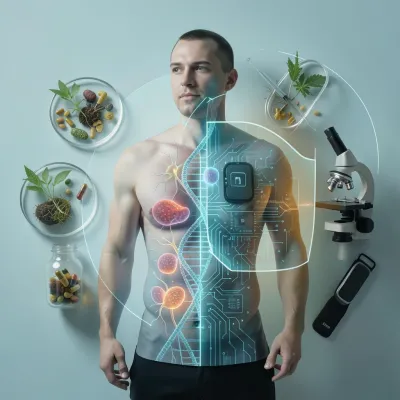
"Biohacking Responsibly" offers a balanced and evidence-based examination of popular biohacks, supplements, and technologies, aiming to equip readers with the skills to navigate the often-hyped world of personal optimization. The book emphasizes the importance of critical thinking, distinguishing between scientific evidence and marketing claims. It establishes a framework for responsible self-experimentation, urging readers to understand the scientific method, appraise evidence critically, and recognize the limitations of various study designs.
A core theme is risk management, with practical advice for self-experimenters including pre-participation assessment, defining risk categories, prioritizing reversibility, gradual dose escalation, and setting clear stop criteria. The book delves into ethical considerations such as informed consent, data privacy, and the potential for biohacking culture to foster coercion or exclusion. It highlights the significance of establishing a baseline through biomarkers, wearables, and subjective tracking to accurately assess the impact of any intervention.
The book then systematically reviews common biohacks, including intermittent fasting, cold exposure, heat/sauna use, sleep optimization, and various exercise modalities (strength, Zone 2, VO2 max training), detailing their mechanisms, proven benefits, and significant contraindications. It provides an overview of popular supplements like nootropics, adaptogens (ashwagandha, rhodiola), NAD precursors (NR, NMN, niacin), and mitochondrial enhancers (creatine, berberine), scrutinizing their scientific backing and safety profiles. The crucial role of fundamental nutrition—protein, fiber, and micronutrients—is underscored as the bedrock upon which any advanced biohacking should be built.
Finally, "Biohacking Responsibly" addresses specific populations, cautioning against applying adult-centric biohacks to children, older adults, and individuals with chronic illnesses or disabilities, emphasizing the shifting risk-reward calculus in these groups. It concludes by outlining how to design ethical N-of-1 trials, turning personal curiosity into disciplined self-investigation by formulating testable hypotheses, designing rigorous protocols, collecting data consistently, and interpreting results honestly. The overarching message is to approach biohacking with humility, skepticism, and a commitment to evidence-based, individualized, and sustainable practices.
What You'll Find Inside:
- How to critically evaluate scientific evidence, distinguish correlation from causation, and avoid hype when assessing biohacking interventions
- Risk management frameworks including stop criteria, dose escalation principles, and reversibility considerations for safe self-experimentation
- Ethical dimensions of biohacking covering informed consent, data privacy, equity concerns, and interpersonal impacts of health optimization
- Establishing meaningful baselines using biomarkers, wearables, and outcome tracking to measure intervention effects accurately
- Prioritizing evidence-based fundamentals like sleep, nutrition, exercise, and stress management over unproven or extreme biohacks
Who's It For:
This book is for health-conscious individuals interested in biohacking who want to move beyond hype and anecdotal claims to adopt evidence-based approaches. It's particularly valuable for those engaged in self-experimentation who need frameworks for evaluating risks, setting boundaries, and interpreting their own data responsibly. Readers seeking to optimize their health through lifestyle interventions rather than relying on unproven supplements or extreme protocols will benefit most.
Table of Contents:
- Introduction
- Chapter 1 What Is Biohacking? Definitions, History, and Scope
- Chapter 2 Evidence Appraisal 101: How to Read Studies and Avoid Hype
- Chapter 3 Risk Management for Self-Experimenters: Protocols and Boundaries
- Chapter 4 Ethics, Consent, and Data Privacy in Personal Health Experiments
- Chapter 5 Building a Baseline: Biomarkers, Wearables, and Outcome Tracking
- Chapter 6 Intermittent Fasting: Mechanisms, Benefits, and Contraindications
- Chapter 7 Cold Exposure: Adaptation, Performance, and Safety Limits
- Chapter 8 Heat and Sauna: Cardiometabolic Effects and Hydration Risks
- Chapter 9 Sleep Optimization: Light, Circadian Timing, and Behavioral Tools
- Chapter 10 Exercise Programming as a Core Biohack: Strength, Zone 2, and VO2
- Chapter 11 Nutrition Foundations: Protein, Fiber, Micronutrients, and Timing
- Chapter 12 Nootropics Overview: From Caffeine to Racetams—What Holds Up?
- Chapter 13 Adaptogens and Herbal Compounds: Ashwagandha, Rhodiola, and Safety
- Chapter 14 NAD Pathways: NR, NMN, and Niacin—Claims vs. Evidence
- Chapter 15 Mitochondrial and Metabolic Enhancers: Creatine, Berberine, and More
- Chapter 16 Wearable Tech: Accuracy, Validation, and Practical Use
- Chapter 17 Red Light and Photobiomodulation: Parameters and Evidence
- Chapter 18 Gut Microbiome Modulation: Prebiotics, Probiotics, and Caution
- Chapter 19 Stress, Mindfulness, and Cognitive Performance: Techniques and Measures
- Chapter 20 Breathing, CO2 Tolerance, and HRV: Mechanisms and Practice Safeguards
- Chapter 21 Hormesis and Recovery: Finding the Adaptation Sweet Spot
- Chapter 22 Aging and Longevity Compounds: Metformin, Spermidine, and Trade-offs
- Chapter 23 Female-Specific Considerations: Cycle-Aware Training and Fasting
- Chapter 24 Youth, Older Adults, and Special Populations: When Not to Biohack
- Chapter 25 Designing Ethical N-of-1 Trials: From Hypothesis to Reflection
Author:
Published By:
Date Published:
May 10, 2026
Type:
Nonfiction
Language:
English
Word Count:
72,407 words
Reading Time:
5 hours 4 minutes
Sample:
Order:
Order Biohacking Responsibly: Evidence-Based Enhancements and Risks for Body Optimization (Paperback) on MixCache.com:
Buy NowPrint copy is made to order and ships worldwide. Includes the ebook free, ready to read instantly.
$5 account credit for all new MixCache.com accounts, usable toward any ebook purchase!*