
Browse by Category
Fiction
- Action & Adventure
- African American
- Anthologies
- Children's Fiction
- Classics
- Comics & Graphic Novels
- Coming of Age
- Contemporary
- Cultural & Regional
- Drama
- Erotica
- Fantasy
- General
- Historical Fiction
- Horror
- Humor & Satire
- Literary Fiction
- Mystery, Thriller & Suspense
- Poetry
- Religious & Inspirational
- Romance
- Science Fiction
- Short Stories
- War & Military
- Westerns
- Women's Fiction
- Young Adult
Non-Fiction
- Antiques & Collectibles
- Arts & Photography
- Biographies & Memoirs
- Business & Money
- Children's Non-Fiction
-
Computers & Technology
- Artificial Intelligence
- Computer Science
- Cybersecurity & Cryptography
- Data Science & Analytics
- Databases & Big Data
- Game Development & Design
- General
- Hardware & DIY
- Mobile App Development
- Networking & Cloud Computing
- Operating Systems
- Programming
- Robotics
- Software
- Software Engineering
- User Experience (UX) & Design
- Web Development & Design
- Cooking, Food & Wine
- Crafts, Hobbies & Home
- Education & Teaching
- Engineering
- General
- Health, Fitness & Dieting
-
History
- African History
- African History - North Africa
- African History - Sub-Saharan Africa
- American History
- American History - 20th Century
- American History - Civil War
- American History - Colonial Period
- Ancient History
- Asian History
- Asian History - China
- Asian History - India
- Asian History - Japan
- Asian History - Southeast Asia
- European History
- European History - Ancient Greece
- European History - Ancient Rome
- European History - Medieval
- European History - Modern
- European History - Renaissance
- General
- Middle Eastern History
- Military History
- Military History - Aviation
- Military History - Naval
- Social & Cultural History
- World History
- Humor & Entertainment
- Industrial Technology
- Language Learning
- Law
- LGBTQ+ Non-Fiction
- Literary Criticism
- Medical Books
- Parenting & Relationships
- Philosophy
- Politics & Social Sciences
- Reference
- Religion & Spirituality
-
Science & Math
- Agricultural Sciences
- Astronomy & Space Science
- Behavioral Sciences
- Biological Sciences
- Botany & Plant Science
- Chemistry
- Earth Sciences
- Engineering - Chemical
- Engineering - Civil
- Engineering - Electrical
- Engineering - Mechanical
- Environment
- General
- Geology
- Mathematics
- Nature & Ecology
- Oceanography
- Paleontology
- Physics
- Statistics
- Self-Help
- Sports & Outdoors
- Study Aids
- Sustainability & Green Living
- Textbooks
- Transportation
- Travel
- True Crime
- Urban Planning & Development
- Veterinary Medicine
- Writing & Publishing
Jump to Section
MixCache.com Total Access
Unlimited reading and audiobooks for every book published by MixCache.com.
Included titles carry the MTA badge.
Learn more →
Labyrinth of the Gut-Brain Axis: How Your Digestive System Controls Mood, Immunity, and Cognition
MTA
An evidence-based exploration of bidirectional gut-brain communication with therapeutic approaches
About this book:
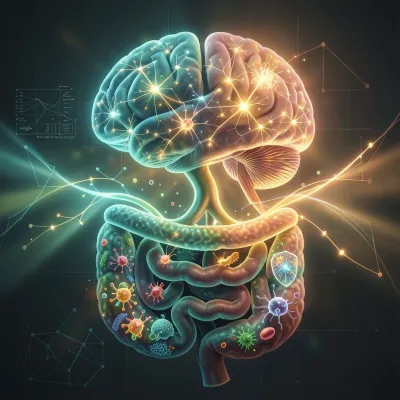
"Labyrinth of the Gut-Brain Axis" delves into the intricate and bidirectional communication network between the digestive system and the brain, demonstrating its profound influence on mood, immunity, and cognition. The book establishes the gut-brain axis not as a simple connection, but as a complex "superhighway" involving neural pathways (primarily the vagus nerve and enteric nervous system), microbial metabolites, hormones, and the immune system. It emphasizes that this constant conversation means the health of one system directly impacts the other, challenging traditional medical silos that separate mental and physical health.
The core mechanisms explored include the pivotal role of the vagus nerve as the main conduit for signals traveling between the gut and brain, affecting everything from motility to inflammation. The book highlights the gut microbiome as a central orchestrator, detailing how its composition and metabolic outputs—like short-chain fatty acids (SCFAs), tryptophan derivatives, and bile acids—directly influence brain chemistry, barrier integrity, and immune responses. It also examines the critical importance of the intestinal barrier, often referred to as the "leaky gut," and how its compromise leads to systemic inflammation that can reach and affect the brain.
Throughout the book, the author connects these biological foundations to a wide range of health conditions, from irritable bowel syndrome (IBS) and chronic fatigue to anxiety, depression, and neurodegenerative diseases like Alzheimer's and Parkinson's. It explores how factors such as stress (via the HPA axis), sleep, circadian rhythms, and early-life experiences profoundly shape the development and function of the gut-brain axis across the lifespan. Unique considerations for women's health, particularly hormonal fluctuations during menstrual cycles, pregnancy, and menopause, are also addressed, underscoring the personalized nature of gut-brain interactions.
The book culminates in practical, evidence-based therapeutic approaches. It advocates for comprehensive integrative care pathways that prioritize dietary patterns (like the Mediterranean diet rich in fiber and healthy fats), judicious use of probiotics, prebiotics, and postbiotics, and lifestyle levers such as exercise, breathing techniques, and stress management to enhance vagal tone. Mind-body therapies like Cognitive Behavioral Therapy (CBT), gut-directed hypnotherapy, and biofeedback are presented as crucial tools for re-calibrating the brain's interpretation of gut signals. The final chapter looks to the future, envisioning precision nutrition, digital biomarkers, and next-generation microbiome interventions, while emphasizing the ethical considerations essential for responsible advancement in this transformative field.
What You'll Find Inside:
- Explores the bidirectional gut-brain axis through neural (vagus nerve), endocrine, immune, and microbial pathways, explaining how digestive health directly influences mood, cognition, and immunity.
- Details how gut microbial metabolites—including short-chain fatty acids, tryptophan pathways, and bile acids—act as signaling molecules that cross to the brain and affect neurotransmission, neuroinflammation, and neuronal gene expression.
- Examines intestinal barrier integrity as a critical gatekeeper, with mechanisms explaining how 'leaky gut' allows bacterial products and inflammatory cytokines to reach the brain and contribute to neuropsychiatric conditions.
- Provides evidence-based dietary strategies (Mediterranean pattern, fiber diversity, specific fats, meal timing) that optimize microbiome function and metabolite production for brain and bowel health.
- Outlines integrative interventions—nutrition, probiotics/prebiotics, stress management, exercise, sleep optimization, and mind-body therapies—that target multiple nodes of the gut-brain axis simultaneously for conditions like IBS, anxiety, depression, and cognitive concerns.
Who's It For:
Healthcare professionals (integrative medicine physicians, gastroenterologists, neurologists, psychiatrists), nutritionists, and health coaches seeking evidence-based frameworks for assessing and treating gut-brain axis disorders, as well as scientifically literate individuals looking to understand and optimize their own gut-brain connections through personalized lifestyle and nutritional interventions.
Table of Contents:
- Introduction
- Chapter 1 The Gut–Brain Axis: A Primer
- Chapter 2 Anatomy and Evolution of the Enteric and Central Nervous Systems
- Chapter 3 The Vagus Nerve: Wiring Mood, Motility, and Inflammation
- Chapter 4 The Human Microbiome: Diversity, Resilience, and Dysbiosis
- Chapter 5 Microbial Metabolites: SCFAs, Tryptophan Pathways, and Bile Acids
- Chapter 6 The Intestinal Barrier: Mucus, Tight Junctions, and “Leaky Gut”
- Chapter 7 Immune Crosstalk: From Mucosal Immunity to Neuroinflammation
- Chapter 8 Hormones and the HPA Axis: Stress Signaling in the Gut–Brain Loop
- Chapter 9 Gut-Derived Neurotransmitters: Serotonin, GABA, and Beyond
- Chapter 10 Circadian Rhythms, Sleep, and the Microbiome
- Chapter 11 Dietary Patterns for Brain and Bowel: Mediterranean, Fiber, and Fats
- Chapter 12 Probiotics, Prebiotics, Synbiotics, and Postbiotics: What Works, When, and Why
- Chapter 13 Metabolism and Meal Timing: Fasting and Time-Restricted Eating
- Chapter 14 Irritable Bowel Syndrome: Phenotypes, Mechanisms, and Targets
- Chapter 15 Anxiety and Depression: Mechanistic Bridges from Gut to Mind
- Chapter 16 Cognition and Neurodegeneration: Signals from the Gut in Aging Brains
- Chapter 17 The Lifespan Lens: Infancy, Adolescence, and Healthy Aging
- Chapter 18 Women’s Health: Hormones, Pregnancy, and the Microbiome
- Chapter 19 Food Sensitivities and Allergies: Immune Triggers and Tolerogenic Paths
- Chapter 20 Infections, Antibiotics, and Fecal Microbiota Transplantation
- Chapter 21 Lifestyle Levers: Exercise, Breathing, and Vagal Tone
- Chapter 22 Mind–Body Therapies: CBT, Gut-Directed Hypnotherapy, and Biofeedback
- Chapter 23 Clinical Assessment: From History-Taking to Targeted Testing
- Chapter 24 Integrative Care Pathways: Case Studies and Treatment Algorithms
- Chapter 25 The Road Ahead: Precision Nutrition, Digital Biomarkers, and Ethics
Author:
Published By:
Date Published:
May 10, 2026
Type:
Nonfiction
Language:
English
Word Count:
76,714 words
Reading Time:
5 hours 22 minutes
Sample:
MixCache.com Total Access
Get unlimited access to this book + all books published by MixCache.com for $11.99/month
Subscribe to MTAOr purchase this book individually below
Order:
Buy the Labyrinth of the Gut-Brain Axis: How Your Digestive System Controls Mood, Immunity, and Cognition ebook on MixCache.com:
Buy Now
Full ebook will be available immediately
- read online or download as a PDF file.
$5 account credit for all new MixCache.com accounts, usable toward any ebook purchase!*





Ratings & Reviews
Ask Questions About This Book
Have a question about the content? Ask our AI assistant!
Start by asking a question about "Labyrinth of the Gut-Brain Axis: How Your Digestive System Controls Mood, Immunity, and Cognition"
Example: "Does this book mention William Shakespeare?"
Thinking...