
Browse by Category
Fiction
- Action & Adventure
- African American
- Anthologies
- Children's Fiction
- Classics
- Comics & Graphic Novels
- Coming of Age
- Contemporary
- Cultural & Regional
- Drama
- Erotica
- Fantasy
- General
- Historical Fiction
- Horror
- Humor & Satire
- Literary Fiction
- Mystery, Thriller & Suspense
- Poetry
- Religious & Inspirational
- Romance
- Science Fiction
- Short Stories
- War & Military
- Westerns
- Women's Fiction
- Young Adult
Non-Fiction
- Antiques & Collectibles
- Arts & Photography
- Biographies & Memoirs
- Business & Money
- Children's Non-Fiction
-
Computers & Technology
- Artificial Intelligence
- Computer Science
- Cybersecurity & Cryptography
- Data Science & Analytics
- Databases & Big Data
- Game Development & Design
- General
- Hardware & DIY
- Mobile App Development
- Networking & Cloud Computing
- Operating Systems
- Programming
- Robotics
- Software
- Software Engineering
- User Experience (UX) & Design
- Web Development & Design
- Cooking, Food & Wine
- Crafts, Hobbies & Home
- Education & Teaching
- Engineering
- General
- Health, Fitness & Dieting
-
History
- African History
- African History - North Africa
- African History - Sub-Saharan Africa
- American History
- American History - 20th Century
- American History - Civil War
- American History - Colonial Period
- Ancient History
- Asian History
- Asian History - China
- Asian History - India
- Asian History - Japan
- Asian History - Southeast Asia
- European History
- European History - Ancient Greece
- European History - Ancient Rome
- European History - Medieval
- European History - Modern
- European History - Renaissance
- General
- Middle Eastern History
- Military History
- Military History - Aviation
- Military History - Naval
- Social & Cultural History
- World History
- Humor & Entertainment
- Industrial Technology
- Language Learning
- Law
- LGBTQ+ Non-Fiction
- Literary Criticism
- Medical Books
- Parenting & Relationships
- Philosophy
- Politics & Social Sciences
- Reference
- Religion & Spirituality
-
Science & Math
- Agricultural Sciences
- Astronomy & Space Science
- Behavioral Sciences
- Biological Sciences
- Botany & Plant Science
- Chemistry
- Earth Sciences
- Engineering - Chemical
- Engineering - Civil
- Engineering - Electrical
- Engineering - Mechanical
- Environment
- General
- Geology
- Mathematics
- Nature & Ecology
- Oceanography
- Paleontology
- Physics
- Statistics
- Self-Help
- Sports & Outdoors
- Study Aids
- Sustainability & Green Living
- Textbooks
- Transportation
- Travel
- True Crime
- Urban Planning & Development
- Veterinary Medicine
- Writing & Publishing
Jump to Section
MixCache.com Total Access
Unlimited reading and audiobooks for every book published by MixCache.com.
Included titles carry the MTA badge.
Learn more →
Wine Science for Cooks: The Chemistry Behind Better Meals
MTA
How acidity, tannin, sugar, and heat transform ingredients and drinks
About this book:
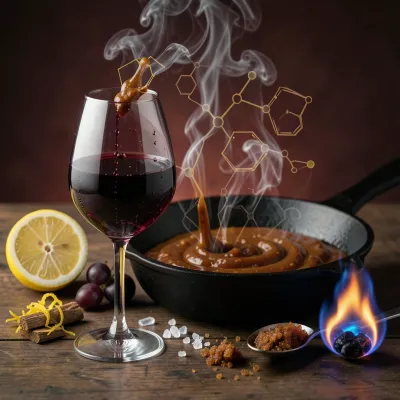
*Wine Science for Cooks: The Chemistry Behind Better Meals* is a technical yet practical guide that bridges oenology and culinary technique, teaching cooks how to manipulate the four pillars of flavor—acidity, tannin, sugar, and heat—to achieve perfect pairings. Rather than offering rigid rules, the book explains the molecular interactions between food and wine, such as how salt suppresses bitterness, how fats buffer astringent tannins, and how alcohol acts as a solvent to extract and carry flavor. It empowers cooks to treat recipes as adjustable frameworks, using "levers" like seasoning and cooking methods to harmonize the plate with the glass.
The text details how specific cooking techniques fundamentally shift a wine’s compatibility. High-heat methods like grilling and roasting trigger Maillard reactions and caramelization, creating savory, nutty compounds that provide aromatic bridges to oak-aged wines. Conversely, moist-heat methods like braising and poaching transform protein structures and concentrate acids, requiring different structural support from the wine. The book also demystifies common kitchen myths, explaining that alcohol rarely "cooks off" entirely and that the perceived "weight" of a pairing is often more important than matching specific flavor notes.
A significant portion of the book focuses on ingredient-specific chemistry, ranging from the iodine and sulfur profiles of seafood to the myoglobin and fat content of red meats. It explores the challenging nature of fermented foods, vegetable bitterness, and capsaicin heat, providing scientific strategies to mitigate clashes—such as using sugar to dampen chili fire or lactic acid to soften sharp vinegars. By understanding the chemical fingerprint of ingredients like miso, kimchi, and aged cheeses, cooks can predict how these "umami bombs" will amplify or diminish the structural elements of a wine.
The final chapters transition from theory to application, offering menu design strategies, troubleshooting decision trees, and DIY kitchen experiments. These sections encourage cooks to calibrate their palates by isolating variables—for example, tasting a tannic red with and without a salted cracker to observe the immediate softening of the wine’s grip. Ultimately, the book serves as a sensory toolkit, transforming wine from a mere accompaniment into an active chemical component of the meal, allowing for intuitive, science-based adjustments that elevate the dining experience.
What You'll Find Inside:
- Learn how the four pillars—acidity, tannin, sugar, and heat—create harmony or clash in food and wine pairings through practical chemistry explanations.
- Discover how to read and manipulate taste, flavor, and mouthfeel signals to make intuitive pairing adjustments without memorizing rigid rules.
- Master kitchen-tested techniques for managing acidity, tannins, sweetness, and alcohol through methods like deglazing, reduction, and emulsion building.
- Conduct simple home experiments to calibrate your palate and predict how ingredient changes affect wine compatibility.
- Apply decision trees and troubleshooting strategies to fix pairing challenges in real-time using salt, fat, sugar, acid, and temperature adjustments.
Who's It For:
This book is for home cooks and professional chefs who want to understand the scientific principles behind food and wine pairing rather than rely on memorized rules. It's ideal for anyone who cooks regularly with wine and seeks to make informed, intuitive adjustments to recipes based on the specific chemistry of their ingredients and the wine in their glass. Readers will gain the confidence to troubleshoot pairing challenges in real-time using practical levers like salt, acid, sugar, fat, and temperature, whether working with weeknight bottles or a curated cellar.
Table of Contents:
- Introduction
- Chapter 1 Taste, Flavor, and Mouthfeel: A Cook’s Sensory Toolkit
- Chapter 2 The Chemistry of Acidity: pH, Titratable Acidity, and Perception
- Chapter 3 Tannins and Texture: Polyphenols in Wine and Food
- Chapter 4 Sugar, Sweetness, and Balance: From Brut to Sauternes
- Chapter 5 Alcohol, Body, and Heat: The Kitchen’s Most Overlooked Solvent
- Chapter 6 Salt, Umami, and Bitterness: How Cooks Modulate Taste
- Chapter 7 Aromas and Volatiles: Esters, Terpenes, and Thiols in the Glass and on the Plate
- Chapter 8 Heat and Transformation: Maillard, Caramelization, and Protein Denaturation
- Chapter 9 How Cooking Methods Shift Pairings: Grilling, Roasting, and Braising
- Chapter 10 Acidity on the Plate: Vinaigrettes, Pickles, and Citrus
- Chapter 11 Managing Vegetable Bitterness: Brassicas, Alliums, and Herbs
- Chapter 12 Seafood and the Sea: Iodine, Sulfur, and Mineral Affinities
- Chapter 13 Red Meat Chemistry: Myoglobin, Fat, and Tannin Binding
- Chapter 14 Poultry and Pork: Brines, Cures, and Pan Sauces
- Chapter 15 Cheese, Fat, and Salt: Classic Pairings Reframed by Science
- Chapter 16 Spices and Capsaicin: Pairing for Pungency and Heat
- Chapter 17 Sweet Endings: Dessert Pairings and the Science of Sugar
- Chapter 18 Fermented Foods: Bread, Miso, Kimchi—and Wine
- Chapter 19 Sauces and Emulsions: Butter Mounts, Stocks, and Reductions
- Chapter 20 Cooking with Wine: Deglazing, Poaching, and Reduction Techniques
- Chapter 21 Managing Alcohol in the Pan: Evaporation Myths and Facts
- Chapter 22 Menu Design: Sequencing, Contrast, and Continuity Across Courses
- Chapter 23 Tweak the Recipe: Practical Levers for Pairing Success
- Chapter 24 Kitchen Experiments: Predicting Outcomes at Home
- Chapter 25 Troubleshooting: Decision Trees for Real-World Kitchens
Author:
Published By:
Date Published:
May 9, 2026
Type:
Nonfiction
Language:
English
Word Count:
66,596 words
Reading Time:
4 hours 40 minutes
Sample:
MixCache.com Total Access
Get unlimited access to this book + all books published by MixCache.com for $11.99/month
Subscribe to MTAOr purchase this book individually below
Order:
Buy the Wine Science for Cooks: The Chemistry Behind Better Meals ebook on MixCache.com:
Buy Now
Full ebook will be available immediately
- read online or download as a PDF file.
$5 account credit for all new MixCache.com accounts, usable toward any ebook purchase!*




Ratings & Reviews
Ask Questions About This Book
Have a question about the content? Ask our AI assistant!
Start by asking a question about "Wine Science for Cooks: The Chemistry Behind Better Meals"
Example: "Does this book mention William Shakespeare?"
Thinking...