
Browse by Category
Fiction
- Action & Adventure
- African American
- Anthologies
- Children's Fiction
- Classics
- Comics & Graphic Novels
- Coming of Age
- Contemporary
- Cultural & Regional
- Drama
- Erotica
- Fantasy
- General
- Historical Fiction
- Horror
- Humor & Satire
- Literary Fiction
- Mystery, Thriller & Suspense
- Poetry
- Religious & Inspirational
- Romance
- Science Fiction
- Short Stories
- War & Military
- Westerns
- Women's Fiction
- Young Adult
Non-Fiction
- Antiques & Collectibles
- Arts & Photography
- Biographies & Memoirs
- Business & Money
- Children's Non-Fiction
-
Computers & Technology
- Artificial Intelligence
- Computer Science
- Cybersecurity & Cryptography
- Data Science & Analytics
- Databases & Big Data
- Game Development & Design
- General
- Hardware & DIY
- Mobile App Development
- Networking & Cloud Computing
- Operating Systems
- Programming
- Robotics
- Software
- Software Engineering
- User Experience (UX) & Design
- Web Development & Design
- Cooking, Food & Wine
- Crafts, Hobbies & Home
- Education & Teaching
- Engineering
- General
- Health, Fitness & Dieting
-
History
- African History
- African History - North Africa
- African History - Sub-Saharan Africa
- American History
- American History - 20th Century
- American History - Civil War
- American History - Colonial Period
- Ancient History
- Asian History
- Asian History - China
- Asian History - India
- Asian History - Japan
- Asian History - Southeast Asia
- European History
- European History - Ancient Greece
- European History - Ancient Rome
- European History - Medieval
- European History - Modern
- European History - Renaissance
- General
- Middle Eastern History
- Military History
- Military History - Aviation
- Military History - Naval
- Social & Cultural History
- World History
- Humor & Entertainment
- Industrial Technology
- Language Learning
- Law
- LGBTQ+ Non-Fiction
- Literary Criticism
- Medical Books
- Parenting & Relationships
- Philosophy
- Politics & Social Sciences
- Reference
- Religion & Spirituality
-
Science & Math
- Agricultural Sciences
- Astronomy & Space Science
- Behavioral Sciences
- Biological Sciences
- Botany & Plant Science
- Chemistry
- Earth Sciences
- Engineering - Chemical
- Engineering - Civil
- Engineering - Electrical
- Engineering - Mechanical
- Environment
- General
- Geology
- Mathematics
- Nature & Ecology
- Oceanography
- Paleontology
- Physics
- Statistics
- Self-Help
- Sports & Outdoors
- Study Aids
- Sustainability & Green Living
- Textbooks
- Transportation
- Travel
- True Crime
- Urban Planning & Development
- Veterinary Medicine
- Writing & Publishing
Jump to Section
MixCache.com Total Access
Unlimited reading and audiobooks for every book published by MixCache.com.
Included titles carry the MTA badge.
Learn more →
Chemistry of the Sea: From Nutrients to Pollution
MTA
Contemporary chemical oceanography for scientists, policymakers, and environmental managers
About this book:
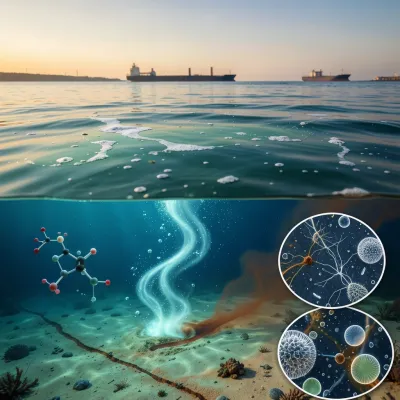
*Chemistry of the Sea: From Nutrients to Pollution* explores the ocean as a dynamic chemical engine essential to climate regulation and global biodiversity. The book transitions from foundational biogeochemical cycles—detailing the movement of carbon, nitrogen, phosphorus, silicon, and iron—to the contemporary crises of ocean acidification and deoxygenation. By examining the "biological pump" and the stoichiometry of nutrient supply, the text illustrates how microscopic microbial processes govern planetary-scale feedbacks, such as carbon sequestration and the expansion of oxygen minimum zones.
The narrative shifts to the profound impact of human activity on marine chemistry, specifically through the lens of eutrophication, harmful algal blooms, and the introduction of anthropogenic contaminants. It provides in-depth analyses of persistent organic pollutants (POPs), heavy metals like mercury, and emerging threats such as PFAS and microplastics. The book highlights how these substances move through the water column and bioaccumulate in food webs, fundamentally altering the chemical landscape of both coastal and open-ocean environments.
To address these challenges, the book emphasizes the evolution of analytical and observational technology. It covers the transition from traditional "clean lab" techniques to the use of autonomous gliders, BGC-Argo floats, and satellite remote sensing, which provide high-resolution data on a global scale. These tools, combined with complex biogeochemical modeling and stable isotope tracers, allow scientists to diagnose ecosystem health and predict future responses to climate change with increasing precision.
The concluding chapters bridge the gap between science and stewardship by discussing policy frameworks, environmental standards, and the potential of "blue carbon" pathways. Through diverse case studies—ranging from the Mississippi River’s "dead zones" to the sequestration potential of mangrove forests—the book argues for an integrated management approach. It underscores that the future of the ocean depends on translating chemical data into effective regulations that account for the complex, transboundary nature of marine systems.
What You'll Find Inside:
- Comprehensive exploration of marine biogeochemical cycles including carbon, nitrogen, phosphorus, silicon, iron, and sulfur transformations that govern ocean productivity and climate interactions.
- In-depth analysis of ocean acidification mechanisms, carbonate chemistry, and biological impacts from molecular to ecosystem scales.
- Examination of marine pollution pathways covering metal contaminants (including mercury speciation), organic pollutants (POPs, PFAS, PPCPs), and plastics/microplastics from sources to fate in marine systems.
- Investigation of physical drivers of chemical processes such as mixing, stratification, upwelling, and their roles in nutrient supply, oxygen dynamics, and contaminant distribution.
- Practical tools for application including sampling techniques, autonomous observing platforms, biogeochemical modeling, monitoring frameworks, and policy-relevant case studies from watersheds to open ocean.
Who's It For:
This book is designed for chemical oceanographers, marine biogeochemists, and environmental scientists seeking to understand the complex interplay of chemical, physical, and biological processes in marine systems. It also serves policymakers, environmental managers, and coastal planners who need scientific foundations to develop evidence-based strategies for addressing ocean acidification, eutrophication, pollution, and climate change impacts. Graduate students and researchers in marine sciences will find it valuable as both a comprehensive reference and a guide to translating chemical oceanography into practical management decisions.
Table of Contents:
- Introduction
- Chapter 1 The Ocean as a Chemical System: Scales, Reservoirs, and Fluxes
- Chapter 2 The Carbonate System and Ocean Acidification
- Chapter 3 The Marine Carbon Cycle: DIC, DOC, and the Biological Pump
- Chapter 4 Nitrogen Cycling: From N2 Fixation to Denitrification and Anammox
- Chapter 5 Phosphorus and Silicon: Limitation, Regeneration, and Diatom Dynamics
- Chapter 6 Iron and Trace Metals: Bioavailability, Organic Ligands, and Limitation
- Chapter 7 Sulfur, Oxygen, and Redox Transformations in Seawater
- Chapter 8 Nutrient Stoichiometry and the Redfield Legacy
- Chapter 9 Physical Drivers of Chemistry: Mixing, Stratification, and Upwelling
- Chapter 10 Oxygen Minimum Zones and Global Deoxygenation
- Chapter 11 Eutrophication and Coastal Hypoxia
- Chapter 12 Harmful Algal Blooms: Chemistry–Biology Interactions
- Chapter 13 Dissolved and Particulate Organic Matter: Sources and Sinks
- Chapter 14 Air–Sea Exchange of Gases and Aerosols: Climate Feedbacks
- Chapter 15 Anthropogenic Carbon and Blue Carbon Pathways
- Chapter 16 Metal Contaminants and Mercury Speciation
- Chapter 17 Organic Pollutants: POPs, PAHs, and Emerging Compounds (PFAS, PPCPs)
- Chapter 18 Plastics and Micro/Nanoplastics in Marine Systems
- Chapter 19 Radioisotopes and Tracers in Chemical Oceanography
- Chapter 20 Sampling and Analytical Techniques: From Clean Labs to In Situ Sensors
- Chapter 21 Autonomous Platforms, Remote Sensing, and Ocean Observing Networks
- Chapter 22 Modeling Marine Biogeochemistry: From Box Models to Earth System Models
- Chapter 23 Monitoring Frameworks and Indicators for Ecosystem Health
- Chapter 24 Policy and Management: Standards, Regulations, and Decision Tools
- Chapter 25 Case Studies and Solutions: From Watersheds to the High Seas
Author:
Published By:
Date Published:
May 3, 2026
Type:
Nonfiction
Language:
English
Word Count:
62,924 words
Reading Time:
4 hours 24 minutes
Sample:
MixCache.com Total Access
Get unlimited access to this book + all books published by MixCache.com for $11.99/month
Subscribe to MTAOr purchase this book individually below
Order:
Buy the Chemistry of the Sea: From Nutrients to Pollution ebook on MixCache.com:
Buy Now
Full ebook will be available immediately
- read online or download as a PDF file.
$5 account credit for all new MixCache.com accounts, usable toward any ebook purchase!*


Ratings & Reviews
Ask Questions About This Book
Have a question about the content? Ask our AI assistant!
Start by asking a question about "Chemistry of the Sea: From Nutrients to Pollution"
Example: "Does this book mention William Shakespeare?"
Thinking...