
Browse by Category
Fiction
- Action & Adventure
- African American
- Anthologies
- Children's Fiction
- Classics
- Comics & Graphic Novels
- Coming of Age
- Contemporary
- Cultural & Regional
- Drama
- Erotica
- Fantasy
- General
- Historical Fiction
- Horror
- Humor & Satire
- Literary Fiction
- Mystery, Thriller & Suspense
- Poetry
- Religious & Inspirational
- Romance
- Science Fiction
- Short Stories
- War & Military
- Westerns
- Women's Fiction
- Young Adult
Non-Fiction
- Antiques & Collectibles
- Arts & Photography
- Biographies & Memoirs
- Business & Money
- Children's Non-Fiction
-
Computers & Technology
- Artificial Intelligence
- Computer Science
- Cybersecurity & Cryptography
- Data Science & Analytics
- Databases & Big Data
- Game Development & Design
- General
- Hardware & DIY
- Mobile App Development
- Networking & Cloud Computing
- Operating Systems
- Programming
- Robotics
- Software
- Software Engineering
- User Experience (UX) & Design
- Web Development & Design
- Cooking, Food & Wine
- Crafts, Hobbies & Home
- Education & Teaching
- Engineering
- General
- Health, Fitness & Dieting
-
History
- African History
- African History - North Africa
- African History - Sub-Saharan Africa
- American History
- American History - 20th Century
- American History - Civil War
- American History - Colonial Period
- Ancient History
- Asian History
- Asian History - China
- Asian History - India
- Asian History - Japan
- Asian History - Southeast Asia
- European History
- European History - Ancient Greece
- European History - Ancient Rome
- European History - Medieval
- European History - Modern
- European History - Renaissance
- General
- Middle Eastern History
- Military History
- Military History - Aviation
- Military History - Naval
- Social & Cultural History
- World History
- Humor & Entertainment
- Industrial Technology
- Language Learning
- Law
- LGBTQ+ Non-Fiction
- Literary Criticism
- Medical Books
- Parenting & Relationships
- Philosophy
- Politics & Social Sciences
- Reference
- Religion & Spirituality
-
Science & Math
- Agricultural Sciences
- Astronomy & Space Science
- Behavioral Sciences
- Biological Sciences
- Botany & Plant Science
- Chemistry
- Earth Sciences
- Engineering - Chemical
- Engineering - Civil
- Engineering - Electrical
- Engineering - Mechanical
- Environment
- General
- Geology
- Mathematics
- Nature & Ecology
- Oceanography
- Paleontology
- Physics
- Statistics
- Self-Help
- Sports & Outdoors
- Study Aids
- Sustainability & Green Living
- Textbooks
- Transportation
- Travel
- True Crime
- Urban Planning & Development
- Veterinary Medicine
- Writing & Publishing
Jump to Section
MixCache.com Total Access
Unlimited reading and audiobooks for every book published by MixCache.com.
Included titles carry the MTA badge.
Learn more →
Sovereigns and States: A Global History of Monarchies and Dynasties
MTA
Comparative narratives of royal power from antiquity to the present era
About this book:
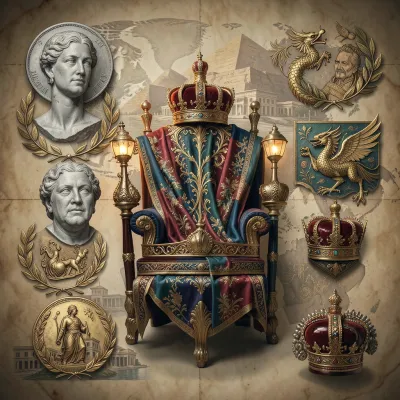
"Sovereigns and States: A Global History of Monarchies and Dynasties" offers a comprehensive comparative narrative of royal power from antiquity to the present. The book moves beyond individual rulers to examine the enduring structures and strategies that sustained hereditary authority across diverse civilizations. It highlights common challenges faced by monarchies, such as securing legitimacy, managing resources, commanding armies, and ensuring succession, and the universal "toolkits" they employed, including ritual, religion, marriage alliances, and administrative specialization. By comparing diverse dynastic systems, from Akkadian kings to Chinese emperors, and Mughals to European constitutional monarchs, the book reveals both shared patterns and unique adaptations in the exercise of sovereign power.
The narrative traces the evolution of kingship through distinct geographical and cultural contexts. Chapters explore the sacred authority of early states, divine rule along the Nile, and the imperial ambitions of Mesopotamia and Achaemenid Persia. It delves into China's dynastic cycles governed by the Mandate of Heaven, the diverse crowns of the Indian subcontinent from Mauryas to Mughals, and the Hellenistic and Roman empires' shift from diadems to imperial purple. The book also examines Islamic conceptions of sovereignty under caliphs and sultans, the rich monarchical traditions of African kingdoms like Nubia, Ethiopia, Mali, Kongo, and Benin, and the complex palace systems of the Maya, Mexica (Aztec), and Inca in the Americas. Furthermore, it explores the mobile empires of Steppe Khans and their nomadic conquests, the unique courts of East Asia, and the mandala kingships of Southeast Asia.
Later sections of the book delve into Medieval Europe's feudal monarchies and the papal challenge, the making of imperial Russia under tsars, and the rise and limits of absolutism in Early Modern Europe. It then expands to "Oceanic Crowns," detailing Iberian dynasties and global empires, before charting the significant upheavals of the Enlightenment, Revolution, and the unseating of kings. The text covers the nineteenth-century era of restoration, nationalism, and reform, the "high tide" of colonial monarchies and indirect rule, and the dramatic impact of World Wars on the fall and adaptation of thrones. The final chapters analyze interwar kingship, the fate of monarchies during decolonization, the interplay of oil, faith, and dynasty in modern Middle Eastern monarchies, and the contemporary roles of crowns in democracies, including the British Commonwealth.
The concluding chapter extends the concept of dynastic power beyond formal thrones, examining how familial influence persists in contemporary republics, such as political families in the United States, Latin America, and postcolonial Africa. Ultimately, "Sovereigns and States" argues that modernity did not abolish monarchy but transformed it, demonstrating its remarkable resilience and adaptability. Monarchies have continued to function as symbols of continuity, national identity, and cultural heritage, navigating new media, democratic expectations, and global challenges by constantly reinventing their roles and leveraging their unique symbolic capital. The book underscores that the fundamental questions of who rules, by what right, and to what end remain central to political life, with monarchical traditions continuing to shape governance even in their absence.
What You'll Find Inside:
- Comparative analysis revealing common patterns in the rise, consolidation, and collapse of monarchies across different civilizations and time periods
- How geography, environment, and technology conditioned the scale and nature of royal power throughout history
- The recurring challenges monarchies faced: securing legitimacy, extracting revenue, commanding armies, adjudicating disputes, and managing succession
- The toolkits monarchies used to sustain authority: ritual and religion, marriage alliances, administrative specialization, monumental architecture, and narratives of sacred or historical destiny
- How monarchies transformed rather than disappeared in modernity, evolving into constitutional forms and surviving as dynastic influences in republics
Who's It For:
This book is ideal for students and scholars of history, political science, and anthropology seeking a comprehensive comparative analysis of monarchical systems across time and geography. It will also appeal to educated general readers interested in understanding how hereditary rule has shaped world history, from ancient god-kings to modern constitutional monarchies, and how dynastic power persists in contemporary political systems. Readers looking for insights into the structural foundations of political authority and its evolution will find particular value in this work.
Table of Contents:
- Introduction
- Chapter 1 Origins of Kingship: Sacred Authority and Early States
- Chapter 2 Pharaohs and Divine Rule along the Nile
- Chapter 3 Between Rivers and Empires: Mesopotamia to Achaemenid Persia
- Chapter 4 The Mandate of Heaven: China’s Dynastic Cycles
- Chapter 5 Crowns of the Subcontinent: From Mauryas to Mughals
- Chapter 6 Hellenistic Courts and Roman Emperors: From Diadem to Purple
- Chapter 7 Caliphs and Sultans: Islamic Conceptions of Sovereignty
- Chapter 8 Thrones of Africa: Nubia, Ethiopia, Mali, Kongo, and Benin
- Chapter 9 Palaces of the Americas: Maya, Mexica (Aztec), and Inca
- Chapter 10 Riders of Empire: Steppe Khans and Nomadic Conquests
- Chapter 11 Courts of East Asia: Japan’s Emperors and Korea’s Kings
- Chapter 12 Southeast Asian Mandalas: Kingship across Mainland and Island Realms
- Chapter 13 Medieval Europe: Feudal Monarchies and the Papal Challenge
- Chapter 14 Tsars and Autocracy: The Making of Imperial Russia
- Chapter 15 Absolutism and Its Limits: Early Modern Europe
- Chapter 16 Oceanic Crowns: Iberian Dynasties and Global Empires
- Chapter 17 Enlightenment, Revolution, and the Unseating of Kings
- Chapter 18 Restoration, Nation, and Reform in the Nineteenth Century
- Chapter 19 Empire at High Tide: Colonial Monarchies and Indirect Rule
- Chapter 20 1914–1945: World Wars and the Fall of Thrones
- Chapter 21 Interwar Kingship: Crisis, Authoritarianism, and Adaptation
- Chapter 22 Decolonization and the Fate of Monarchies
- Chapter 23 Oil, Faith, and Dynasty: Monarchies of the Modern Middle East
- Chapter 24 Crowns in Democracies: Europe and the Commonwealth Today
- Chapter 25 Beyond Thrones: Dynastic Power in Contemporary Republics
Author:
Published By:
Date Published:
May 2, 2026
Type:
Nonfiction
Language:
English
Word Count:
73,181 words
Reading Time:
5 hours 7 minutes
Sample:
Order:
Order Sovereigns and States: A Global History of Monarchies and Dynasties (Hardcover) on MixCache.com:
Buy NowPrint copy is made to order and ships worldwide. Includes the ebook free, ready to read instantly.
$5 account credit for all new MixCache.com accounts, usable toward any ebook purchase!*


