
Browse by Category
Fiction
- Action & Adventure
- African American
- Anthologies
- Children's Fiction
- Classics
- Comics & Graphic Novels
- Coming of Age
- Contemporary
- Cultural & Regional
- Drama
- Erotica
- Fantasy
- General
- Historical Fiction
- Horror
- Humor & Satire
- Literary Fiction
- Mystery, Thriller & Suspense
- Poetry
- Religious & Inspirational
- Romance
- Science Fiction
- Short Stories
- War & Military
- Westerns
- Women's Fiction
- Young Adult
Non-Fiction
- Antiques & Collectibles
- Arts & Photography
- Biographies & Memoirs
- Business & Money
- Children's Non-Fiction
-
Computers & Technology
- Artificial Intelligence
- Computer Science
- Cybersecurity & Cryptography
- Data Science & Analytics
- Databases & Big Data
- Game Development & Design
- General
- Hardware & DIY
- Mobile App Development
- Networking & Cloud Computing
- Operating Systems
- Programming
- Robotics
- Software
- Software Engineering
- User Experience (UX) & Design
- Web Development & Design
- Cooking, Food & Wine
- Crafts, Hobbies & Home
- Education & Teaching
- Engineering
- General
- Health, Fitness & Dieting
-
History
- African History
- African History - North Africa
- African History - Sub-Saharan Africa
- American History
- American History - 20th Century
- American History - Civil War
- American History - Colonial Period
- Ancient History
- Asian History
- Asian History - China
- Asian History - India
- Asian History - Japan
- Asian History - Southeast Asia
- European History
- European History - Ancient Greece
- European History - Ancient Rome
- European History - Medieval
- European History - Modern
- European History - Renaissance
- General
- Middle Eastern History
- Military History
- Military History - Aviation
- Military History - Naval
- Social & Cultural History
- World History
- Humor & Entertainment
- Industrial Technology
- Language Learning
- Law
- LGBTQ+ Non-Fiction
- Literary Criticism
- Medical Books
- Parenting & Relationships
- Philosophy
- Politics & Social Sciences
- Reference
- Religion & Spirituality
-
Science & Math
- Agricultural Sciences
- Astronomy & Space Science
- Behavioral Sciences
- Biological Sciences
- Botany & Plant Science
- Chemistry
- Earth Sciences
- Engineering - Chemical
- Engineering - Civil
- Engineering - Electrical
- Engineering - Mechanical
- Environment
- General
- Geology
- Mathematics
- Nature & Ecology
- Oceanography
- Paleontology
- Physics
- Statistics
- Self-Help
- Sports & Outdoors
- Study Aids
- Sustainability & Green Living
- Textbooks
- Transportation
- Travel
- True Crime
- Urban Planning & Development
- Veterinary Medicine
- Writing & Publishing
Jump to Section
MixCache.com Total Access
Unlimited reading and audiobooks for every book published by MixCache.com.
Included titles carry the MTA badge.
Learn more →
Oil, Gas, and Geopolitics: Iran's Energy Strategy in the 21st Century
MTA
Analysis of Iran's hydrocarbon resources, infrastructure, and regional energy diplomacy
About this book:
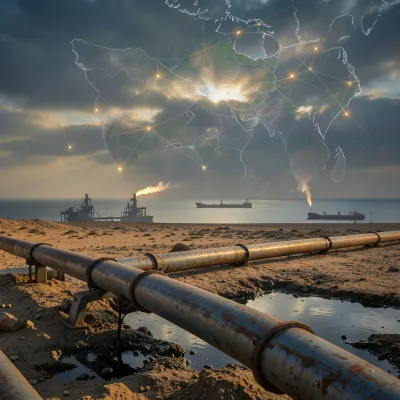
*Oil, Gas, and Geopolitics: Iran's Energy Strategy in the 21st Century* provides a comprehensive analysis of Iran’s position as a global hydrocarbon heavyweight navigating a complex landscape of geological wealth and geopolitical constraints. The book details Iran’s formidable resource endowment, centered on the Zagros fold-thrust belt and the supergiant South Pars/North Dome gas field. It traces the sector’s evolution from colonial-era concessions to nationalization and modern-day state control, highlighting a persistent struggle to translate vast reserves into sustained economic influence amid mature field depletion and a desperate need for enhanced oil recovery technology.
The narrative explores the intricate "midstream" and "downstream" logistics, where an aging infrastructure of pipelines, storage, and refineries must meet soaring domestic demand fueled by heavy state subsidies. This internal consumption creates a perennial tug-of-war with export ambitions, as the state balances social stability with the need for hard currency. The book underscores the transformative role of natural gas, which serves as a domestic anchor and a regional diplomatic tool, while also acknowledging the missed opportunities in LNG development due to investment hurdles and technology restrictions.
A significant portion of the analysis is dedicated to the "shadow market" and the resilience of Iran’s energy diplomacy under various sanctions regimes. It examines the strategic importance of the Strait of Hormuz, pipeline politics with neighbors like Turkey and Iraq, and the pivotal "Look East" policy toward China and India. Through case studies of contracts and disputes, the text illustrates the friction between sovereign control and the requirement for foreign capital, particularly through the lens of the JCPOA and relations with Russia and Europe.
Ultimately, the book offers a forward-looking perspective on Iran’s energy trajectory toward 2035 and 2050. It addresses emerging challenges such as the global energy transition, methane abatement, and cyber risks to infrastructure. The concluding chapters provide strategic recommendations, emphasizing the need for domestic subsidy reform, upstream modernization, and a diversified export strategy. The book portrays Iran as a resilient but constrained energy power whose future depends on its ability to navigate the relentless interplay between its geological fortune and a volatile international order.
What You'll Find Inside:
- Iran's immense hydrocarbon potential, particularly the South Pars/North Dome gas field (the world's largest non-associated gas accumulation), and how geological realities interact with technical, economic and political constraints to shape development strategies.
- The profound impact of sanctions on Iran's energy sector, including the emergence of shadow market mechanisms, workarounds like swap and barter arrangements, and how compliance requirements affect investment, financing, technology transfer and operational decisions.
- Iran's complex energy diplomacy involving pipeline politics with neighbors (Turkey, Iraq, Pakistan, Caucasus), maritime security challenges in the Strait of Hormuz, and evolving relationships with major powers including Russia, China, India and Europe.
- The critical tension between heavily subsidized domestic energy consumption (which encourages waste and strains fiscal accounts) and export ambitions, including how subsidy reform could unlock volumes for sale while creating political challenges.
- Forward-looking scenario planning to 2035 and 2050 examining how energy transition, technology adoption, sanctions regimes, regional dynamics and domestic policy choices will shape Iran's energy future across multiple plausible pathways.
Who's It For:
This book is essential reading for energy investors and analysts seeking to understand Iran's hydrocarbon potential and risks, policymakers and government officials working on energy policy or Iran-related issues, professionals in the oil and gas industry engaged in international projects, researchers and students of geopolitics or energy studies, and traders focused on Middle Eastern energy markets. It provides the technical, economic and geopolitical context needed to navigate Iran's complex energy landscape.
Table of Contents:
- Introduction
- Chapter 1: Resource Endowment and Geological Basins of Iran
- Chapter 2: The Evolution of Iran’s Oil Industry: From Concession to Nationalization to Today
- Chapter 3: Upstream Oil: Fields, Enhanced Recovery, and Production Profiles
- Chapter 4: Natural Gas Giants: South Pars/North Dome and Beyond
- Chapter 5: Midstream Infrastructure: Pipelines, Storage, and Export Terminals
- Chapter 6: Downstream and Petrochemicals: Refineries, NGLs, and Value Chains
- Chapter 7: Domestic Energy Demand, Subsidies, and Power Generation
- Chapter 8: Investment Landscape: Legal Frameworks, Contracts, and Risk
- Chapter 9: Sanctions, Compliance, and the Shadow Market
- Chapter 10: Pricing, Benchmarks, and Contract Structures
- Chapter 11: Pipeline Politics with Neighbors: Turkey, Iraq, Pakistan, and the Caucasus
- Chapter 12: The Strait of Hormuz: Maritime Security, Insurance, and Tanker Logistics
- Chapter 13: Energy Diplomacy with the Gulf and Middle East
- Chapter 14: Relations with Russia, Central Asia, and the Caspian
- Chapter 15: China, India, and Asia’s Demand Centers
- Chapter 16: Europe, the JCPOA, and the Prospects for Reengagement
- Chapter 17: OPEC+, Market Management, and Iran’s Production Strategy
- Chapter 18: Gas Exports, LNG Prospects, and Swap Deals
- Chapter 19: Technology, Services, and Local Content
- Chapter 20: Environmental Footprint, Methane, and Flaring Reduction
- Chapter 21: Security of Energy Infrastructure and Cyber Risks
- Chapter 22: State, Society, and the Political Economy of Energy
- Chapter 23: Scenario Planning to 2035 and 2050: Transition and Volatility
- Chapter 24: Case Studies: Contracts, Projects, and Disputes
- Chapter 25: Strategic Options and Policy Recommendations
Author:
Published By:
Date Published:
April 30, 2026
Type:
Nonfiction
Language:
English
Word Count:
71,172 words
Reading Time:
4 hours 59 minutes
Sample:
MixCache.com Total Access
Get unlimited access to this book + all books published by MixCache.com for $11.99/month
Subscribe to MTAOr purchase this book individually below
Order:
Buy the Oil, Gas, and Geopolitics: Iran's Energy Strategy in the 21st Century ebook on MixCache.com:
Buy Now
Full ebook will be available immediately
- read online or download as a PDF file.
$5 account credit for all new MixCache.com accounts, usable toward any ebook purchase!*




Ratings & Reviews
Ask Questions About This Book
Have a question about the content? Ask our AI assistant!
Start by asking a question about "Oil, Gas, and Geopolitics: Iran's Energy Strategy in the 21st Century"
Example: "Does this book mention William Shakespeare?"
Thinking...