
Browse by Category
Fiction
- Action & Adventure
- African American
- Anthologies
- Children's Fiction
- Classics
- Comics & Graphic Novels
- Coming of Age
- Contemporary
- Cultural & Regional
- Drama
- Erotica
- Fantasy
- General
- Historical Fiction
- Horror
- Humor & Satire
- Literary Fiction
- Mystery, Thriller & Suspense
- Poetry
- Religious & Inspirational
- Romance
- Science Fiction
- Short Stories
- War & Military
- Westerns
- Women's Fiction
- Young Adult
Non-Fiction
- Antiques & Collectibles
- Arts & Photography
- Biographies & Memoirs
- Business & Money
- Children's Non-Fiction
-
Computers & Technology
- Artificial Intelligence
- Computer Science
- Cybersecurity & Cryptography
- Data Science & Analytics
- Databases & Big Data
- Game Development & Design
- General
- Hardware & DIY
- Mobile App Development
- Networking & Cloud Computing
- Operating Systems
- Programming
- Robotics
- Software
- Software Engineering
- User Experience (UX) & Design
- Web Development & Design
- Cooking, Food & Wine
- Crafts, Hobbies & Home
- Education & Teaching
- Engineering
- General
- Health, Fitness & Dieting
-
History
- African History
- African History - North Africa
- African History - Sub-Saharan Africa
- American History
- American History - 20th Century
- American History - Civil War
- American History - Colonial Period
- Ancient History
- Asian History
- Asian History - China
- Asian History - India
- Asian History - Japan
- Asian History - Southeast Asia
- European History
- European History - Ancient Greece
- European History - Ancient Rome
- European History - Medieval
- European History - Modern
- European History - Renaissance
- General
- Middle Eastern History
- Military History
- Military History - Aviation
- Military History - Naval
- Social & Cultural History
- World History
- Humor & Entertainment
- Industrial Technology
- Language Learning
- Law
- LGBTQ+ Non-Fiction
- Literary Criticism
- Medical Books
- Parenting & Relationships
- Philosophy
- Politics & Social Sciences
- Reference
- Religion & Spirituality
-
Science & Math
- Agricultural Sciences
- Astronomy & Space Science
- Behavioral Sciences
- Biological Sciences
- Botany & Plant Science
- Chemistry
- Earth Sciences
- Engineering - Chemical
- Engineering - Civil
- Engineering - Electrical
- Engineering - Mechanical
- Environment
- General
- Geology
- Mathematics
- Nature & Ecology
- Oceanography
- Paleontology
- Physics
- Statistics
- Self-Help
- Sports & Outdoors
- Study Aids
- Sustainability & Green Living
- Textbooks
- Transportation
- Travel
- True Crime
- Urban Planning & Development
- Veterinary Medicine
- Writing & Publishing
Jump to Section
MixCache.com Total Access
Unlimited reading and audiobooks for every book published by MixCache.com.
Included titles carry the MTA badge.
Learn more →
Lines of Supply: Logistics, Transportation, and the Hidden Backbone of Victory
MTA
How railways, convoys, pipelines, and motor pools sustained armies across continents
About this book:
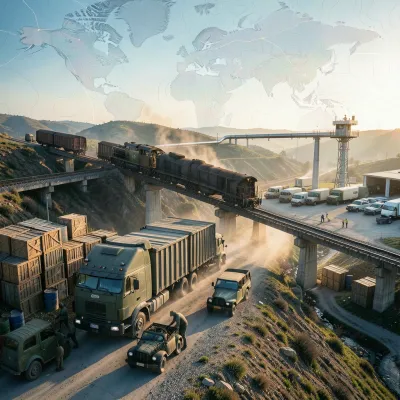
*Lines of Supply: Logistics, Transportation, and the Hidden Backbone of Victory* explores the fundamental role of sustainment in military history, arguing that logistics is not merely a supporting function but a primary strategic actor. The book details how victory is built upon the "mobilization math" of force flow and throughput, where the "tyranny of distance" is overcome through the integration of steel arteries like railways, sea-lane convoys, and cross-continental pipelines. It emphasizes that combat power is essentially a conversion of industrial potential into frontline kinetic energy through a practiced harmony of engineering, scheduling, and standardizing components to ensure the right materiel reaches the decisive point under fire.
The narrative moves from large-scale strategic infrastructure to the tactical grit of the "last tactical mile," examining specialized disciplines such as POL (petroleum, oil, and lubricants) mastery, the "anti-explosion discipline" of ammunition depots, and the cold-chain logistics required to feed and care for millions of troops. Through case studies like the Red Ball Express, the "Hump" airlift, and the Mulberry Harbors, the text illustrates how combat engineers and logisticians bridge gaps and rehabilitate destroyed infrastructure. It highlights the human element of sustainment, where mechanics in motor pools and medics in evacuation chains preserve fighting strength through maintenance and specialized care.
A significant portion of the book is dedicated to the "nerves of supply"—the signals, tracking systems, and command structures that prevent network paralysis. It examines the critical roles of deception, camouflage, and operational security (OPSEC) in protecting vulnerable lines of communication from enemy interdiction. The text also delves into the complexities of coalition warfare, where "many flags" must synchronize disparate national standards into a single interoperable train. It notes that in extreme environments—from Arctic wastes to tropical jungles—terrain acts as a primary adversary that forces radical improvisation and field expedients when formal supply lines fail.
The final chapters address the often-overlooked phase of reverse logistics and redeployment, where the tide of war is "turned back" through the systematic repair, salvage, and disposal of vast accumulations of materiel. By analyzing the transition from wartime necessity to peacetime industrial standards, the book concludes that military logistical lessons in redundancy, resilience, and visibility provide the blueprint for modern global supply chains. Looking toward the future, it anticipates new challenges in cyber and space domains, suggesting that the hidden backbone of victory will continue to evolve through automation, artificial intelligence, and a relentless focus on adaptability.
What You'll Find Inside:
- Logistics transforms industrial output into combat power, dictating an army's reach and sustainable tempo.
- Mobilization math balances force flow, throughput, and distance to prevent outrunning supply lines.
- Railways, pipelines, convoys, and truck networks form interdependent arteries that sustain forces across terrain and enemy action.
- Maintenance, spare parts flow, and readiness rates keep mechanized units operational under combat stress.
- Information systems, standardization, and concealment protect and optimize the hidden backbone of victory.
Who's It For:
Military planners, logisticians, and defense analysts will find frameworks for translating campaign aims into sustainment requirements. Historians gain fresh perspectives on classic conflicts through a logistics lens. Supply chain professionals and coalition partners can apply lessons on resilience, standardization, and interoperability to modern operations.
Table of Contents:
- Introduction
- Chapter 1 Logistics as Strategy: Turning Supply into Combat Power
- Chapter 2 Mobilization Math: Force Flow, Throughput, and the Tyranny of Distance
- Chapter 3 Steel Arteries: Building and Running Military Railways
- Chapter 4 Gateways of War: Ports, Harbors, and Beachheads
- Chapter 5 Across the Ocean: Convoys, Escorts, and the Merchant Marine
- Chapter 6 Beating the Wolf Pack: Routing, Convoy Systems, and Insurance of Delivery
- Chapter 7 Lifeblood in Pipe: Fuel Lines from Wellhead to Frontline
- Chapter 8 POL Mastery: Storage, Distribution, and Anti-Explosion Discipline
- Chapter 9 The Motor Pool: Maintenance, Spares, and Readiness Rates
- Chapter 10 Highways of Victory: Trucking Networks and the Red Ball Express
- Chapter 11 Wings for the Wagon: Airlift, Airdrop, and the Air Bridge
- Chapter 12 Bridging the Gap: Combat Engineers, Ferries, and Railheads Forward
- Chapter 13 The Ammunition Problem: Depots, Fuzes, and Controlled Risk
- Chapter 14 Saving Strength: Medical Evacuation, Blood, and the Logistics of Care
- Chapter 15 Feeding the Force: Rations, Refrigeration, and the Cold Chain
- Chapter 16 Nerves of Supply: Signals, Tracking, and Command of Movement
- Chapter 17 Standardization and Scale: Procurement, Interchangeability, and the BOM
- Chapter 18 Seeing the Network: Reconnaissance, Forecasting, and Wargaming Sustainment
- Chapter 19 Concealment and Continuity: Deception, Camouflage, and OPSEC in Logistics
- Chapter 20 Many Flags, One Train: Coalition Logistics and Interoperability
- Chapter 21 Terrain as Adversary: Desert, Jungle, Mountain, and Arctic Sustainment
- Chapter 22 The Last Tactical Mile: Urban Distribution Under Fire
- Chapter 23 Improvisation Under Constraint: Local Sourcing and Field Expedients
- Chapter 24 Turning the Tide Back: Redeployment, Repair, and Reverse Logistics
- Chapter 25 Beyond the Battlefield: Lessons for Industry and the Future Fight
Author:
Published By:
Date Published:
April 15, 2026
Type:
Nonfiction
Language:
English
Word Count:
44,220 words
Reading Time:
3 hours 6 minutes
Sample:
MixCache.com Total Access
Get unlimited access to this book + all books published by MixCache.com for $11.99/month
Subscribe to MTAOr purchase this book individually below
Order:
Buy the Lines of Supply: Logistics, Transportation, and the Hidden Backbone of Victory ebook on MixCache.com:
Buy Now
Full ebook will be available immediately
- read online or download as a PDF file.
$5 account credit for all new MixCache.com accounts, usable toward any ebook purchase!*


Ratings & Reviews
Ask Questions About This Book
Have a question about the content? Ask our AI assistant!
Start by asking a question about "Lines of Supply: Logistics, Transportation, and the Hidden Backbone of Victory"
Example: "Does this book mention William Shakespeare?"
Thinking...