Browse by Category
Fiction
- Action & Adventure
- African American
- Anthologies
- Children's Fiction
- Classics
- Comics & Graphic Novels
- Coming of Age
- Contemporary
- Cultural & Regional
- Drama
- Erotica
- Fantasy
- General
- Historical Fiction
- Horror
- Humor & Satire
- Literary Fiction
- Mystery, Thriller & Suspense
- Poetry
- Religious & Inspirational
- Romance
- Science Fiction
- Short Stories
- War & Military
- Westerns
- Women's Fiction
- Young Adult
Non-Fiction
- Antiques & Collectibles
- Arts & Photography
- Biographies & Memoirs
- Business & Money
- Children's Non-Fiction
-
Computers & Technology
- Artificial Intelligence
- Computer Science
- Cybersecurity & Cryptography
- Data Science & Analytics
- Databases & Big Data
- Game Development & Design
- General
- Hardware & DIY
- Mobile App Development
- Networking & Cloud Computing
- Operating Systems
- Programming
- Robotics
- Software
- Software Engineering
- User Experience (UX) & Design
- Web Development & Design
- Cooking, Food & Wine
- Crafts, Hobbies & Home
- Education & Teaching
- Engineering
- General
- Health, Fitness & Dieting
-
History
- African History
- African History - North Africa
- African History - Sub-Saharan Africa
- American History
- American History - 20th Century
- American History - Civil War
- American History - Colonial Period
- Ancient History
- Asian History
- Asian History - China
- Asian History - India
- Asian History - Japan
- Asian History - Southeast Asia
- European History
- European History - Ancient Greece
- European History - Ancient Rome
- European History - Medieval
- European History - Modern
- European History - Renaissance
- General
- Middle Eastern History
- Military History
- Military History - Aviation
- Military History - Naval
- Social & Cultural History
- World History
- Humor & Entertainment
- Industrial Technology
- Language Learning
- Law
- LGBTQ+ Non-Fiction
- Literary Criticism
- Medical Books
- Parenting & Relationships
- Philosophy
- Politics & Social Sciences
- Reference
- Religion & Spirituality
-
Science & Math
- Agricultural Sciences
- Astronomy & Space Science
- Behavioral Sciences
- Biological Sciences
- Botany & Plant Science
- Chemistry
- Earth Sciences
- Engineering - Chemical
- Engineering - Civil
- Engineering - Electrical
- Engineering - Mechanical
- Environment
- General
- Geology
- Mathematics
- Nature & Ecology
- Oceanography
- Paleontology
- Physics
- Statistics
- Self-Help
- Sports & Outdoors
- Study Aids
- Sustainability & Green Living
- Textbooks
- Transportation
- Travel
- True Crime
- Urban Planning & Development
- Veterinary Medicine
- Writing & Publishing
Jump to Section
MixCache.com Total Access
Unlimited reading and audiobooks for every book published by MixCache.com.
Included titles carry the MTA badge.
Learn more →
Swarm Robotics and Collective Intelligence
MTA
Principles and applications of multi-robot coordination and distributed control
About this book:

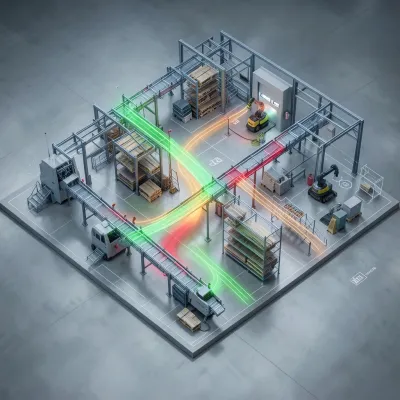
"Swarm Robotics and Collective Intelligence" provides a comprehensive exploration of how decentralized coordination among simple, autonomous agents leads to complex emergent behaviors. Drawing inspiration from biological systems like ant colonies and bird flocks, the text establishes a framework for designing multi-robot systems that prioritize scalability, robustness, and flexibility. By focusing on local rules and stigmergy—indirect coordination through environmental modification—the book demonstrates how collectives can solve problems exceeding the capabilities of any single unit without the need for a central controller.
The book details the technical architecture required to sustain such systems, covering decentralized control structures, consensus algorithms, and diverse communication protocols including RF, optical, and acoustic modalities. It addresses the practical challenges of modeling agents, managing limited energy resources, and ensuring reliable data fusion from noisy sensors. Specialized chapters delve into the complexities of distributed task allocation, collective mapping, and the specific hurdles of multi-modal coordination in heterogeneous swarms where different robot types must collaborate.
Moving from theory to practice, the text examines high-impact applications such as search-and-rescue, precision agriculture, and automated logistics. It provides a pragmatic analysis of the "reality gap," offering lessons learned from field deployments regarding hardware ruggedness and environmental unpredictability. This practical focus is balanced by an extensive discussion on the social dimensions of the field, including human-swarm interaction, supervisory control, and the critical security and ethical implications of autonomous collective systems.
The concluding sections look toward the future, identifying open challenges in long-term autonomy, collective cognition, and self-sustainability. The author envisions a transformative role for swarms in environmental stewardship, space exploration, and nanomedicine. Ultimately, the book serves as both a technical manual and a visionary guide, encouraging the development of responsible, intelligent collectives designed to augment human capability and address global challenges through the power of self-organization.
What You'll Find Inside:
- Emergent global behaviors arise from simple local rules, feedback loops, and stigmergic environmental interactions, enabling complex tasks without centralized control.
- Effective swarm operation hinges on carefully designed communication topologies and protocols that balance locality, robustness, and energy consumption under real-world constraints.
- Scalability is achieved through sub-linear per-robot communication and computation, with performance metrics such as coverage, throughput, and graceful degradation guiding system evaluation.
- Distributed task allocation and role assignment mechanisms (e.g., threshold-based, stigmergic, market-driven) enable dynamic division of labor and adaptive workforce reconfiguration.
- Robustness, fault tolerance, and resilience are inherent properties of decentralized swarms, supported by redundancy, self-healing mechanisms, and adaptive learning in uncertain environments.
Who's It For:
This book is intended for graduate students, researchers, and engineers working in robotics, multi-agent systems, and swarm intelligence who seek a comprehensive foundation in both theory and practice. It also benefits practitioners and system designers looking to deploy scalable, robust robotic collectives in domains such as disaster response, precision agriculture, or automated logistics, providing them with the modeling tools, algorithms, and validation techniques needed to bridge simulation to real-world field trials.
Table of Contents:
- Introduction
- Chapter 1 Foundations of Swarm Robotics
- Chapter 2 Principles of Collective Intelligence
- Chapter 3 Modeling Agents and Environments
- Chapter 4 Decentralized Control Architectures
- Chapter 5 Consensus, Flocking, and Formation Control
- Chapter 6 Distributed Task Allocation and Role Assignment
- Chapter 7 Communication Topologies and Protocols
- Chapter 8 Sensing, Perception, and Data Fusion in Swarms
- Chapter 9 From Local Rules to Global Behavior: Emergence
- Chapter 10 Learning in Swarms: Reinforcement and Evolutionary Methods
- Chapter 11 Robustness, Fault Tolerance, and Resilience
- Chapter 12 Scalability and Performance Metrics
- Chapter 13 Energy Management and Resource Constraints
- Chapter 14 Map Building and Exploration Strategies
- Chapter 15 Search-and-Rescue: Mission Design and Tactics
- Chapter 16 Agriculture: Monitoring, Pollination, and Field Operations
- Chapter 17 Logistics: Warehousing, Transport, and Last-Mile Swarms
- Chapter 18 Human–Swarm Interaction and Supervisory Control
- Chapter 19 Safety, Security, and Ethical Considerations
- Chapter 20 Simulation Frameworks and Benchmarking
- Chapter 21 Hardware Platforms, Sensing, and Actuation
- Chapter 22 Swarm Communication in the Real World: RF, Optical, and Acoustic
- Chapter 23 Heterogeneous Swarms and Multi-Modal Coordination
- Chapter 24 From Lab to Field: Case Studies and Lessons Learned
- Chapter 25 Future Directions: Open Challenges and Grand Visions
Author:
Published By:
Date Published:
March 23, 2026
Type:
Nonfiction
Language:
English
Word Count:
46,393 words
Reading Time:
3 hours 15 minutes
Sample:
Order:
Order Swarm Robotics and Collective Intelligence (Paperback) on MixCache.com:
Buy NowPrint copy is made to order and ships worldwide. Includes the ebook free, ready to read instantly.
$5 account credit for all new MixCache.com accounts, usable toward any ebook purchase!*