
Browse by Category
Fiction
- Action & Adventure
- African American
- Anthologies
- Children's Fiction
- Classics
- Comics & Graphic Novels
- Coming of Age
- Contemporary
- Cultural & Regional
- Drama
- Erotica
- Fantasy
- General
- Historical Fiction
- Horror
- Humor & Satire
- Literary Fiction
- Mystery, Thriller & Suspense
- Poetry
- Religious & Inspirational
- Romance
- Science Fiction
- Short Stories
- War & Military
- Westerns
- Women's Fiction
- Young Adult
Non-Fiction
- Antiques & Collectibles
- Arts & Photography
- Biographies & Memoirs
- Business & Money
- Children's Non-Fiction
-
Computers & Technology
- Artificial Intelligence
- Computer Science
- Cybersecurity & Cryptography
- Data Science & Analytics
- Databases & Big Data
- Game Development & Design
- General
- Hardware & DIY
- Mobile App Development
- Networking & Cloud Computing
- Operating Systems
- Programming
- Robotics
- Software
- Software Engineering
- User Experience (UX) & Design
- Web Development & Design
- Cooking, Food & Wine
- Crafts, Hobbies & Home
- Education & Teaching
- Engineering
- General
- Health, Fitness & Dieting
-
History
- African History
- African History - North Africa
- African History - Sub-Saharan Africa
- American History
- American History - 20th Century
- American History - Civil War
- American History - Colonial Period
- Ancient History
- Asian History
- Asian History - China
- Asian History - India
- Asian History - Japan
- Asian History - Southeast Asia
- European History
- European History - Ancient Greece
- European History - Ancient Rome
- European History - Medieval
- European History - Modern
- European History - Renaissance
- General
- Middle Eastern History
- Military History
- Military History - Aviation
- Military History - Naval
- Social & Cultural History
- World History
- Humor & Entertainment
- Industrial Technology
- Language Learning
- Law
- LGBTQ+ Non-Fiction
- Literary Criticism
- Medical Books
- Parenting & Relationships
- Philosophy
- Politics & Social Sciences
- Reference
- Religion & Spirituality
-
Science & Math
- Agricultural Sciences
- Astronomy & Space Science
- Behavioral Sciences
- Biological Sciences
- Botany & Plant Science
- Chemistry
- Earth Sciences
- Engineering - Chemical
- Engineering - Civil
- Engineering - Electrical
- Engineering - Mechanical
- Environment
- General
- Geology
- Mathematics
- Nature & Ecology
- Oceanography
- Paleontology
- Physics
- Statistics
- Self-Help
- Sports & Outdoors
- Study Aids
- Sustainability & Green Living
- Textbooks
- Transportation
- Travel
- True Crime
- Urban Planning & Development
- Veterinary Medicine
- Writing & Publishing
Jump to Section
MixCache.com Total Access
Unlimited reading and audiobooks for every book published by MixCache.com.
Included titles carry the MTA badge.
Learn more →
The Islamic Republic: Revolution, Institutions, and Everyday Life
MTA
A comprehensive guide to Iran's post-1979 political system and its social consequences
About this book:

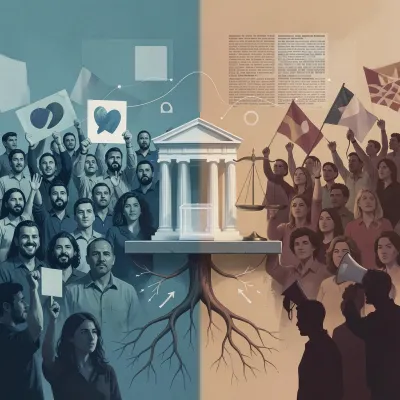
This book provides a comprehensive analysis of the Islamic Republic of Iran, examining its evolution from the 1979 Revolution to its current status as a resilient, hybrid political system. It details the unique constitutional architecture that fuses theocratic authority—embodied in the doctrine of *velayat-e faqih* and the office of the Supreme Leader—with republican institutions such as the presidency and the Majles. The text explains how powerful unelected bodies, like the Guardian Council and the Assembly of Experts, act as ideological gatekeepers, ensuring that legislation and electoral candidates remain aligned with revolutionary principles.
The narrative extends beyond formal politics to explore the pervasive role of the Islamic Revolutionary Guard Corps (IRGC) and various religious foundations (*bonyads*) in the national economy and regional security. It examines how the state navigates a complex political economy defined by oil wealth and persistent international sanctions, which has necessitated the development of a "resistance economy" focused on self-reliance. The book also details the expansive social welfare state, highlighting achievements in public health and education alongside the challenges of managing subsidies and housing for a rapidly urbanizing population.
A central theme is the "politics of everyday life," illustrating how citizens negotiate, adapt to, and occasionally resist state-imposed moralities and social restrictions. The chapters cover the tensions inherent in the education system, the battle over information in the digital age, and the shifting dynamics of gender politics and family law. It also addresses the status of ethnic and religious minorities, the vibrancy of youth culture, and the resilient role of informal networks and civil society in an environment of significant state oversight and censorship.
Ultimately, the book characterizes the Islamic Republic as a system of both continuity and change. While the core tenets of the revolution and the authority of the clerical establishment remain steadfast, the state has demonstrated a pragmatic capacity for institutional adaptation in response to demographic shifts, technological advancements, and external pressures. By connecting high-level institutional design with the lived realities of urban and rural Iranians, the work offers a nuanced view of how a revolutionary project endures through forty years of internal and external turbulence.
What You'll Find Inside:
- The Islamic Republic's political system centers on velayat-e faqih (guardianship of the jurist), placing the Supreme Leader at the apex while maintaining republican institutions like the presidency and Majles that operate under significant clerical oversight.
- Key unelected bodies—the Guardian Council and Assembly of Experts—act as ideological gatekeepers by vetting candidates and legislation, creating persistent tension between popular sovereignty and religious authority that shapes Iran's cycles of reform and retrenchment.
- The IRGC and Basij have evolved from revolutionary militias into multifaceted powers controlling military, economic, and social domains, extending the state's influence into everyday life while maintaining direct allegiance to the Supreme Leader.
- Social policies reveal a complex reality where revolutionary ideals coexist with pragmatic adaptations—evident in women's educational advancement alongside legal restrictions, welfare state expansion amid economic pressures, and youth cultural negotiation within state constraints.
- Iran's political economy is defined by oil wealth, international sanctions, and the rise of bonyads (foundations) and IRGC-linked enterprises, creating parallel economic power structures that affect everything from subsidy policies to regional influence and sanctions circumvention.
Who's It For:
This book is ideal for students, researchers, and professionals seeking a nuanced understanding of Iran's post-1979 political system. It will particularly benefit those studying Middle Eastern politics, comparative governance, or international relations who need to grasp how Iran's unique hybrid institutions function in theory and practice. Policymakers, analysts, and journalists working on Iran-related issues will find valuable insights into the interplay between state institutions, social policies, and everyday life that shape the country's domestic and foreign policy decisions.
Table of Contents:
- Introduction
- Chapter 1 1979 in Context: From Monarchy to Revolution
- Chapter 2 Ideological Foundations: Islamism, Republicanism, and Velayat-e Faqih
- Chapter 3 Writing the Constitution: 1979–1989 Revisions
- Chapter 4 The Supreme Leader: Authority, Networks, and Succession
- Chapter 5 The Guardian Council and the Assembly of Experts
- Chapter 6 The Presidency: Executive Power Under Constraint
- Chapter 7 The Islamic Consultative Assembly (Majles): Lawmaking and Oversight
- Chapter 8 The Judiciary: Law, Shari‘a, and Revolutionary Courts
- Chapter 9 The Expediency Discernment Council and Policy Arbitration
- Chapter 10 The Islamic Revolutionary Guard Corps (IRGC) and the Basij
- Chapter 11 Parties, Factions, and Electoral Politics
- Chapter 12 Provincial Governance and the Bonyads (Foundations)
- Chapter 13 Oil, Sanctions, and the Political Economy
- Chapter 14 Welfare State and Social Policy: Health, Housing, and Subsidies
- Chapter 15 Education, Universities, and the Battle over Knowledge
- Chapter 16 Religion, Clergy, and the Seminary–State Relationship
- Chapter 17 Media, Internet, and Censorship
- Chapter 18 Urban Life: Tehran and the Politics of Space
- Chapter 19 Rural Iran: Agriculture, Migration, and Local Authority
- Chapter 20 Women, Family Law, and Gender Politics
- Chapter 21 Ethnic and Religious Minorities: Inclusion and Control
- Chapter 22 Youth, Culture, and Everyday Negotiations
- Chapter 23 Law Enforcement, Morality Policing, and Personal Autonomy
- Chapter 24 Civil Society, NGOs, and Informal Networks
- Chapter 25 Continuity and Change Across Four Decades
Author:
Published By:
Date Published:
March 14, 2026
Type:
Nonfiction
Language:
English
Word Count:
44,407 words
Reading Time:
3 hours 7 minutes
Sample:
MixCache.com Total Access
Get unlimited access to this book + all books published by MixCache.com for $11.99/month
Subscribe to MTAOr purchase this book individually below
Order:
Buy the The Islamic Republic: Revolution, Institutions, and Everyday Life ebook on MixCache.com:
Buy Now
Full ebook will be available immediately
- read online or download as a PDF file.
$5 account credit for all new MixCache.com accounts, usable toward any ebook purchase!*



Ratings & Reviews
Ask Questions About This Book
Have a question about the content? Ask our AI assistant!
Start by asking a question about "The Islamic Republic: Revolution, Institutions, and Everyday Life"
Example: "Does this book mention William Shakespeare?"
Thinking...